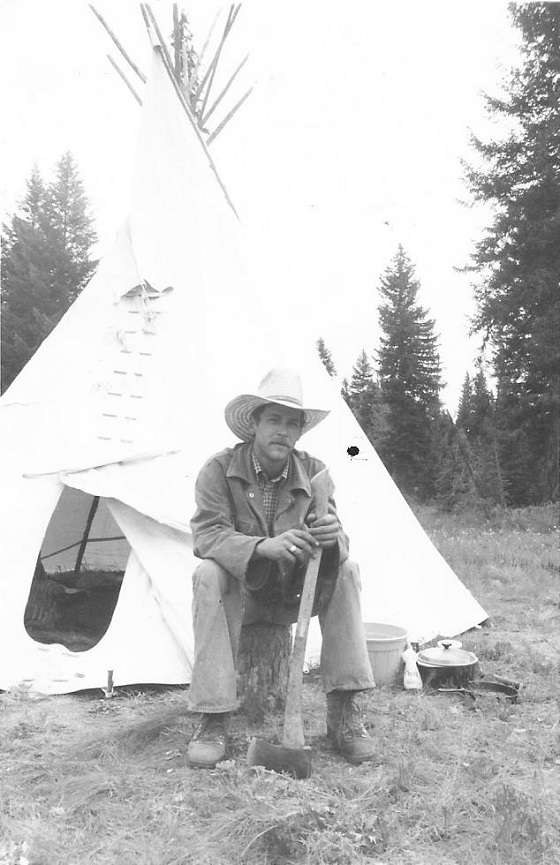
Canada’s conservative tribe lost one of its chieftains January 24 when Link Byfield succumbed to cancer at 63. It’s been a tough few months for the Byfield clan. Link’s mother Virginia passed away last summer. His father Ted, 85, is soldiering on. He meets regularly with various cronies on Friday afternoons at a quiet west Edmonton neighbourhood pub where the beer is cheap, the peanuts free and the conversation always political and philosophical. As long as Ted continues holding court over a double rye and beer chaser, there is reason to hope we will not be attending another Byfield funeral any time soon.
The Byfield name may not mean much to some C2C Journal readers, especially younger ones. But this magazine, along with numerous other contemporary publications and political organizations in Canada, is directly and indirectly descended from the myriad publishing and political endeavours of the Byfields during the last third of the 20th century.
The best way to understand their influence is to see them as counter-revolutionaries: As the tide of secular liberalism swept over western culture from the 1960s onwards, they paddled stubbornly against the current as conservatives and Christians. Through their stable of weekly newsmagazines, and especially the flagship Alberta Report, from 1973-2003 the Byfields and the assortment of oddballs and geniuses they attracted gave voice to both libertarian arguments against ever-bigger and more intrusive government, and to the social conservative case against post-modern morality in all its manifestations, from liberalized abortion to gay marriage.
An equally big reason for their success, though, was just good journalism – quality writing, reliably fresh angles and details, and a nice balance between pith and pathos. To this day, many former subscribers say they didn’t really share the ideology; they liked it simply because it was independent of the mainstream media, and a consistently interesting, informative and entertaining read.
Link used to call the magazine’s subscribers “Westians,” referring to both the conservative Christian base and the Albertans and other westerners embittered by central Canada’s hammerlock on power in Ottawa. It was the latter that made the magazine a force for political change, first through the battles over energy policy and then over constitutional reform. These events fuelled the creation of the Reform Party, which in the early days built its constituency largely on the subscriber base of the Report.
Today, of course, Canada’s governing party is descended from the Reform Party, as is its leader. Conservative and libertarian ideas have a much bigger place in the public square, and many of their promulgators are Report alumni. Even the Quebec tail no longer wags the Canadian dog, or at least not as much as it used to when the Report published a cover story under a headline that said, in French, “If you can’t read this you can’t work for the federal government.”
It’s true Canada still has no legal restrictions on abortion. The gay rights lobby is still bullying politicians to do their bidding. Christians are holding their own, but barely, against the secular crusade to suppress all faiths but its own. Link was disappointed about all this, but realistic about it because he spent much of his last decade in politics, learning about the art of the possible.
True to his long-time advocacy for better, fairer regional representation in Ottawa, he ran as an independent in an Alberta senatorial election. It was a typically quixotic bid, without the money and backing of a provincial party. The truth is there was no party at the time that would have him, or he it. Still he got 239,000 votes and a fourth-place finish that made him a senator-in-waiting. After six years of waiting for a Senate vacancy that never came, he proclaimed his democratic mandate expired, and voluntarily resigned.
Then he started a new party, the Alberta Wildrose Party, teaming up with libertarian Danielle Smith to light a fire under the creaky old Progressive Conservative dynasty. They did pretty well, chasing off two poor premiers and electing a formidable opposition that forced the PCs to shift right and try to purge themselves of their “culture of corruption and entitlement.”
Though he ran, Link was not among the Wildrosers who got elected to the Legislature. Had he been a member of the caucus, the party might have remained on course and provided Alberta with the genuinely conservative government Link always envisioned.
Link was disappointed about that too. But in toting up the successes and failures of his life, there were far more of the former than the latter. The four children he and his wife Joanne raised are chief among them. Whatever paths they choose, they will be a credit to their parents and their communities. Link’s words and ideas will continue to influence and inspire from the archives of the many publications he wrote for. And his values and objectives will live on in the political organizations he helped build.
One of Link’s singular achievements as publisher of the Report was the creation of an internship program that brought young writers into the newsroom and developed their journalistic skills. Many went on to successful careers in the media. In recognition of this particular aspect of Link’s legacy, the Manning Foundation for Democratic Education and C2C Journal are creating the Link Byfield Journalism Legacy Fund.
This Fund will be used to find and develop young writers who will advocate for the values of freedom and democracy that underlie the mission of the Manning Foundation and were at the core of Link’s contributions to public life. Fittingly, the Fund is the brainchild of one of the alumni of Link’s internship program at the Report. Tom McFeely, a Calgary native who later became an international journalist and editor with the U.S.-based National Catholic Register, has generously seeded the Fund with a contribution of $25,000.
Ever since C2C was founded seven years ago, a central part of its mandate has been to find and develop the next generation of writers and thinkers who will produce Ideas That Lead in advancing the cause of freedom and democracy. The Link Byfield Journalism Legacy Fund will help us sustain these efforts. His family, and all of us who knew and admired him, are certain he would be proud to lend his name to this cause.
Paul Bunner is editor of C2C Journal. He worked with Link Byfield at the Report family of newsmagazines from 1986-2003.
Anyone interested in making a tax-deductible donation to the Manning Foundation in support of the Link Byfield Journalism Legacy Fund may contact Vida Brodie, VP Development, at [email protected] or by calling (403) 700-6091.