Climate Strikes

Canada’s “Climate Crisis” is Entirely Political

Gwyn Morgan
January 14, 2020
Maurice Strong died of old age before seeing his predictions of climate apocalypse come true. But don’t worry: there are plenty of putative replacements for the late organizer of the original “Earth Summit”. They’re younger, more credulous, far shriller and even less scientifically literate. If the planet won’t heat up and destroy industrial civilization as predicted, they’re here to help make sure that the latter, at least, occurs one way or another. Gwyn Morgan peruses selected lowlights from the current “climate crisis” spectacle and laments our Liberal government’s credulous genuflection before the prophets of doom when Canada’s industry actually has the means to help reduce global greenhouse gas emissions.
Climate Strikes

Canada’s “Climate Crisis” is Entirely Political

Gwyn Morgan
January 14, 2020
Maurice Strong died of old age before seeing his predictions of climate apocalypse come true. But don’t worry: there are plenty of putative replacements for the late organizer of the original “Earth Summit”. They’re younger, more credulous, far shriller and even less scientifically literate. If the planet won’t heat up and destroy industrial civilization as predicted, they’re here to help make sure that the latter, at least, occurs one way or another. Gwyn Morgan peruses selected lowlights from the current “climate crisis” spectacle and laments our Liberal government’s credulous genuflection before the prophets of doom when Canada’s industry actually has the means to help reduce global greenhouse gas emissions.
Share on Facebook
Share on Twitter

It has been almost three decades since delegates from 172 countries met at the UN Earth Summit in Rio de Janeiro and adopted the United Nations Framework Convention on Climate Change. Data from the U.S. National Oceanic and Atmospheric Administration show that since then, the Earth’s atmospheric temperature has risen by an average of 0.03° Celsius per year. At that rate, the planet’s climate will warm by 2.4° by 2100. That’s a sizable amount over 80 years, but even if the planet warms exactly as forecast, it’s certainly not the “climate emergency” needed to galvanize people into making life-altering sacrifices such as giving up cars or air travel, moving en masse into “tiny homes” or switching to “eco-friendly” food. 

xGradually warming temperatures are unlikely to persuade the mass of people to radically alter their lifestyles. They’ll need to be forced.

The answer to every climate activist’s prayer came in the form of Swedish schoolgirl Greta Thunberg. Her transformation into the world’s pre-eminent climate-change warrior began in 2018 at the age of 15, with Fridays spent demonstrating outside the Swedish Parliament while gaining the attention of financially capable fellow warriors. Her carefully choreographed journey last year to New York by “zero-carbon” sailboat (in fact a rakish and well-equipped ultra-modern racing yacht, built largely out of petroleum products, with an expert crew who all had to be transported back home again) was timed to coincide with the UN Climate Action Summit, where she passionately delivered her apocalyptic “How dare you!” tirade heard around the world.

xImpossible without oil: The “zero carbon” racing yacht that whisked Thunberg across the Atlantic is built almost entirely from petroleum products.

Here in Canada Thunberg’s performance inspired radicalized groups including “Extinction Rebellion,” which enraged drivers by blocking roads and bridges during busy rush hours, generating uncounted tonnes of needless greenhouse gas emissions. A one-day climate strike shut down school classes across the country as pupils joined climate emergency rallies. In a scant few days, the angry scowling Swede evoked existential climate-change anxiety in teenagers everywhere. Unfortunately, her words had an even greater effect on younger kids, striking terror into pre-teens. In one elementary class, a child yelled out, “I don’t wanna die.” Another went home and said, “Mommy, they say that we’re going to die in eight years.” Traumatizing young children by telling them the world is about to end crosses the line from eco-activism to emotional eco-terrorism.

xThunberg’s baseless rants are manipulating teens and traumatizing young kids.

After New York, Thunberg journeyed to Alberta where she held an anti-oilsands rally. This was a puzzling choice given that Canada produces just 1.6 per cent of global greenhouse gas emissions, with the oilsands contributing just one-tenth of that. China or India’s emissions make Canada’s just a rounding error. Indeed, in some years the increase in China’s emissions approximately equals Canada’s entire annual total. Why didn’t Thunberg travel there? While she was in Edmonton, the ever-determined reporters at Rebel Media asked her that question. Her answer? She “hadn’t been invited.” No doubt that’s true. If she or Extinction Rebellion tried their stunts in the Communist-run police state, they would likely be “invited” to a forced-labour camp. Just ask the Hong Kong protesters, who are risking their lives merely to preserve their most basic legal rights. 

Either way, Thunberg’s disparaging visit to Canada’s oilsands again illustrates activists’ fixation on Western countries even though virtually all emissions growth is elsewhere. China, India, South Africa, South Korea, the Philippines and Japan, all signatories to the Paris climate accord, are in various stages of constructing a total of 1,800 coal-fired electric power plants. If Canada disappeared from the face of the Earth, those new plants would replace our emissions in a few short months.

xDon’t try this in China: Thunberg denounces the oil and gas industry in front of the Alberta Legislature.

There’s little doubt Thunberg’s visit also influenced Canada’s federal election. Massive media coverage of her climate emergency claims increased support for prime minister Justin Trudeau’s national carbon tax. Trudeau’s task was made easier by Conservative leader Andrew Scheer’s failure to explain clearly why his party’s environmental policy would more effectively reduce global emissions than the Liberal carbon tax. 

Scheer’s mission shouldn’t have been all that difficult to accomplish. Virtually all experts agree the carbon tax would have to be several times higher than planned to have any perceptible impact on Canada’s  emissions (and as we’ve seen, Canada’s total emissions have negligible impact on global emissions). By contrast, the cornerstone of the Conservative environmental platform was the recognition that exporting Canadian natural gas on a large scale would have a real impact globally. The evidence for this is compelling, for the large-scale switching from coal to natural gas in the United States has largely accounted for that country’s dramatic decline in greenhouse gas emissions, despite the fact the U.S. has spurned various global climate accords.

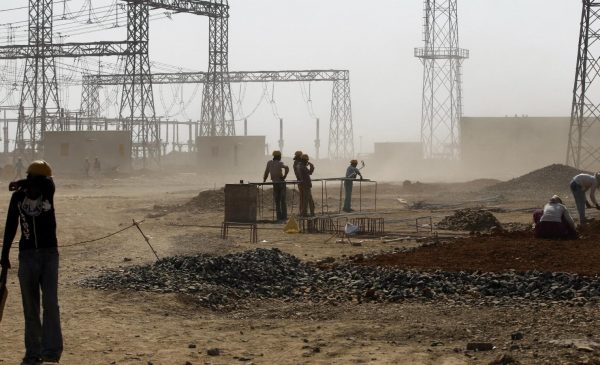
Natural gas-fired electrical generating stations produce, on average, just half the greenhouse gas emissions as coal-fired plants per unit of power produced. Every natural gas-fired plant fuelled with Canadian gas around the world would enable shutting down one old coal-fired plant, or would forestall the construction of one new one. The more clean-burning natural gas Canada exported, the more global greenhouse gas emissions would be avoided. So it’s no surprise that Canada’s energy industry, as well as the governments of energy-producing provinces, had urged the Trudeau government to push recognition of that reality at last month’s Madrid climate conference. Once again, they were disappointed.

Rounding error: Canada’s emissions are dwarfed by those of China, India and other developing countries, but current Liberal policy ensures the pain will be felt here at home.

Instead, the Liberals and Canada’s vast climate emergency movement remain preoccupied with national rather than global emissions, and this leads to myriad “local action” absurdities. The award for most ludicrous goes to Victoria’s City Council for its plan to spend $14 million on installing shore power at its harbour so that cruise ships can shut off their generators while moored at city docks. Council clearly doesn’t understand that emissions caused by actually propelling the ships after they leave port are hundreds of times greater than their generators produce.

More tragic than ludicrous is the systematic destruction of one of the world’s most technically advanced and ethically responsible oil industries. While hundreds of thousands of trained workers have been rendered jobless and, in many cases, hopeless as capital investment and corporate headquarters have fled to the U.S., the world’s oil consumption continues to grow. It is now 6 million barrels per day higher than it was in 2010 and the International Energy Agency forecasts that demand will keep rising for at least two more decades. China recently gained the dubious distinction of world’s largest oil-importing country. 

xExportable idea: Fuel-switching from coal to gas, as with this Alberta facility, dramatically cuts emissions. Shipping Canadian gas worldwide could help do so on a global scale.

Yet the Trudeau Liberals’ progressive evisceration of our oil industry has handed that growing market to such environmental stewards and human rights champions as Saudi Arabia, Iraq, Nigeria and Algeria. Adding insult to injury, Quebec, consistent with its “distinct society” status, favours its own political interests over those of the country at large and continues to import oil from those countries in preference to Alberta’s “dirty oil.” But it happily accepts this year’s equalization grant of $13.1 billion, as it does every other year’s, funded disproportionately by Alberta taxpayers.

No other country has so deliberately turned itself into a climate-change martyr. And yet for all the economic, social and national unity pain inflicted, our sacrifices will have no perceptible impact on global climate change. Entering the third decade of this troubled millennium, we can only hope our federal government somehow realizes the future of our Confederation requires leaving behind blind ideology and finding some basic common sense.

Gwyn Morgan is the retired founding CEO of Encana Corp.

Love C2C Journal? Here's how you can help us grow.

More for you

From the Strait of Hormuz to Cuba, Net Zero is Dying – Mark Carney Needs to Let Go

After decades spent pursuing net-zero dreams at great cost to their economies and social fabric, most of the world’s industrialized nations are waking back up. War with Iran and the threat of tanker blockades have everyone worried about oil and natural gas supplies and clamouring for energy security. Or nearly everyone. Not Mark Carney, though. Canada’s prime minister keeps pushing industrial carbon taxes higher and insists on wasting taxpayers’ money on windmills that make no difference. Gwyn Morgan recalls his own observation of the global warming movement’s original rise, its morphing into the radical “net zero” cult – and its spectacular global disintegration. It is high time, Morgan writes, that Canadians demand Carney also drop his delusions.

Busted Flush: Why Your Next Mayor Should Be an Engineer

You drag yourself out of bed for your morning coffee, but the faucet’s dry. And the toilet won’t flush. It’s going to be a really bad day. Beneath our cities lie massive webs of pipes delivering water and removing sewage. They are crucial to our daily lives. But as Greg Wilson reveals, they have been scandalously overlooked and underfunded across Canada. The City of Calgary, C2C Journal found out, has even skimmed more than $1 billion from its ratepayer-funded water utility to spend on other programs. With a spate of recent failures bringing attention to the condition of our local water services, Wilson argues for a dramatic change in priorities at city hall: drop the social engineering and put real engineers in charge.

We Have Ways of Making You Talk: The Tyranny of Land Acknowledgements and Other Compelled Speech

Indigenous land acknowledgements have become so common that many Canadians no longer give them a second thought – simply accepting a kind of tuneless new national anthem before events of all sorts. And that’s why they’re so dangerous. The enforced conformity and compelled speech they depend on are not just threats to individual freedom, writes George Ramsay, they also create a divisive moral hierarchy based on race. In this originally reported story, Ramsay delves into the dangers posed by Canada’s broader shift to enforced verbal compliance, reveals the inspiring stories of a few brave souls who have dared to challenge this social tyranny and offers practical tips on how the rest of us can fight back too.

More from this author

From the Strait of Hormuz to Cuba, Net Zero is Dying – Mark Carney Needs to Let Go

After decades spent pursuing net-zero dreams at great cost to their economies and social fabric, most of the world’s industrialized nations are waking back up. War with Iran and the threat of tanker blockades have everyone worried about oil and natural gas supplies and clamouring for energy security. Or nearly everyone. Not Mark Carney, though. Canada’s prime minister keeps pushing industrial carbon taxes higher and insists on wasting taxpayers’ money on windmills that make no difference. Gwyn Morgan recalls his own observation of the global warming movement’s original rise, its morphing into the radical “net zero” cult – and its spectacular global disintegration. It is high time, Morgan writes, that Canadians demand Carney also drop his delusions.

Future Tense: Why Gen Z is Right to Feel Betrayed

Older generations often roll their eyes when young people seek to blame them for their woes. But if Canada’s Gen Zers feel betrayed by the Boomers, they are right to do so, argues Gwyn Morgan. Years of irresponsible fiscal and regulatory policies have hamstrung the Canadian economy and left younger generations facing a bleak future of stagnant wages, rising taxes and shrinking opportunities. A former business leader who created more than his share of jobs and prosperity during his long corporate career, Morgan casts a worried eye over the next generation – and offers sympathy for the situation they’re inheriting.

The Price of Foolish Pride: What Germany’s Social and Economic Decline Can Teach Canada

Germany was postwar Europe’s most successful nation – until it was seized by an arrogant leftist ideology that led it down a ruinous path. Its government abandoned safe, zero-emission nuclear power for inefficient wind and solar plus natural gas from Vladmir Putin. It threw open its borders to millions of asylum-seekers with barely a thought to the enormous costs or the difficulties of social integration. Today, at the 11th hour, Germany is at last struggling to turn around its decade of economic decline and social disintegration. In this cautionary tale, Gwyn Morgan sees a profound warning for Canada.