Anti-Semitism

Quick Read

What if October 7 Had Happened Not in Israel but in Canada?

Gwyn Morgan
October 10, 2025
It is probably beyond the imagination of most Canadians that they would ever face the kind of evil atrocity Israelis suffered on October 7, 2023. Or that we would find ourselves living next door to savage terrorists bent on our annihilation. But as Gwyn Morgan points out, it is critical to understand that reality as Israel’s struggle for existence carries on. The history of Israel is nothing short of miraculous. As Morgan personally observed on a tour of the world’s only Jewish state, Israelis have with determination and heart built a free, tolerant, prosperous and technologically-advanced democracy while surrounded by enemies. In the face of ruthless attacks by Hamas and the craven behaviour of supposed friends and allies who now lean in favour of the terrorists, Israel has reminded the rest of the world what real courage is.
Anti-Semitism

Quick Read

What if October 7 Had Happened Not in Israel but in Canada?

Gwyn Morgan
October 10, 2025
It is probably beyond the imagination of most Canadians that they would ever face the kind of evil atrocity Israelis suffered on October 7, 2023. Or that we would find ourselves living next door to savage terrorists bent on our annihilation. But as Gwyn Morgan points out, it is critical to understand that reality as Israel’s struggle for existence carries on. The history of Israel is nothing short of miraculous. As Morgan personally observed on a tour of the world’s only Jewish state, Israelis have with determination and heart built a free, tolerant, prosperous and technologically-advanced democracy while surrounded by enemies. In the face of ruthless attacks by Hamas and the craven behaviour of supposed friends and allies who now lean in favour of the terrorists, Israel has reminded the rest of the world what real courage is.
Share on Facebook
Share on Twitter

European Jews had faced anti-Semitism-fuelled persecution for centuries before Adolf Hitler’s plan to exterminate every Jew saw more than 6 million lose their lives in the most horribly unimaginable ways. What isn’t as well-known, especially among today’s younger generations, is that anti-Semitism was common in Europe well before the Holocaust. So it is little wonder that once the Second World War ended, many surviving Jews recoiled at the thought of returning to the European countries of which they had been loyal and proud citizens. Instead, it was only logical – as well as satisfying a deep, eternal longing in the Jewish heart – to move to the region where the Israeli people had originated 24 centuries ago and where many still lived.

Since 1917, the British had administered what had latterly been named Palestine. There had long been an active movement – Zionism – that sought to repatriate Jews to their ancient homeland and, it was hoped, form an independent Jewish state for the first time in nearly 2,000 years. In late 1947, the newly created United Nations resolved that the British Mandate territory was to be split into a zone for Arabs called Palestine and a zone for Jews called Israel. On May 14, 1948, Israel declared its independence and the British Army departed.

Born in war: In 1948, the British Mandate territory was split into a zone for Arabs called Palestine and a zone for Jews called Israel; the new state of Israel came under immediate attack by the armies of Egypt, Jordan, Syria, Lebanon and Iraq as well as local Arab militias. Shown: (left) A 1947 UN map of the proposed partition; (right) units of the nascent Israel Defense Forces (right) during Operation Horev in 1948. Zionism_October 7_history of Israel_iron dome_1
xBorn in war: In 1948, the British Mandate territory was split into a zone for Arabs called Palestine and a zone for Jews called Israel; the new state of Israel came under immediate attack by the armies of Egypt, Jordan, Syria, Lebanon and Iraq as well as local Arab militias. Shown at left, a 1947 UN map of the proposed partition; at right, units of the nascent Israel Defense Forces during Operation Horev in 1948.

The very next day, the infant state of Israel came under attack by the armies of Egypt, Jordan, Syria, Lebanon and Iraq as well as local Arab militias. The Israelis were given zero chance of winning. A tiny country of 800,000 people with only untested militias and a motley collection of hand-me-down weaponry going up against well-equipped, formally trained armies made victory inconceivable. Miraculously, not only did Israel win, it captured large additional territories geographically vital to the country’s future defence. (For those interested in that improbable outcome but not inclined to plough through history books, I can recommend the movies Exodus with Paul Newman and Eva Marie Saint, and Cast a Giant Shadow with Kirk Douglas and Senta Berger.)

How could this be possible? I got an answer to that question one evening in Tel Aviv. I was privileged to be part of a private tour of Israel hosted by the government with security provided by the Israel Defense Forces. We met with a remarkable 35-year-old female unit commander tasked with protecting the Lebanon-facing Golan Heights border area from attacks by Hezbollah terrorists. Her answer to my question was both brief and profound: Heart. Half an hour later, her pager buzzed. Hezbollah was attacking the Golan Heights just above our meeting place. She ran to her waiting helicopter.

The Second World War’s aftermath became a pivotal phase in the history of Israel, as it enabled the country’s founding. European Jews had faced centuries of anti-Semitism, which culminated in the Holocaust and the murder of more than 6 million people. After the war ended, many surviving Jews recoiled at the thought of returning to the European countries of which they had been citizens. Instead, it was a logical step for them to move to their ancestral homeland, a goal that fulfilled the aspirations of Zionism, a long-active movement that sought to form an independent Jewish state. This movement culminated on May 14, 1948, when Israel, in keeping with a United Nations resolution the previous year, declared its independence as a Jewish state.

That Israeli army commander’s single word put so much in perspective. The Oxford English Dictionary defines courage as bravery or strength in the face of pain or grief. The Latin root word for courage is “heart”. The postwar Jews who streamed to their ancestral homeland in decrepit steamships knew that Israel was their last chance. There was nowhere else to go. The enemy soldiers’ massive advantage in numbers and weaponry made them confident the conflict would be over in hours. They never expected to face adversaries fully prepared to die. Terrified by that fearless ferocity, as the 14-month War of Independence went on, more and more they turned and ran.

Since that incredible victory in 1949, driven by constant threats from surrounding Islamist enemies, Israel went on to build one of the world’s most technologically advanced, tactically innovative and well-trained defence forces. Here is a very quick look at the two other make-or-break confrontations Israel faced. First came the so-called Six-Day War of 1967. When Israel’s famed Mossad intelligence agency learned of an imminent attack by Egypt, Jordan and Syria, Israel attacked pre-emptively, all-but wiping out Egypt’s much superior air force while its fighter jets were still parked on the ground, then launching a lightning ground campaign that seized the Sinai Peninsula, West Bank of the Jordan River and Golan Heights.

A test of courage and heart: In 1973, Egypt and Syria launched a surprise attack on the Jewish holy day of Yom Kippur; Israeli forces regrouped and mounted a fierce counterattack – a turning point that showcased the country’s capability and resolve. Shown, IDF tanks and an armoured vehicle during the Yom Kippur War. Zionism_October 7_history of Israel_iron dome_2
xA test of courage and heart: In 1973, Egypt and Syria launched a surprise attack on the Jewish holy day of Yom Kippur; Israeli forces regrouped and mounted a fierce counterattack – a turning point that showcased the country’s capability and resolve. Shown, IDF tanks and an armoured vehicle during the Yom Kippur War. (Source of bottom photo: Israel Press and Photo Agency/Dan Hadani collection, National Library of Israel, licensed under CC BY 4.0)

Six years later, on the holy day of Yom Kippur – October 6 – Egypt and Syria launched a massive surprise attack that caught Israel completely off-guard. Egypt envisioned quickly recapturing the Sinai while Syria drove across the Golan Heights; Israel’s annihilation was intended to follow. After some very tense days and fearsome losses of soldiers and aircraft, Israel turned the tables, recaptured the lost ground and very likely could have driven all the way to Damascus and Cairo.

Amidst these and other tumultuous events, the history of Israel has included building one of the world’s most tolerant and technically advanced democracies. Our tour group noted no discrimination against minority groups. The country’s currently 2 million Sunni Muslim citizens are considered equals to its nearly 8 million Jews. An Israeli Arab, Khaled Kabub, is a Justice on Israel’s Supreme Court.

Israel is also home to a small population of Druze, an Abrahamic faith descended but now very different from Shia Islam. Arrangements had been made for us to have lunch at the home of a Druze family. It was a memorable experience. The eldest of the three children helped her mom prepare the meal, while her brother prepared the table. And the bubbly little girl entertained us. While the Druze largely inhabit their own enclave, they are otherwise integrated into Israeli society, fiercely loyal to the State of Isarel, and serve proudly in the military. The Israelis considers the Druze brethren, protecting them from persecution throughout the Middle East, including in Lebanon and Syria. The IDF’s recent airstrikes in western Syria near the Golan Heights were partly aimed at protecting Syria’s Druze population when it came under attack from Sunni Muslim extremists linked to Syria’s new regime.

Israel has one of the world’s most well-trained and technologically-advanced militaries, including its Iron Dome air defence system that intercepts incoming missiles launched by hostile states or terrorist forces. Zionism_October 7_history of Israel_iron dome_3
xIsrael has one of the world’s most well-trained and technologically-advanced militaries, including its Iron Dome air defence system that intercepts incoming missiles launched by hostile states or terrorist forces. (Source of photo: Shutterstock)

During our 2019 visit, our group was also taken to an amazing technology centre and toured a factory producing advanced products for sectors from aerospace to defence. Having been a professional engineer throughout my career, I found this fascinating. Much of our digital world runs on Israeli technology. NVIDIA, Apple and Intel’s chips are designed in Israel’s development centres. Michael Kagan, Global Chief Technology Officer of NVIDIA, the world’s top computer-chip design firm by market capitalization, lives in Tel Aviv, the country’s commercial capital. Israel’s extraordinary Iron Dome and Arrow air-defence systems that shoot down terrorist missiles fired by Hezbollah in Lebanon, Houthis in Yemen, Hamas in Gaza and Iran’s mullahs have been crucial to saving the country from devastation.

But now the long-suffering Israelis have been attacked by people whose tactics can’t be stopped by technology like Iron Dome and whose driving objective, as was Hitler’s, is to wipe them off the face of the Earth. Hamas, an acronym for “Islamic Resistance Movement”, is committed to “armed resistance to Israel and creation of a Palestinian State.” Israel’s invasion of Gaza in late 2023 in response to the October 7 incursion by the vicious Hamas throat-slitters and kidnappers has engendered intense criticism and worsened longstanding anti-Semitism. It may be hard for many to watch the death and destruction occurring in Gaza without experiencing those emotions. But we need to put ourselves in the Israelis’ shoes, and we need to ask ourselves an important question. What would we do?

A good portion of the world runs on Israeli technology, including cutting-edge chips designed for the likes of NVIDIA, Apple and Intel. Shown at left, the headquarters of AI powerhouse NVIDIA Israel in Tel Aviv; at right, Michael Kagan, NVIDIA Chief Technology Officer). Zionism_October 7_history of Israel_iron dome_4
xA good portion of the world runs on Israeli technology, including cutting-edge chips designed for the likes of NVIDIA, Apple and Intel. Shown at left, the headquarters of AI powerhouse NVIDIA Israel in Tel Aviv; at right, Michael Kagan, NVIDIA Chief Technology Officer. (Sources of photos: (left) Igal Vaisman/Shuttestock; (right) YouTube/NetEvents International)

Imagine we Canadians are living on the other side of a security fence from a territory populated by Islamic terrorists whose sole avowed objective is to annihilate every one of us. Imagine also that they continually fire lethal rockets into civilian areas, necessitating every home to have a bomb-proof “safe space”. Then one night, as a large group of happy young people dance to music at a festival, the terrorists burst through the security fence using construction equipment while hundreds of others swoop in from above on powered paragliders.

They fall upon that group of happy young Canadians, who are then viciously tortured and raped, followed by genital mutilation and murder, all proudly recorded on GoPro cameras or smartphones. One of the terrorists even uses a murdered young woman’s phone to call his family. “Hi Dad, open my WhatsApp and see how many I killed with my own hands. I killed ten! Put mom on…Mom, your son is a hero, Kill Kill Kill!” “Oh my son, God bless you,” the ecstatic mother replies. (Note: These quotes are not made up but are from a transcript of phone recordings recovered by Israeli authorities.)

The day after its declaration of independence on May 14, 1948, Israel was attacked by the armies of Egypt, Jordan, Syria, Lebanon and Iraq. Despite having only untested militias against well-equipped armies, 14 months later the Israelis triumphed in what became known as the War of Independence. Some attribute this victory against seemingly impossible odds to the “heart” and fearless ferocity of the infant state’s citizens, who were fighting for their last chance at a homeland and were fully prepared to die. Since that time, Israel has built one of the world’s most technologically advanced defence forces. In the Six-Day War of 1967, it launched a successful pre-emptive attack, and in 1973, it recovered from a surprise attack starting the Yom Kippur War to drive back invading forces. Israel’s current defences include advanced domestically-developed systems like the Iron Dome and Arrow, which protect it from missile attacks.

Then, those still living are loaded onto trucks heading back to the perpetrators’ territory, there to be held as hostages in a huge multi-million-dollar underground tunnel network funded in part, ironically, by donations from UNRWA, the United Nations Relief and Works Agency. UNRWA employees are later found to have not only supported but directly participated in the terrorist acts.

In response to this unspeakable atrocity, democratic and peace-seeking Canada retaliates strongly, sending tens of thousands of soldiers to recover the kidnapped hostages – many of whom have been repeatedly raped, tortured, starved or forced to perform humiliating labour for the terrorists and their families – while attempting to minimize casualties among the enemy’s civilian population. But, knowing that ongoing civilian deaths will trigger international condemnation – the more, the greater – the terrorists use their own population as human shields, forcing them to live in the above-ground battle zone while they themselves hunker down in reinforced tunnels. (In the Second World War, by contrast, not only the British but even the Nazi Germans put their civilians in shelters while remaining above ground to fight.)

What if this had happened in Canada? The massacre of October 7, 2023 saw Hamas terrorists kill 1,405 people, including more than 370 at the Nova music festival in the Negev desert; hundreds more were taken hostage, raped and tortured. Shown at top, Hamas fighters taking captured Israeli civilian into the Gaza Strip; at bottom, a commemorative site in memory of the massacre, Kibbutz Reim. Zionism_October 7_history of Israel_iron dome_5
xWhat if this had happened in Canada? The massacre of October 7, 2023 saw Hamas terrorists kill 1,405 people, including more than 370 at the Nova music festival in the Negev desert; hundreds more were taken hostage, raped and tortured. Shown at top, Hamas fighters taking captured Israeli civilian into the Gaza Strip; at bottom, a commemorative site in memory of the massacre, Kibbutz Reim. (Sources of photos: (top two) AP; (bottom) זאב שטיין, licensed under CC BY 2.5)

But rather than recognizing that our country’s survival left us with no other choice, a huge upwelling of support for the terrorists sweeps through countries and infects governments that we thought were our friends, allies and supporters. Virtually limitless Muslim immigration to those countries has resulted in a hugely belligerent and electorally significant population segment. Our own prime minister then admits that our country has become more economically and politically isolated – but, rather than caving to international pressure, will have to become more self-reliant. Shifting back to the current literal reality of Israel, the good news is that no other country in the world is more able to do just that. And so two years after the October 7, 2023 atrocity, Israel’s fight for a just result – victory over Hamas, recovery of all hostages and official recognition by every Arab state of Israel’s right to live in peace as a Jewish state – goes on.

Gwyn Morgan is a retired business leader who was a director of five global corporations.

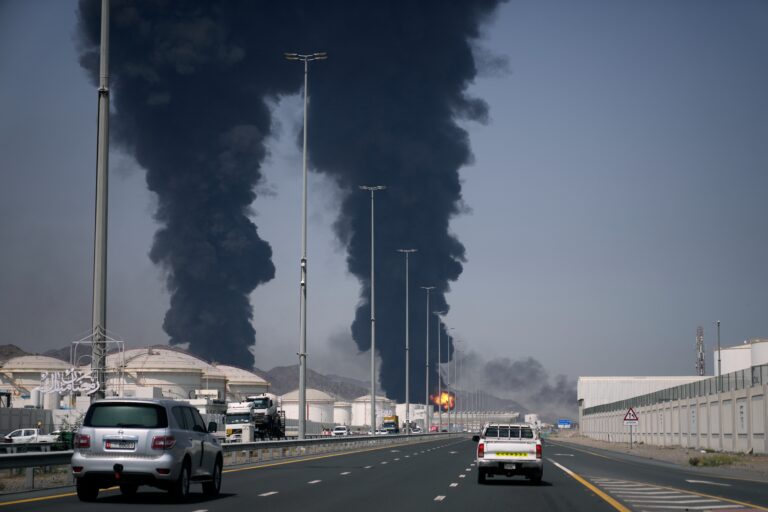
Source of main image: Omri Eliyahu/Shutterstock.

Love C2C Journal? Here's how you can help us grow.

More for you

One Free Miracle: Towards a Theory of Everything

A new year has dawned and, as the light strengthens across the Northern Hemisphere, David Solway reminds us that how we choose to experience our world is at least as important as understanding how it came to be. In the first instalment of this two-part series, the writer illuminated the irreducible paradox at the heart of all theories concerning the universe’s creation, then scrutinized the seemingly unbridgeable gap between quantum physics and the physical world we live in. In Part II he considers an even tougher and, so far, unsolved scientific challenge: gravity. Some of the finest minds in science think it actually is insoluble without some kind of creative intelligence to oversee it. In other words, a miracle. To Solway, the true miracle is the fact of a marvellous world and our freedom to experience and wonder at it.

The Impossible Equation: Seeking a Unified Theory for a Miraculous Universe

We’ve long been told that science and religion occupy two incompatible poles – one of reason and fact, the other of faith, superstition and even irrationality. But what if it isn’t so? In this two-part series, David Solway proposes a new Grand Unified Theory of cosmology aimed at bringing science and religion back together. In the opening instalment, Solway illuminates the irreducible paradoxes at the heart of all theories concerning the universe’s creation, then scrutinizes the seemingly unbridgeable gap between quantum physics and the physical world we live in – a gap that nevertheless is bridged into an integrated and orderly reality. What, then, might this say about the apparently irreconcilable differences between 21st century science and theology? Perhaps, Solway ventures, they’re more like two peas in a pod – and should consider forging a new entente to support humanity’s eternal search for Truth.

Triangulation of Hate: Why Canada Is Choosing to Let Antisemitism Grow

Canada has seen a troubling rise in anti-Semitism in the last two years. Hatred of Jews is now expressed openly, shamelessly, without restraint – and without consequence for those engaged in it. In part one of a two-part series, Lynne Cohen explains why Canada’s political and civic leaders seem unwilling to call out anti-Semitism or take any meaningful action to stop it. Whether driven by bias, cowardice or cold political calculation, the country’s political class is not just failing Canada’s Jewish population. It is choosing to do so. If the brutal massacre of innocent Jews by Muslim terrorists at Bondi Beach in Australia teaches anything, it’s that allowing anti-Semitism to spread has murderous consequences. Canada should take heed.

More from this author

Socialist Shakedown: It’s Finally Time to End Supply Management in Agriculture

U.S. President Donald Trump’s trade policy may be chaotic and punitive, but he’s right about one thing: Canada’s agricultural supply management system has to go. Not because it’s unfair to America, though it is, but because it punishes Canadians. The price-fixing scheme limits consumer choice, requires a huge bureaucracy and prevents farmers from producing more in the face of shortages, forcing them instead to dump excess production. Worst of all, writes Gwyn Morgan, it drives up prices for milk, cheese, chicken, eggs and other essential foods — all for the benefit of a few thousand farmers, largely in Quebec. For Canada’s trade negotiators, argues Morgan, ending this mad racket should be job one.

Climate Climbdown: Sacrificing the Canadian Economy for Net Zero Goals Others Are Abandoning

Climate-obsessed politicians – Justin Trudeau in the vanguard – nearly destroyed the Canadian economy chasing emissions targets that are both unrealistic and pointless. Ottawa and the four biggest provinces have squandered $158 billion to create just 68,000 “clean” jobs. Meanwhile, fossil fuels are supplying a bigger share of Canada’s energy needs than ever. And now, leading U.S. officials and even eco-zealots like Bill Gates are re-evaluating their net-zero ideology. But that hasn’t gotten through to Prime Minister Mark Carney who, warns Gwyn Morgan, intends to inflict further punishment on an ailing country in pursuit of a delusional cause.

Dead Wait: Canada’s Fatal Obsession with Public Health Care

Canada spends more on health care than just about any other country in the world, and with abysmal results. Yet when it comes to fixing the problem, most politicians and policy-makers are immune to common sense. As business leader Gwyn Morgan writes, allowing private options alongside government-funded health care has been proven to help patients in both systems – around the world and here in Canada, too. Yet the courts continued to uphold restrictions on private care while the Mark Carney government simply promises to throw still more money at the problem – showing itself to be as deluded and dogmatic as those who went before.