Stories

She Could Take a Scalp with a Stroke of her Pen

Colman Byfield
August 1, 2014
Western Canada’s Byfield publishing clan is mourning the death of their 85-year-old matriarch, Virginia, who passed away at her home in Edmonton on July 21. A journalist and historian, she was the wife and partner for 65 years of Ted Byfield, founder of the influential Alberta Report group of newsmagazines that championed western, conservative and Christian causes from 1973-2003. Her grandson Colman, son of long-time Alberta journalist and political activist Link Byfield, recalls the turbulent life of an extraordinary woman…
Stories

She Could Take a Scalp with a Stroke of her Pen

Colman Byfield
August 1, 2014
Western Canada’s Byfield publishing clan is mourning the death of their 85-year-old matriarch, Virginia, who passed away at her home in Edmonton on July 21. A journalist and historian, she was the wife and partner for 65 years of Ted Byfield, founder of the influential Alberta Report group of newsmagazines that championed western, conservative and Christian causes from 1973-2003. Her grandson Colman, son of long-time Alberta journalist and political activist Link Byfield, recalls the turbulent life of an extraordinary woman…
Share on Facebook
Share on Twitter

My paternal grandmother, Virginia, once muttered, in sympathetic contemplation of a thistle growing through the flagstones, “Oh, how they struggle,” before tearing it up by its roots.

It was an odd sentiment, but then, in this clan of weirdos and misfits, Grandma was our unquestioned oddball-in-chief. We lost her to cancer on Monday (July 21), and, hard as it to imagine life without her, it’s even harder to imagine a life better lived.

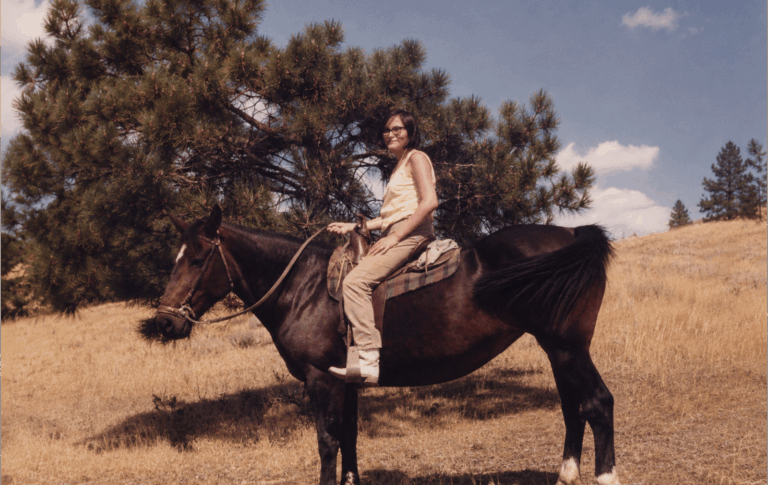
She was born in Albuquerque in 1929. By 1933 her parents had split and dumped Grandma with relatives in Nova Scotia while her mother moved west to catch a new man. Those relatives were mostly lumberjacks, and Grandma’s earliest and perhaps fondest memories were of eastern logging camps.

When her mother finally caught her coveted diplomat, Grandma was dispatched, kicking and screaming, to Ottawa and proper society. But she arrived an irreclaimable tomboy, and no amount of charm-coaching could quite correct her troublesome habit of cursing like, well, a lumberjack.

Ottawa did afford good schools, though, and she matriculated to the University of Toronto on scholarships, where she quickly took over editorship of the institution’s communist rag.

A summer reporting job with the Ottawa Journal introduced her to the news business and Ted, a hot- tempered, hard-drinking young newspaperman harboring (maybe) equally vivid streaks of brilliance and lunacy. Rebuffing Grandpa’s initial, sometimes rather menacing advances, she warmed to and eventually married him to secure a position on the Timmins paper and, according to him, infuriate her mother.

It would prove a surprisingly successful union. Both vaguely atheist when they married, they soon embraced Christianity with a fervor that would define the rest of their lives. They founded three private boys’ schools in three provinces, a chain of influential conservative news magazines, and published a successful book series on the history of Alberta before producing a massive popular history of Christianity entitled simply, The Christians, in their “retirement.” They were sailors as well, and captained their sloop from Vancouver to Nova Scotia via the Panama Canal with a rotating crew of drunks and seasick landlubbers (a hallmark of all of their endeavors).

Along the way, she raised six children, who gave her fifteen grandchildren, who have so far produced six great grandchildren, all lovingly referred to as “little Turks” or “bastards.” The smarter bastards learned to always kiss Grandma hello and beware the tomahawk she kept behind her teeth.

She could indeed take a scalp with a flick of her tongue, or the stroke of her pen. She was a fine writer and reporter, a voracious reader and a razor-sharp editor, feared by old hands across the country, who fondly conjure a chain-smoking matron tearing their copy apart while swilling rye from the bottle.

It’s probably not far off. She spoke perfect English, always, if liberally peppered with profanity, but wasn’t above belching over her beer.

Her conservatism was hard, practical, and she didn’t suffer fools quietly, but was a staunch friend to dreamers, ne’er-do-wells, and winos everywhere. Though she might disagree with or even condemn you, she’d always find you some pity.

Bubbling up unexpectedly through her customary gruffness was a deep humanity, for people, animals, and the occasional weed. Her faith dictated that all people and things have a purpose, but I expect she sensed those purposes are often in direct opposition, and oh, how we sometimes struggle.

Her own struggle is over now. Devout, feisty, and madly in love with her husband until her last days, she died on his dedicated, devastated watch.

Goodbye Grandma. We’ll miss you. But we will struggle on.

~

This article is reprinted with permission from the Edmonton Sun, where Colman Byfield has a weekly column.
Love C2C Journal? Here's how you can help us grow.

More for you

From the Strait of Hormuz to Cuba, Net Zero is Dying – Mark Carney Needs to Let Go

After decades spent pursuing net-zero dreams at great cost to their economies and social fabric, most of the world’s industrialized nations are waking back up. War with Iran and the threat of tanker blockades have everyone worried about oil and natural gas supplies and clamouring for energy security. Or nearly everyone. Not Mark Carney, though. Canada’s prime minister keeps pushing industrial carbon taxes higher and insists on wasting taxpayers’ money on windmills that make no difference. Gwyn Morgan recalls his own observation of the global warming movement’s original rise, its morphing into the radical “net zero” cult – and its spectacular global disintegration. It is high time, Morgan writes, that Canadians demand Carney also drop his delusions.

Busted Flush: Why Your Next Mayor Should Be an Engineer

You drag yourself out of bed for your morning coffee, but the faucet’s dry. And the toilet won’t flush. It’s going to be a really bad day. Beneath our cities lie massive webs of pipes delivering water and removing sewage. They are crucial to our daily lives. But as Greg Wilson reveals, they have been scandalously overlooked and underfunded across Canada. The City of Calgary, C2C Journal found out, has even skimmed more than $1 billion from its ratepayer-funded water utility to spend on other programs. With a spate of recent failures bringing attention to the condition of our local water services, Wilson argues for a dramatic change in priorities at city hall: drop the social engineering and put real engineers in charge.

We Have Ways of Making You Talk: The Tyranny of Land Acknowledgements and Other Compelled Speech

Indigenous land acknowledgements have become so common that many Canadians no longer give them a second thought – simply accepting a kind of tuneless new national anthem before events of all sorts. And that’s why they’re so dangerous. The enforced conformity and compelled speech they depend on are not just threats to individual freedom, writes George Ramsay, they also create a divisive moral hierarchy based on race. In this originally reported story, Ramsay delves into the dangers posed by Canada’s broader shift to enforced verbal compliance, reveals the inspiring stories of a few brave souls who have dared to challenge this social tyranny and offers practical tips on how the rest of us can fight back too.

More from this author

At Last, a Great Canadian War Movie

Paul Gross’ Hyena Road may be the best Canadian war movie ever made. But that’s not saying much because there are so few Canadian war movies, good or bad. Despite our rich military history, Canada’s tiny coterie of government-subsidized moviemakers mostly prefer to create art-house fare, modern urban dramas for the indie-fest circuit. We line up for Hollywood’s inexhaustible supply of American war stories but mostly ignore our own, including Gross’ big, bold, bloody and beautiful account of Canada’s war in Afghanistan. That’s a shame, writes Colman Byfield, because it leaves so many great Canadian stories untold, and weakens our appreciation for the men and women who fight for our country.

Harper vs Notley for the Soul of Alberta

The stunning NDP victory in last spring’s provincial election marked a big leftward shift in Alberta politics. Yet polls consistently indicate another near-sweep of the province for the federal Conservatives this fall. How can this be? On policy and principles, the two parties are as different as night and day. Conservative leader Stephen Harper has made NDP Premier Rachel Notley his primary campaign target in Alberta, blaming her government for making the oil patch recession “much, much, worse”. She coolly replies that Harper is out of touch with the province’s new “values”. Whatever happens October 19, writes Colman Byfield, it won’t end this fight for the political soul of Alberta.

May Day! May Day! Alberta elects the NDP

On the eve of Alberta’s next election here’s an entertaining romp through the last one. Colman Byfield argued that the NDP victory in 2015 was consistent with Alberta voters’ long history of electing big, intrusive governments. Under Social Credit in the 1930s the province started a bank and even invented its own currency. Peter Lougheed’s Progressive Conservative regime bought an airline, created an oil company, and confiscated billions for the Heritage Savings Slush Fund. It was probably inevitable the province would one day elect an actual socialist government. The only surprise, observed Byfield, is how long it took, given how hard the ruling Tory dynasty worked to dethrone itself.