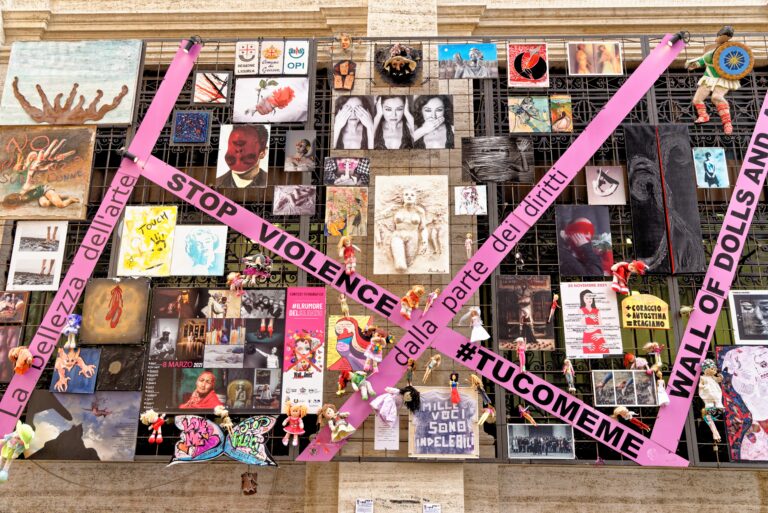

There was another rally on the lawns of Parliament Hill the other day. Three hundred or so protestors gathered in clumps to express their dissatisfaction about something or other. I don’t actually remember the cause. Do you? Probably not. But I do remember there was anger and rage, and spittle flying, as there usually is. There were clenched fists held aloft. There were placards pumping almost in time with chants that almost rhymed. The protesters didn’t stay long. After a few megaphone-muffled speeches the group dispersed to make way for another clutch of disgruntled Canadians, mad about a completely different issue, heading across the grass for the mid-afternoon time slot. I don’t remember what they were protesting either.
In the early 1980s I was very active in the national student movement. I’d somehow persuaded the undergraduates of McMaster University to elect me President of the students’ union. I marched in many protest rallies opposing higher tuition fees, in support of gender equality, against university funding cuts, and demanding more student financial aid. We made angry speeches. We hurled insults at the bastions of power in Ottawa and several provincial capitals. We railed against various tyrannies that simply did not understand, accept, or care about, the plight of the student. That’s what we did back then. We felt like we were doing something, and perhaps even accomplishing something. And maybe we were. Now, all these years later, I’m not so sure. Hindsight is a cruel companion.
Don’t get me wrong. Assembling to raise a flag, or sometimes burn one, for or against a government’s conduct, decision, policy, or legislation, is an inalienable right of citizens in an effectively functioning democracy. I want more young people to get engaged in the democratic process and hold governments’ fee to the fire. In fact, I think our future turns on it. I’m just not sure Canadians, the media, or governments take much notice any more when the protest signs are hoisted yet again and the semi-rhythmic chants begin anew. The rage just washes over us, now. We don’t seem to care much anymore. We’ve heard it all before. Forged in the Sixties, the standard, garden-variety protest rally seems to have lost its lustre after fifty years. I think we’ve grown inured to the anger, the shouting, the signs, and the marching. There must be a better way. And I think there is. Let’s laugh at what threatens us, appalls us, or enrages us. Let’s just laugh at it.
In early 1985, just months removed from my student activist days, I was working on Parliament Hill for a Liberal MP. Somehow I was invited to represent the Young Liberals of Canada at a meeting in Strasbourg, France, of the International Federation of Liberal and Radical Youth (IFLRY). Surely you’ve heard of IFLRY. No, neither had I at the time. But I’m pleased to report they’re apparently still around helping to nurture a progressive and enlightened world view among a new generation of young liberals. Bear with me, now, there is a point to this story.
I was thrilled to be the sole Canadian delegate to this assembly. I’d never been to France, and I was keen to commune with my ideological soul mates from other countries. The meeting was about racism and xenophobia, and was attended by about 60 young liberals from almost every western European nation, all the Scandinavian countries, two from the United States, and me from Canada.
In 1985, despite nearly universal condemnation, Apartheid was still firmly entrenched in South Africa. The keynote speaker at that Strasbourg conference was a man named Donald Woods, the former editor of the Daily Dispatch, a newspaper in the Eastern Cape of South Africa. In the ‘70s Donald Woods befriended Steven Biko, the famed anti-apartheid activist and founder of the Black Consciousness movement. Over time, Woods came to reject Apartheid and became a harsh critic of the government. To make a long but important story short, eventually the police arrested Steven Biko and beat him to death while in custody. When the news broke, Woods was outraged and ran a front-page story featuring a photo of Steven Biko and the headline “A Hero for a Nation”.
As you can imagine, the Afrikaans government was not a fan of Donald Woods. He was summarily banned and had to escape the country to neighbouring Lesotho disguised as a priest.
We all gathered in a meeting room in a Strasbourg youth centre to hear Donald Woods tell his story. We were a pretty well informed group of young Liberals who found Apartheid utterly abhorrent. We were enraged that in the latter part of the 20th century, the government of a seemingly modern and advanced nation could preside over a society where skin pigment was a pillar of public policy. Yet, about two minutes after Donald Woods began his talk, the room was filled with laughter. To be clear, I don’t mean that there was a little smiling, chuckling and giggling. I mean that everyone, yes, all of us, were clutching our abdomens in the throes of unexpected paroxysms of hilarity. Sides were split that day.
Donald Woods told a series of funny stories that powerfully illustrated just how absolutely ridiculous and ludicrous were the pass-book laws and the other statutes of the Apartheid regime. He gave a tour-de-force performance.
I have a vivid memory of thinking to myself, as tears of laughter streamed down my face, “I’m laughing about Apartheid.” I wondered if it were appropriate to be laughing about Apartheid. Shortly thereafter, it dawned on me that Donald Woods wasn’t making us laugh about Apartheid. He was making us laugh at Apartheid.
This was a revelation to me. I accept that it probably should not have been such an epiphany. I was 25 years old, and should have appreciated the power of humour to undermine and challenge the status quo. But until that moment, I really hadn’t. Back then, I was not a big novel reader. I’d missed out on the classic satires that used humour as a trenchant instrument of social comment. I hadn’t read Joseph Heller or Kurt Vonnegut, or Gore Vidal or the other humour heavyweights. So the performance of Donald Woods struck me like lightning. As a group, my fellow young liberals and I were no less motivated to work against racism and Apartheid because Woods had made us laugh at it. In fact, it made us feel stronger. Laughing somehow emboldened us and empowered us to fight the good fight.

After dinner that night, Donald Woods and I stayed up and played pool in the recreation room of that Strasbourg youth centre, and talked until the wee hours. I’ll never forget that encounter and what it meant to me. Before we said goodnight, he told me that Richard Attenborough was going to make a film about Woods’s friendship with Steven Biko, and his escape from South Africa. Two years later, I sat rapt in a darkened Toronto theatre watching Cry Freedom, starring Kevin Kline as Donald Woods and Denzel Washington as Steven Biko.
Donald Woods taught me that when you laugh at an unjust authority you weaken it. When you laugh at a corrupt government, you weaken it. When you laugh at injustice or inequality, you weaken it. When the impact of rage and anger, and chants, and placards, and rallies, and marches, has been softened through repetition, I learned that humour, satire and laughter can be new and powerful forces for social change if wielded with passion and skill.
When I got back to Canada after the conference, I went on a fiction reading binge. I read every satirical or comic novel I could lay my hands on. Not all of them took aim at righting wrongs, but many did. I loved laughing while I read. It was a new experience for me. I’d found my chosen literary fare.
I didn’t write my first novel, The Best Laid Plans, until 20 years after that fateful encounter in that French town near the German border. Yet, in a way, the fingerprints of the now late Donald Woods are all over that novel. I’d written a funny story about the sorry state of politics in Canada. If I’d written a rage-filled, non-fiction polemic railing against my dissatisfaction with the uber-partisan, ultra-negative, deeply personal nature of politics today, no one would have published it and no one would have read it. So I cloaked my ideas in a comic tale and put my thoughts in the minds and mouths of some characters readers might come to like and even care about. While I’m always thrilled to hear that readers have enjoyed and laughed their way through the novel, I’m always even more fulfilled if they have given passing thought to the more serious issues I’ve tried to illuminate underneath the fun.
There are several scenes that play out in my first two novels in the seat of our parliamentary democracy, the House of Commons. It seems that humour in the Commons may only appear in fiction. In real life, you seldom feel the urge to laugh, or even smile when watching the televised proceedings in the House. The urge to bang your head on a nearby coffee table is more likely.
Don’t you think we need more humour in the House of Commons? It used to be that most Canadians, if pushed, would choose watching Question Period over having a root canal. Nowadays, I’m not so sure. It’s usually such a dreary, tedious and stultifying exercise with members of all parties apparently honouring the no-humour zone in the House. It’s unnatural. I’m quite sure that safely concealed beneath the partisan armour each MP dons before entering the House, at least some MPs actually do have a sense of humour. Why not let it loose a bit more while in the chamber? I don’t mean MPs and ministers in the Commons should start playing the stand-up whenever they, er, stand up. But they might at least recognize that a wit-laced jab can be just as potent as a rage-tinged epithet. And it’s a hell of a lot more interesting for those who may stumble upon the Parliamentary channel as they move up the dial from TSN to Sportsnet. Humour lightens the load and inflicts perspective. We need more of it. Lots more of it. Why not give it a try.
I’m sure right about now, yet another demonstration is amassing on Parliament Hill. More power to them. If I believe in a cause, I will always support groups who want to demonstrate on Parliament Hill or in front of provincial legislatures. Hell, on some issues, I’ll be right there with them. There will always be a place for that brand of dissent. But I think it’s time we considered adding the humour arrow to the quivers of the advocate and the activist. It may even be more effective at mobilizing Canadians, challenging authority, and effecting social change.
So let’s not only rage against that which is unjust, let’s laugh at it.
~
Canadian writer and public relations consultant Terry Fallis won the Stephen Leacock Memorial Medal for Humour in 2008 for his debut novel The Best Laid Plans and again in 2015 for his novel No Relation.