
Free trade has divided Canadians since the days of Confederation, with one side worrying about falling under the influence of our large southern neighbour and the other side trumpeting the benefits for economic growth. In Quebec, even the separatist Parti Québécois has tended to support free trade, if only because it makes the province less dependent on the rest of Canada. That might change, however, now that the federal NDP has made such significant inroads in la belle province.
When the Mulroney government ran for re-election in 1988, the main focus of the campaign was the signing of the free trade agreement between Canada and the United States. It was an issue that sharply divided the country. In the red corner stood the provinces and political parties that were against free trade, and in the blue corner, those who were in favour.
Those in the red corner believed in protectionism because they were afraid of the economic and cultural power of the United States. During the federal campaign’s English debate on October 25, 1988, Liberal leader John Turner worried aloud about “the north-south influence of the United States,” and he was convinced free trade would reduce Canada “to a colony of the United States.” Sir John A. Macdonald had expounded similar annexationist fears in 1891 in his contest against free trade advocate Wilfrid Laurier.
In the blue corner with Brian Mulroney were two provinces: Québec and Alberta. Like Laurier before them, the blue corner saw the free trade agreement as it was and is: an incredible opportunity for business and an engine for economic growth.
Québec and Alberta had different reasons for being in the blue corner. As the Montreal Economic Institute explained in a recent research paper titled “A Plea for a Quebec-Alberta Dialogue”: “Albertans … have long been in favour of free trade with the United States, particularly in reaction to Canadian protectionism that was perceived as having favoured the country’s Eastern provinces since the end of the 19th century.” (p. 14)
Politicians in Québec stood for free trade for a variety of reasons. The provincial Liberal Party, the perceived right-wing political formation with a business agenda, favoured free trade mainly for economic reasons. However, the Parti Québécois (PQ), the separatist party, also favoured free trade, one reason being that “a free trade agreement with the United States had the advantage of making the Québec economy less dependent on the rest of Canada, therefore facilitating the road to political independence.” (p. 14) So, in Québec, most political leaders understand the benefits of free trade, and whether they want economic growth or to move on politically, the U.S. market (and now the European market) was and is seen in a positive light.
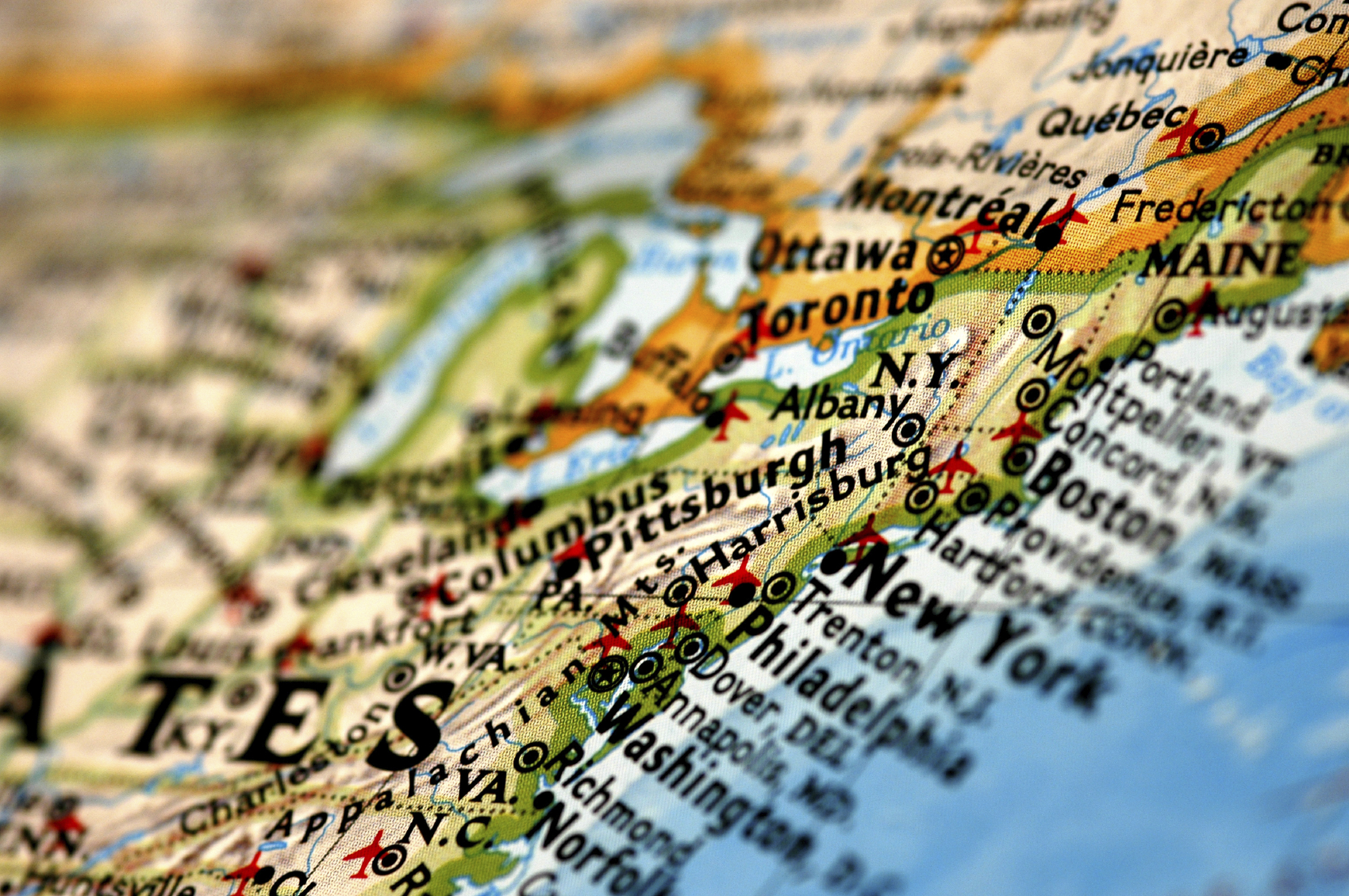
This might change in the coming years, however, if the NDP increases its political influence in la belle province. As we wrote in the Washington Examiner a few months ago, the last federal election was a political tsunami, especially in Québec. Before the last federal election, the NDP had only one seat in Québec, held by Thomas Mulcair. When the winner was declared on the evening of May 2, the NDP had catapulted to 59 seats in the province (and 102 across the country). If this election was just an aberration, the NDP will not have gained much more influence than it had before the last election. But if the NDP remains a strong political voice in the province, Québec might move to the red corner of the free trade debate before long.
The NDP promotes more of a radical left political agenda than many other left-leaning parties we have seen in this province, at either the federal or the provincial level. In many provinces, the NDP has formed the provincial government or the Official Opposition and it has fared relatively well in federal elections, too. In Québec, this was never the case before May 2, 2011. Not only was this a first in Canadian history, but now the majority of NDP MPs are from la belle province.
One possibility is that the policies that will be promoted by the Québec delegation of the NDP will follow in the footsteps of other well-known left-leaning political figures who, like former Québec premier and PQ leader Bernard Landry, believe in government intervention yet also understand the benefits of free trade. The overall anti-free trade position of the NDP might soften as a result.
But there are cultural and political reasons to doubt that this will be the case. Culturally speaking, the NDP has no deep roots in Québec, and the intellectual influence behind many of the decisions backed by Québec NDP MPs will therefore not come from years of NDP presence in the province but rather from the NDP’s political tradition that was set outside of Québec. And outside of Québec, the left is against free trade. As International Trade Minister Ed Fast argued in a speech to a Montreal business audience this past September, the NDP usually flies under the banner of “fair trade,” but the result is always NDP opposition to Canada’s trade agreements, as when the party filibustered the ratification of the Canada-Columbia Free Trade Agreement in 2009.
Politically speaking, given the sheer number of NDP MPs elected in May, it is impossible for their decision-makers not to listen to Québec’s demands. And Québec does want free trade. An April 2009 Harris-Decima poll found that 73 per cent of Quebeckers thought Canada “should pursue the establishment of more free trade agreements,” tied for first place among the provinces and slightly ahead of the Canadian average of 70 per cent. (Ontario brought up the rear at 65 per cent.)
But what will this political influence amount to when the vast majority of the Québec delegation is made up of people with little to no political experience? Of course, there are a few in the bunch with more experience, such as Thomas Mulcair. But will Mulcair be promoting free trade with the European Union now that he is seeking the NDP’s national leadership? We will see in the coming weeks, but NDP supporters in the rest of the country would not look kindly on the party’s Québec wing advocating freer trade and less regulation of economic activities.
Supporters of the federal Bloc Quebecois were also very likely to support free trade. As the Harris-Decima poll mentioned above showed, they supported free trade as much as Conservative supporters (76%), and far more than NDP supporters (64%).
Given the NDP’s historic surge in May, however, the province’s political landscape has changed. With 59 seats, the NDP has five more Québec seats than the Bloc ever had and 10 more than the Bloc had in the last parliament. If the NDP influences the left in Québec more than vice versa – through efforts to oppose a trade deal with the EU, for example – the province’s tradition of solid support for free trade, which dates back to Quebecer Wilfrid Laurier, might wind up being outdated.
The opinions expressed in this text do not represent those of anybody except the authors themselves.