Property Rights

What’s Yours is Ours: Why Canada’s Charter Ignores Property Rights and What That Means for Everything You Own

Peter Shawn Taylor
January 20, 2026
“The whole meaning of life,” famed comedian George Carlin once observed, “is trying to find a place for all your stuff. That’s what your house is, it’s a place for your stuff with a cover on it.” If so, then Canadians should be very concerned about their stuff. Unlike nearly every other modern nation, Canada lacks constitutional affirmation of the right to own property and as protection against its unjust seizure. With a recent B.C. Supreme Court ruling putting the very notion of home ownership at risk, Peter Shawn Taylor seeks out legal opinions on Canada’s surprisingly lax attitude towards property rights, how it differs from other countries and what that means for everyone’s possessions. If Canadians really want to protect their homes, belongings and personal finances, Taylor concludes, now’s the time to get loud.
Property Rights

What’s Yours is Ours: Why Canada’s Charter Ignores Property Rights and What That Means for Everything You Own

Peter Shawn Taylor
January 20, 2026
“The whole meaning of life,” famed comedian George Carlin once observed, “is trying to find a place for all your stuff. That’s what your house is, it’s a place for your stuff with a cover on it.” If so, then Canadians should be very concerned about their stuff. Unlike nearly every other modern nation, Canada lacks constitutional affirmation of the right to own property and as protection against its unjust seizure. With a recent B.C. Supreme Court ruling putting the very notion of home ownership at risk, Peter Shawn Taylor seeks out legal opinions on Canada’s surprisingly lax attitude towards property rights, how it differs from other countries and what that means for everyone’s possessions. If Canadians really want to protect their homes, belongings and personal finances, Taylor concludes, now’s the time to get loud.
Share on Facebook
Share on Twitter

Why do governments exist? There must be a more convincing reason than simply providing well-paid jobs for folks who enjoy bossing others around. Many of history’s greatest thinkers have wrestled with the essential question of why anyone would give up a life of pure freedom to live under another’s thumb. John Locke, the 17th century English philosopher widely regarded as the father of classical liberalism, offered one of the most convincing answers in his Second Treatise on Government written in 1690.

Despite the obvious benefits of true liberty, Locke observed, a life of unfettered individualism “is full of fears and continual dangers.” To protect oneself and one’s belongings, it is necessary to join in society with others for everyone’s mutual protection. As Locke famously concluded, “The great and chief end therefore, of Mens uniting into Commonwealths, and putting themselves under Government, is the Preservation of their Property.” [Emphasis in original.]

To summarize Locke, the single greatest task of any government is to protect its constituents’ property against the threat of loss. And by this timeless and most basic measure of competence, Canadian governments are failing miserably. Nowhere is the failure more obvious than in Richmond, British Columbia.

What are governments good for? Writing in his Second Treatise on Government, John Locke, the father of classical liberalism, famously noted that the “great and chief end” of governments is to ensure “the Preservation of their [citizens’] Property.”What are governments good for? Writing in his Second Treatise on Government, John Locke, the father of classical liberalism, famously noted that the “great and chief end” of governments is to ensure “the Preservation of their [citizens’] Property.”

The much-discussed Cowichan Tribes v. Canada ruling last August threatens to upend the very foundation of Canadian property law. According to B.C. Supreme Court Justice Barbara Young’s judgment, an 1859 surveying error that overlooked an abandoned seasonal native fishing camp in what is now Richmond meant that a plot of nearly 800 acres along the Fraser River should never have been declared Crown land nor subsequently sold to private citizens. Young ruled the land therefore remains subject to aboriginal title in addition to the fee simple tenure granted to anyone who buys land in Canada. Further, she declared this to be a “senior and prior interest” because of its connection to Section 35 of Canada’s Constitution Act, 1982, which protects “existing” Indigenous rights. While the case is being appealed, the process will almost certainly take years and the outcome remains uncertain.

For now, Young’s ruling has unleashed an existential crisis among property owners in Richmond and something close to panic for homeowners elsewhere in the province. The Cowichans’ lawyer has informed residents living on the disputed land that they cannot sell, renovate or otherwise alter their property without permission from native leadership. A developer planning a warehouse project in the area has seen prospective lenders and tenants flee due to “uncertainties and risk allocation issues.” The situation has even attracted international attention, with the Wall Street Journal asking, “Do Property Rights Still Exist in British Columbia?” Attempting to quell these worries, the province has offered a $150 million backstop to local owners, but experts say it could take as much as $1 billion to properly shield their interests.

An existential crisis unleashed: The 2025 Cowichan Tribes v. Canada ruling that affirmed aboriginal title over nearly 800 acres of riverfront land around Richmond, B.C. set off panic among local property owners and spurred international media attention. At top, the area allegedly once occupied by the Cowichans; at bottom, a recent headline in the Wall Street Journal. An existential crisis unleashed: The 2025 Cowichan Tribes v. Canada ruling that affirmed aboriginal title over nearly 800 acres of riverfront land around Richmond, B.C. set off panic among local property owners and spurred international media attention. At top, the area allegedly once occupied by the Cowichans; at bottom, a recent headline in the Wall Street Journal. (Source of top map: Capital Daily)

“Aboriginal title is now a constitutionally protected right as the B.C. court said it trumps private individuals’ fee simple ownership,” observes Bruce Pardy, a law professor at Queen’s University and executive director of the think tank Rights Probe. “This potentially means you do not have exclusive rights to your property.” Such ambiguity is not restricted to B.C.; it is conceivable that future courts could rule aboriginal title is similarly lurking in various other places across the country. “It opens up a huge can of worms,” says Pardy in an interview. “And the courts are the ones holding the lid.”

While a subsequent New Brunswick court case has since cast doubt on the coherence of Young’s legal logic, for the first time in Canadian jurisprudence the permanence of fee simple tenure has been called into question. Locke’s “great and chief aim” of the protection of personal property has come a cropper.

Not just land is at stake: Across a wide range of policies and government activities, Canadians are seeing their property rights eroded. Shown, Freedom Convoy organizer Chris Barber and his truck “Big Red”, which the federal government sought to confiscate.
xNot just land is at stake: Across a wide range of policies and government activities, Canadians are seeing their property rights eroded. Shown, Freedom Convoy organizer Chris Barber and his truck “Big Red”, which the federal government sought to confiscate. (Source of photo: Falice Chin/CBC)

Yet it’s not as if Canadian governments were fulfilling Locke’s prime directive prior to Young’s ruling. “Cowichan is not a break from the past,” stresses Pardy. Rather, he says, it is simply the latest and most glaring example of a decades-long process that has seen a gradual diminution in the fundamental rights of property owners in Canada. As governments increasingly embrace communitarian or social-democratic principles, the ability of individual Canadians to control what happens to their land and possessions has been steadily eroded. It has reached the point, in fact, that governments can now come after a citizen’s most important possession simply to make a political point. The extended legal battle over Freedom Convoy organizer Chris Barber’s truck “Big Red” is a notorious example of this alarming tendency.

Where does the blame lie? A good place to start is the Canadian Charter of Rights and Freedoms, the alleged protector of all Canadians’ fundamental rights.

Unique, But Not in a Good Way

Scan the constitutions of the world’s liberal democracies and you will find a few things in common. In most countries this includes a list of the specific rights and freedoms guaranteed to all citizens – a list that typically includes the freedom of speech, of religious belief and conscience, and of association and assembly, as well as the right to judicial fairness, to own property and to be protected against its unlawful seizure. The U.S. Constitution takes a somewhat different perspective by asserting that these rights inhere in the individual and therefore don’t need to be listed one-by-one, although the effect is the same.

In Canada, however, property is entirely absent from the Charter. The only constitutional mentions of the word in the original British North America Act of 1867 refer to the landholding requirements for potential Senators and the federal-provincial division of powers, neither of which have anything to do with Canadians’ individual rights.
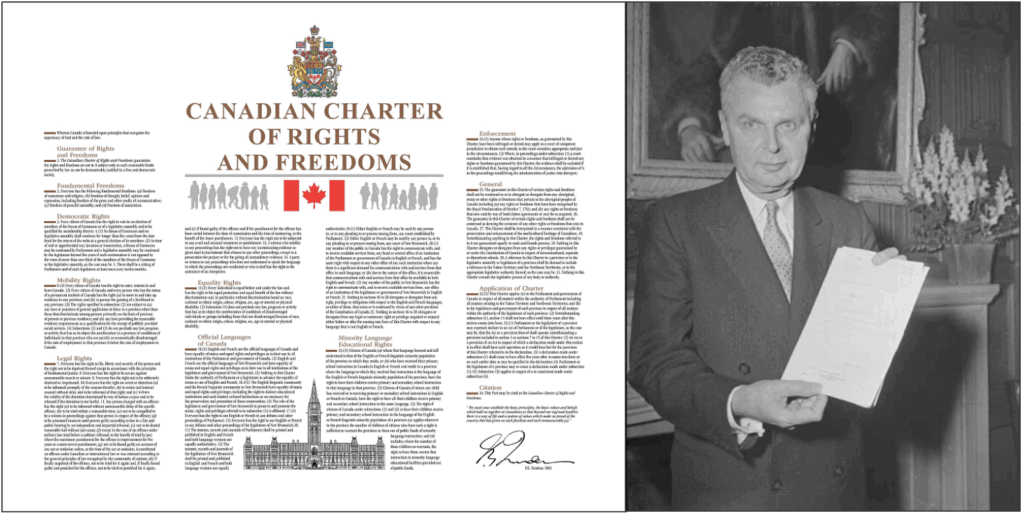
What’s missing? Prime Minister John Diefenbaker’s 1960 Bill of Rights protected the property rights of Canadians. That protection disappeared with the promulgation of the Canadian Charter of Rights and Freedoms in 1982, leaving Canada as one of the few Western democracies with a constitution that doesn’t mention property. At right, Diefenbaker in 1958 holding an early copy of the Bill of Rights. What’s missing? Prime Minister John Diefenbaker’s 1960 Bill of Rights protected the property rights of Canadians. That protection disappeared with the promulgation of the Canadian Charter of Rights and Freedoms in 1982, leaving Canada as one of the few Western democracies with a constitution that doesn’t mention property. At right, Diefenbaker in 1958 holding an early copy of the Bill of Rights. (Source of right photo: Library and Archives Canada)

This absence of private property rights in Canada’s Constitution is a “surprising” state of affairs, admits University of Saskatchewan constitutional lawyer Dwight Newman in an interview, adding, “it certainly makes us an outlier.” Among the 38 OECD nations, only Canada and New Zealand lack explicit constitutional protection for property rights. Even unrepentant communist countries such as North Korea and China pay lip service to the notion that their subjects have a right to own things.

This gap between Canada and its peers is a relatively recent development. Canadian common law can be traced back to the Magna Carta of 1215, which famously protected the lands of English barons from unjust seizure by King John. In 1960, Prime Minister John Diefenbaker’s Bill of Rights made this legal tradition explicit by establishing a legislative guarantee of the “right of the individual to life, liberty, security of the person and enjoyment of property, and the right not to be deprived thereof except by due process of law.” Such statutory wording is similar to property rights clauses found in the constitutions of most other Western nations.

The Fifth Amendment to the Constitution of the United States of America, for example, reads, “No person shall be…deprived of life, liberty, or property without due process of law.” Mexico’s constitution states, “No person shall be deprived of life, liberty, property, possessions, or rights without a trial by a duly created court.” France’s Declaration of the Rights of Man says much the same thing, but with more Gallic drama: “Since the right to Property is inviolable and sacred, no one may be deprived thereof, unless public necessity, legally ascertained, obviously requires it, and just and prior indemnity has been paid.” While situations will inevitably arise that require the use of private property for the public good – building a highway, for example, or fighting a forest fire – the purpose of constitutional guarantees against unjust government “takings” is to ensure this cannot be done on a whim or without fair compensation.

Yet Canada has always lacked explicit constitutional recognition of both the right to own property and to protect against its unfair seizure. This is because the Charter, promulgated in 1982 by the Liberal government of Prime Minister Pierre Trudeau as part of the patriation of Canada’s Constitution and as a replacement for Diefenbaker’s Bill of Rights, is silent on the issue of property rights. Over time, the Charter has gradually subordinated Canada’s traditional common law protection for property, which Diefenbaker sought to enshrine. The reasons for this absence will be discussed later. First, the effects it’s having on Canadians and their belongings.

“One of the basic ideas of Western liberal democracy”: Rights Probe executive director and Queen’s University law professor Bruce Pardy warns that protecting property owners’ rights is fundamental to modern life.
x“One of the basic ideas of Western liberal democracy”: Rights Probe executive director and Queen’s University law professor Bruce Pardy warns that protecting property owners’ rights is fundamental to modern life.

Your Property is at Risk

“Property is one of the basic ideas of Western liberal democracy. It is also fundamental to our economic system,” says Pardy. “If you don’t have security of property, you don’t have much.” Without explicit constitutional limits, he warns, Canadian governments “can take your land and give you nothing, if that’s what they decide they want to do.” And across Canada, that’s exactly what many governments do.  

Eight provinces, including Ontario, Quebec and B.C., have given themselves the authority to seize private property through civil forfeitures. This process was originally meant to prevent convicted criminals from profiting from any ill-gained goods. More recently, however, the practice has proliferated into a convenient source of government revenue. Because forfeiture orders are based on civil rather than criminal law, there’s no requirement that the individual who stands to lose his or her property be found definitively guilty of anything. The mere fact their property was involved in some criminal act is often sufficient. This means presumptively innocent landlords can have their properties seized because of what their tenants did. Even worse, a recent addition to Quebec’s forfeiture law automatically assumes all cash sums greater than $2,000 are evidence of illegal activity unless proven otherwise. “It is appalling,” says Pardy of the lack of proper constraints on civil forfeitures.

Even this is small potatoes, however. The full scope of governments’ ability to take away a Canadian citizen’s legally-held property was revealed during the 2022 Freedom Convoy protests. Once the Liberal government of Prime Minister Justin Trudeau invoked the Emergencies Act (unconstitutionally, as it turned out) it then set about freezing protestors’ bank accounts and other financial assets – dramatically interfering with their ability to access their own property and engage in economic transactions critical to their lives, such as paying bills.
“The freezing orders extended to joint account holders and family members who had no involvement in the protests, depriving them of access to their own money without any process to contest their inclusion,” points out Paul Warchuk, a law professor at the University of New Brunswick, in a recent Macdonald-Laurier Institute paper on property rights. Warchuk calls these actions “a complete deprivation of property based on suspicion alone.”

A similarly authoritarian attitude pervades a variety of other government policies, most notably in the housing sector. Rather than allowing the housing market to function as it should through the interaction of supply and demand, governments at all levels seek to interfere with the rights of property owners. Rent control removes the ability of landlords to charge market rates. “Renoviction” and “demoviction” bylaws prohibit landlords from removing tenants in order to renovate or demolish apartments they own, subordinating the owner’s rights to those of tenants. Vacant homes taxes deliberately punish anyone who wants to own more than one home for whatever reason. Inclusionary zoning requirements force property owners to build below-market apartments against their wishes.

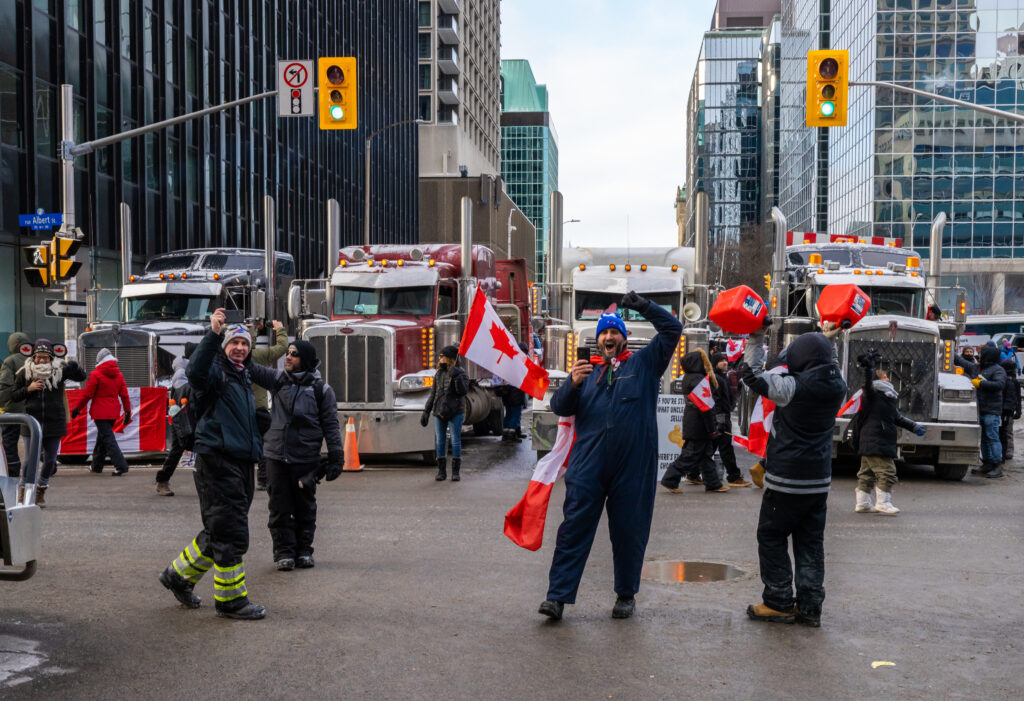
How far will Ottawa go in taking your stuff? After invoking the Emergencies Act in February 2022, the federal government froze the bank accounts of Freedom Convoy protestors and their relatives. University of New Brunswick law professor Paul Warchuk calls the move “a complete deprivation of property based on suspicion alone.” How far will Ottawa go in taking your stuff? After invoking the Emergencies Act in February 2022, the federal government froze the bank accounts of Freedom Convoy protestors and their relatives. University of New Brunswick law professor Paul Warchuk calls the move “a complete deprivation of property based on suspicion alone.” (Source of photo: Maksim Sokolov (Maxergon), licensed under CC BY-SA 4.0)
Housing policy in Canada today can be loosely summarized as governments inventing new ways to interfere with property owners’ rights. “It is a reflection of how socialist Canada has become,” says Pardy. “We are doubling down on a dumb idea: that restricting property rights is the best way to get more housing built. [But] as soon as you start interfering with those rights, you no longer have a real market.”

The 2025 federal budget provides further unsettling evidence of the disdain in which Ottawa holds the rights of property owners. A proposal for a high-speed rail line through Ontario and Quebec, for example, exempts VIA Rail from the federal Expropriation Act. This means any land VIA wants for its boondoggle-in-the-making can be seized without having to make a market-value offer. It also blocks owners from doing any work on their land for up to four years while the government decides if it wants their land, and gives VIA a right of first refusal. “VIA will be able to take your land, freeze your property and cancel your sale agreements, all without negotiation,” MEI senior policy analyst Gabriel Giguère explained in a news release. “Steamrolling property owners is no way to treat Canadians.”

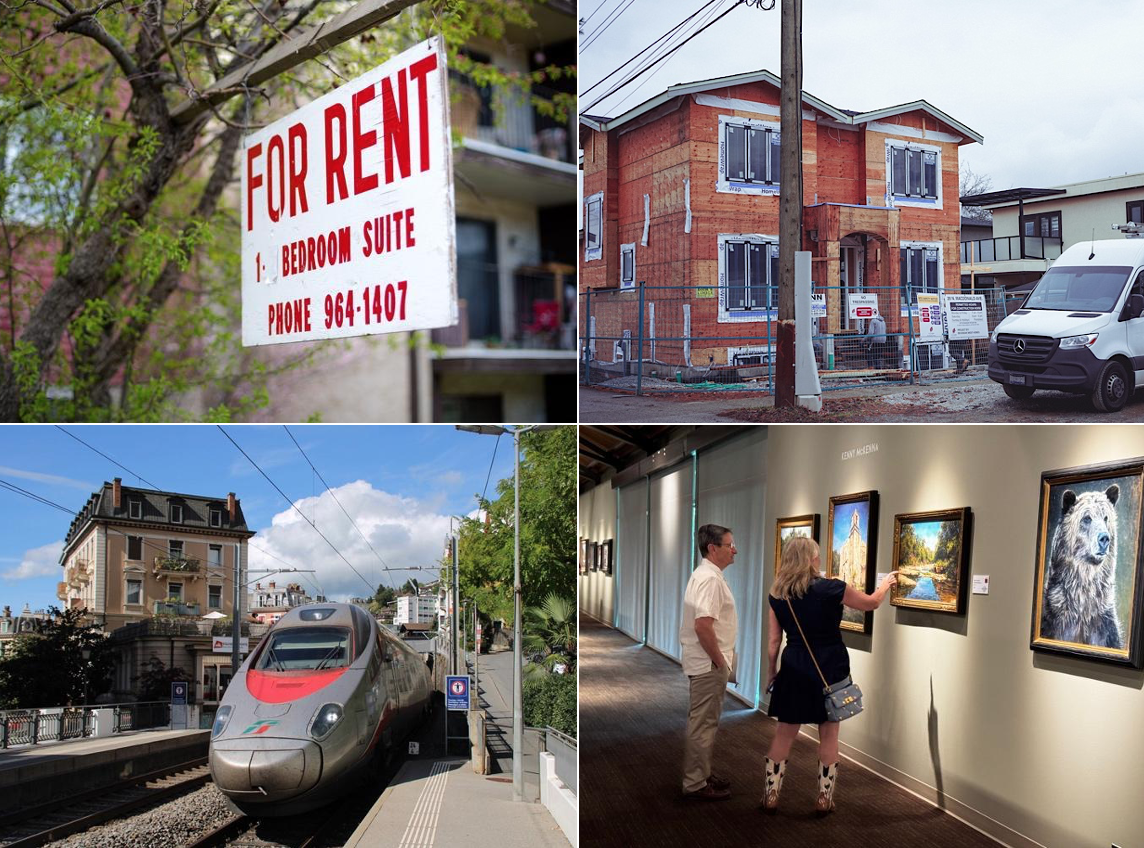
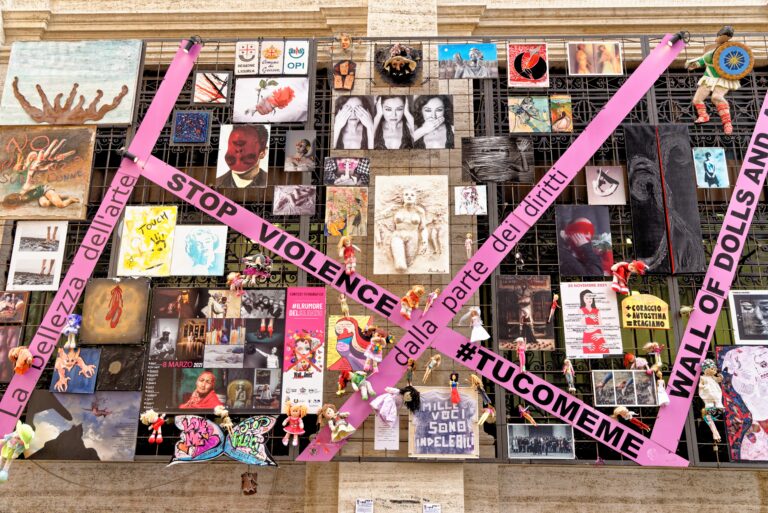
Steamrolling property owners everywhere: Housing policies such as rent control, inclusion zoning, vacant homes taxes and renoviction bans subvert the rights of Canadian property owners. Other recent rights-impeding innovations include plans to exempt a proposed high-speed rail line from the federal Expropriations Act and changes to the Copyright Act that will allow artists to retain a permanent share of any work they sell.Steamrolling property owners everywhere: Housing policies such as rent control, inclusion zoning, vacant homes taxes and renoviction bans subvert the rights of Canadian property owners. Other recent rights-impeding innovations include plans to exempt a proposed high-speed rail line from the federal Expropriations Act and changes to the Copyright Act that will allow artists to retain a permanent share of any work they sell. (Sources of photos (clockwise starting top left): Kurayba, licensed under CC BY-SA 2.0; Unsplash; Facebook/The Briscoe Western Art Museum; David Lassen)

A more obscure section of the 2025 Budget amends Canada’s copyright law so that creators of physical artworks such as paintings and statues will be entitled to a portion of all future resales of their art by third parties. Even after selling their work to an arm’s-length buyer, the artist effectively retains a permanent ownership share; it will thus become impossible for anyone to ever fully own a work of art. While this new quirk may pale in comparison to the situation homeowners face in Richmond, it is yet another example of the erosion of ownership rights as a concept in Canada. “If you can’t do with your own property whatever you want – if it needs to be regulated and inspected and approved and controlled and taxed by government – then we are just pretending we have a full range of property rights,” gripes Pardy.

How We Got Here

Since the shaky state of property rights in today’s Canada can be traced back to the fateful decision to leave them out of the Charter in 1982, does that make former Prime Minister Pierre Trudeau the villain of this tale? Not exactly. The full story is a bit more complicated than that.

“Trudeau was very open to including property rights” in the Constitution, Newman explains. As federal Minister of Justice in 1968, Trudeau published a monograph on a potential charter that included a property rights clause similar to Diefenbaker’s Bill of Rights. Early drafts of the Charter did likewise. It was only in the final stages of the drafting process that property rights disappeared. As Newman explains in a much-cited 2015 article in Alberta Law Review (co-authored with Lorelle Binnion), the reasons for the absence are twofold: political trends and happenstance.

This B.C. Supreme Court ruling has caused great uncertainty regarding fee simple ownership because the judge ruled that aboriginal title can exist at the same time as fee simple on the same piece of property. The judge also said that aboriginal title is a “senior and prior interest” that potentially trumps the ownership rights of private citizens. In Richmond, B.C., this has led to a situation where homeowners have been told they cannot sell or alter their property without permission from Cowichan tribal leaders.

With regard to the first reason, Newman explains that property rights were not a top-of-mind topic at the time. “The political focus of the day was on equality rather than liberty,” he recalls, noting that the key contemporary issues involved distributive policies such as expanding the welfare state and imposing wage and price controls. Further, several premiers were concerned that a federal constitutional safeguard for property rights would erode their ability to enact statist policies. Prince Edward Island, for example, worried about the impact on efforts to limit land purchases by non-Islanders. Saskatchewan’s NDP government felt the same about its plans to nationalize the natural resource sector. The federal NDP, meanwhile, considered property rights anathema to its socialist ideology.

For Trudeau, while he recognized a need for property rights, they weren’t a hill he was prepared to die on. And in the face of concerted opposition, he decided to toss the concept overboard to ensure the rest of his Charter passed federal and provincial muster. That’s one version of the story.

University of Saskatchewan law professor Dwight Newman says Prime Minister Pierre Trudeau was initially open to including property rights in the Charter, but circumstances intervened. University of Saskatchewan law professor Dwight Newman says Prime Minister Pierre Trudeau was initially open to including property rights in the Charter, but circumstances intervened.
In the footnotes of Newman’s 2015 article, however, a different tale plays out. In the same way that a nasty bout of hemorrhoids allegedly prevented Napoleon from sitting on his horse at Waterloo and accurately assessing the battle, a series of minor mishaps and coincidences during the harried Charter negotiations played an outsized role in shaping its final form.

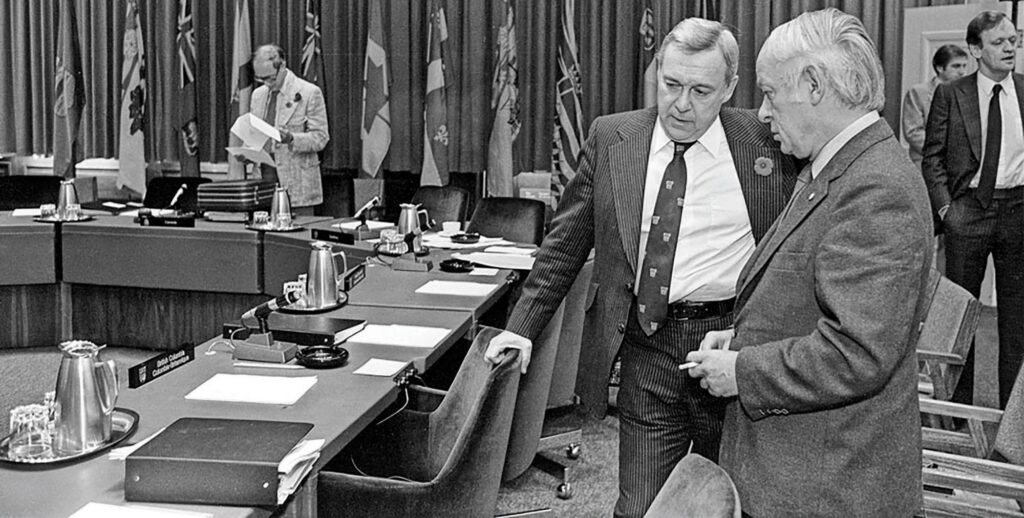
Saskatchewan premier Allan Blakeney, for example, was apparently wavering in his objection to property rights as negotiations reached their climax. During a crucial weekend in mid-January 1981, however, he was holidaying in Hawaii and difficult to reach. Trudeau had promised to call him to discuss property rights but the prime minister’s car got a flat tire while driving from Montreal to Ottawa and he never made contact. According to Newman’s sources, Blakeney’s view hardened after that missed call; a few days later Saskatchewan declared it would only support a Charter without property rights.

Another curiosity is that the Charter’s Section 33, aka the Notwithstanding Clause, would have easily assuaged the premiers worries about the impact of property rights by providing an escape hatch for provincial policies. Unfortunately, Section 33 wasn’t conceived until November 1981 – after property rights had already been removed. “Had the premiers been able to look at the whole final text, then property rights might have seemed less worrisome,” adds Newman.

Following the Charter’s adoption, the federal Progressive Conservatives twice tried to amend the Constitution to return property rights to their proper place in Canada’s legal firmament. The amending process proved so arduous that neither effort got very far.

Amid the hectic wheeling and dealing of Charter negotiations, property rights were dropped in order to assuage the premiers. As Newman observes, however, the later inclusion of Section 33, the Notwithstanding Clause, would have satisfied provincial complaints about property rights. Shown, Canada’s premiers conferring at a constitutional conference in 1981.Amid the hectic wheeling and dealing of Charter negotiations, property rights were dropped in order to assuage the premiers. As Newman observes, however, the later inclusion of Section 33, the Notwithstanding Clause, would have satisfied provincial complaints about property rights. Shown, Canada’s premiers conferring at a constitutional conference in 1981. (Source of photo: CBC)

In grappling with today’s direct challenge to the validity of property titles, Newman suggests one option could be for individual provinces to use the amending formula in Section 43 of the Constitution Act, 1982 to add property rights protection within their own boundaries. B.C., for example, could declare that fee simple ownership supersedes aboriginal title in its province. Section 43 has been used in the past to make province-specific constitutional amendments, such as removing the obligation to fund religious schools in Quebec and Newfoundland and Labrador. Perhaps, offers Newman, it could be used to insert property rights into the Constitution in piecemeal fashion; it is unclear if such a manoeuvre would pass legal scrutiny.

The 2025 federal budget disregards property rights in several ways. Most notably, it exempts plans for a high-speed rail in Ontario and Quebec from the federal Expropriation Act. The government can thus seize any land it wants for this project without having to make a market-value offer. It can also freeze a citizen’s ability to work on their own land for years while the state decides if it wants to buy their property. The budget also proposes to amend federal copyright legislation to require that artists receive future royalties from the sale of their work, even if those works have been legitimately sold to third-party buyers.

The American Experience

Whether the result of political destiny or random chance, the absence of property rights in the Charter is a fact of life for Canadians. But what if Trudeau hadn’t gotten a flat tire? Or what if Section 33 had been dreamt up a few months earlier? Experience from other countries offers some clues to life with a property rights clause.   

Eric Claeys is a law professor at George Mason University in Virginia and author of the 2025 book Natural Property Rights. Its purpose, he says in an interview, is to establish a legal foundation for property rights grounded in the work of natural law philosophers such as Locke and Thomas Aquinas. This is meant as a corrective to the ad hoc manner with which property rights are currently treated in the U.S.

Back to basics: In his recent book Natural Property Rights, Eric Claeys, a law professor at George Mason University, proposes a legal premise for property rights based on the foundational writings of Locke and Thomas Aquinas. Back to basics: In his recent book Natural Property Rights, Eric Claeys, a law professor at George Mason University, proposes a legal premise for property rights based on the foundational writings of Locke and Thomas Aquinas.

After introducing Locke’s “great and chief aim” of government on his book’s first page, Claeys immediately turns to the infamous Kelo v. City of New London case of 2005 that still casts a large shadow over property rights throughout the U.S. In Kelo, the U.S. Supreme Court permitted the city of New London, Connecticut to expropriate private homes in order to give them to a development company planning to build a pharmaceutical plant. There was no evidence that infringing on the homeowners’ property rights in this way was in the public interest. Nor was it for a public work like a road or bridge. The court simply accepted that helping out the developer in this way would boost the local economy. Critics pointed out such a flaccid standard could justify almost any government taking, essentially rendering Fifth Amendment property rights meaningless.

“It turns out property rights are not guaranteed in the way most people thought they were,” observes Claeys. Despite the alleged protection of the Constitution, the U.S. court system approved a patently unjust seizure of private property. “Kelo shocked a lot of people,” he says, “and that made them more vigilant.” While the seizure was allowed to proceed, the larger result was a huge public and media outcry that saw many key municipal and state legislators involved in Kelo voted out of office. Across the country, more than a dozen states amended their constitutions to explicitly forbid Kelo-type seizures while almost every state tightened the rules of eminent domain that facilitate expropriation by the sovereign authority.

The full lesson of Kelo, Claeys says, is that the courts are far more important to the protection of property rights than the wording of any constitutional clause. (Which is why property rights are wholly fictitious in China and North Korea, despite what their constitutions say.) The only reliable protection of owners’ rights lies in a constant dialogue between the electorate and their elected representatives to ensure their preservation. “A constitutional guarantee only works if it is an expression of a broad consensus among elites and rank-and-file voters,” says Claeys. “But either group can gut that right if they decide not to fight for it.”

Fifth Amendment failure: In Kelo v. City of New London, the U.S. Supreme Court allowed the city to expropriate Susette Kelo’s property to make way for a planned pharmaceutical plant. Shown, Kelo in front of her beloved “little pink house” at 8 East Street, New London.Fifth Amendment failure: In Kelo v. City of New London, the U.S. Supreme Court allowed the city to expropriate Susette Kelo’s property to make way for a planned pharmaceutical plant. Shown, Kelo in front of her beloved “little pink house” at 8 East Street, New London. (Source of photo: Competitive Enterprise Institute)

Property Rights on the Emerald Isle

Ireland offers a somewhat different perspective on the role of constitutions in protecting property rights. The Constitution of Ireland, established in 1937, is notable for its firm grounding in natural law and the writings of Aquinas and Locke. Article 43.1.1 reads, “The State acknowledges that man, in virtue of his rational being, has the natural right…to the private ownership of external goods.” Another clause expressly prohibits government from attempting to “abolish the right of private ownership.” The Irish Constitution thus includes both an individual right to own property and institutional protection for the broader concept of private ownership, although it also puts limits on these rights based on “the principles of social justice” as well as “the exigencies of the common good.”

Land-obsessed for a reason: Ireland’s Land Wars of the 1880s ultimately led to extensive land reform throughout the country and heavily influenced the country’s 1937 Constitution. Shown, the Royal Irish Constabulary forcibly evict a tenant family from their house in County Clare, July 1888 for non-payment of rent.Land-obsessed for a reason: Ireland’s Land Wars of the 1880s ultimately led to extensive land reform throughout the country and heavily influenced the country’s 1937 Constitution. Shown, the Royal Irish Constabulary forcibly evict a tenant family from their house in County Clare, July 1888 for non-payment of rent.

“Ireland is quite obsessed with our land,” says Sarah Hamill, an assistant professor of law at Trinity College Dublin, by way of explaining the peculiarity of her country’s constitution. This obsession was a key factor in the Land Wars of the 1880s, when many (mostly Catholic) tenant farmers refused to pay rent to absentee (mostly Protestant) landlords at a time when Ireland was part of the United Kingdom. The land tenure reforms that followed this crisis resulted in the establishment of many small independent farms, an achievement the Irish citizenry was unwilling to put at risk as Ireland gradually wrested itself away from Britain, a process that included the 1937 Constitution and culminated in the 1949 founding of the Irish Republic.

These explicit constitutional guarantees were central to two landmark court cases in the 1980s that have come to define the issue of property rights in Ireland, Hamill explains. In weighing competing tenant and owners’ rights, the Irish courts accepted that landlords should be generally entitled to earn market rents. Since then, efforts at freezing rents or establishing a permanent system of rent control have typically been considered unconstitutional. As a result, governments have become wary of trying to establish additional state controls over the housing market, aside from temporary measures. “Politicians will often use the Constitution as an excuse to avoid doing more” when it comes to responding to the demands of tenant groups, observes Hamill in an interview. She adds that many progressive activists have since taken to demanding that the Constitution be amended to include a tenant “right” to housing to counterbalance the effectiveness of existing safeguards for landlords.

Trinity College Dublin law professor Sarah Hamill (left) explains that Ireland’s Constitution offers reasonably strong protection for landlords’ rights. As a result, Irish progressive activists have taken to demanding a constitutional amendment to protect a “right” to housing for tenants.
xTrinity College Dublin law professor Sarah Hamill (left) explains that Ireland’s Constitution offers reasonably strong protection for landlords’ rights. As a result, Irish progressive activists have taken to demanding a constitutional amendment to protect a “right” to housing for tenants. (Source of right photo: Benoit Daoust/Shutterstock)

Yet in areas outside housing policy, the Irish Constitution is not nearly as reliable in protecting individual property rights. The property rights of investors, for example, tend to be weaker than those of home owners; following the financial crisis of 2008 the courts generally sided with mortgage holders over lenders. The country also has one of the strictest gun control laws in Europe. And despite a “natural right” to own land, government retains broad expropriation powers. In 2006, a High Court judge declared that “social justice in the context of property rights means that there ought to be at least a fair…distribution of property amongst all members of the society, so that justice is achieved.”

What Canada Needs

While Kelo reveals that the mere mention of property in a constitution is not sufficient to protect citizens from unjust seizures, the Irish experience suggests a strongly worded property rights clause can have a positive effect in some areas. What might a similar provision inserted into our Charter have meant for Canada, and Cowichan in particular?

Hamill, who earned her PhD at the University of Alberta and is familiar with Canadian property law, is uncertain whether Irish-style property protections could have forestalled the Cowichan decision. “Clauses like we have in the Irish Constitution wouldn’t necessarily have changed the outcome,” she speculates. “But they might have led to more discussion on the need to balance competing rights” between homeowners and native claimants. 

Claeys is similarly ambivalent, noting that if the Canadian judiciary has decided that aboriginal title exists as a superior and prior right to fee simple, then it doesn’t matter whether the Charter includes a property clause or not: the judges will rule as they please. He also explains that a Cowichan-type ruling would be impossible in the U.S. because it has been legally established that aboriginal title exists only where explicitly granted by the federal government. The comprehensive conquest of all native tribes in the U.S. means Washington enjoys unambiguous sovereignty over the entire country.

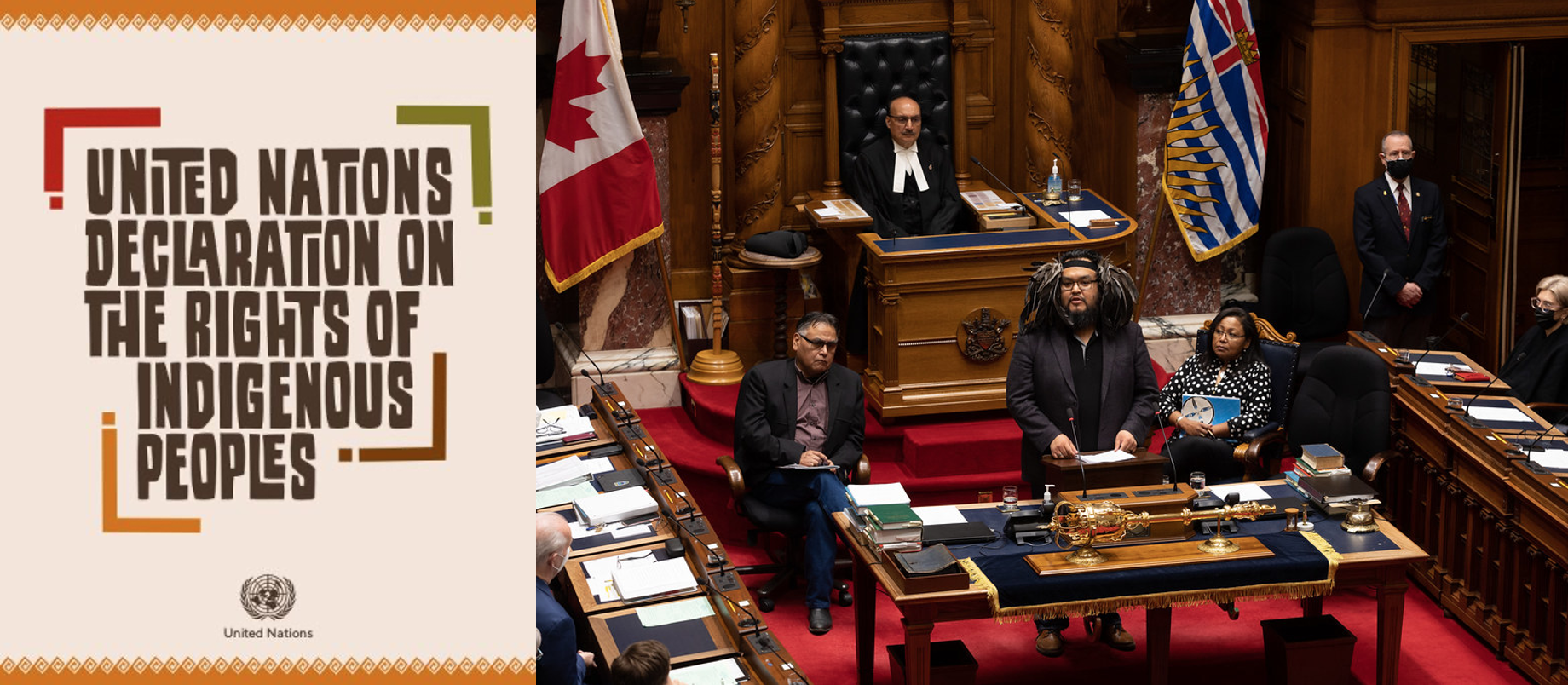
Self-inflicted wounds: By enshrining the United Nations Declaration on the Rights of Indigenous Peoples (UNDRIP) in B.C. and federal legislation, Canadian governments have advanced the concept of eternal aboriginal rights and laid the groundwork for the current erosion of Canadians’ property rights. Shown at right, B.C. announces its plans to implement UNDRIP in March 2022. Self-inflicted wounds: By enshrining the United Nations Declaration on the Rights of Indigenous Peoples (UNDRIP) in B.C. and federal legislation, Canadian governments have advanced the concept of eternal aboriginal rights and laid the groundwork for the current erosion of Canadians’ property rights. Shown at right, B.C. announces its plans to implement UNDRIP in March 2022. (Source of photo: BC Gov Photos, licensed under CC BY-NC-ND 2.0)
To Pardy, the lack of pushback by voters in the face of repeated government intrusions across many policy areas suggests that a constitutional property rights guarantee would be far less effective than some might hope. Canadians have essentially ceded authority over these rights to the judiciary, he observes, and with disastrous effect. This is because progressive-minded judges typically regard private property as a tool to be seized or an obstacle to be overcome in promoting the public interest, rather than a sacred trust to be protected.

Pardy cites as an example the fact that both B.C. and Ottawa have enshrined the United Nations Declaration on the Rights of Indigenous Peoples (UNDRIP) into provincial and federal legislation. These moves – which much of the public accepted as necessary for promoting reconciliation – bolster the concept of eternal aboriginal title. In fact, UNDRIP featured prominently in Young’s ruling, including her decision to undermine property rights in Richmond (and possibly beyond). The damage done by the Cowichan ruling should thus be seen as a self-inflicted wound. Asked if a U.S.-style “takings” clause could have prevented such an outcome, Pardy replies glumly, “I would guess not.”

Newman offers a more optimistic perspective. “We know the courts read the Charter holistically,” he says. “And there is no question a Charter of Rights with property rights protection and one without property rights would be very different things.” The inclusion of a specific economic right to the holding, use and enjoyment of property – making it equivalent to other fundamental rights such as freedom of speech or religion – could have led judges to see the Charter in a whole new way.

Placing economic rights on the same level as those other rights would likely have forced governments to go to much greater lengths to justify takings, particularly in controversial areas such as civil forfeitures and housing policy. Newman suggests, for example, that a government proposing to tax vacant houses would face a strong constitutional challenge over the concept if Canada had a property rights clause in place. Politicians would presumably be required to justify the new tax as being superior to all other potential policies that didn’t infringe so clearly on owners’ rights. “Having property rights protections [in the Charter] would make governments responsible and accountable to those rights,” Newman adds.

While property rights were initially included in draft versions of Canada’s Charter of Rights and Freedoms, objections by some premiers and the federal NDP caused Prime Minister Pierre Trudeau to drop the clause in 1982 in order to get the full Charter approved. Constitutional law experts today say that the presence of Section 33, aka the Notwithstanding Clause, would have assuaged the premiers’ concerns. Unfortunately, Section 33 was not written until after property rights were removed from the Charter. As a result, Canada is one of only two countries in the OECD that does not mention property rights and protections against unjust seizure of property in its constitution.

Despite multiple points of difference, all Canadian and international law experts consulted for this article – Newman, Pardy, Claeys and Hamill – agree that the surest defence of property rights lies not in what a particular constitution says, but in that country’s social, legal and legislative cultures. And on that score, Canada’s track record is downright depressing. No one, it seems, is prepared to fight for the “inviolable and sacred” right to own, keep and dispose of property.

Yet Canada is not alone in failing to defend these rights. The overall tendency in most Western nations is to cede ever-more authority over property to the state, says Claeys. “This general trend is resisted only in countries where they have experienced what it really means to have no property rights,” he notes, citing post-Communist countries such as Poland, Hungary and the Czech Republic as places where property rights nowadays are given the greatest prominence and offered the stoutest defence.

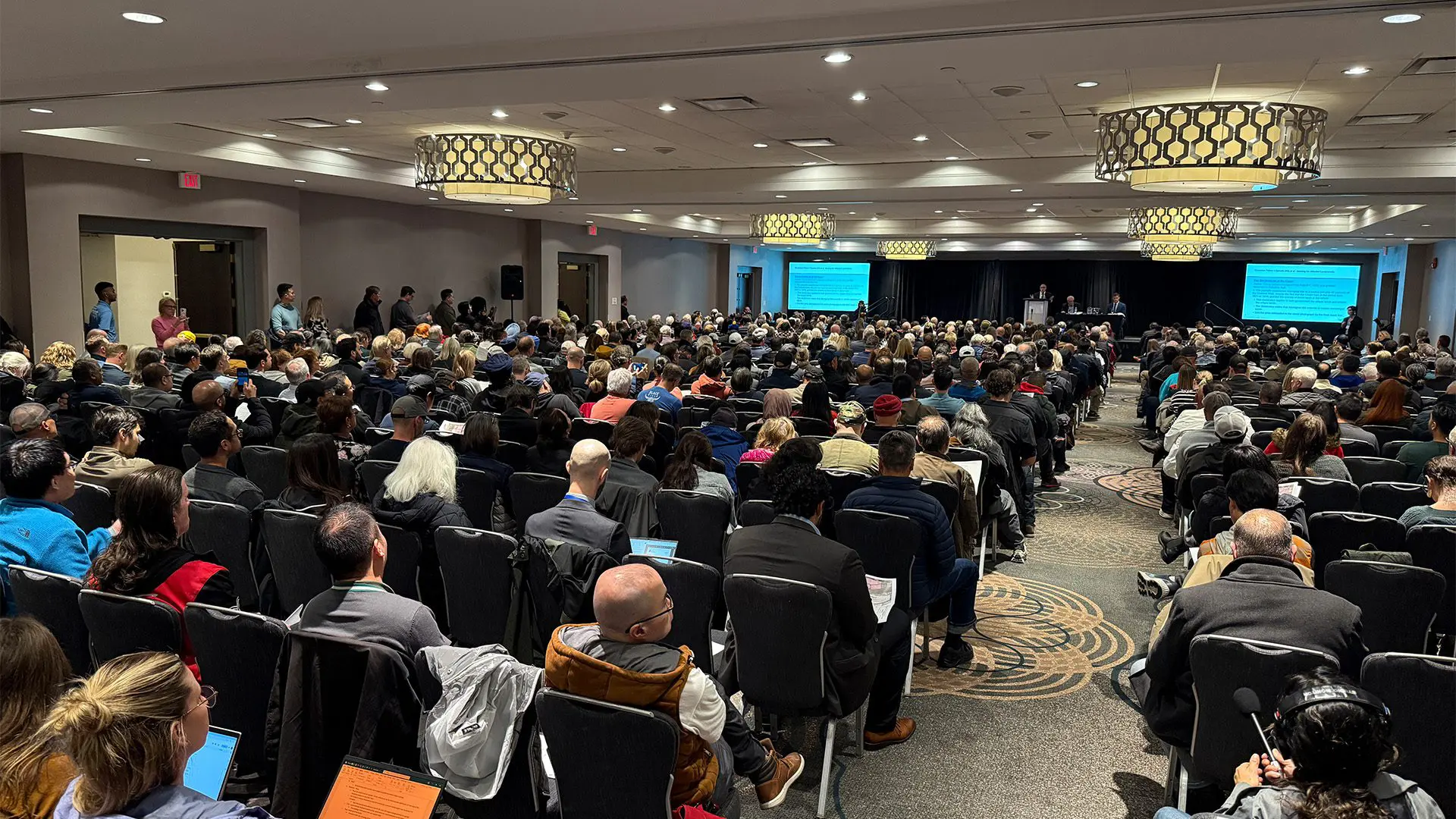
An inflection point? While Canadians have so far shown little interest in fighting to defend their property rights, the chaos created by the Cowichan ruling may lead to greater political action. Shown, Richmond homeowners attend a heated town hall meeting on October 28, 2025 regarding the court’s decision and its implications. An inflection point? While Canadians have so far shown little interest in fighting to defend their property rights, the chaos created by the Cowichan ruling may lead to greater political action. Shown, Richmond homeowners attend a heated town hall meeting on October 28, 2025 regarding the court’s decision and its implications. (Source of photo: Simon Charland/APTN)


If anything can shake off this apathy in Canada, however, it ought to be Cowichan. The realization by all Canadian homeowners that their ownership rights may be far less secure than they’ve always believed them to be threatens a real, seismic cultural shift. And perhaps that holds the promise of finally engaging the voting public on this issue. Claeys agrees Cowichan could represent “an inflection point” for Canadian property rights similar to Kelo in the U.S., if it continues to resonate.

The topic does appear to be slowly gaining traction in Canada. Beyond domestic and international media attention focused on the plight of Richmond homeowners, the Canadian Taxpayers Federation recently launched a national petition demanding that property rights be added to Canada’s Constitution. And both the B.C. and federal Conservative parties have seized on the Cowichan debacle for political purposes. If Canadians are truly worried about the state of their property rights – as they very much should be – now is the time to make some noise.

Peter Shawn Taylor is senior features editor of C2C Journal. He lives in Waterloo, Ontario.

Source of main image: The Hamster Factor, licensed under CC BY-NC-ND 2.0.

Love C2C Journal? Here's how you can help us grow.

More for you

Give This Idea an F: The Problematic Push to Eliminate Letter Grades

B.C.’s decision to abandon letter grades in favour of four vague “proficiency” categories is the latest example of the move to do away with objective standards throughout Canada’s public education system. Traditional grading methods are too hard on the tender egos of young students, the logic goes. And the possibility of failure is outdated, if not downright racist. Christina Park reveals how this new system is failing parents, who have a right to know how their child is doing, and harming students, who may be denied the help they need. She also uncovers some “gritty optimism” about the possible return of coherent educational standards.

The Price of Foolish Pride: What Germany’s Social and Economic Decline Can Teach Canada

Germany was postwar Europe’s most successful nation – until it was seized by an arrogant leftist ideology that led it down a ruinous path. Its government abandoned safe, zero-emission nuclear power for inefficient wind and solar plus natural gas from Vladmir Putin. It threw open its borders to millions of asylum-seekers with barely a thought to the enormous costs or the difficulties of social integration. Today, at the 11th hour, Germany is at last struggling to turn around its decade of economic decline and social disintegration. In this cautionary tale, Gwyn Morgan sees a profound warning for Canada.

The Righteous Response: What Canada Can Learn from America’s Fight Against Antisemitism

Canadians frequently criticize U.S. President Donald Trump’s projection of American power. But in the fight against anti-Semitism, Canada could learn a thing or two from our neighbour to the south. In Part One of this series, Lynne Cohen revealed how Canada’s political and civic leaders have chosen to ignore or even abet the hate crimes and abuse Jews have suffered since October 7, 2023. In this second installment, she shows how the U.S. – from the President on down to local officials and law enforcement – has fought back. Where Canada has been cowering and cowardly, the U.S. has resolved to fight anti-Semitism, protect its Jewish citizens and defend Israel’s right to live freely as a Jewish state.

More from this author

Cash Constrained: Bill C-2 and Ottawa’s Plan to End Paper Money

“Cash is king, credit is a slave,” George N. McLean wrote in his classic 1890 book How to do Business. More than a century later, it’s still good advice – one that active pro-cash movements in many other countries are recognizing. So why does Ottawa seem determined to put its own banknotes out of commission? In the name of fighting international money-launderers, the Mark Carney government is proposing to outlaw all larger cash transactions and interfere with other key aspects of Canada’s cash economy. Through interviews with experts in business, social policy and politics, Peter Shawn Taylor examines the varied benefits cash provides and asks who stands to gain from a truly cashless society.

Restoring Canada Special Series
Part VIII: The Trump Tariffs and Canada’s History as a Trading Nation

Prime Minister Mark Carney recently declared that, “Canada is the most European of non-European countries.” With Chile, Argentina and Australia (among many others) likely to object to such a characterization, Peter Shawn Taylor’s counterclaim that Canada is the “most U.S. of all non-U.S. countries” seems a much safer bet, given the centuries of shared history, geography, culture and trade. In this latest installment of C2C Journal’s Restoring Canada Special Series, Taylor examines the deep economic relationship between the two countries and argues that nothing can ever destroy its significance. Further, any attempt at such a thing – as currently seems popular with the “Elbows Up!” crowd – will ultimately prove disastrous. Canada’s economic future depends on trading with the Americans. Full stop.

Unstung Heroes: Canada’s Honey Bees Aren’t Disappearing – They’re Thriving

Busy as a bee. Sting like a bee. Queen Bee. Honey bees have long held an unparalleled reputation for industriousness, dedication and hierarchical efficiency. More recently, however, the insects have become better known as an environmental calamity-in-the-making. Over the past two decades, dire warnings have repeatedly declared Canada’s honey bees to be on the verge of extinction – with grave implications for the world’s food supply, given their key role in pollinating crops. In this deeply-researched article, Peter Shawn Taylor looks beyond the headlines and finds that while honey bees face many challenges every year, their population is in fact soaring. As Taylor reports, this happy news is a testament to Canada’s large-scale commercial beekeepers, who have plenty of motivation to ensure their hives are always buzzing with activity.