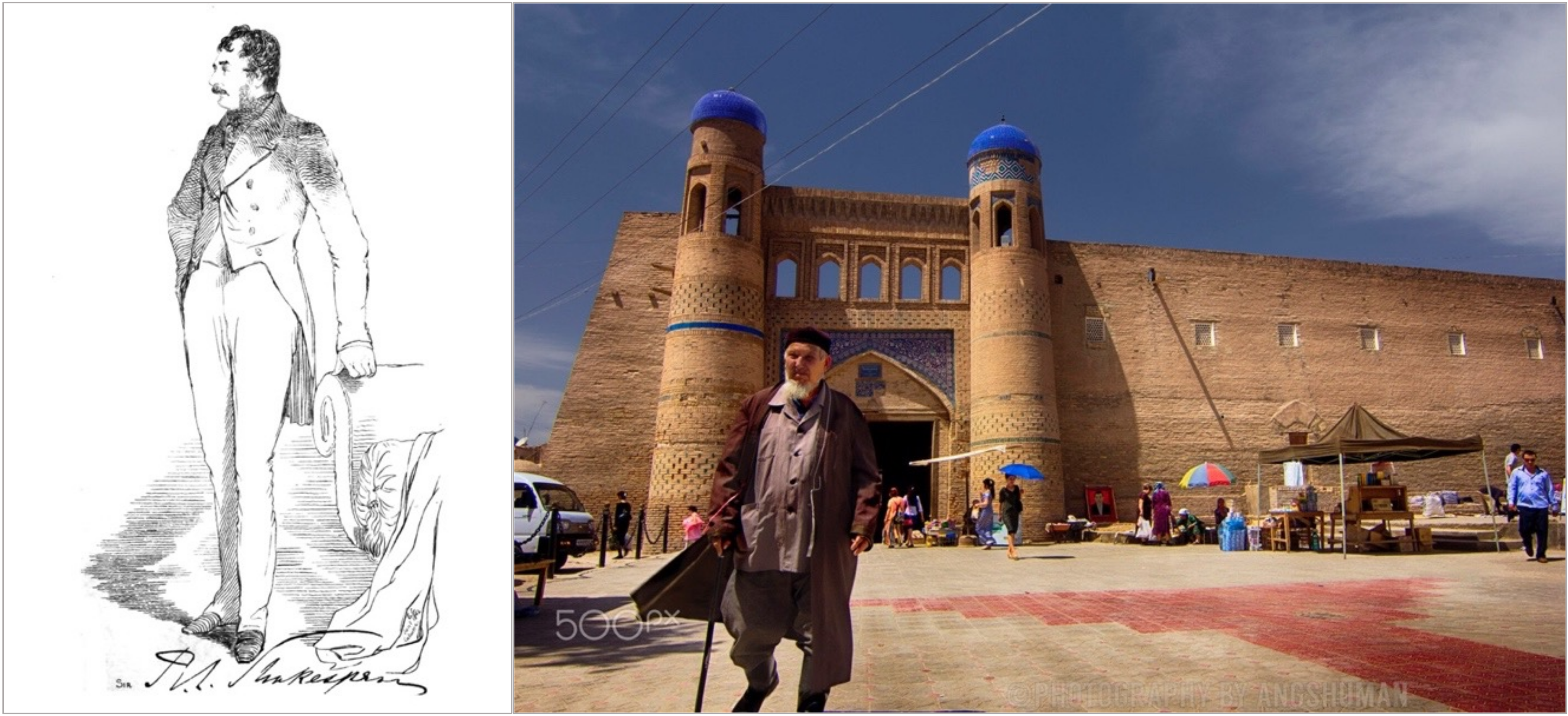
In May 1840 Lieutenant Richmond Shakespear, a British artillery officer in India, dressed himself in the clothing of a Turcoman traveller and set off with a handful of local guides on a dangerous 1,100-km journey north from Herat, Afghanistan to the ancient Silk Road city of Khiva, in what is now Uzbekistan. Upon arriving, he told the reigning Khan he was there to protect his city from a Russian invasion. Shakespear was the second British officer sent to Khiva on such a mission that year. The first had disappeared without a trace.
As part of a century-long geopolitical/military struggle between Russia and Great Britain over control of Central Asia that became known as The Great Game, Britain sought to maintain the independence of small khanates such as Khiva to serve as a buffer between expansionist-minded Russia and its colonial goldmine in India. But the presence in Khiva of several hundred enslaved Russians – mostly fishermen and merchants nabbed by Turcoman slave traders – offered Tsar Nicholas I a convenient pretext to attack the city, which could tip the delicate balance of power. Hence the need for a solution favourable to British interests.
Arriving in Khiva, Shakespear told the Khan that if he gave him the slaves, he would see them returned personally. It was a plan far beyond Shakespear’s original orders, but he bluffed his way forward. Shakespear shepherded all 416 of them to a Russian military post nearly 2,000 km away. He then travelled onward to St. Petersburg to meet the Tsar, who publicly thanked him – while privately fuming at the upstart’s success. A year later, Shakespear was knighted by Queen Victoria, the recommendation for his knighthood noting that he had “deprived the Russian Government of all Pretence for a renewed attack upon Khiva.” He was 29.
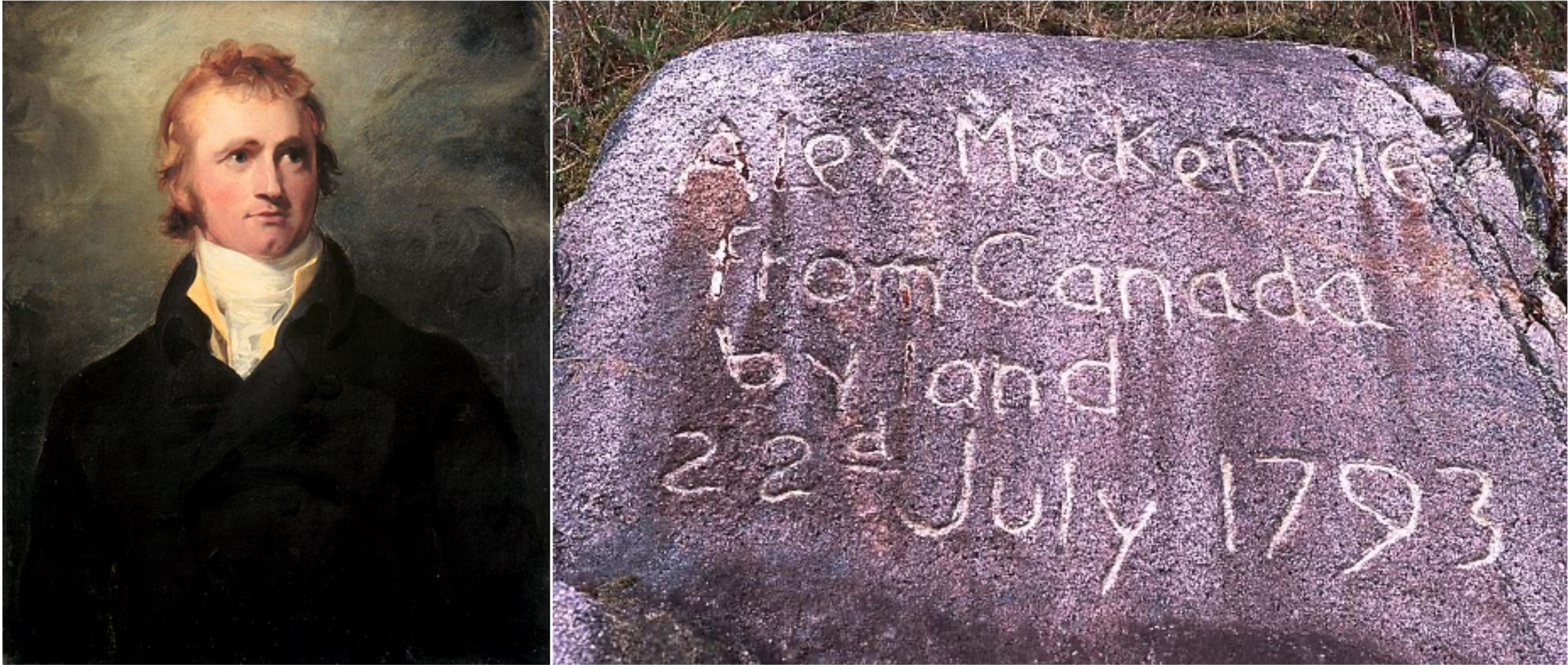
Alexander Mackenzie was even younger when he set out on his own great adventure. Having grown up on Scotland’s Outer Hebrides islands, he moved with his family to the American colonies just as the Revolutionary War was breaking out. After his father died fighting for the Crown, Mackenzie went to Montreal where, at 15, he was apprenticed to a fur-trading company. By age 24 he’d been named to succeed Peter Pond as the North West Company’s chief trader at Fort Chipewyan on Lake Athabasca in what is now Alberta. It had been Pond’s quest to find a water route to the Pacific Ocean, and Mackenzie pursued his inherited duty with gusto. In 1789 he followed what is known today as the Mackenzie River in hopes it would bend westward to the Pacific. When it became obvious the river was intent on heading north, Mackenzie continued anyway, later writing that completing the trek “would satisfy Peoples Curiosity tho’ not their Intentions.” He was the first European to make an overland journey to the Arctic Ocean.
After returning to Britain to study advanced surveying techniques and get better instruments, Mackenzie tried again in 1793, this time heading west over the Rocky Mountains and through a vast interior. He followed a river to its mouth, where he painted his name on a weathered beach rock at what is now known as Bella Coola. In doing so, Mackenzie became the first European to cross North America and reach salt water, beating American explorers Merriweather Lewis and William Clark by 12 years. Mackenzie’s two-volume journal describing his adventures, Voyages from Montreal: Through the Continent of North America to the Frozen and Pacific Oceans, was published in 1801 and became an enormous best-seller.
Nor are such adventurous lives exclusively a male endeavour. In 1898 Martha Purdy arrived with her brother and cousin in Dawson City, Yukon, planning to take part in the Klondike Gold Rush. Born into high society in Chicago, Martha had been married for ten years but decided she needed a change of scenery. The Klondike delivered. While hiking the storied Chilkoot Pass, Purdy realized she was pregnant with her third child. Undaunted, she pressed on. By 1901, reunited with her parents and all three sons, she established a successful sawmill and gold-processing plant in Dawson City. She then divorced her first husband and married George Black, a local lawyer and later the Yukon Territory’s MP.
Martha Black subsequently became a world-renowned expert on wildflowers, providing collections to the Smithsonian Institution and gaining election to the Royal Geographical Society. During the First World War, she travelled to Britain as a Red Cross volunteer. After her husband suffered a nervous breakdown, Prime Minister R. B. Bennett asked Martha to run in his place in the 1935 federal election. She won handily, becoming the second woman elected to Canada’s parliament. Black’s memoirs were initially titled My Seventy Years, but she later revised and republished them as My Ninety Years. She died in 1957 at age 91 in Whitehorse, having lived a life of unquestioned adventure and accomplishment.
There is a sense of awe that arises naturally when retelling the lives of people like Shakespear, Mackenzie and Black. To our modern selves, they appear as fascinating aberrations, gifted men and women with unusual appetites for risky or dangerous undertakings. Their willingness to set out into the unknown strikes us today as thrilling, unnerving and more than a bit foolhardy. We may admire them, but they also scare us a little. And yet it would be wrong to regard their experiences as beyond the bounds of normal behaviour. Their accomplishments may seem remarkable today, but their attitudes towards risk and the unknown were nearly run-of-the-mill. They lived in more adventuresome times.
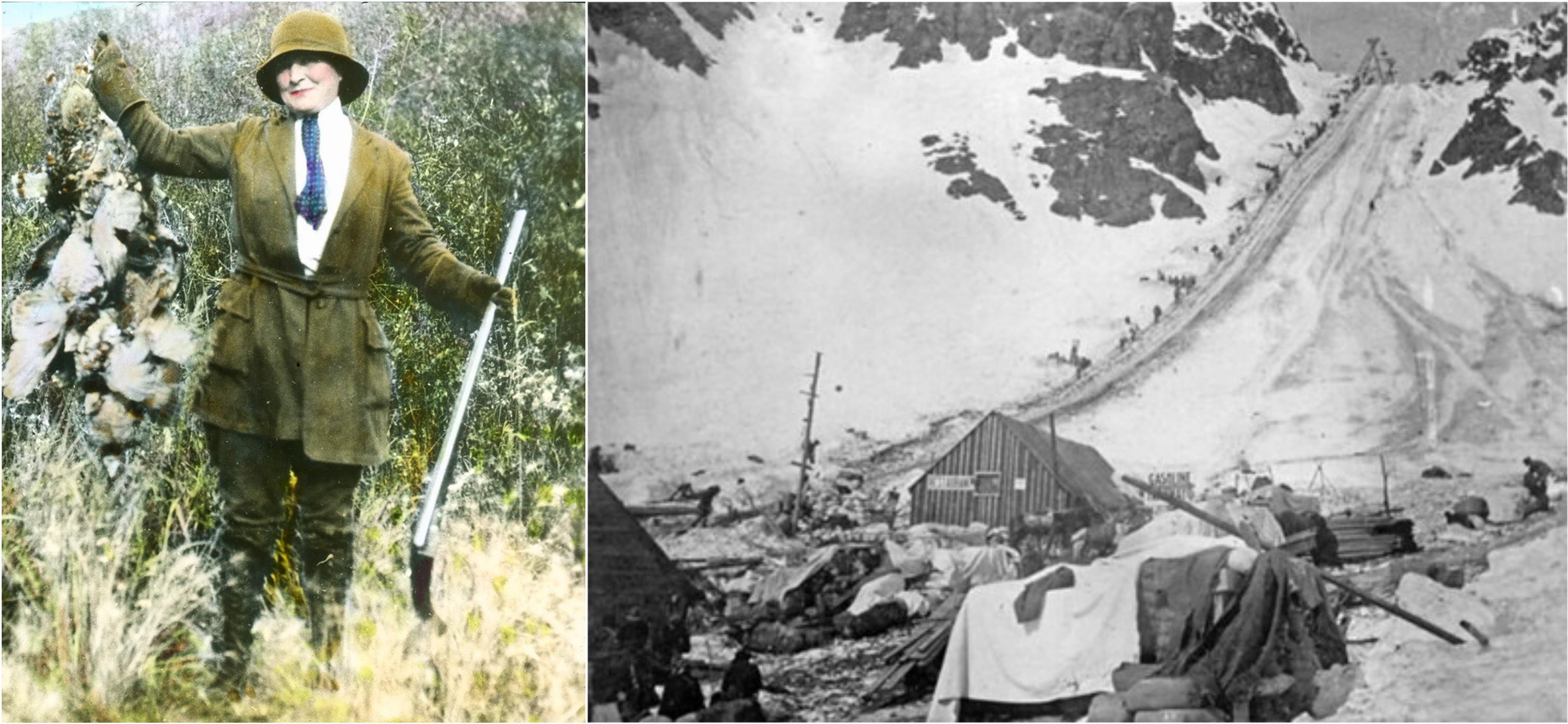
All made logical choices based on their own needs and in line with the spirit of the age, a time of immense curiosity about the world. Though all accepted risk, none sought it for its own sake. Mackenzie was a fur trader driven by financial need. Shakespear, an ambitious soldier following orders. Black, eager to escape a failed marriage. “Adventurer” was a label others applied after the fact.
As such, Shakespear, Mackenzie and Black should properly be considered exemplars rather than aberrations. They represent a sense of adventurousness that was once commonplace, but has all-but disappeared from 21st-century life. Through a combination of practical circumstances, changing social standards and dramatic shifts in individual risk tolerance and government behaviour, present-day opportunities for an adventurous life have been drastically curtailed.

Today, twenty-somethings are more likely to be living at home with their parents while working on yet another graduate degree than negotiating with feckless Khans or following uncharted rivers. Divorce may be more common today, but the same cannot be said for starting one’s life over in a forbidding wilderness. Unwilling to entertain strange or unfamiliar territory, we have become a nation of screen-watching, risk-fearing, self-isolating, zero-tolerance safety-culture cadets diligently avoiding whatever it is we don’t know. Why has postmodern society elevated risk aversion to a moral good and so thoroughly abandoned any sense of adventure? And how can we get it back?
Are Adventures Harder to Find?
“An adventure is only an inconvenience rightly considered,” G.K. Chesterton once wrote. “An inconvenience is only an adventure wrongly considered.” There is, however, a case to be made that adventures are simply harder to come by these days. The world today is less well-supplied with inconveniences than it once was.
After centuries of global travel and exploration, for example, it is no longer possible to find empty spaces on a map in need of investigation. The vast terra incognita of northern Canada that drew Mackenzie to search for a passage to the Pacific Ocean has long since been traversed, mapped, camped upon and geolocated. Opportunities for exploratory adventures have been severely diminished simply because there are far fewer places to go where no one else has ever been. That imposes a severe physical constraint on one type of adventure in the 21st century.
The communications revolution has similarly reduced the role played by happenstance, luck and bravura in life as in geopolitics. Today, a chancer like Shakespear would be unlikely to get away with bluffing a powerful potentate. His game would be up as soon as the Khan googled his name or contacted the nearest British mission. And it would then be incumbent upon the British government to get him out. The same goes for Mackenzie or Black. If something went wrong today, they could rely on a satellite phone or GPS tracker to summon assistance. The omnipresence of the Internet and other communications tools make it much harder to have an adventure in which the outcome is truly unknown or your fate rests solely on your own skills and chutzpah. It’s almost impossible to get truly lost anymore and, if you do, help is usually close at hand.
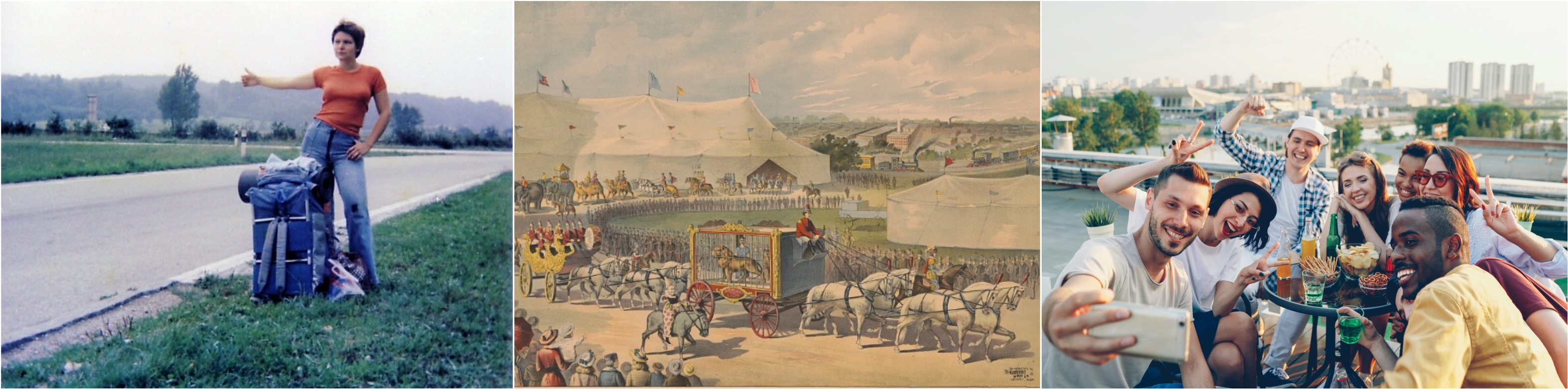
Beyond these practical limitations, it seems incontestable that society today is less interested in promoting, facilitating or participating in an adventurous life. Pressed by economic hardship or just boredom, it was once familiar to talk – sometimes jokingly, but not always – of joining a traveling circus, signing up with the French Foreign Legion, hopping a tramp steamer or hitchhiking out West to work on a ranch. No one mentions such adventures anymore, even in jest. In their place we have the “gap year” – in which students between degrees jet off on what they claim to be adventure travel, all the while posting relentlessly on Instagram or Snapchat and spending freely on their credit cards. The same goes for the older crowd enjoying luxury cruises to Antarctica or other once-desolate locales. Clientele are handed a simulacrum of adventure on a fixed schedule and with unlimited premium drinks. There has clearly been a deeper societal change in attitudes towards risk and adventure.
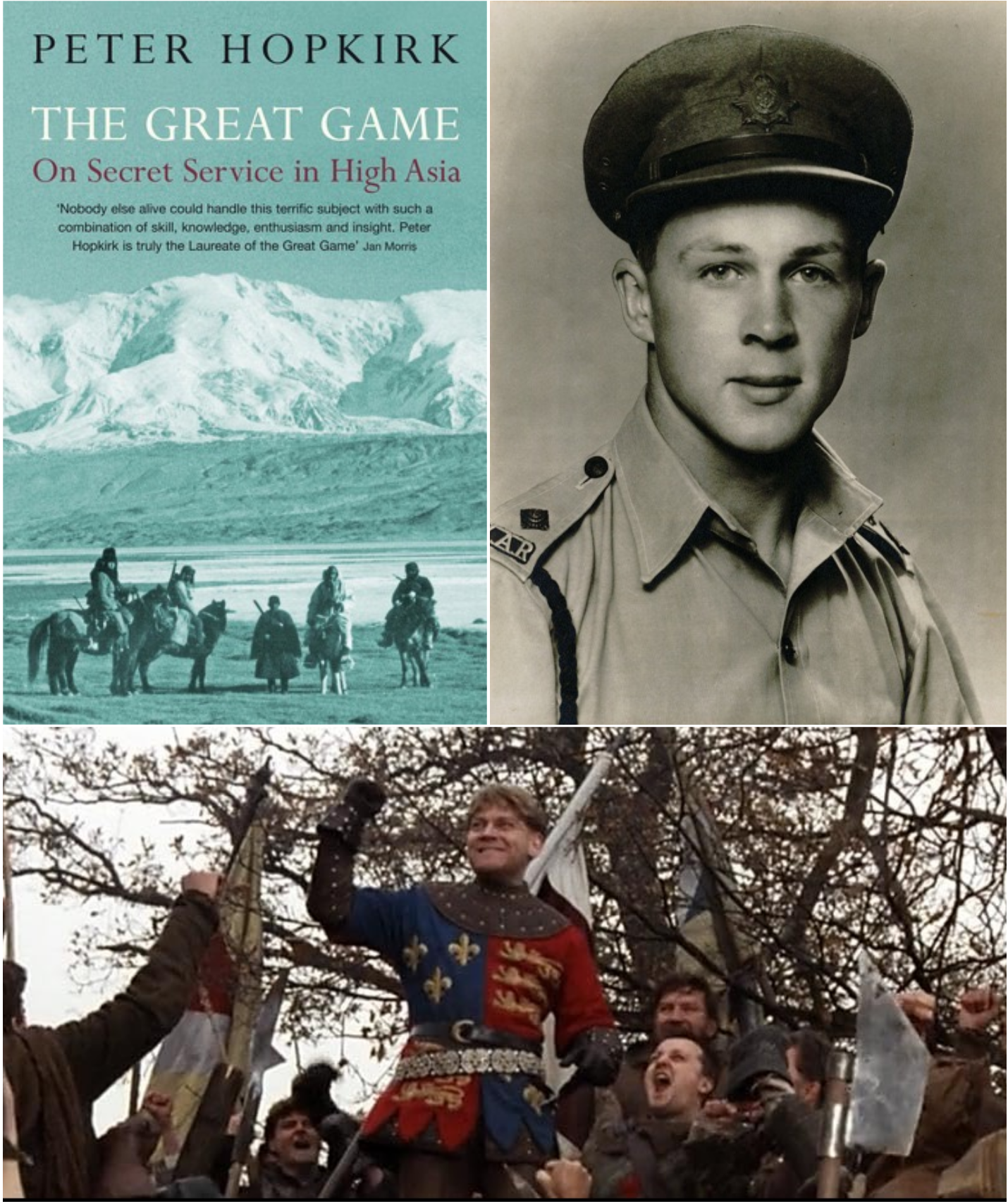 Derring-do a-plenty: In The Great Game, author Peter Hopkirk (top right, shown at age 19 in his uniform of the King’s African Rifles) recounts numerous stories of men driven by duty, faith and patriotism to undertake extraordinary risks. At bottom, a scene from the 1989 movie version of Henry V, with Kenneth Branaugh delivering the famous “band of brothers” speech. (Source of top right photo: hopkirk.org)
Such an attitude contrasts sharply with the perpetual childhood of today’s youth. Beyond the twenty-something experiences of Shakespear and Mackenzie, consider that in 1780, William Wilberforce was elected to the British Parliament at age 21. He then went on to be instrumental in the campaign to end the trans-Atlantic slave trade and free slaves throughout the British Empire. His friend William Pitt the Younger became Prime Minister at 24, his long term in office coinciding with the rise of the equally young Napoleon Bonaparte. Quite a lot can be accomplished when one starts early.
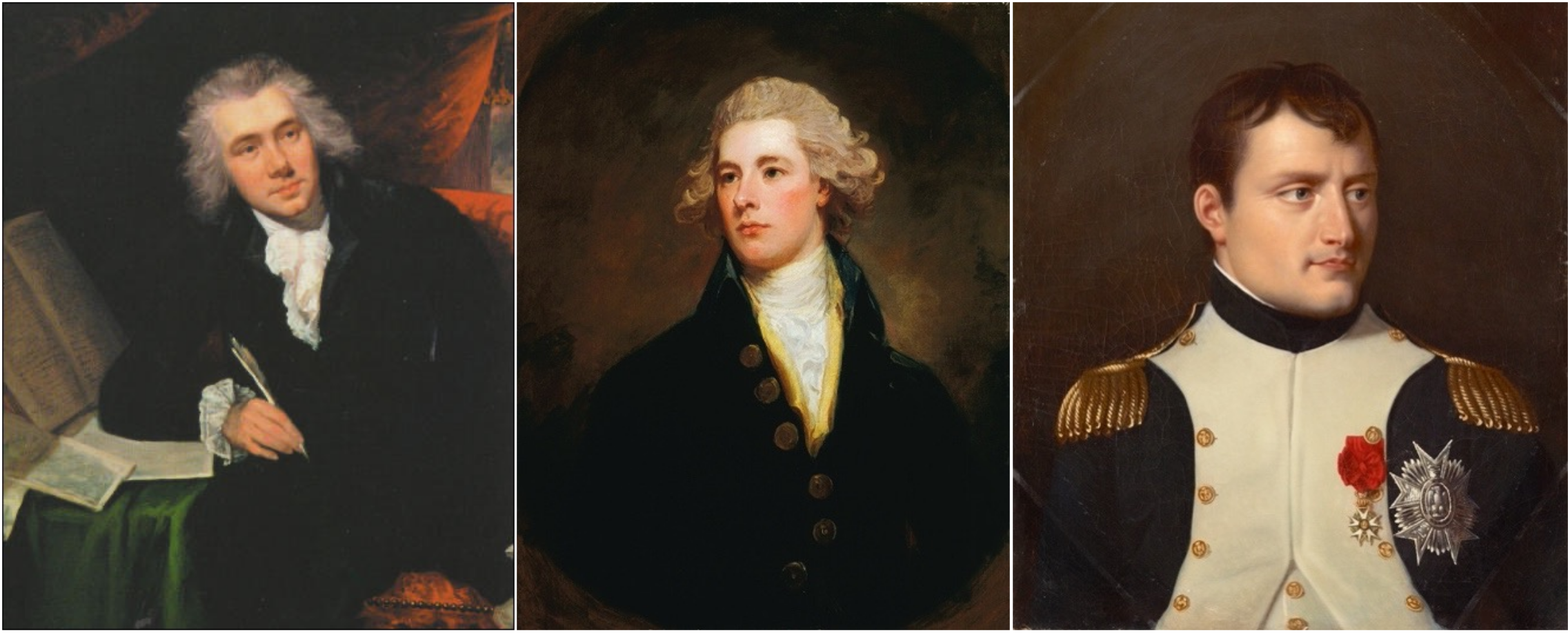
The absence of any welfare state was another important motivator. When Shakespear and Mackenzie left their family homes at an early age, it was because they had little choice. They were expected to make their way in the world as teenagers. The same urgency applied to Martha Black as the 20th century dawned. She was on her own without a government to hold her hand. No perpetual childhood in sight. Adventure followed.
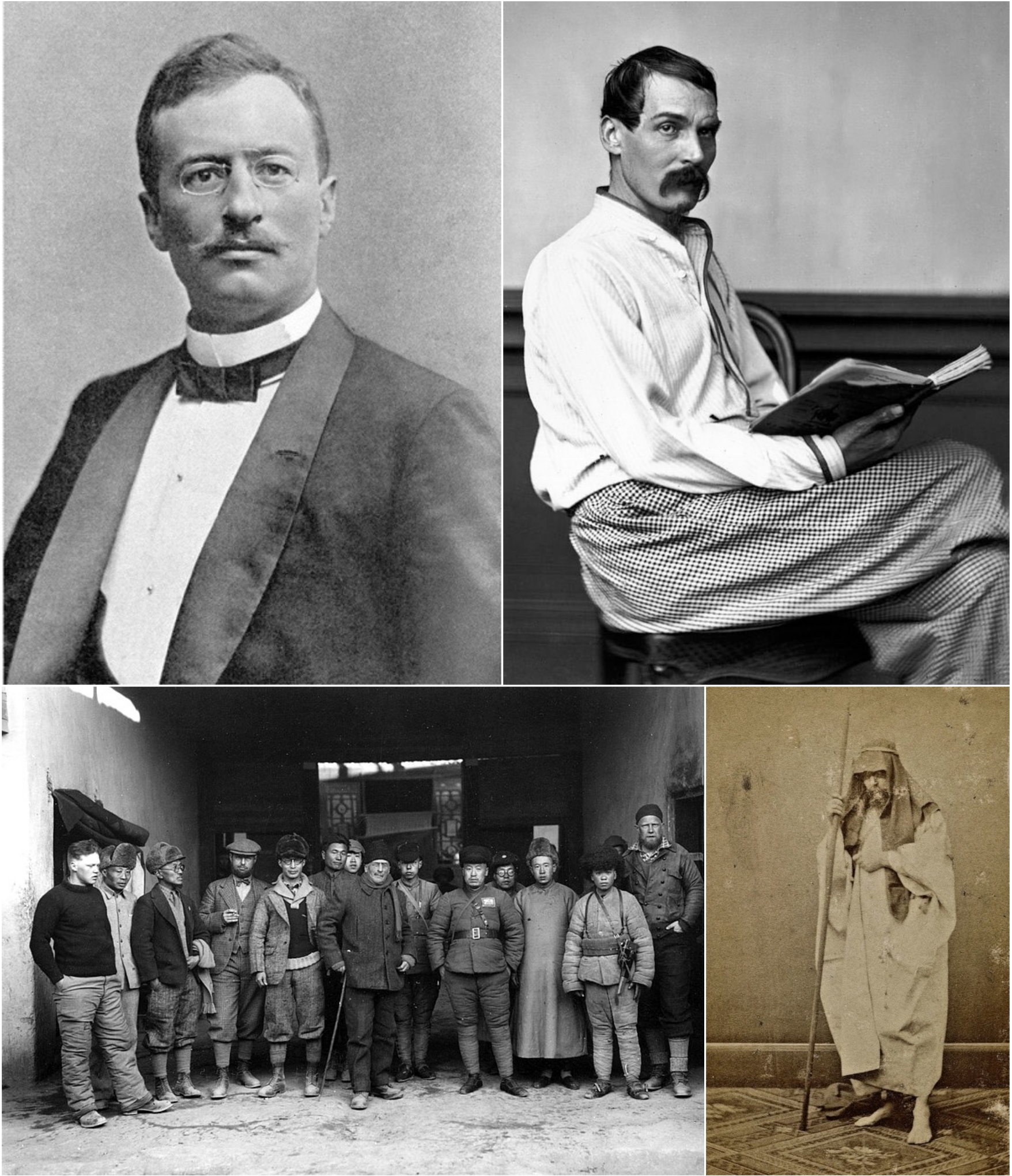
The everyday availability of adventure further embedded risk-taking as a social virtue. Consider Swedish explorer Sven Hedin, who mapped many of the rivers and mountains of Central Asia and uncovered several lost Silk Road cities during a career that spanned the 1890s to 1930s. The seminal moment for Hedin, he recalled in his autobiography My Life as an Explorer, was witnessing at age 15 the triumphant return of Arctic explorer Adolf Erik Nordenskiöld to Stockholm. “All my life I shall remember that day,” he wrote. “It decided my career.”
The popularity of published stories like those by Shakespear, Mackenzie, Hedin and others testify to the public appetite for tales of contemporary adventures. Richard Burton, who searched for the elusive source of the Nile and visited Mecca in disguise, was among the greatest celebrities of his day. Today, readers still snap-up rousing stories from the colonial era – The Wager by David Grann being a notable recent example. One reason for this appetite is surely that modern-day examples are in such short supply.
If we define adventure as an undertaking involving some danger or unknown outcome and that produces an exciting or remarkable experience, then there are still some examples to be had today. The global attention paid to the recent Artemis II mission to orbit the Moon suggests that being the first to see or experience something still holds a powerful attraction. Humanity retains a fascination with the unfamiliar as well as unforeseen risks.
And there are indeed some men and women today who seek out such experiences via risky pursuits like BASE jumping, big-wave surfing or free solo climbing. But do these activities fulfill the true elements of adventure? They may be risky – how can launching a snowmobile off a huge jump and performing a backflip be otherwise? But they notably tend to involve risk for its own sake; the activity is performed purely for self-gratification, often of the performative variety, rather than in pursuit of a greater good, as was the case with Shakespear or Mackenzie, or personal betterment, as with Black. None of them ever did a thing simply because it was risky or fun. They did it because it was necessary.
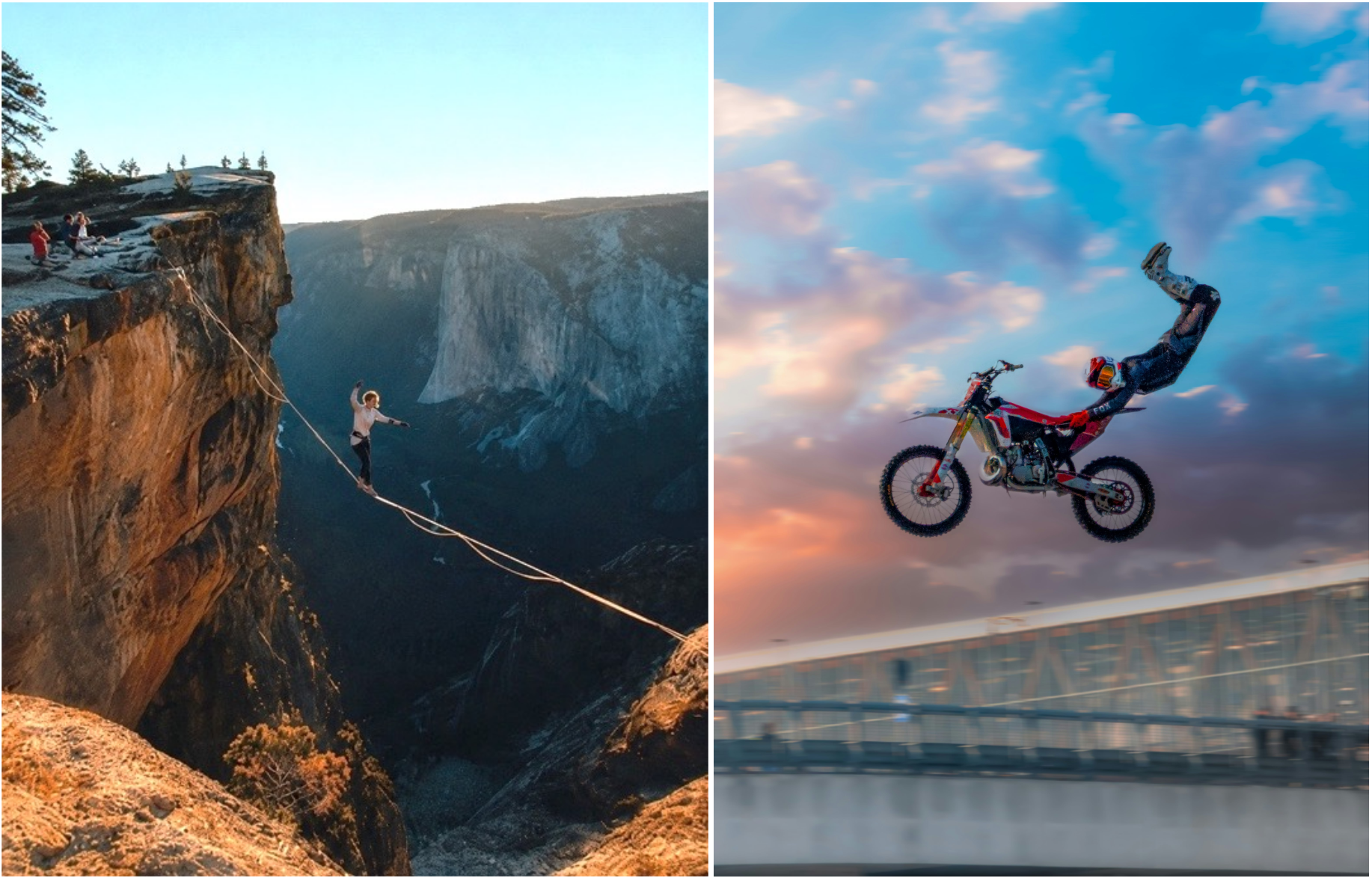
Perhaps the clearest way to distinguish real adventure from the fake kind is that one is purposeful, the other self-indulgent. Kayaking off a waterfall for one’s own pleasure is, in principle, no different from the cricket Shakespear probably played to relax between his adventures spent rearranging regional geopolitics, rescuing doomed hostages and outwitting khans. Or the bracing swims Mackenzie took to wash the sweat off his body while dragging his canoes up the Blackwater River across the Chilcotin Plateau on his way to the Pacific. Today’s “adventures” are like the icing on the cake, minus the cake.
The lines do blur, of course: if one were to scuba dive into waters colder or deeper than anything done before, and in so doing discover some new species or other intriguing scientific phenomenon, then one of course would satisfy both elements. Still, many of today’s “adventures” are simply dangerous hobbies. They remain childish ways. And comparatively few people actually entertain themselves this way.
Their framework for this study is what they call the “Three Great Untruths” of our modern age, ideas that have become totems of our era yet are provably false. They entail: 1) fragility, “what doesn’t kill you makes you weaker”; 2) emotional over logical reasoning, “always trust your feelings”; and 3) a strict Manichean outlook, “life is a battle between good and evil people.” These three falsehoods, the authors argue, violate both ancient wisdom and modern psychological evidence and do great harm to the individuals and societies who follow them.
For our purposes, the first untruth resonates most clearly by upending Friedrich Nietzsche’s famous 1888 aphorism, “What does not kill me makes me stronger.” That formulation encouraged people to endure hardship, face danger and try new things. Resiliency, we now know, is based on the experience of failure and figuring out how to overcome it. Unfortunately, as Haidt and Lukianoff observe, this experiential outlook has been replaced by a worldview that celebrates fragility and victimhood.
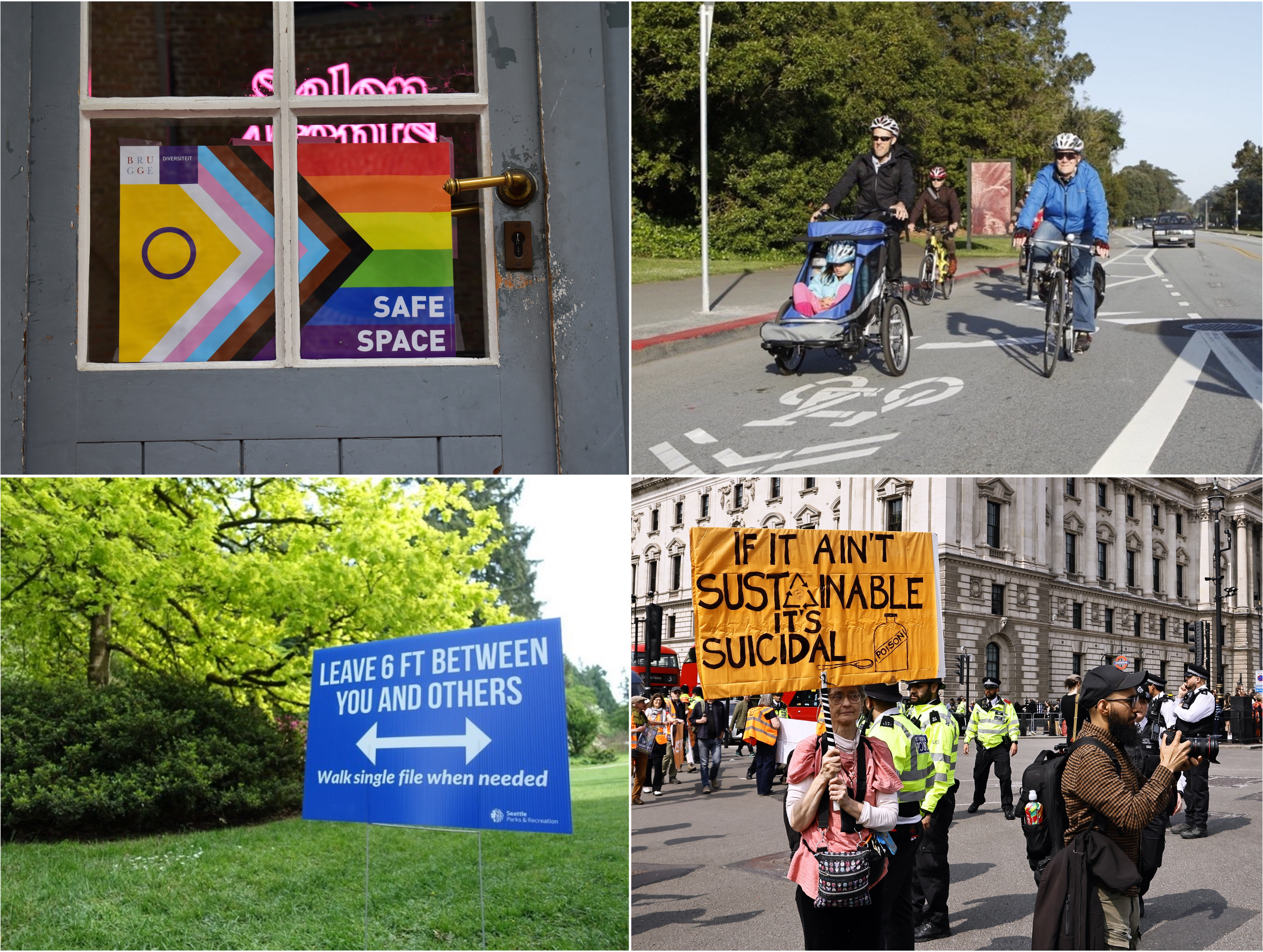
The oppressive safety culture we now live in ensures our children are regularly denied experiences that might expose them to risk or (mis)adventure. Trigger warnings, safe spaces, mandatory bicycle helmets, bans on fireworks, prohibition of plastic straws, six-foot distancing rules…the list seems endless. All seem designed to delay adulthood – in which assessing and managing risks is surely central – and keep everyone in perpetual childhood. What hope is there for creating young adventurous adults in the mold of Shakespear, Mackenzie or Black when public school principals announce at the onset of every snowfall, “All snow must stay on the ground”?
A related theme can be found in American author Helen Andrews’ recent discussion of “The Great Feminization”. Men, Andrews notes, tend to engage in group dynamics optimized for expansion and conflict, while women interact in ways designed to protect their offspring and the status quo. One approach is clearly more outward-focused and geared towards adventure and exploration, the other to staying put. And as Andrews observes, as the ratio of females to males rises in key gatekeeping areas such as government, universities, courtrooms and hospitals, these institutions’ focus shifts away from risk-taking towards a more defensive posture.
“Everything you think of as wokeness involves prioritizing the feminine over the masculine: empathy over rationality, safety over risk, cohesion over competition,” writes Andrews. And those who resist face cancel culture, she notes, which is both a tactic and an emblem of the larger trend. While the life of Martha Black shows that anyone can be adventurous, an overall predisposition towards adventure appears to be a masculine trait. This poses a particular problem for young men today, given recent societal attitudes towards the supposedly “toxic” aspects of traditional masculinity.
And while there may no longer be any unexplored places to go in the world, there are still plenty of experiences to be had in which the journey is risky and the outcome unpredictable. As the leader of a mineral exploration company, I was once taken to a cliff edge high in the Peruvian Andes with a spectacular view of the valley spreading out far below. My guide was the president of the local water co-operative and he had taken me there to inform me that my rotting carcass would be found at the cliff base should our company be found to have disrupted their water allocation system. It was a persuasive presentation.
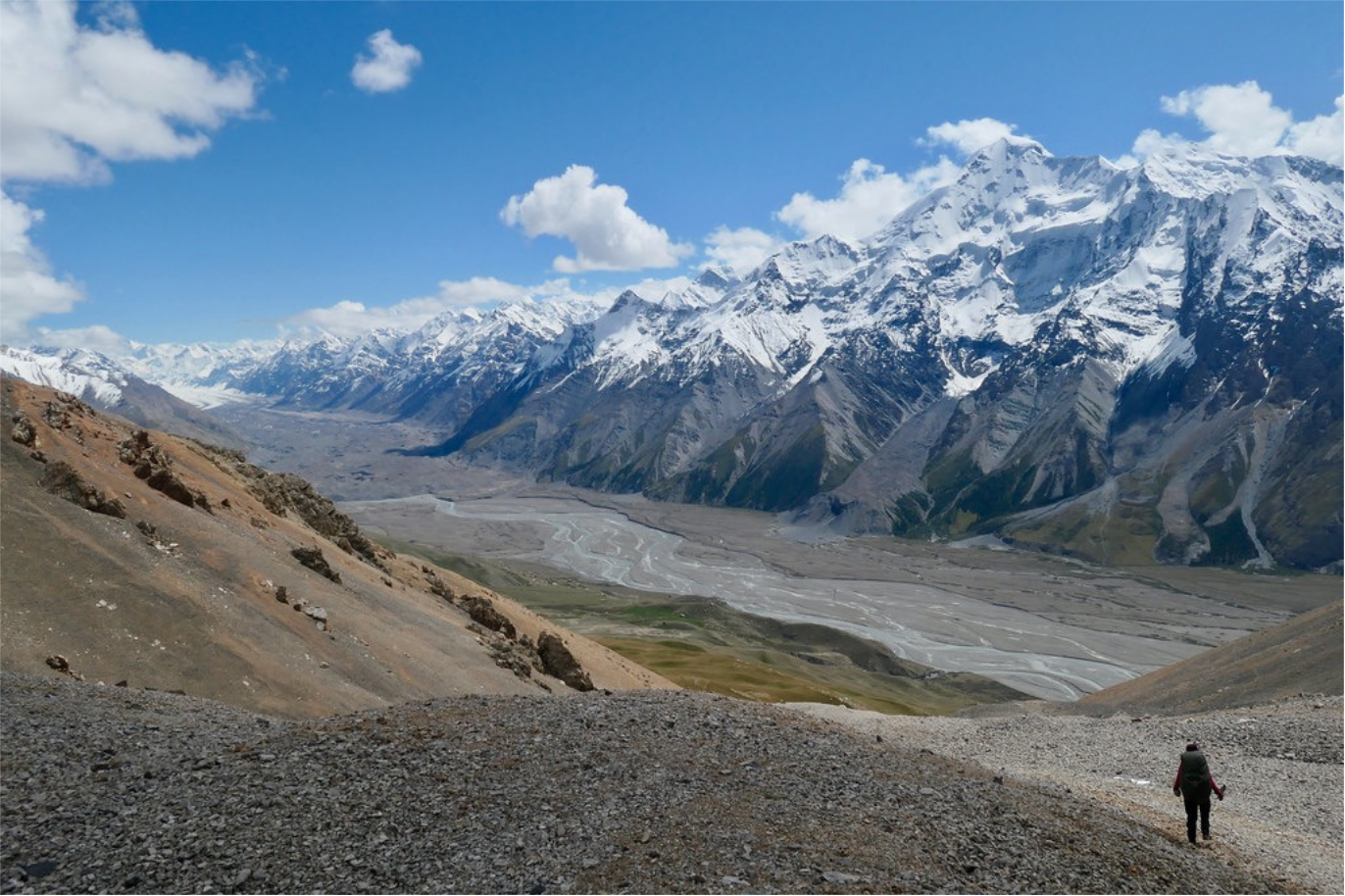
While on another work trip in 2013 I celebrated my entry into my 60s with a trip to the Tien Shan Mountains in Kyrgyzstan along the Chinese border. At over 4,000 metres above sea level, breathing could be difficult. At night I would drift off to sleep only to wake up every 15 minutes gasping for air thinking, “You idiot! You are too old for this.” Adventure should properly be considered a spirit, not a place. It is driven by a powerful mixture of curiosity, necessity and an openness to experiencing new things.
In truth, adventure can be found wherever uncertainty reigns. Today we Albertans are “blessed” to be faced with a period of increasing uncertainty as we dangle our legs over the precipice of an important decision – independence from Canada (while dealing with the attendant risk of being grabbed by the U.S.) or continued servitude under Laurentia. One needn’t agree with my formulation of the issue to see that the coming months and perhaps years will be full of many unknowns – and many potential adventures.
Murray Lytle is a once peripatetic and now retired mining engineer who, when not seeking adventure on his own, teaches history and encourages his grandchildren to live exciting lives.
Source of main image: ChatGPT.