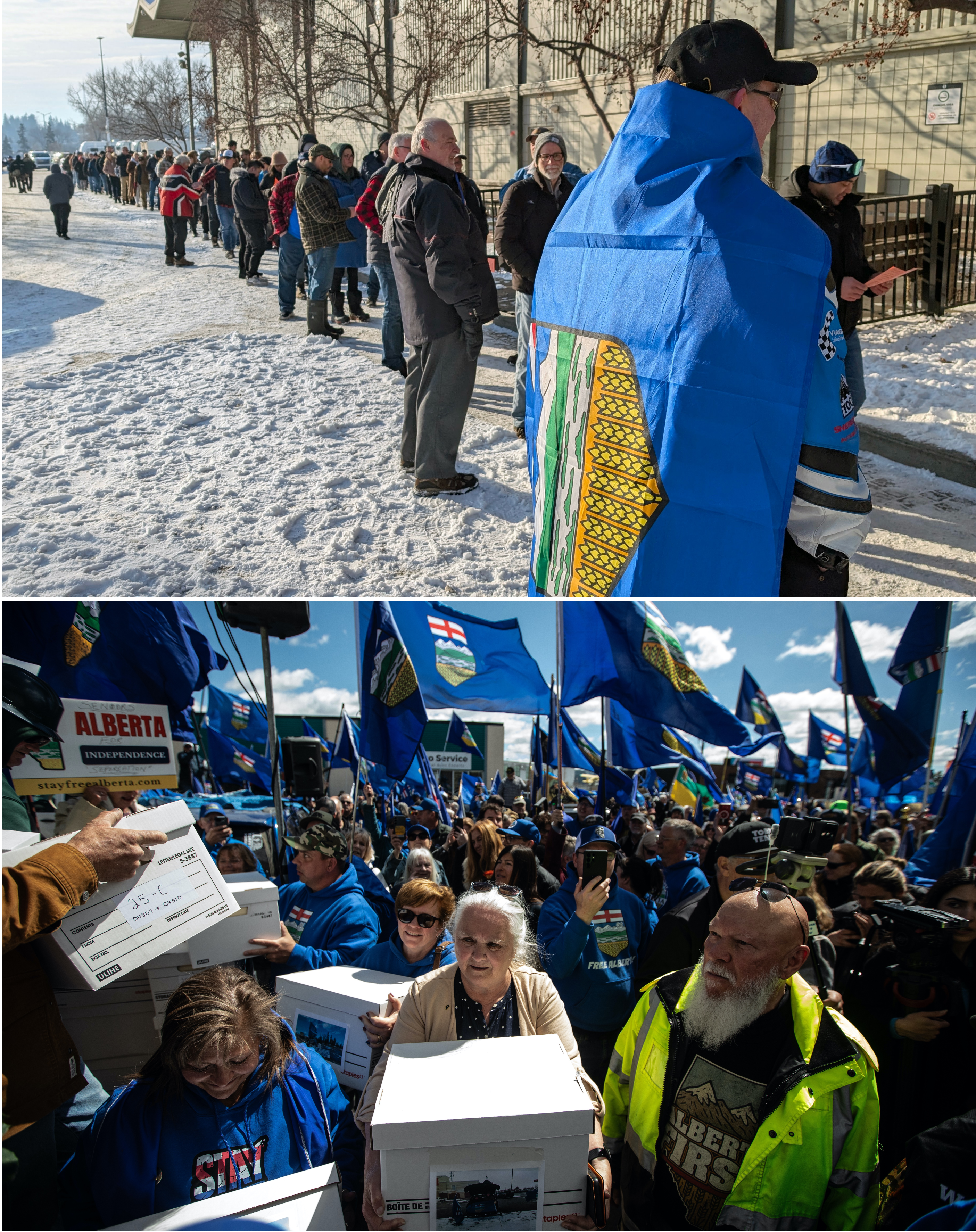
While some have been quick to crow that a recent Alberta Court of King’s Bench ruling deals a crippling blow to Alberta’s independence movement by declaring the Stay Free Alberta petition invalid for the purposes of triggering a provincial referendum on separation from Canada, the issue is anything but settled. Multiple groups are preparing to appeal the ruling, arguing it is both anti-democratic and legally incorrect.
And whatever the outcome of this one court battle, some question related to secession is likely to join the host of issues Alberta’s UCP government is already putting to a public vote in October. Last week it briefly appeared that it might even be the “Forever Canadian” group’s remain-focused question. Then on Thursday evening, Alberta Premier Danielle Smith threaded the political needle with her dramatic announcement that her government will include a non-binding plebiscite question in October asking whether Alberta should hold a formal constitutional vote on separation one year later.
With some kind of vote all but certain, then, the far more important question – one that all sides of the debate should put their minds to – is what comes the day after? Especially the day after a vote to leave?
Independence supporters seem to think there’s only one possible next step. They have been waving around the federal Clarity Act as if the law’s mere existence guarantees that a “Yes” vote will trigger negotiations between Alberta and Ottawa that place them on a clear path towards the recognition of Alberta as an independent state. Some are so convinced of this they’ve floated “strategic plans” setting forth the predicted phases. One commentator in the Western Standard wrote confidently of a “365-day playbook” with a “disciplined one-year roadmap,” which he declared “consistent with the Clarity Act framework.” Imagine: a clear timetable to get the entire deal done by October 2027 – everything from dividing the Canada Pension Plan’s assets to passing the required constitutional amendments that create the independent state of Alberta.
Such scenarios presume an almost mechanical process leading from 50-percent-plus-one of the ballots cast straight through to Alberta’s Independence Day celebrations, a smooth escalator ride with just a few i’s to dot and t’s to cross as we glide ever-upwards. Complex political or diplomatic interactions are usually characterized by heated emotions, self-interest, illogic, setbacks, dissembling, interruptions and, often, bad faith. Not these. Here, Alberta is in the driver’s seat as solidly as the Terminator behind that firetruck steering wheel, and Ottawa is a compliant, if grumpy, passenger. Nobody else will have much to say about it. Only one outcome is possible. It’s almost as easy as A-B-C!
Yet a clear-eyed reading of the actual Clarity Act – which is written in plain language and only 1,500 words long, including preamble – combined with a basic understanding of how the federal government and Canada’s Laurentian elite operate, reveal such an outlook as seriously naïve, if not delusional or deceptive. While the Clarity Act is crystal-clear in a couple of areas, it is mostly a collection of vague and/or open-ended provisions that assign nearly every important decision to the House of Commons, which usually means, in substance, the Prime Minister’s Office. And far from creating a framework for bilateral negotiations, the law proclaims that every other province and territory plus aboriginal groups and any other entity the federal government may wish to consult be brought into the discussions. In no fewer than three places, the Act assigns a significant role, if not a near-veto, to aboriginals.
The net effect is that, other than calling the referendum itself, the federal government is given almost all decision-making power throughout the process, with no constraints on what inputs or logic it uses to make these decisions. Nor does the Clarity Act provide any avenue for appeal to any of the numerous decisions Ottawa arrogates to itself.
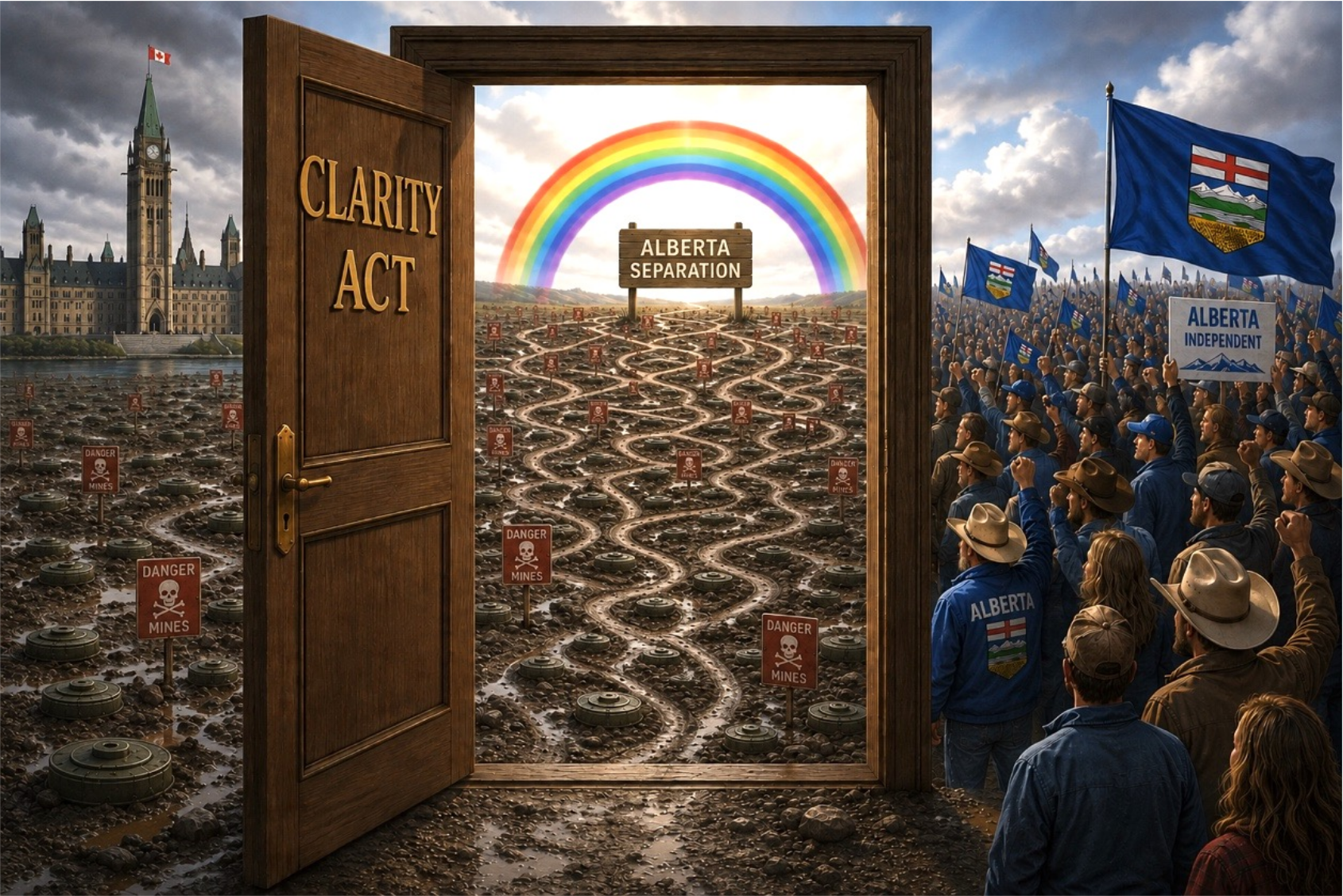
The Clarity Act, in short, is a legal and political minefield likely to blow up any province’s attempted march towards independence. Why might that be? One possible interpretation is that the law was drafted by breathtakingly incompetent bureaucrats and passed by equally inattentive MPs. Another is that it was very carefully and deliberately drafted indeed, designed from top to bottom to prevent any province from ever separating. Seen in that light, the Clarity Act represents a path not to independence but disaster. And, as we shall see, disaster for both sides.
Clear as a Diamond – Or as Mud?
The Clarity Act (full title: An Act to give effect to the requirement for clarity as set out in the opinion of the Supreme Court of Canada in the Quebec Secession Reference) was passed in 2000 by the Liberal government of Jean Chrétien, two years after the Supreme Court decision referred to in the Act’s title (and to be discussed in Part II). The Act is widely said to define clearly the process by which a province can obtain independence from Canada. But does it?
The Clarity Act acknowledges that any province has the right ‘to consult its population by referendum on any issue and is entitled to formulate the wording of its referendum question.’ This right is absolute and unqualified. In a law mentioning aboriginal interests three times, no role for aboriginals is specified or even implied here.
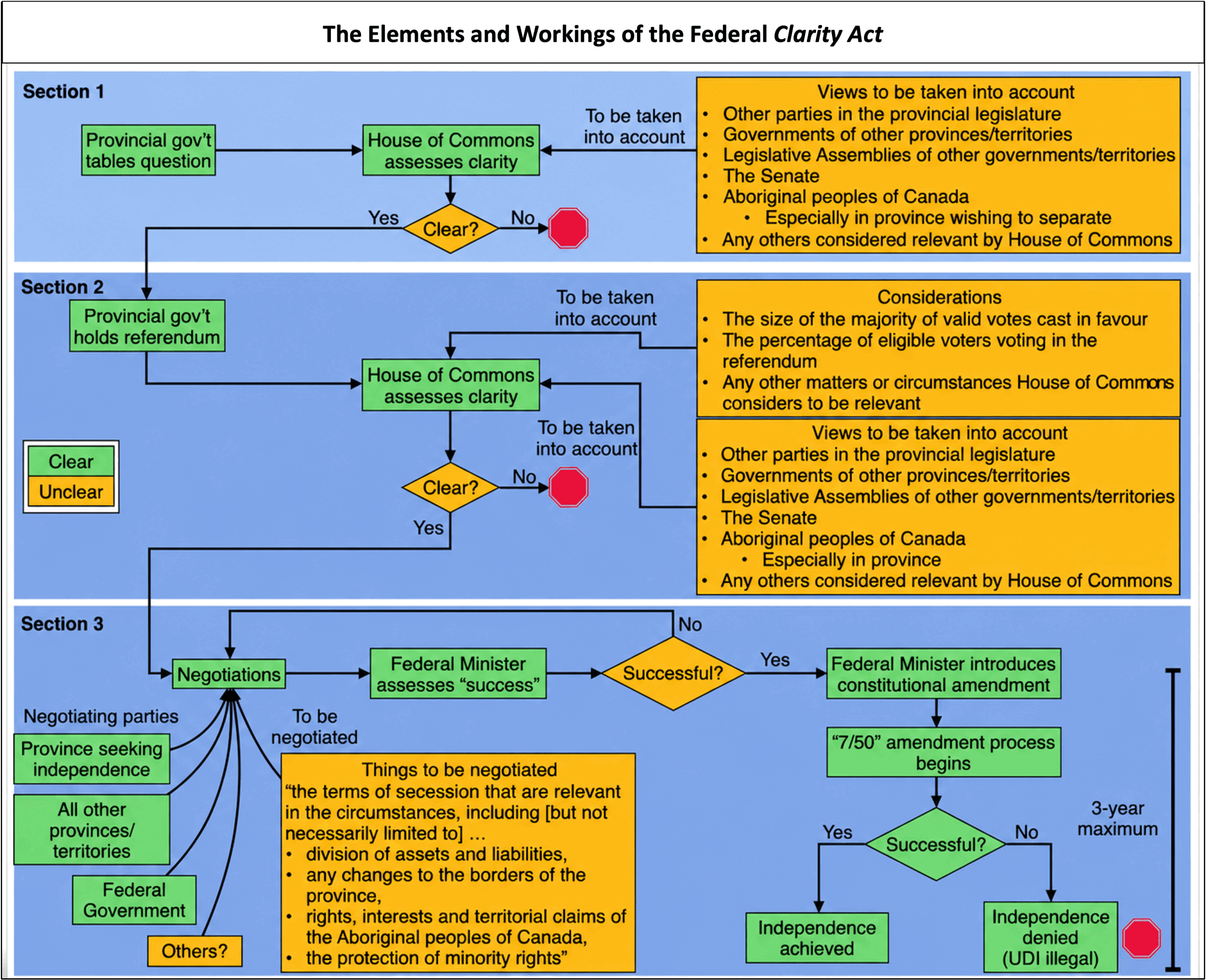
The processes described or alluded to in the Act are illustrated in the accompanying chart. The various aspects are colour-coded, green indicating “clear” and orange “vague”. The chart’s multiplicity of elements and flow-lines make it admittedly complex, possibly even confusing. Of note: this was as simple as we could make it. That plus the preponderance of orange fields is already suggestive of the Clarity Act’s overall clarity.
The Clarity Act’s Clear Elements
In its preamble (third paragraph), the Act acknowledges that any province has the right “to consult its population by referendum on any issue and is entitled to formulate the wording of its referendum question.” [Emphasis added] This right is absolute and unqualified. In a law mentioning aboriginal interests three times, no role for aboriginals is specified or even implied here. This provision reflects Supreme Court of Canada precedent and has never been amended or challenged in court.
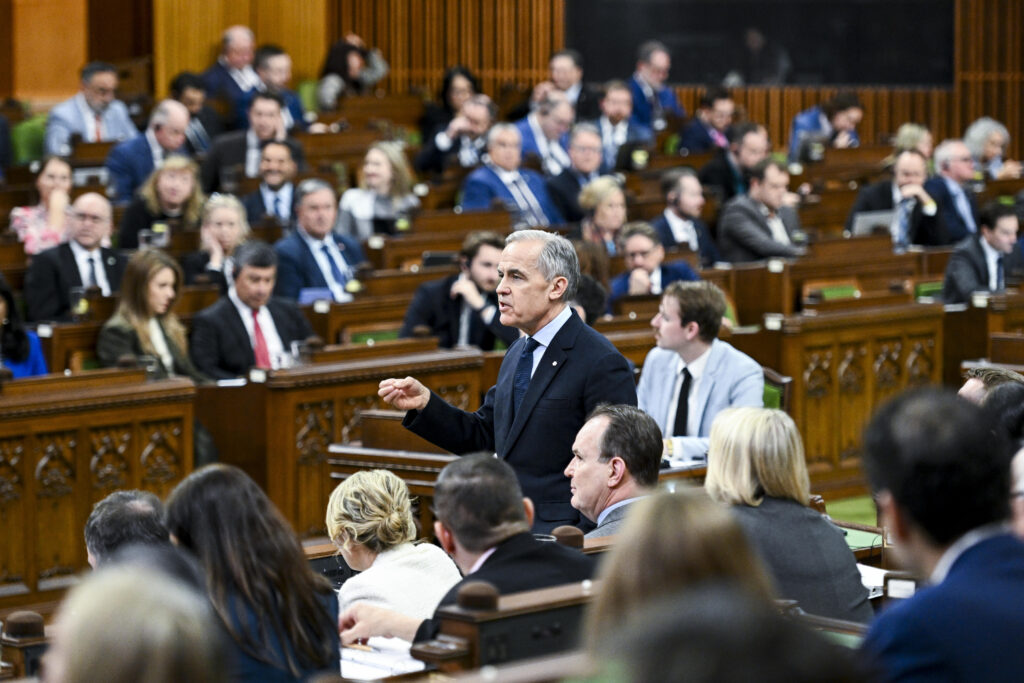
Should a referendum question concern a province’s separation from Canada, s. 1(1) of the Act empowers the House of Commons, at its sole discretion, by simple majority vote on a resolution, to determine “whether the question is clear.” The Act specifies that two types of question shall be deemed unclear: one that seeks only “a mandate to negotiate” anything other than actual independence, or one that “envisages other possibilities in addition to the secession.” Also specified is that the HoC must set out its determination regarding the question’s clarity within 30 days of the province releasing its proposed question.
Following a provincial referendum on secession in which most of the ballots cast supported separation, s. 2(1) empowers the HoC, at its sole discretion, by simple majority vote on a resolution, to “set out its determination on whether, in the circumstances, there has been a clear expression of a will by a clear majority of the population of that province that the province cease to be part of Canada.” If not, s. 2(4) explicitly forbids any negotiations concerning independence.
The first paragraph of the Act’s preamble refers to the Supreme Court’s previous ruling that a unilateral declaration of independence by Quebec is unlawful under both Canadian and international law. Section 3(1) then notes that Canada’s Constitution does not provide for a path to secession for any province.
Accordingly, if there has been a clear expression, s. 3(1) states that “an amendment to the Constitution of Canada would be required for any province to secede from Canada.” The Act is silent on the approval threshold for such an amendment, thus implying that Canada’s existing “7/50” amending formula would be followed. It provides that the Government of Canada plus the legislatures of a minimum of seven provinces collectively representing at least 50 percent of Canada’s population agree to and pass the amendment.

Finally, s. 3(2) states that no Minister of the Crown shall submit a proposed constitutional amendment to effect a province’s independence unless the Government of Canada is satisfied that “the terms of secession that are relevant in the circumstances” have been satisfactorily “addressed” in areas such as finances, borders, aboriginals and minorities.
The Clarity Act’s Unclear Elements
Referendum question – Aside from describing two things that would make a question unclear, as mentioned above, the Act provides no criteria to determine whether a question is clear. In its assessment and determination of a question’s clarity, the HoC is required to “take into account” the views of a number of entities – including aboriginal groups – as listed in the chart above, plus any other views that the House might consider relevant.
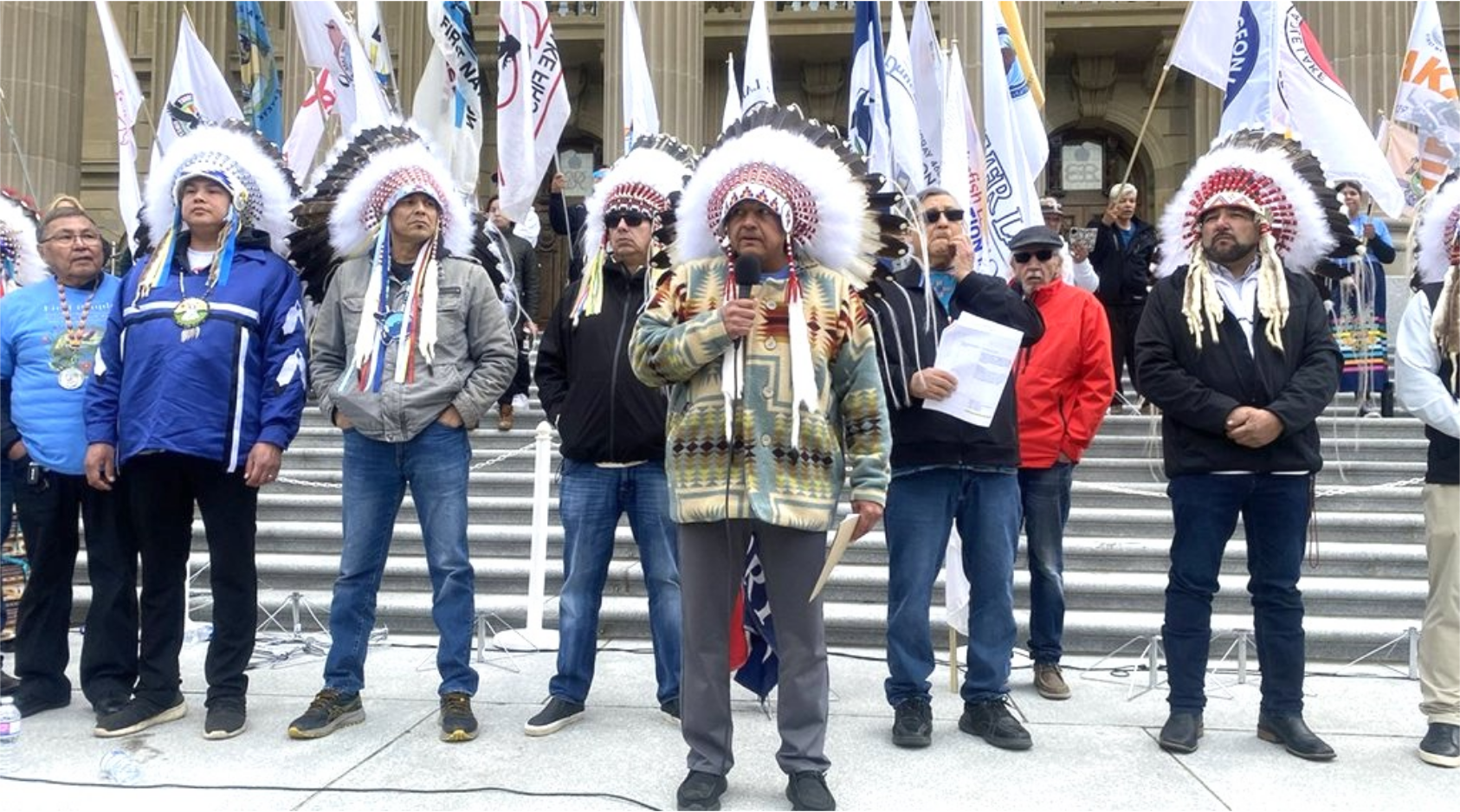
The Act is silent, however, as to whether opposition from all, some or even one of these other entities would require the HoC to deem the question unclear and thus forestall a province from holding a referendum on that particular question. And while the Act does not specify an aboriginal veto regarding the question, that does not mean one won’t be claimed when the time comes (as we saw with the recent court case in Alberta).
As Scott Reid, author of the 1994 book Canada Remapped that examined the potential partitioning of Quebec in the event of the province’s separation from Canada, and a veteran Conservative MP (Lanark-Frontenac-Kingston), notes drily in an interview, “What would have been appropriate in the Clarity Act, would have been among other things, the actual wording for a question.”
Referendum result – The Act lists no criteria to determine whether there has been “a clear expression of a will by a clear majority of the population of that province that the province cease to be part of Canada.” Section 2(2) requires the HoC to “take into account” the “size of the majority of valid votes cast in favour of the secessionist option” and “the percentage of eligible voters voting in the referendum.” But the term “take into account” is not defined, nor is how the two listed factors are to be used in determining whether the results are a “clear majority”.
Who gets to decide whether there has been a clear expression by a clear majority? Why, virtually anyone and everyone, for the Act requires the HoC to ‘take into account’ the ‘views’ of all the same entities that got to weigh in on the question’s clarity. Anyone and everyone, that is, except the province that wishes to become independent.
It is widely accepted that a bare “50-percent-plus-one-vote” majority should not be sufficient to trigger something as momentous as provincial secession, and the Clarity Act recognizes this indirectly by noting in its preamble that, “the Supreme Court of Canada has stated that democracy means more than simple majority rule.” But what would “democracy” mean in this case? Would a seemingly decisive 70 percent vote in favour of independence with a 70 percent turnout be rejected, because the “Yes” vote represented only 49 percent of the province’s eligible voters? Or would an even heavier 75 percent “Yes” vote with a 75 percent turnout – 56.25 percent of eligible voters – but with a 96 percent “No” from aboriginal voters (the latter aspect indeed occurring in Quebec’s 1995 referendum) lead to a determination that this was not a “clear majority”?
As if this weren’t unclear enough, the Act then adds that the HoC “shall” take into account “any other matters or circumstances it considers to be relevant,” without any specificity or limitations. Would, then, an overwhelming vote of 78 percent in favour with a 78 percent turnout but a decided urban-rural split – again, as happened in Quebec in 1995 – lead to rejection? And should not a matter of “utmost gravity,” as the Clarity Act’s preamble puts it, perhaps require majority support in every single constituency across the province? Maybe even a super-majority. Who can say? The Clarity Act certainly does not.
Who gets to decide all this? Why, virtually anyone and everyone, for the Act requires the HoC to “take into account” the “views” of all the same entities, including every province and territory, that got to weigh in on the question’s clarity, as well as “any other views it considers to be relevant.” Anyone and everyone, that is, except the province that wishes to become independent.
Negotiations on secession – Should the many required consultations somehow lead to a determination that the referendum’s results constituted a “clear majority” in favour of independence, the sixth paragraph of the Act’s preamble states that the following “negotiations would be governed by the principles of federalism, democracy, constitutionalism and the rule of law, and the protection of minorities.” This statement alone creates a formula for almost unlimited haggling and litigation, in either courts of law or the court of public opinion, regarding each term’s meaning and effects.
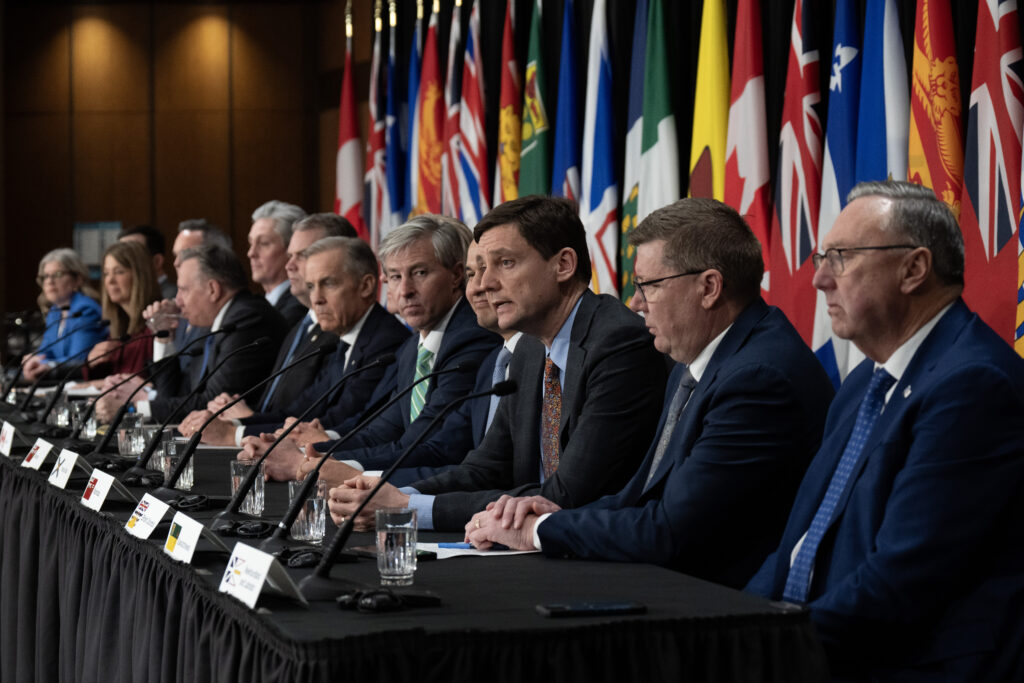
The Act also specifies that the resulting negotiations to effect secession must involve “at least the governments of all of the provinces and the Government of Canada.” [Emphasis added] This wording enables the federal government to add other parties to the negotiations, apparently without limit. The negotiations will either be multilateral, with the province that wishes to separate facing a dozen or more parties opposed to it or, perhaps, bilateral with a unified “No” side creating a veritable phalanx of opposition.
The words ‘deal’, ‘agreement’, ‘conclusion’ or ‘memorandum of understanding’ appear nowhere in the Clarity Act. It is almost as if the Act’s framers never wanted such a process even to begin – let alone to end.
Constitutional amendment – The Act prohibits introducing any constitutional amendment for provincial independence “unless the Government of Canada has addressed, in its negotiations, the terms of secession that are relevant in the circumstances, including the division of assets and liabilities, any changes to the borders of the province, the rights, interests and territorial claims of the Aboriginal peoples of Canada, and the protection of minority rights.” [Emphasis added]
The word “addressed” is not defined. And even this formidable set of obstacles must be read as a minimum list. “Including” allows the federal government to introduce any other terms it considers “relevant”. Otherwise, the Act’s framers would have chosen “comprising” or “which are”. Instead, they left the terms open-ended and Ottawa free to choose more.
Completion – While as noted the Act prohibits the federal government from proposing a constitutional amendment to effect a province’s separation before the “terms of secession” have been “addressed,” it provides no criteria to determine how/when this has been accomplished. It does not define or even describe the end of the negotiating process. The words “deal”, “agreement”, “conclusion” or “memorandum of understanding” appear nowhere in the Clarity Act. It is almost as if the Act’s framers never wanted such a process even to begin – let alone to end.
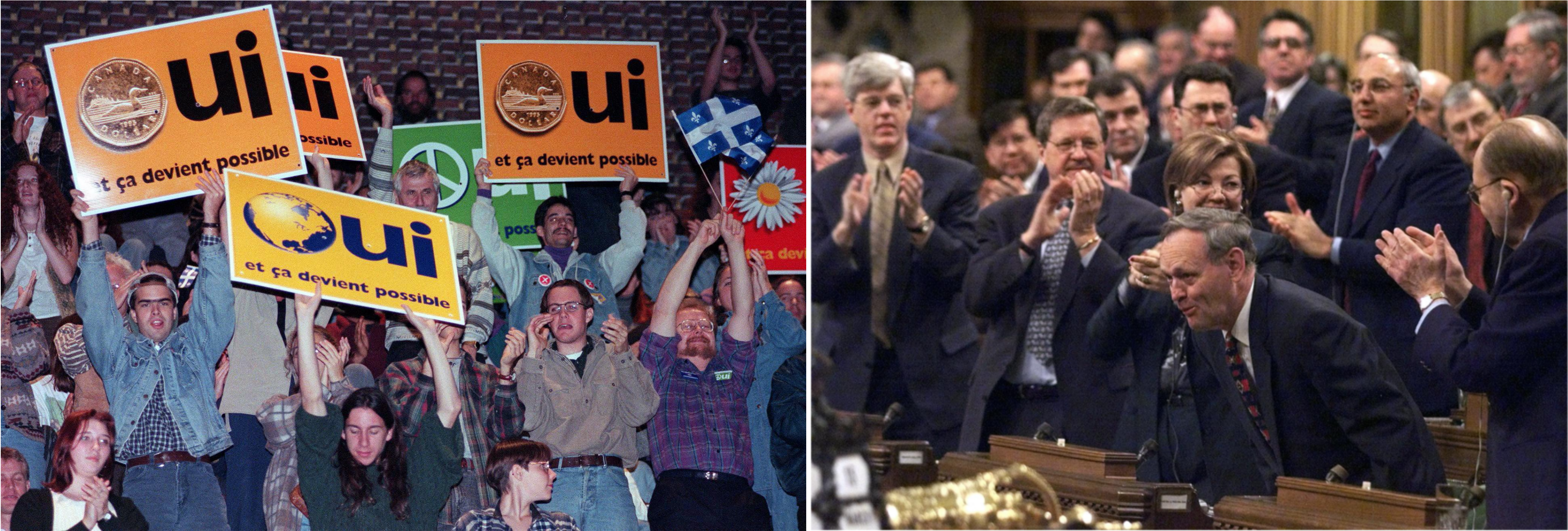
Phalanx of opposition: In any secession negotiations, the Clarity Act requires the involvement of all provincial governments and the Government of Canada – along with any other parties Ottawa would deem relevant. (Source of photo: The Canadian Press/Adrian Wyld)This brings us to the conclusion of Part I of C2C’s two-part series on the federal Clarity Act and what it means for Albertans as they move closer to a referendum on independence from Canada.

Coming in Part II:
- How the seemingly bizarre Clarity Act came into being;
- Who its original target was;
- What the Clarity Act’s history and wording mean for Albertans today;
- The threat the Clarity Act poses to not just to separatist Albertans but those who wish to remain in Canada; and most importantly
- A possible way out of the mess.
Jim Mason holds a BSc in engineering physics and a PhD in experimental nuclear physics; he lived and worked in Alberta for 17 years and is currently retired and living near Lakefield, Ontario.
George Koch is Editor-in-Chief of C2C Journal.
Source of main image: ChatGPT.