July 1, 2015 was a special day in Picton, Ontario. Alongside festivities befitting Canada’s 148th birthday, the picturesque tourist town on Lake Ontario known for its wineries, art galleries and wide sandy beaches was also celebrating one of our country’s greatest heroes. Long before he was “Sir”, an elected official or even a fully-fledged lawyer, Canada’s first prime minister made a name for himself in Picton.
Thirty-four years before Confederation – when Picton was known as Hallowell, Upper Canada – an 18-year-old legal apprentice named John A. Macdonald arrived in town to help with his cousin’s law practice. With his cousin in poor health, Macdonald was soon running the office – as he would later run the entire country. In the heated political atmosphere ahead of the Rebellion of 1837, however, the outspoken Macdonald found himself in hot water over a nasty public dispute with Thomas Moore, a local doctor. Moore was a Reformer; Macdonald a Tory. Their row got so heated that both were charged with assault. Their cases were heard on the same day at the local courthouse. Moore went first, was found guilty, and received a token fine of six pence.
Next came legal apprentice Macdonald arguing his first case before judge and jury – representing himself though he had not yet even been called to the bar. While there’s no surviving transcript, contemporary records indicate that Macdonald “won the day with his logic that all colonists, not just landowners and British appointees, had the right to freedom of expression in a public place.” Macdonald scholars today say the trial “marks the moment when John A. came of age,” proving “that he was effective in both the courts and the court of public opinion.”
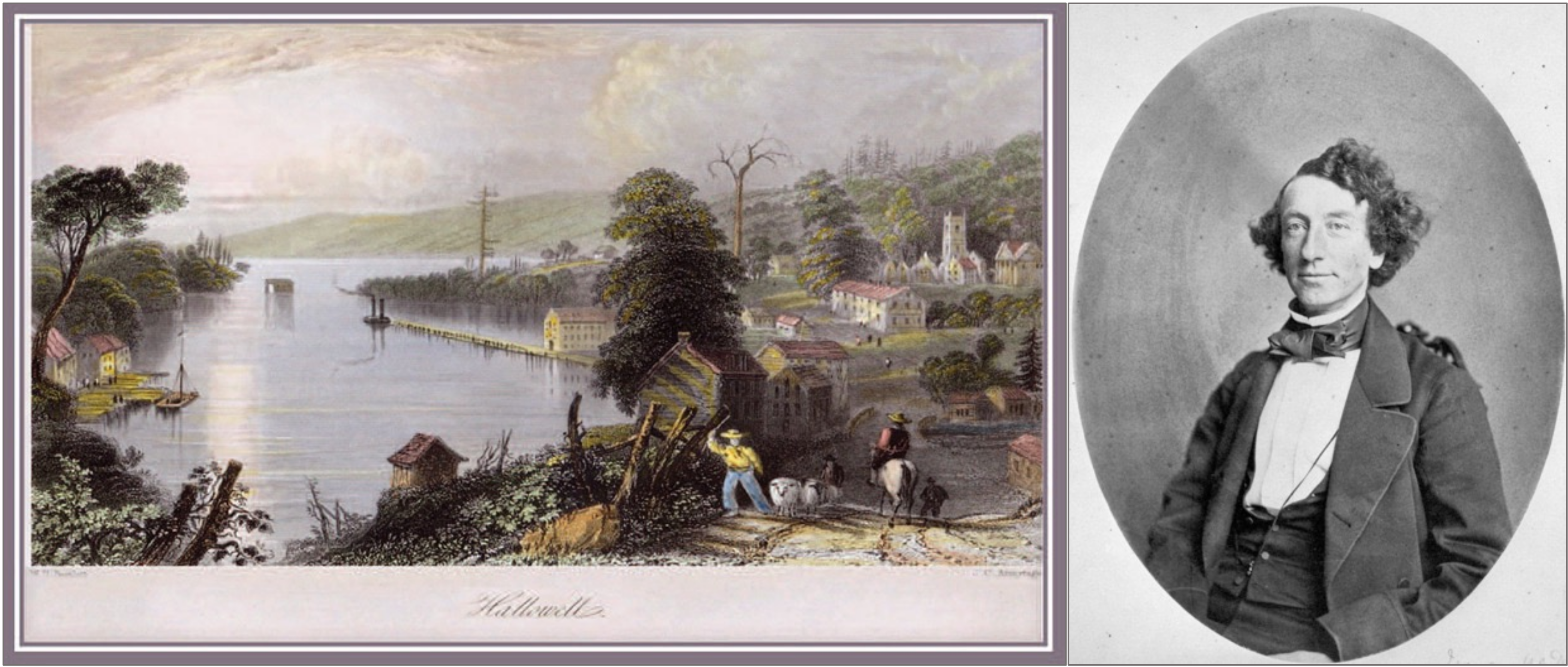
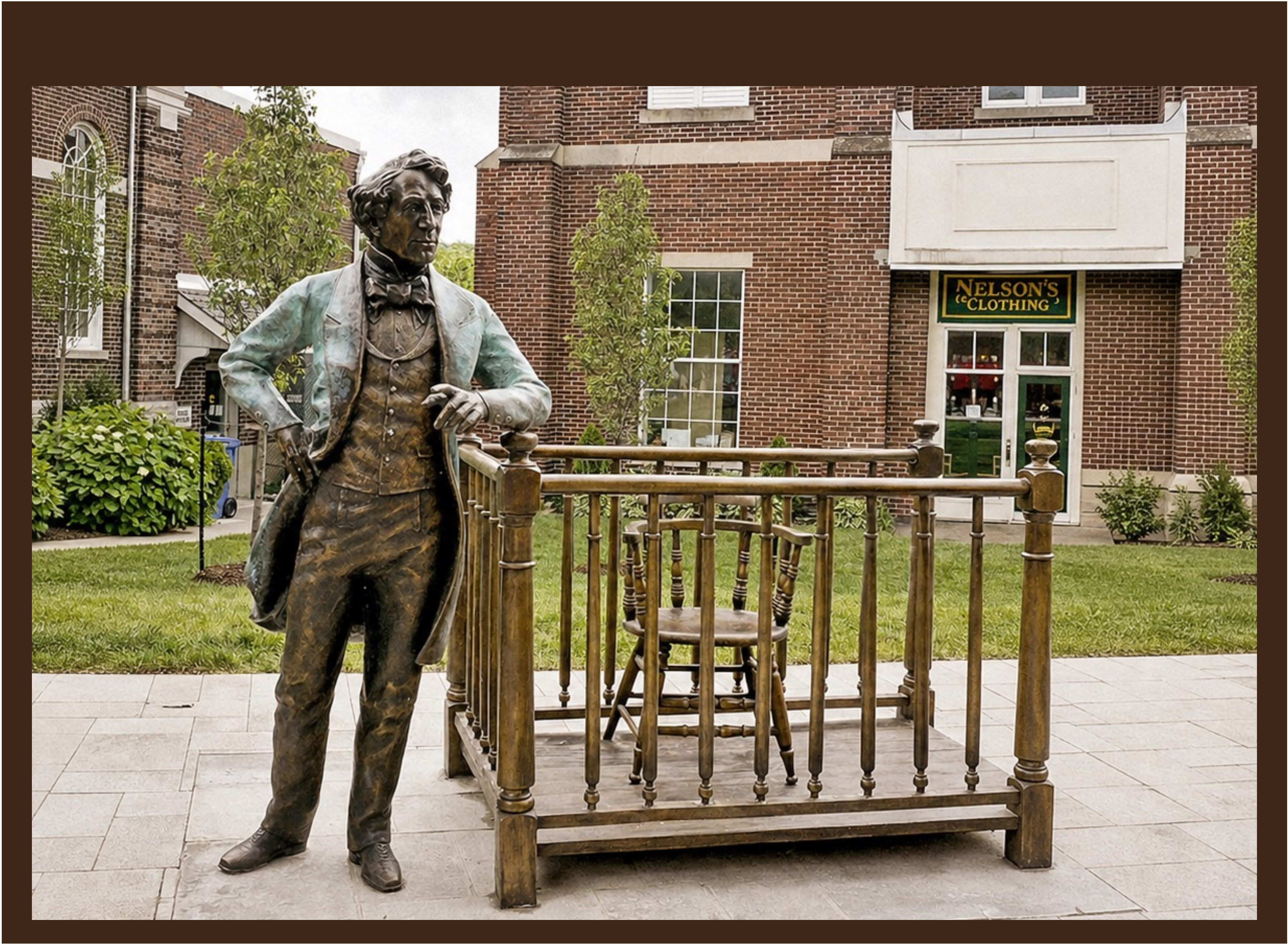
One-hundred-eighty-one years later, Picton’s elected council decided to immortalize the moment in bronze. The Macdonald Project, a local history group, commissioned renowned artist Ruth Abernethy to create a sculpture of young Macdonald arguing in defence of free speech. It was unveiled at a large and joyful ceremony on Canada Day, 2015.
Less than six years later, Abernethy’s creation was gone.
A community that once celebrated Macdonald’s presence on Main Street as a point of historical significance and civic pride decided he was a murderous white supremacist whose likeness posed a threat to “public safety” and had to be removed. Examining how things turned so quickly in Picton and what has happened since the statue disappeared lays bare the inner workings of the historical revisionism that is plaguing Canada. It also points to the slow, painstaking process that will be required to replace misinformation and national self-loathing with historical fact.
The Pendulum of History Swings
The time between the sculpture’s July 2015 installation and its June 2021 removal was a tumultuous one for Canada and its history. It began with pride and pomp. In 2015 more than 5,000 people showed up for the Canada Day ceremony in Picton – including historical reenactors in period dress such as local Macdonald impersonator Brian Porter, plus scores of dignitaries including Ontario Premier Kathleen Wynne and Macdonald biographer Richard Gwyn.
The dedication began with the Prince Edward County Pipes and Drums marching down Main Street, followed by a collective singing of O Canada. Actor R. H. Thomson read the eulogy delivered by Sir Wilfrid Laurier in the House of Commons two days after Macdonald’s death in 1891, praising him as “Canada’s most illustrious son, and in every sense Canada’s foremost citizen and statesman.”
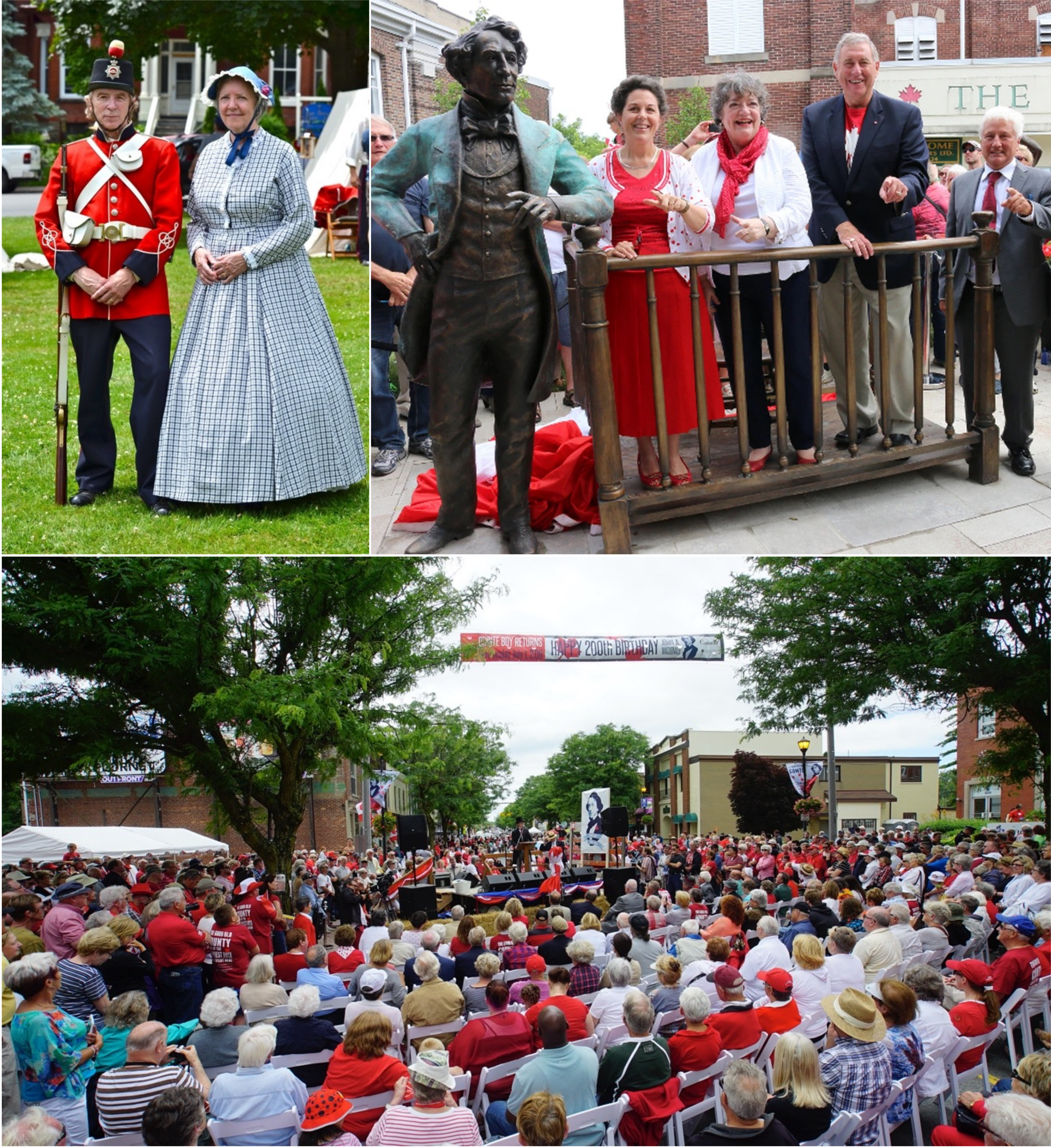
Then Abernethy’s work was unveiled at a prominent Main Street location. Entitled Holding Court, it depicted a teenaged Macdonald in formal legal attire standing beside the prisoner’s dock in the Picton courthouse. The bronze chair in the dock sits empty because Macdonald was both defendant and counsel that day. Cleverly, it invites passersby to have a seat and insert themselves into the scene.
Abernethy is widely known for her innovative life-sized bronze statues of Canadian public figures such as musicians Oscar Peterson and Glenn Gould, poet John McCrae (author of In Flanders Fields) and numerous politicians. Today she says Holding Court is among her best works and fondly remembers the unveiling ceremony. “It was a public party with a great sense of celebration and respect,” she recalls in an interview. (The quotation above of how Macdonald “won the day” in 1834 comes from her autobiography Life and Bronze: A Sculptor’s Journal.)
 From pride to shame: Prime Minister Justin Trudeau’s Liberal government made hating Canadian history publicly acceptable. Shown: top left, Trudeau “taking a knee” on the grounds of a former Indian Residential School; top right, Macdonald’s statue in Picton heading for storage, June 2021; bottom, a Cancel Canada Day rally on Parliament Hill, July 2021. (Sources of photos (left): The Canadian Press/Liam Richards; (right): Picton Gazette; (bottom) Paul McKinnon/Shutterstock)
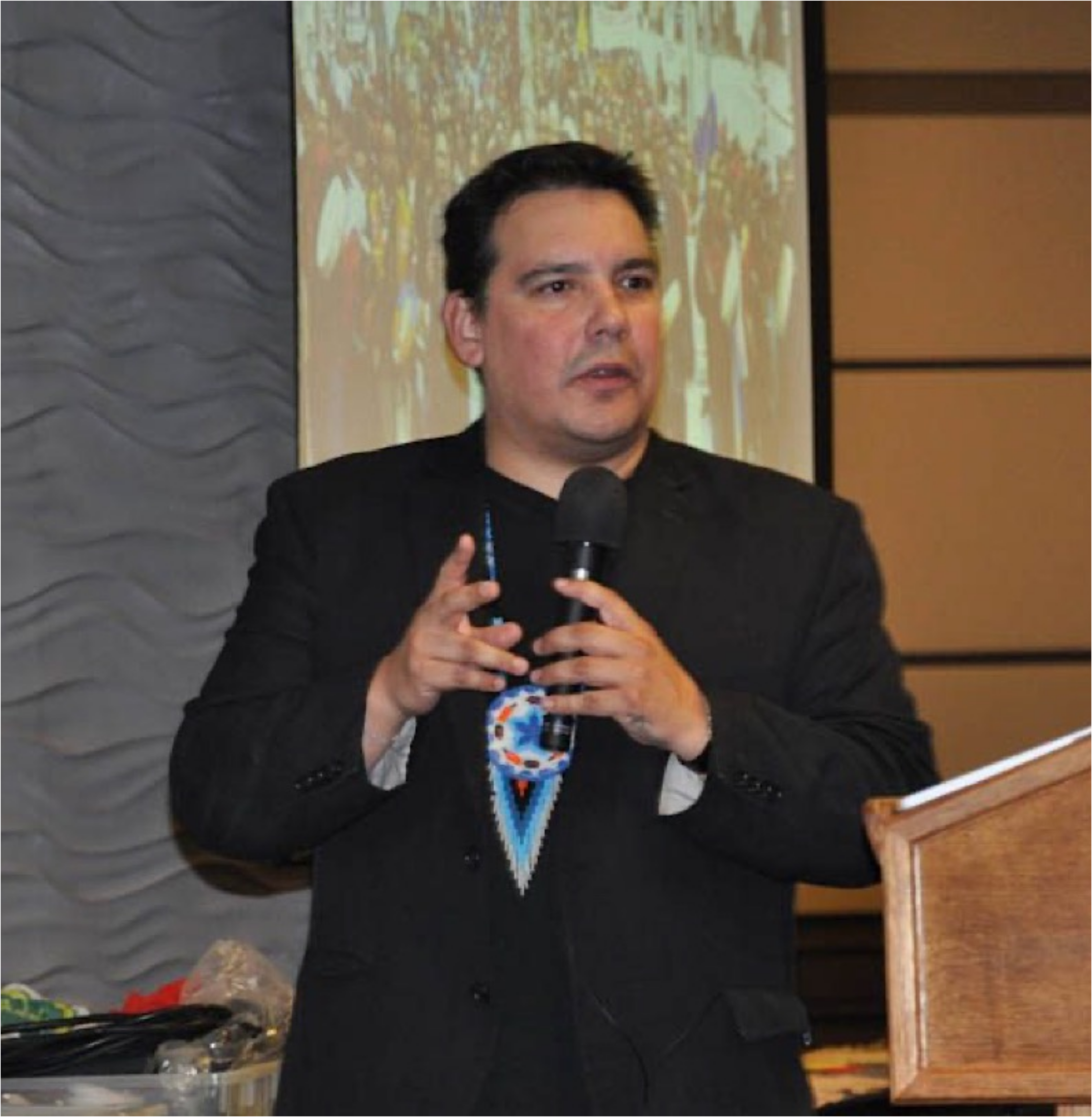
This renewed public agitation, bolstered by an online petition, led the local school board and library to invite Indigenous journalist Niigaan Sinclair, who has never been shy about his hatred of Macdonald, to give a presentation. “Violence is violence is violence,” Sinclair told Picton residents as he claimed to be weighing the pros and cons of Macdonald’s legacy. “What I mean by that is Macdonald’s career, while remarkable and important and impactful, is defined by incredible brutal and draconian violence, particularly against Indigenous Peoples.” The statue was nonetheless returned to Main Street in December 2019. This time, however, Prince Edward County Council (the municipal authority in Picton) promised to hold an official consultation on the matter.
Even in 2019 it remained acceptable to quibble over the finer points of Macdonald’s reputation while acknowledging his unparalleled contribution to the creation of Canada. That changed with the Kamloops allegations. With Trudeau himself leading the charge, Macdonald’s legacy headed straight into the gutter without regard for his accomplishments. On June 7, 2021 Prince Edward County Council voted 13-1 to remove him from his Main Street locale, with a vague commitment to “consider a future public location…in the next 12 months.” The sculpture is still in storage. Cancel culture had come for Canada’s first prime minister, a man who was already dead nearly 140 years.
“History should not be a case for the prosecution”
Fast-forward to April 21, 2026. With no sign that council intended to fulfill its promise for a new location, councillor Brad Neiman – the lone “No” vote in the earlier 13-1 decision – moved that Holding Court be reinstalled at its old location in downtown Picton. Placing the topic on the council’s agenda in this way turned the meeting into a referendum on Macdonald and his legacy.
Spearheading the campaign to bring back Macdonald was Toronto lawyer and history buff Mark Johnson, representing the grassroots group Save Our History. Johnson recruited several other historians and public commentators in support, including J.D.M. Stewart, author of the recently published The Prime Ministers, and me. My book SLEEPWOKING examines the lamentable trend of historical revisionism throughout Canada and has a chapter on “The Trashing of John A. Macdonald.”
In his appearance before council, Johnson called Macdonald “our most important prime minister” and cited a poll from nearby Kingston showing 70 per cent of its residents want their own local statue of the man reinstated. He also pointed to the recent unboxing of a statue of Macdonald at Queen’s Park in Toronto and plans to revive the Prime Ministers’ Path in Wilmot, Ontario – a series of ground-level statues of Canada’s prime ministers set in a park – as further evidence that Canadians are beginning to shed their historical self-loathing.
Aware of the sensitivities in play, however, Johnson opened his presentation by acknowledging the many hardships and injustices suffered by Canada’s native people. “The request I am making is not in any way to diminish or decrease the tragedy of residential schools,” he said. “Instead, it is about the rightful place to honour Sir John A. Macdonald.” The real challenge, he said, was balancing the excess of emotion generated by the Kamloops claims. “We believe [removing the statue] was too rash for reasoned conversation and debate,” said Johnson. “It was more reactionary rather than thoughtful.”
Stewart and I each had three minutes for our own presentations. I used my time to point out the factual inaccuracies in popular claims made about Macdonald and his legacy. Stewart argued for a more nuanced approach to history, elegantly concluding that, “History should not be a case for the prosecution.”
Macdonald the Murderer
Macdonald’s detractors were then given the floor, spending the ensuing 90 minutes attacking and condemning him with blatant disregard for historical accuracy. It was as if the audience took Johnson’s observations about the reaction to Kamloops as a challenge rather than a warning. In place of reliable historical evidence came an onslaught of anger and emotion. What I witnessed was horrifying to anyone who values facts and reasoned discussion.
Citing the 215 graves in Kamloops as fact, local Cree resident Shannon Helm characterized the proposal to return Holding Court as a physical threat to her family. When her nine-year old daughter first glimpsed the statue, Helm said she asked, “Mom, do you think he would want to kill me too?” Next came Dree Seeley, who lamented the wholesale “settler occupation” of Prince Edward Country. Among Macdonald’s many sins, Seeley claimed, was responsibility for the much-despised Indian Act, a law actually passed in 1876 by Liberal Prime Minister Sir Alexander Mackenzie.
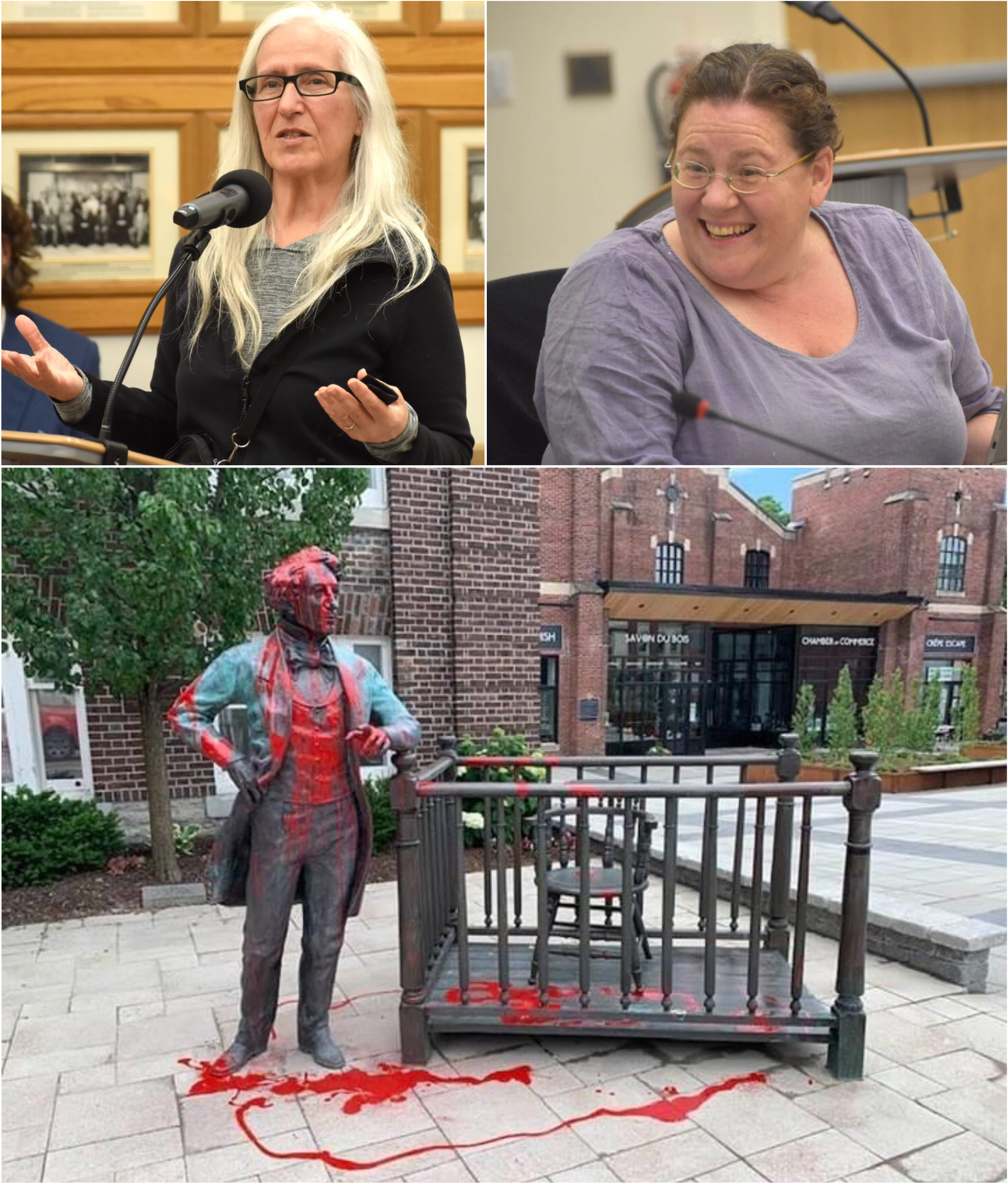 At the same meeting, numerous critics attacked Macdonald’s legacy and/or Johnson’s proposal, including local resident Christine Renaud (top left) and councillor Kate MacNaughton (top right), who warned that putting the statue back on Picton’s Main Street could incite “well-intentioned” young people to deface it. At bottom, the statue after being vandalized in 2020. (Sources of photos: (top left) Jason Parks/Gazette Staff; (top right) Jason Parks/Gazette Staff; (bottom) Steve Ferguson/Facebook)
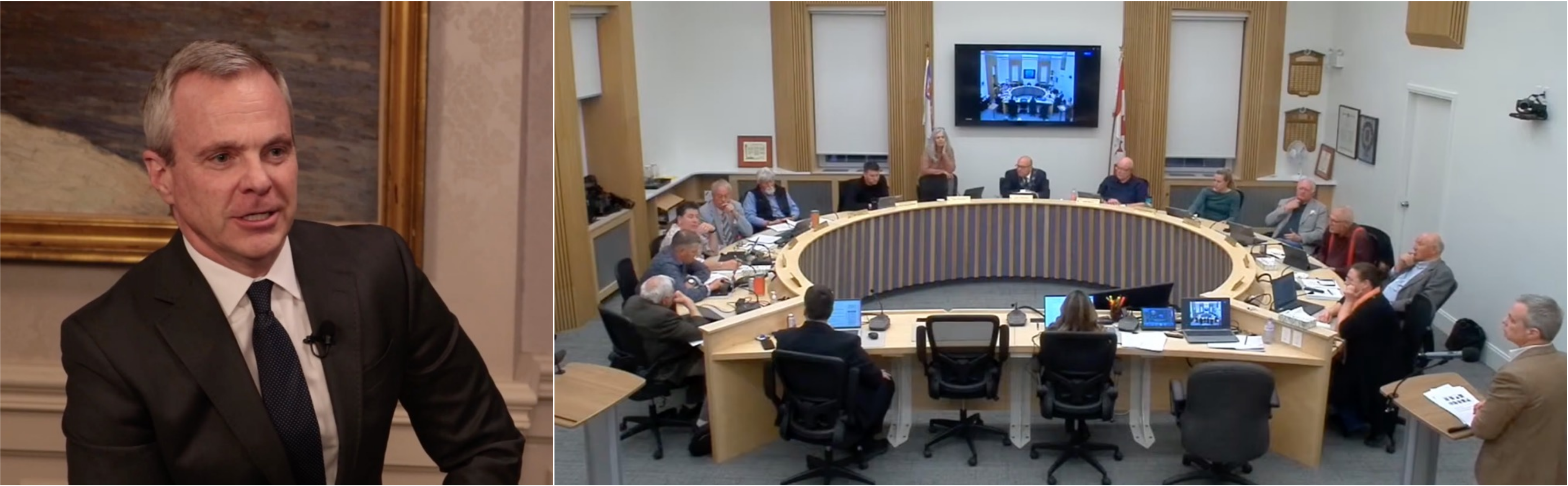
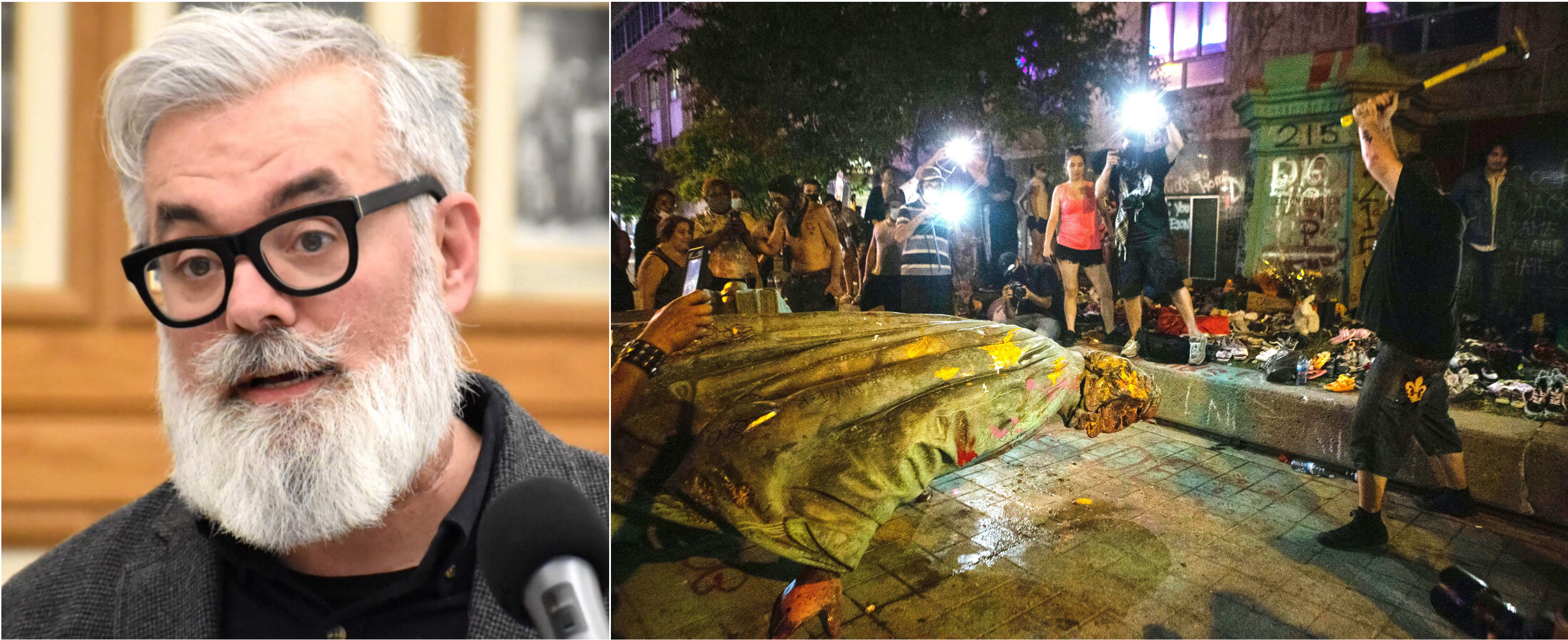 History is bad for business: Local Chamber of Commerce CEO Duarte Da Silva (left) told the local council that returning Macdonald’s statue could hurt struggling local businesses. At right, an Indigenous protestor chops off the head of a statue of Egerton Ryerson in downtown Toronto, June 2021. (Sources of photos: (left) Jason Parks/Gazette Staff; (right) The Canadian Press/Chris Young)
 No time for liars: The overwhelmingly negative public response to a planned CBC television show called Northland Tales that pranked various interviewees – including author Jerry Amernic (right) and fellow C2C contributor Frances Widdowson – about Macdonald’s legacy suggests Canadians are losing patience with activists who spread falsehoods about their history.
Also suggesting a mood shift is the public’s growing impatience with activists who masquerade as historians. Recently, I was among the targets of an elaborate attempt at “gotcha” journalism. Along with Macdonald impersonator Porter and several others, I was asked to participate in a CBC-backed TV show that was supposedly investigating the current mistreatment of Macdonald as part of an effort to clear his name. In truth, it was a prank meant to embarrass public figures who refused to accept the unproven Kamloops graves story. Its producers paid my way to Vancouver and gave me a generous honorarium. When filming began, however, the conversation quickly turned to Macdonald “starving” Indians in the 1880s.
In the controversy following the prank’s revelation, CBC disavowed and “paused” the program. It is no longer clear whether the show, Northland Tales, will ever see the light of day. Given the extensive publicity it has received – all of it negative – I suspect Canadians are growing tired of watching a bunch of jokesters lie about our history. The positive reception given to recent books by Dutil, Stewart and myself further suggests the public would rather hear the truth about their country and its past.
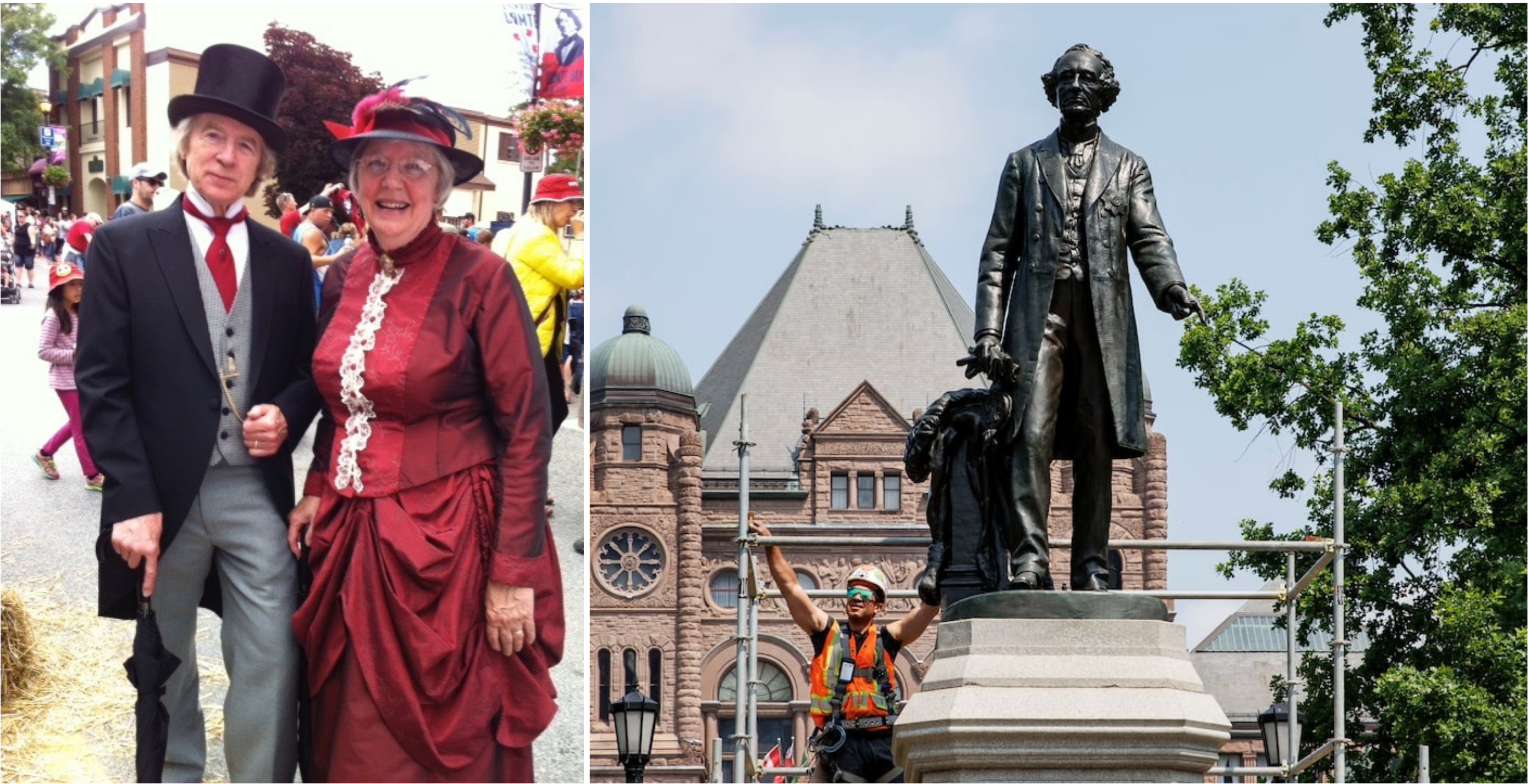
These modest green shoots admittedly will come as faint consolation to those hit hardest by a preference for emotions over facts. Sculptor Abernethy spent years studying Macdonald to properly capture him in bronze. Now her work is hidden away in a warehouse, another victim of cancel culture. Nor is she impressed with the April debate in Picton. “They had a chance to do something that was informed and proactive, and failed,” she says. “They opted to accept discord. It showed timidity on the part of the council and a lack of political conviction.”
As for Porter, the Macdonald impersonator, his business has also been damaged. A retired schoolteacher from Brockville, Porter began appearing as Canada’s first prime minister in 1990 after immersing himself in the man. “I really began to like this guy,” he recalls. Since then, Porter has done hundreds of performances, some with his wife Renee portraying Macdonald’s second wife, Lady Agnes. In 2015 there were 29 events. On Canada’s 150th anniversary in 2017, 35 events. Then the tide turned. In 2018 he was down to two performances. Since 2021, nothing. “The historical illiterates with their highly emotional narrative have taken control of the agenda,” says Porter resignedly. “And officials everywhere have bowed to ignorance.”
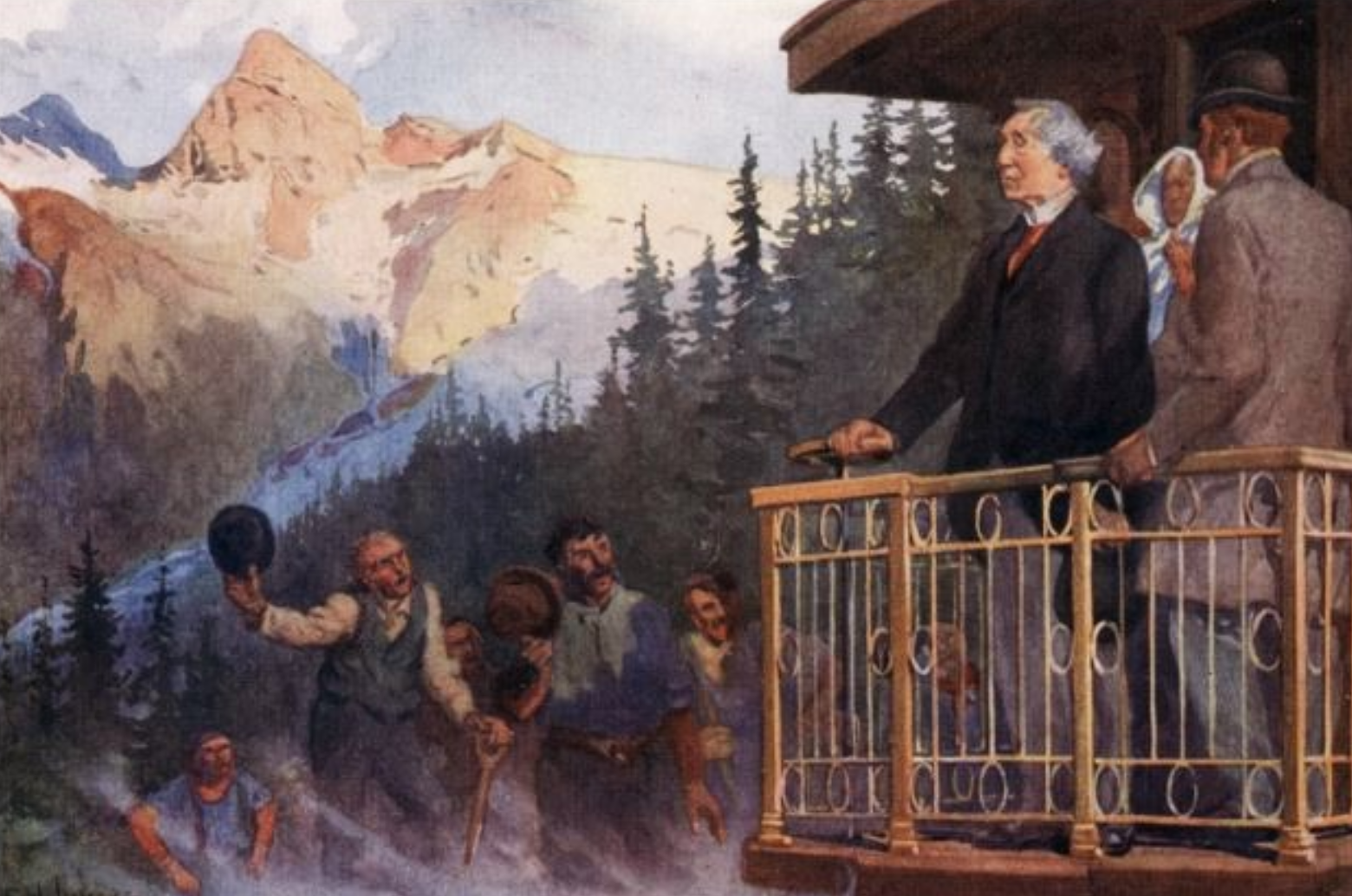
But the last word ought to go to the man at the centre of it all. In 1861 Macdonald, by then a well-known figure in Upper Canada politics, returned to the town where his public career began and addressed a crowd of supporters on the steps of Picton’s courthouse. “Some of the happiest days of my life were spent here,” the Picton Gazette reported Macdonald as saying. “I here obtained my earliest professional education, and here, in this good old town of Picton, I earned my first fee and made my first speech to a jury, in this very Court House.”
He then added, “Like all political men, I have been subjected to continual attacks….I think you will agree with me, if you are in the habit of reading that very able and zealous newspaper called the Globe, that for the last 7, if not 14 years, I have been the best abused man in Upper Canada, insomuch that if half that has been said of me were true I should not be worthy of being a member of the Provincial Parliament, but should rather have earned my place in the Provincial Penitentiary.” The newspaper noted that the crowd then burst into laughter.
In some ways, little has changed since 1861. Sir John A. Macdonald is still among the most significant and recognizable figures in Canadian history. He still enjoys great support in mainstream Canada. And he’s still the “best abused man” in the country.
The fight for historical truth continues, in Picton and elsewhere.
Jerry Amernic is a journalist and novelist based in Toronto. His most recent book, SLEEPWOKING, chronicles the rise and impact of historical revisionism in Canada and is available on Amazon.
Source of main image: Ruth Abernethy.