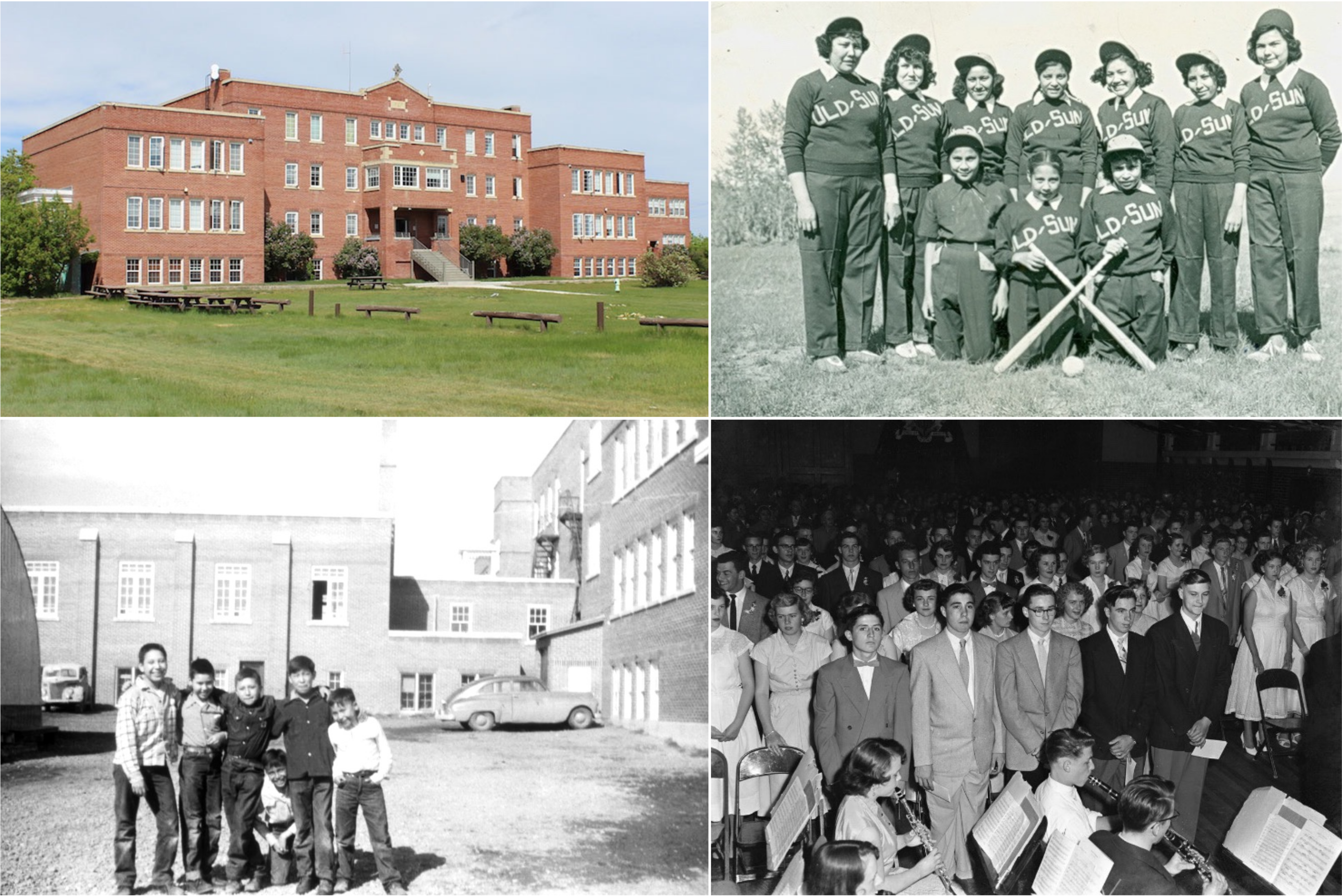
In September 1951 when I was six years old, I enrolled in Old Sun Anglican Indian Residential School as my parents had done when they were six years old. My paternal grandmother, Rosie Ayoungman, had a very positive impression of Old Sun because she was an orphan and the Anglican priest and his wife brought her up during the late 1800s and early 1900s. Because of her upbringing at Old Sun, she spoke both English and Siksika very well. As a result of her good Anglican upbringing, some people were jealous and sometimes called her Nabeeaki – “white woman”.
I was a student in Old Sun for 10 years. I went to elementary school and junior high school in the residential school classrooms. When I graduated into high school, I went to schools in Calgary, and during those years I boarded with non-Indian families. In other words, I was integrated with non-Indian students in the schools, and I lived with non-Indian families. I was an ambassador for both my family and the Siksika.
Readers may not know that in 1948, the federal government (the Prime Minister then was William Lyon Mackenzie King, a Liberal) decided that Indian students should not attend segregated schools when they could attend integrated schools where both Indian and non-Indian students would be educated. It may surprise some people to read that the integration of Canadian Indian students was initiated six years before the world-famous United States Supreme Court case on racial integration, Brown v. Board of Education of Topeka. In fact, the Siksika students were among the first Indian students to be integrated into public schools in the 1950s and 60s.
When I arrived at Old Sun for Grade 1, I had three siblings in the residence: my brothers Randy and Matthew, and my sister Rosella. Six other children were born into our family after me, and three of them attended Old Sun. The residential school was about 15 miles from our farm, and my parents, who wanted us to be educated, signed admission forms so that we could go to Old Sun. They were happy that we went to school, and we were happy to go.
After I was married, non-Indigenous friends would ask if I had gone to a residential school. Of course, I said “Yes,” but soon I changed my answer to, “I went to a private Anglican school.” I wanted people to think that my residential school experience was as good as the experiences of non-Indian students who attended private boarding schools. This is a typical Siksika way of shaping a story so that it is humorous and memorable.
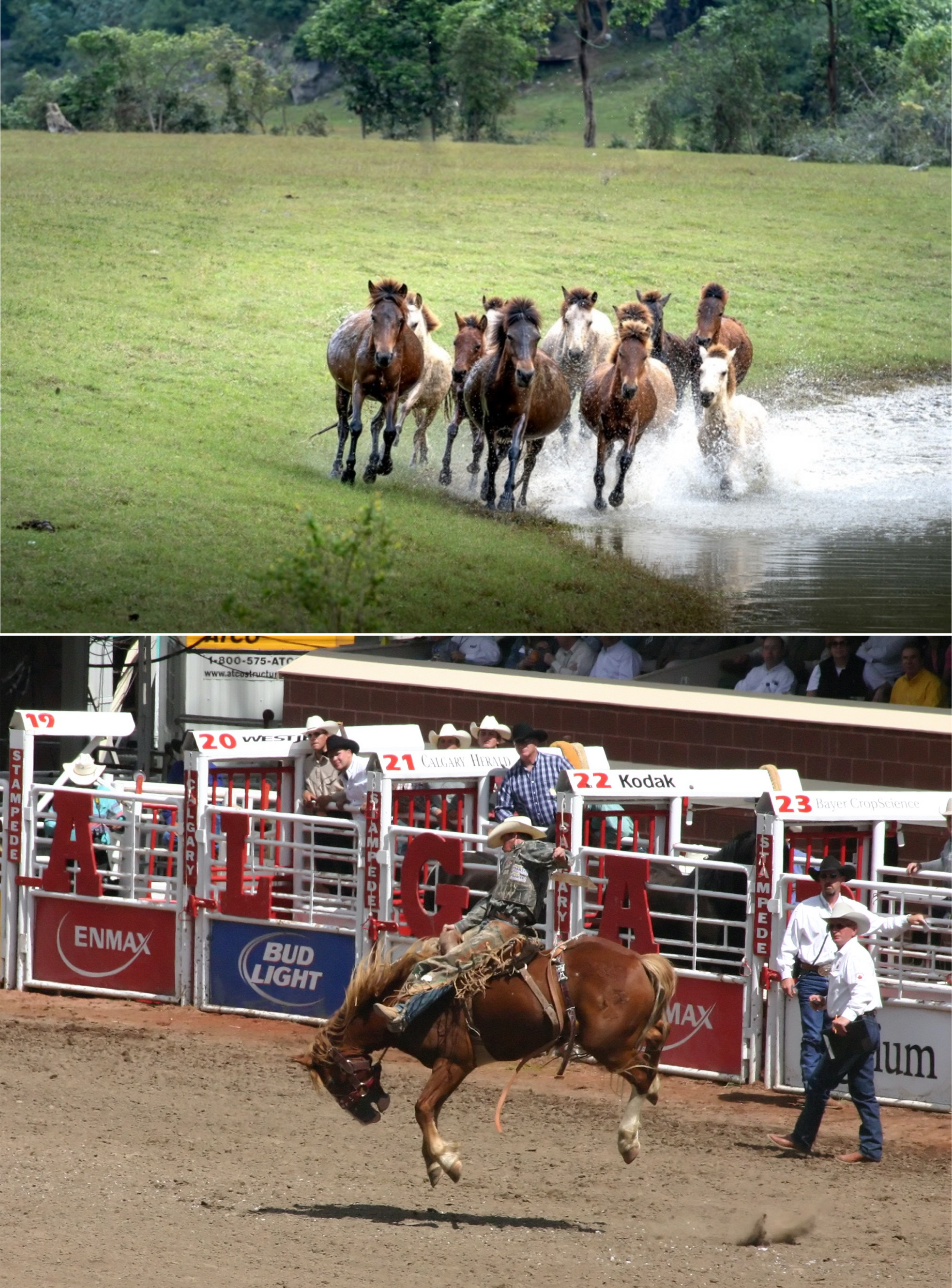
My father, Arthur Ayoungman, was a farmer and rancher. Our family had the use of good fields for growing crops, and we used a large pasture along the Bow River that flowed through the reserve. We had beef cattle in the pasture and saddle horses, chickens and pigs in the farmyard.
I grew up with horses and learned to ride and look after them at an early age. For all the Blackfoot – the four tribes of the old Blackfoot Confederacy were the Siksika, Kainai, Northern Piikani and Southern Piikani or Blackfeet, who live in Montana – horses are considered extremely valuable assets, and my extended family had herds of about 600 wild horses in this pasture. The horses were branded, but they were not halter-broken. In fact, they ran wild like horses did before the land was divided up with barbed-wire fences. Readers will be interested in knowing that before the Calgary Stampede Board set up its own ranch for raising and training livestock, the Board rented our wild horses as bucking broncos for the Calgary Stampede.
My parents were prosperous in comparison with many other Siksika families. They were strong Anglicans and never drank alcohol like many other people. Because of what I saw, to this day I have a great dislike of alcohol and a disrespect for people who drink. Even when I was a young child, I had seen alcohol destroy the lives of many people.
Now, let me tell you about Old Sun, the school I attended.
We had two residential schools on the Siksika First Nation, Old Sun, the Anglican school, and Crowfoot, the Roman Catholic school. No doubt you noticed that these two schools have Indigenous names. The schools were, in fact, named after particularly important Siksika chiefs who signed Treaty 7. Readers may be surprised to know that about 40 percent of the 143 residential schools that are listed in the Truth and Reconciliation Commission Reports of 2015 had Indigenous names.
With that interesting fact in mind, you may not be so surprised to read that I had a wonderful time while I was a student at Old Sun. Like many other Indigenous children, I was very shy when I began school. None of us knew how to speak English, but the teachers were often very patient, and we soon learned English words and phrases. I remember specifically learning to read the Dick and Jane readers, and my Grade 1 teacher, Mrs. Homer, was very kind to me and the other students. I was too shy to read while sitting at my desk, so she would bring me to her desk, put her arm around my waist, and then I could read to the other students. Of course, it was difficult at first, but I soon became a confident reader.
Today I reside in the Misericordia Care Home in Winnipeg, and I still remember my Grade 1 teacher with great affection for the way she gave me the support and encouragement that I needed. Every day I read newspapers, magazines and books, particularly histories and biographies, which I love. In my prayers, I thank God because I had Mrs. Homer as my Grade 1 teacher and she helped me learn to read, which is still an immense joy 75 years later.
Some people have claimed that we were not allowed to speak our Native languages while at residential school, but this was not always true. Of course, we were expected to speak English in the classrooms and the dining room, but when we were in the dorms, and the supervisors were not in hearing distance, we spoke Siksika to each other. Also, when we were out on the playground, we spoke Siksika if a teacher or supervisor was not too close.
It is obvious that the teachers and supervisors knew that we were speaking our Native language, but they never punished us. If we spoke Siksika in a classroom or the dining room, and they heard us, they would remind us to speak English. I was never punished, and I do not know any students who were punished for speaking Siksika.
Soon we became proficient in English, we could speak to non-Siksika people, and we could read the textbooks that were written in English. Of course, I also learned slang and vulgar words from older students. I would not use these words, but some of my classmates would use them especially when they were angry. Even if they were speaking Siksika, they would sometimes use English words because there were no Blackfoot equivalents. Being able to say exactly how you feel is, many people think, one of the joys of knowing a couple of languages. Even today, my husband Rod and I use Siksika words and phrases when we speak to each other.
Another misconception that some people have is that children lived in residential schools for months or years without going home. That was not the case for students in Old Sun or Crowfoot. The Ayoungman children went home every Friday because our parents came to get us, and we returned to Old Sun on Sunday so that our family could go to the Anglican service in the school chapel. Many, but not all, children went home on weekends. Some children had poor homes, and some were orphans, so the principal would keep those children in the school.
Many people do not seem to realize that school chapels were often parish churches. When I was young, my parents would bring us to Old Sun in time for the Anglican service on Sunday mornings. After the service, we would drive to our grandparents’ house which was a few miles away, have a Sunday dinner, and my parents would take us back to Old Sun. The school-aged children would stay in the residence while my parents and the younger children would drive the 15 miles back to the farm.
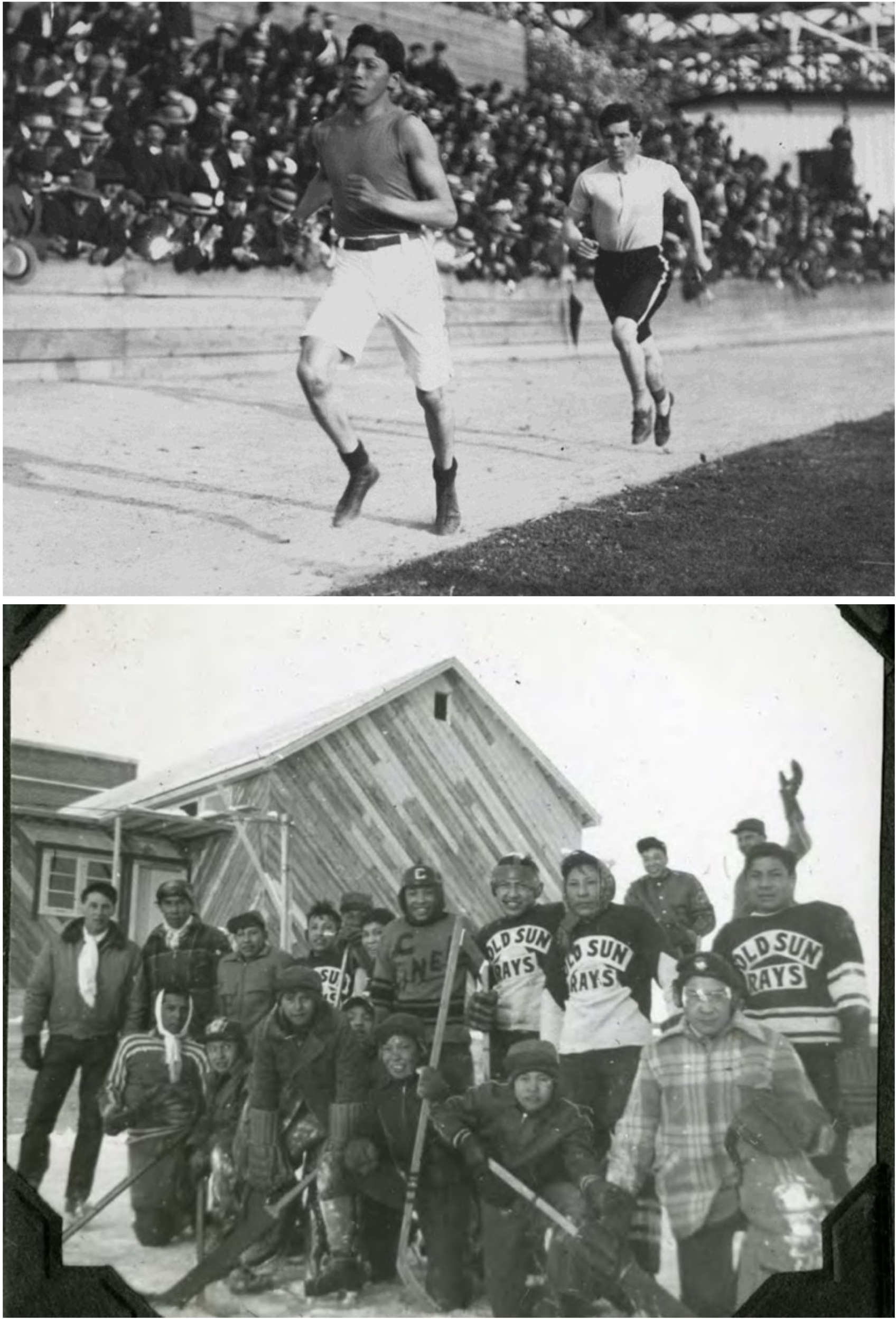
As you can tell, my parents and my grandparents really valued education, and they did everything they could to ensure that their children and grandchildren received a good education. Often, my siblings and I got the highest marks in our classes, and our parents really appreciated us doing well. Even though some of my grandparents did not speak English, they praised us when we did well in school. They often told us to “study hard.”
I also remember when my oldest brother, Randy, was a teenager, Rev. Harry Miller, the principal and Anglican priest, told my parents that Randy was an excellent athlete. He was particularly good at football, hockey and track events. Rev. Miller asked my parents if he could train Randy as a runner. Old Sun had a quarter-mile track, and Randy could run faster than the other boys. With Rev. Miller’s training, he began winning races around southern Alberta, and he soon progressed to winning provincial and national races.
In 1958, Randy won the Tom Longboat Trophy as the best Indian athlete in Canada; Rev. Miller had written a strong supporting letter for Randy’s nomination. Tom Longboat was an Onondaga from the Six Nations in Ontario who was an incredibly talented runner. He won many races in Canada, the United States and Europe in the early 1900s, a time when foot races were extremely popular. The Tom Longboat Award was established in 1951 to recognize the best Indian athletes in Canada. All the people on the reserve were immensely proud of Randy’s national award. Every time my family went to the small towns close to the reserve, both Siksika and non-Indian people would congratulate my parents on Randy’s achievement.
Besides remembering the achievements of my siblings, I also remember some humorous but embarrassing situations at school. One time when I was in Grade 4 or 5, I was playing baseball in the school yard. The teachers had organized the game and the catcher for the opposing team was Nick Breaker, a boy from a farm close to ours. He was teasing me as I was trying to bat the ball. Unfortunately, I could not hit the ball and Nick kept teasing me. I did not like his teasing, and when I struck out, I turned around, lifted the bat, and pretended to let it fall on Nick’s head. Unfortunately, when I let the bat start falling, I was not strong enough to stop it, and the bat came down hard on Nick’s head.
Of course, being a male Siksika, he did not cry but held his head in both hands while sitting on the ground. I could see that he was in pain, and I was deeply sorry. I told Nick and the teachers that I did not mean to hurt him. I remember I was not punished for this misdeed, but I now say that Nick learned a good lesson: Do not tease the girls, especially the Ayoungman girls, unless you want to be crowned with a baseball bat. This is another typical Siksika expression where a speaker twists the words just a little so that the story is humorous and memorable.
Even though we were in a residential school, we learned to tell stories in a way that reflected our culture and language. The Siksika still tell these stories, and they kept much of their traditional culture, especially their unique humour. Whenever I speak to my siblings, we speak Siksika and we often talk about the past, taking part in the Sun Dance, riding horses in the Calgary Stampede Parade, and dancing at Indian Days and pow wows.
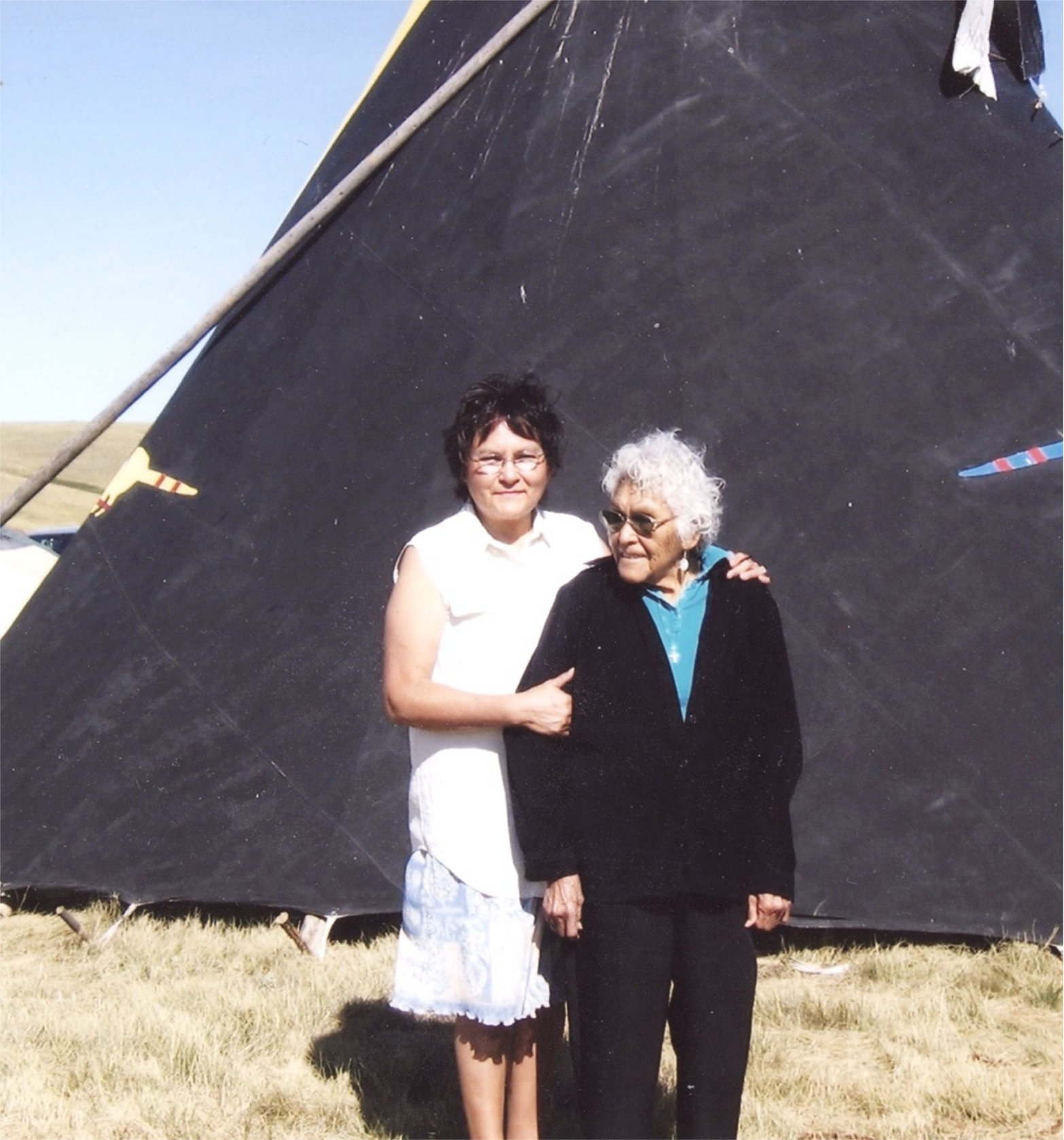
Overall, the teachers and supervisors at Old Sun appreciated our language and our culture, and they were particularly good to us. In fact, I stayed connected with Miss King, my Grade 4 teacher, and Mr. Muir, my Grade 7 teacher, until they died. Truely, I am grateful for what they taught me and the care, friendship and love they gave to me over many years.
I still think of them, and this is why I still call Old Sun Indian Residential School a private Anglican school. When I say this to people, they give me a curious look because they quickly realize that I am telling them something that is not reflected in the popular media. Canadians need to realize that not all Indian Residential Schools were the dreadful institutions that the media often say they were.
A final note: I wrote a draft of this essay for the artists-in-residence program at Misericordia Place, the care home I have lived in for the past five years. My husband, Rod, helped me revise the essay and Jon Ted Wynne made some particularly important editorial suggestions.
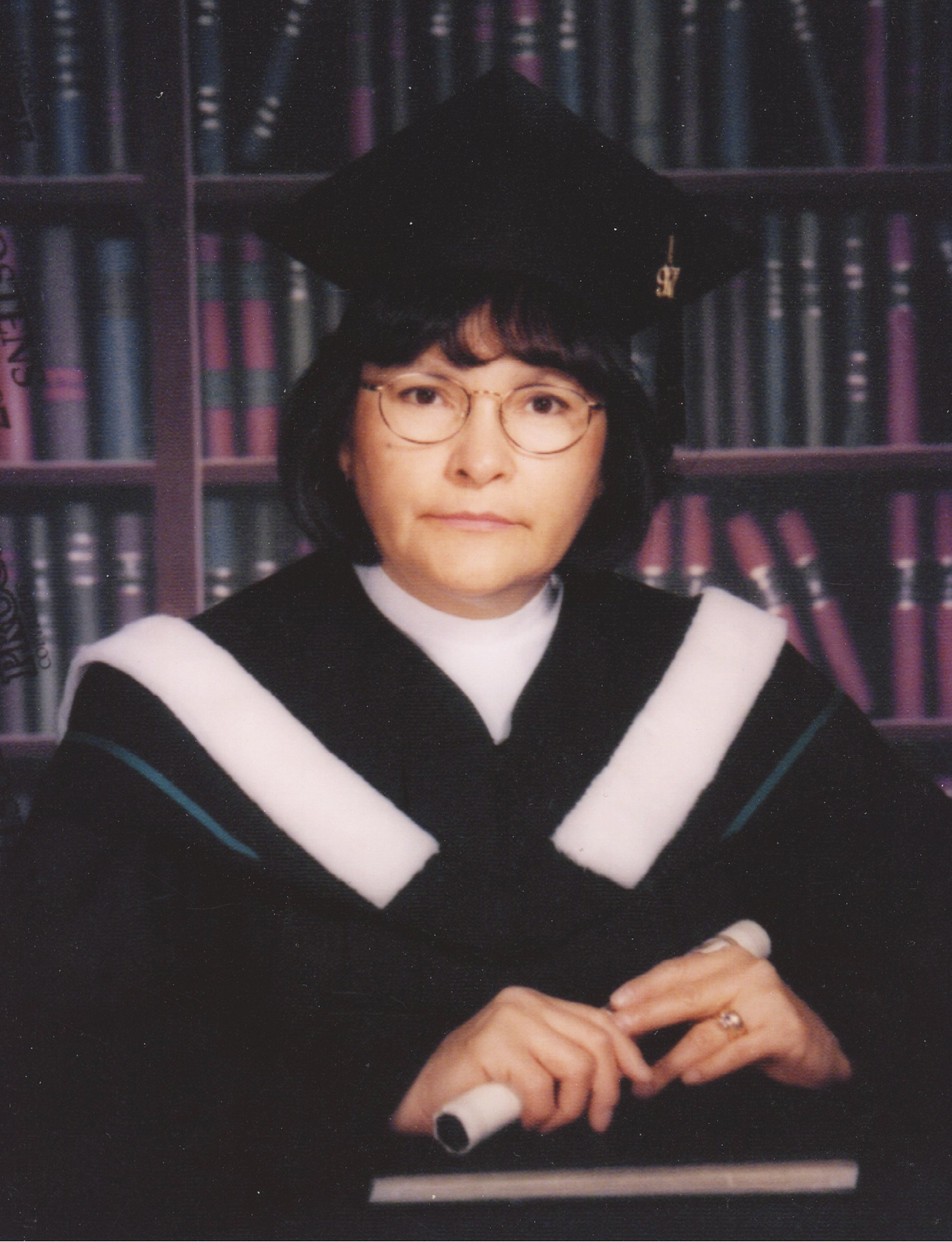
Elaine Ayoungman Clifton is from the Siksika First Nation, and she holds a B.A. in anthropology and psychology from the University of Manitoba.
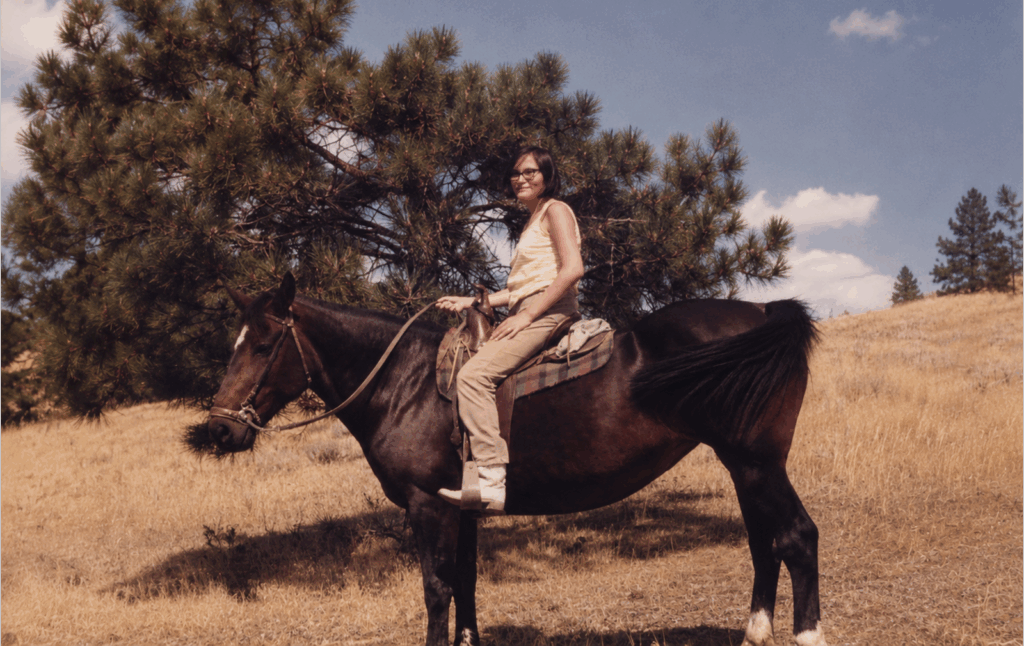
Source of main image: Elaine Ayoungman Clifton, 1968.