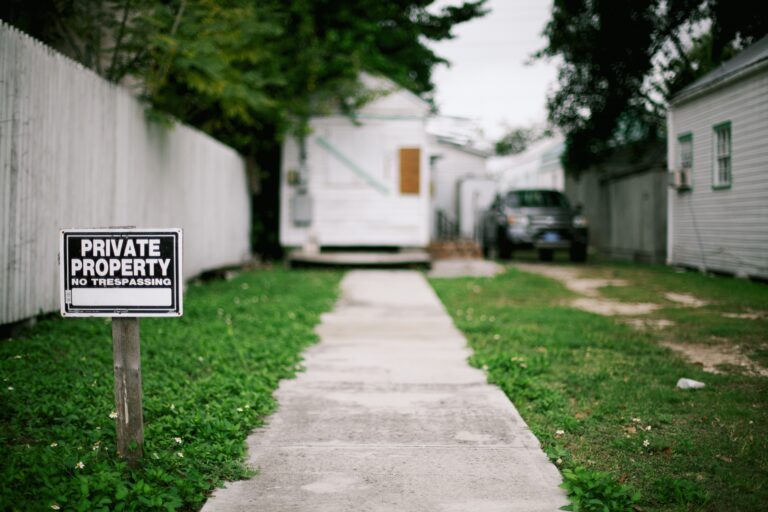
 Can you imagine a $400,000, 400 sq. foot condo being your entry-level home? That is the reality young Canadians face in what The Economist calls the world’s “most overvalued housing market.” Many Canadian Millennials are left asking themselves why they should leave their parents’ basements and why they should purchase a home and start a family. For the first time in Canadian history, young Canadians will not be able to afford a house unless they are very fortunate.
The situation is at odds with Canadian tradition. Canada has always been a vast, young and forward-looking country. Whether it was building a farmhouse in the Last Best West 100 years ago or building a suburban ranch home on the edge of one of our major cities 50 years ago, Canadians have always looked upon development favourably. Despite the inhospitable climate, Canadian homes were among the most affordable in the world. Until about 15 years ago, that is.
Housing is now judged “seriously unaffordable” in Canada’s largest urban areas, such as Toronto, Vancouver, Montreal and Calgary, according to housing analyst Wendell Cox. The average home price stands at $391,000 and is expected to reach $500,000 by the end of the decade, a level that will be unaffordable for even many upper middle-class Canadians.
What has changed? Ten years ago, only two Canadian markets were considered unaffordable – Vancouver and Toronto. Today, all but the smallest and most economically dysfunctional metropolitan areas are considered either “moderately” or “seriously unaffordable.”
The fact of the matter is that the cost of building a new home is not substantially different anywhere in Canada. Carpenters might make a few dollars an hour more in Toronto or Calgary than they do in Moncton or Winnipeg, but the actual difference to the price of a new home is negligible. Those costs have not substantially increased in the past decade. Low interest rates cannot be blamed; they are available everywhere in Canada. Demand is not a substantial reason either; there are economically dynamic regions that are affordable as well as unaffordable. Economically dynamic metropolitan areas like Edmonton have remained affordable whereas less competitive regions like Montreal have become fairly unaffordable.
This really leaves only one reason: land-use regulation.
Consider the case of Ontario, and particularly the Greater Toronto Area (GTA), over the past decade. Following up on a 2003 campaign promise, Ontario’s Liberal government passed legislation in 2005 to limit urban sprawl with new provincial planning policies, and it put a Greenbelt around the fast-growing GTA. This policy required all municipalities to enact the province’s planning policies of constraining growth, even in rural and Northern Ontario. Ontario’s Greenbelt Act restricted 1.8 million acres of prime, developable land surrounding the GTA and the Golden Horseshoe to its current use, making it illegal to develop or redevelop it.

Since Ontario’s government enacted these pieces of legislation and tightened development throughout the province, Ontarians have seen a dramatic decrease in housing affordability. Following the reforms of 2005, Toronto has become a “seriously unaffordable housing market” according to housing policy experts. The area’s median multiple, a common measure of housing affordability, has increased from between 2 and 3 to 5.9. Other previously affordable Ontario cities such as Hamilton and Ottawa have seen similar increases in the same time span.
As other Canadian provinces and cities have tightened their planning and land-use policies, they have seen similar increases in housing unaffordability. As Québec strengthened its agricultural land reserves in the past decades, prices in Montreal have dramatically increased. Calgary has seen a similar run up in prices as the city has made new outward development more difficult. The Lower Mainland of British Columbia, which has had an agricultural land reserve and strict zoning laws since the early 1970s, has been unaffordable since that time. Vancouver has recently been ranked as the second-least affordable housing market in the world behind only Hong Kong.
Consistent economic research shows that the anecdotes about land-use regulation are true; it is the reason for increased Canadian home prices. Since there is little difference in the actual cost of constructing a home in different areas, a lack of a supply of land is the only reason economists can find for the difference in home prices between metropolitan areas. Moreover, in a country as vast as Canada, that supply is artificially, not naturally, constrained.
Just how much of an effect do these artificial constraints have? In a noted study looking at the Boston metropolitan area, Harvard economist Ed Glaeser found that land-use regulations drove up the cost of housing approximately 60 per cent – similar to the increase in Toronto’s median multiple since more restrictive land-use policies were put in place – or about $160,000, enough to buy a home in some U.S. housing markets at the time. Even economists on the other side of the political spectrum concur. Nobel Prize-winning economist Paul Krugman agrees with the assertion that restrictive land-use policy is responsible for expensive housing; he refers to expensive metropolitan areas derogatorily as “zoned zones.”
The result of these “zoned zones” has not just been increased housing prices. They have the effect of indirectly delaying many young Canadians’ transitions out of adolescence and into adulthood. As the price of housing increased over the past decade, more and more Canadian twenty-somethings than ever before have made the decision to live with their parents. Faced with stagnant incomes and low starting salaries out of university, nearly 45 per cent of Canadian twenty-somethings have chosen to live at home, a nearly 50 per cent increase over the rate two decades prior.
In a major metropolitan area such as Toronto, rent on even a modest apartment will take up more than one-third of a young person’s income; the median 25 to 29 year old in Canada with a university degree earns only $29,000 a year. Paying $1,000 a month in rent, not to mention hydro, water, etc., forces many Canadian Millennials to live at home. Cultural variations cannot explain it. Cities with similar demographics, such as Vaughan and Sudbury – both have similarly large Italian-Canadian populations but divergent house prices – do not have similar rates of twenty-somethings living at home.
Some evidence suggests that this may have long-term demographic implications as well. As young people delay moving out of the house, they also delay marriage and children. The declining birth rate due to this phenomenon is particularly pronounced in cities with high housing costs. Research has found that areas with higher housing prices and denser urban environments have lower birth rates than areas with lower housing prices and more dispersed housing. Cities such as Singapore, Hong Kong, Vancouver and New York have dramatically lower birth rates than more-affordable housing markets such as Houston or Atlanta. Vancouver has the lowest birth rate of any North American city; it is no coincidence that it also has the highest housing prices.
~
Dan Osborne is a recent graduate of Queen’s University and sells liberty-themed ties at libertyties.ca. Whilst at university, Mr. Osborne worked with a number of think-tanks working as a Students For Liberty Campus Coordinator and sat on The Prince Arthur Herald’s Board of Directors.