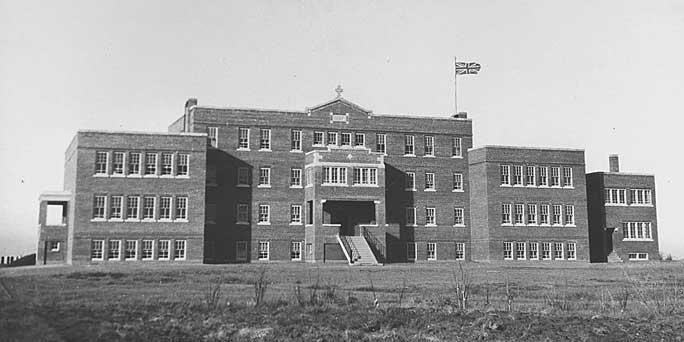
Late in the autumn of 2007, approximately 87,000 aboriginal people who attended the 130 residential schools, many of which were administered by the Anglican, Methodist, Presbyterian, Roman Catholic, and United churches, began receiving payments from the Federal government. For these people, the payment is $10,000 for their first year, or part of it, in residence, and $3,000 for each subsequent year, or part it. It is strange but at the same time a “Truth and Reconciliation Commission” about these schools is touring the country conducting hearings. The irony is that if people receive money for their “terrible experiences”, doesn’t that mean the truth is already known?
Michael Ignatieff, the deputy leader of the Liberal Party, certainly thinks that he knows the truth. In an op-ed article published in the National Post (June 22, 2007), “Setting the Record Straight”, he argues that every aboriginal child who attended a residential school was damaged by the experience. Indeed, he specifically says: “The residential school system…was without question, the most dismaying betrayal of Canada’s first peoples in our history”; and “The worst legacy of the residential schools experience is that it poisoned the wells of faith in education among generations of aboriginal Canadians.”
In 1966-67 I spent a year as a supervisor in an Anglican residential school, Stringer Hall, in Inuvik, North West Territories, and I kept extensive notes about the residence, the students, and my experiences. Before that, I spent four months living at Old Sun School (named after a famous Chief), an Anglican residential school, on the Blackfoot (Siksika) Reserve in Southern Alberta. Earlier, my wife (a Siksika) spent 10 years at Old Sun (full disclosure: now worth $37,000 in compensation), and even earlier, her parents attended the same school for 8 years. In addition, I completed part of my own high school education in a United Church residential school.
Overall, I interpret these experiences as suggesting that both positive and negative things happened in residential schools. In fact, when my wife is asked about her school experience, she says that Old Sun was a “private Anglican school”, and she still exchanges Christmas cards with some teachers who are, after more than forty years, personal friends.
Nevertheless, we now know that some people working in residential schools brutalized the children under their care. Some children, in fact, suffered unspeakable mistreatment at the hands of adults who were charged with caring for them. For this important reason, all people, both aboriginal and non-aboriginal, who abused children should be charged, and if they are convicted, they should pay for their crimes. Additionally, administrators from both the churches and the Department of Indian and Northern Affairs who covered-up these crimes should be charged, and if convicted, they should be punished as well.
Aboriginal residential schools were far from perfect, but so were most other schools. Many non-aboriginal children, for example, were strapped in their schools; some, unfortunately, were also sexually abused. Attempts have been made to charge and convict pedophiles, but little attempt has been made—so far at least—to charge and convict teachers and administrators who gave corporal punishment to students in non-aboriginal schools. Surprisingly, aboriginal people are being compensated, in part, for receiving corporal punishment which, at the time, was a standard—but brutal—practice in virtually all schools.
In this context, were aboriginal residential schools the unmitigated disasters as stated by Michael Ignatieff? Frankly, I doubt that his op-ed article has “set the record straight.”
Most importantly, the great majority of children who went to residential school learned how to read, write, and calculate. Many of them also learned other skills necessary for living in a modern society—the principles of democracy and common law, for example—which would help them participate more fully in both aboriginal and Canadian societies. In fact, today many of the aboriginal leaders, including Phil Fontaine, National Chief of the Assembly of First Nations, learned some of their negotiating and administrative skills in residential schools. Looking at their success, we know that they learned these lessons well.
Some children had serious illnesses—TB, chronic ear infections, and ruptured appendices, for example—that were diagnosed and treated only because they attended residential schools. In fact, a number of the children arrived at Stringer Hall with seriously infected bug bites in their scalps that required having their hair washed, cut, and topical antibiotics applied. Some children arrived with serious ear infections, and residential supervisors often provided the appropriate medical treatment. Importantly, a young nurse was on staff at Stringer Hall, and doctors and dentists were on call to treat children, something that probably would not have happened if they were out on the land hunting and fishing with their parents.
Furthermore, in many residential schools, some administrators and supervisors were aboriginal. At Stringer Hall, for example, two of the six residential supervisors were young Inuit women who, contrary to the common myth, spoke to the children in their mother-tongue. A number of the other employees, both aboriginal and non-aboriginal, also spoke aboriginal languages and used aboriginal gestures in communicating with the children.
In addition, not all the children who attended residential schools were aboriginal. At Stringer Hall, about 12 percent of the 280 students were non-aboriginal, the children of merchants, missionaries, and trappers from tiny settlements where no schools existed. Of course, it would be almost impossible to build schools and find teachers for these very small settlements and especially for hunting and fishing camps where one or two families lived. For many of these children, there were no reasonable alternatives except for residential schools.
Finally, it must be noted that some aboriginal children had been physically and sexually abused in their home communities, and not surprisingly, residential schools saved some of them from continued abuse. Unfortunately, this type of abuse happened in both aboriginal and non-aboriginal communities, but it is now considered politically incorrect to say that sexual abuse happened among aboriginal people while fully admitting that it happened among non-aboriginal people.
Even though this type of information has been available to those who want to find it, Michael Ignatieff did not look very hard before he said: “Another illusion is that the intentions behind the schools were good.” Contrary to his claim, it seems to me that many of the people who worked in residential schools—but certainly not all of them—wanted to help children receive the education that was necessary to survive in the modern world. Most of these people, of course, also wanted to fulfill the evangelistic calling of committed Christians: to help the poor, tend to the weak, and treat the sick.
As a young student, Michael Ignatieff attended Upper Canada College, an exclusive private residential school in Toronto, and he probably did not know that employees in aboriginal residential schools received very little pay and many sleepless nights for their labour. In Stringer Hall, for example, I was responsible for 85 senior boys, between the ages of 12 and 21, for 22 hours a day, 6 days a week. At that time, the work was difficult even for a strong twenty-one year-old. Today, the reward for former residential school employees is denigration in the national press by people like Mr. Ignatieff and, even more surprisingly, in the churches they served. If other residential school employees are similar to me, they are hesitant to talk in public about their residential school experiences.
In fact, given the hostile climate that now exists, most former school employees—both non-aboriginal and aboriginal—will not acknowledge that they worked in residential schools, and very few will appear before the Commission. They already know that the “truth” has been pre-determined, as Michael Ignatieff says, and “reconciliation” is, in fact, financial compensation, which is now being distributed, but only to those students who were aboriginal and not to non-aboriginal students. Certainly, few people will praise residential schools, the administrators, the teachers, or the residential supervisors. Few people, including my wife, who received compensation, will publicly say that their residential school experiences were positive. If they did, morally, they would need to return their compensation cheques to the Canadian people.
In this convoluted interpretation of our history, it is obviously that justice requires truth, but it also requires full-disclosure, which unfortunately, neither Canadians nor the Truth and Reconciliation Commissioners will likely hear.