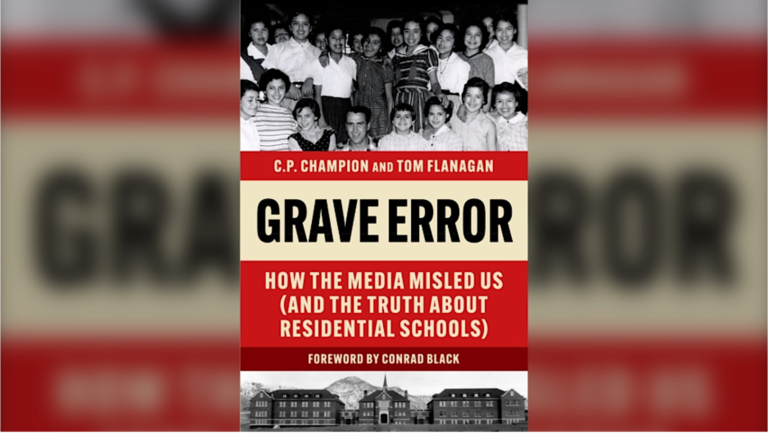
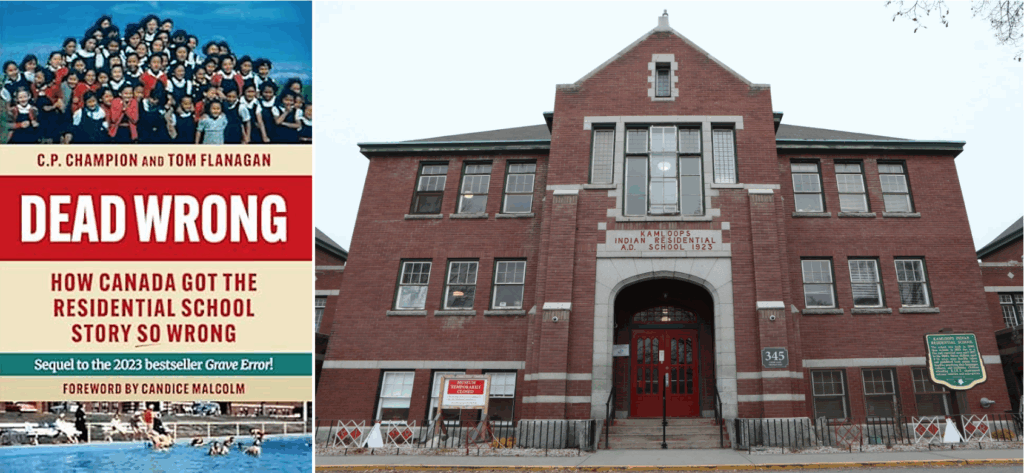
 Dead Wrong: How Canada Got the Residential School Story So Wrong is a sequel to the best-seller Grave Error; it dismantles the many falsehoods and distortions surrounding Canada’s former Indian Residential School (IRS) system, most notably that the “remains of 215 children” were discovered at the Kamloops IRS (right). (Source of right photo: Aaron Hemens)
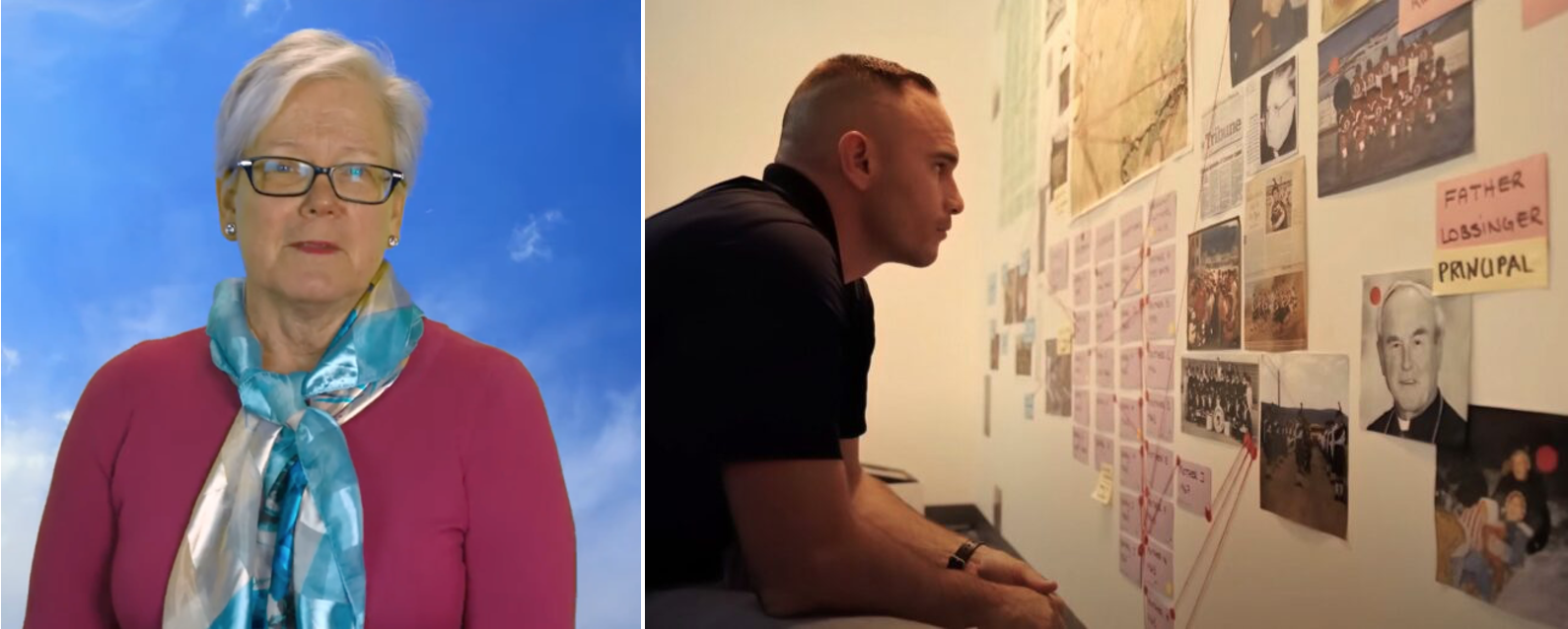 Independent journalist Michelle Stirling (left), a contributor to Dead Wrong, charted the factual errors in the 2024 pseudo-documentary Sugarcane – a fundamentally false tale whose villains are former IRS officials and clergy. At right, a “crime wall” scene from Sugarcane. (Sources: (left screenshot) YouTube/Michelle Stirling; (right photo) © National Geographic Documentary Films/Courtesy Everett Collection)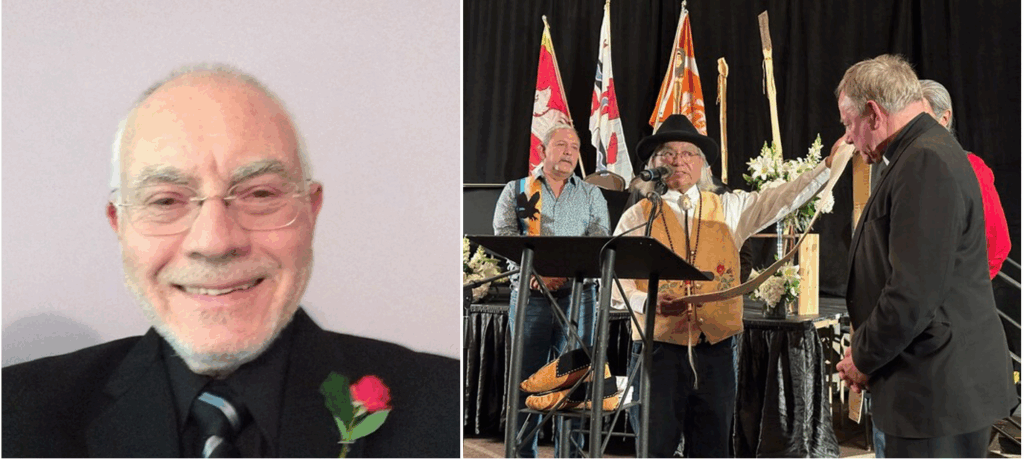
Abandon the truth: In Dead Wrong, Hymie Rubenstein (left) explains how church leaders, just like politicians, can discard the facts and reframe history to keep their followers’ support, as the Archdiocese of Vancouver did in signing the “Sacred Covenant” with the Kamloops band. (Source of right photo: Tk’emlúps te Secwépemc)
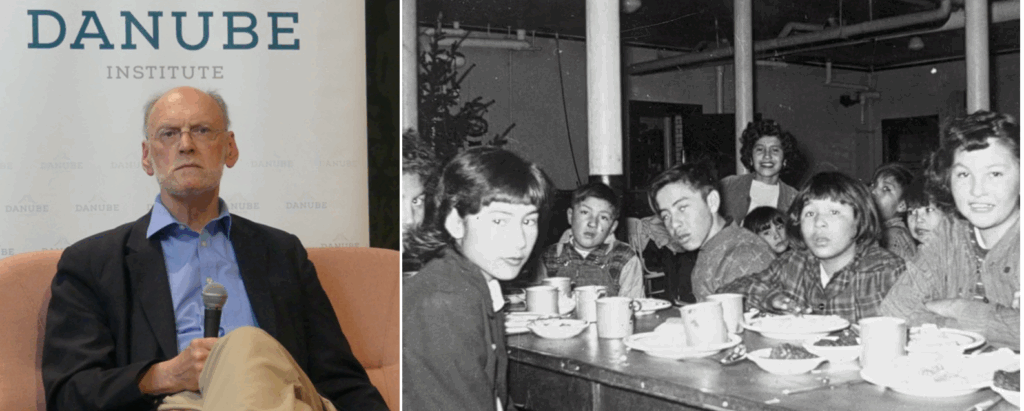 Noted historian and ethicist Nigel Biggar (left), one of the world’s leading authorities on colonialism and Indigenous peoples, offers a balanced overview of life in Canada’s IRS system. (Sources of photos: (left) Elekes Andor, licensed under CC BY-SA 4.0; (right) General Synod Archives, Anglican Church of Canada)
Another important contribution to understanding the medical issues is by Eric Schloss, awarded the Order of Canada for his humanitarian medical work, who narrates the history of the Charles Camsell Indian Hospital in Edmonton. The Camsell was not an IRS but its patients included many IRS students from Alberta and nearby provinces. IRS facilities usually included small clinics but students with serious problems were often transferred to Indian Hospitals for more intensive care.
Today the Camsell’s “segregated” health care is maligned; “survivors” demand federal compensation, rumours swirl on Facebook that the old site is full of “ghosts” and accusations of secret burials have been levied. The site’s redeveloper not long ago even commissioned a GPR survey to hunt for any signs, of course finding nothing. Schloss, who worked as a physician in the Camsell, describes how it delivered state-of-the-art medicine, probably better than the care available to most children anywhere in Canada at the time.

Also important in this context is an extract for the years 1946-48 from the chronicles kept by the Grey Nuns, a Canadian Roman Catholic religious order, who worked at St. Mary’s Residential School at Standoff, Alberta. It paints a revealing portrait of daily life in an IRS, vividly illustrating the care that the nuns took for the children’s well-being. The chronicles counter much of the current mythology about the IRS, describing how the children in fact could frequently return home both for short visits and longer vacations, and how their parents were repeatedly welcomed at the school for religious and secular celebrations. It also describes the wide variety of recreational events provided for the children, from movies in town to musical performances and sporting competitions.
In this vein, we should also mention the contribution by Rodney Clifton, “They Would Call Me a ‘Denier’,” which describes his experiences working in two residential schools in the 1960s as a dorm supervisor among other roles. Clifton does not tell stories of hunger, brutal punishment and suppression of Indigenous culture, but of games, laughter and trying to learn native languages from his Indian and Inuit charges.
The positive memories of Clifton and of the Grey Nuns do not mean that everything was always proper in the facilities. In a system of 143 schools spanning more than a century and educating perhaps as many as 150,000 children, there were undoubtedly many sad and even tragic occurrences, which in the current climate of opinion are endlessly re-told and re-emphasized. But recollections such as those printed here enable a more balanced understanding of what life was like in the schools.
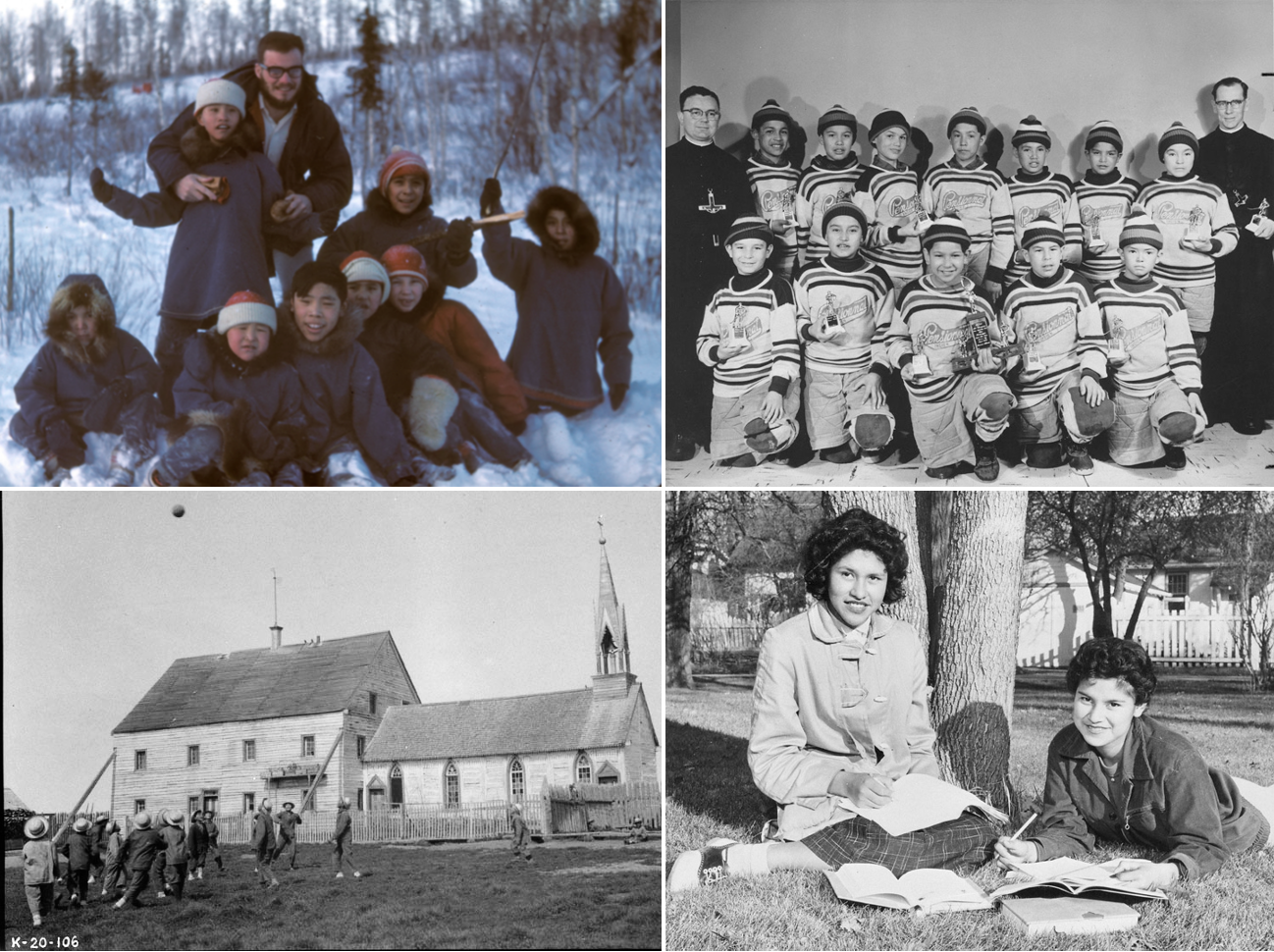 Personal accounts from Rodney Clifton (pictured with children at top left), a former dorm supervisor in two residential schools, and the Grey Nuns counter the dominant narrative of brutal punishment and oppression, recounting stories of games, laughter and cultural celebrations. (Sources of photos (clockwise starting top left): Rodney Clifton; Wikimedia Commons, licensed under CC BY 2.0; BiblioArchives/LibraryArchivesFlickr, licensed under CC BY 2.0; BiblioArchives/LibraryArchives from Canada, licensed under CC BY 2.0)
Finally, Dead Wrong offers readers several articles about various topics more broadly associated with the IRS. Hymie Rubenstein describes the attacks on the reputation of the Oblate missionary Bishop Vital-Justin Grandin, a towering figure of Prairie history who made immense and positive contributions, who in recent years has been denigrated because of his support for the schools.

Cosmin Dzurdzsa reviews the wave of arson against churches – the number of damaged houses of worship eventually totalling well over 100 across Canada and some of them being priceless heritage buildings – that was touched off by the false announcement of children buried at the Kamloops IRS. Shamefully, Canadian authorities have tracked down and prosecuted almost none of the arsonists.
After the Kamloops announcement Kimberly Murray, a Mohawk lawyer, was appointed “Independent Special Interlocutor” to gather information on “missing” IRS students and unmarked graves and make recommendations to the Minister of Justice. In her report to the minister, Murray tried to redefine “missing children” to include every single Indigenous youngster who went through an IRS, Indian hospital, orphanage, prison or other institution – thus creating an agenda that could go on for decades no matter what happens to the claims about Kamloops. Dead Wrong devotes a chapter by Michelle Stirling to critiquing Murray’s report.
Michael Melanson analyzes the “Land Back” movement as a force looming ominously behind agitation over the IRS. And Brian Giesbrecht takes to task lawyers who make reckless accusations and call for international investigations of the “genocide” that Canada supposedly visited upon its Indigenous peoples.
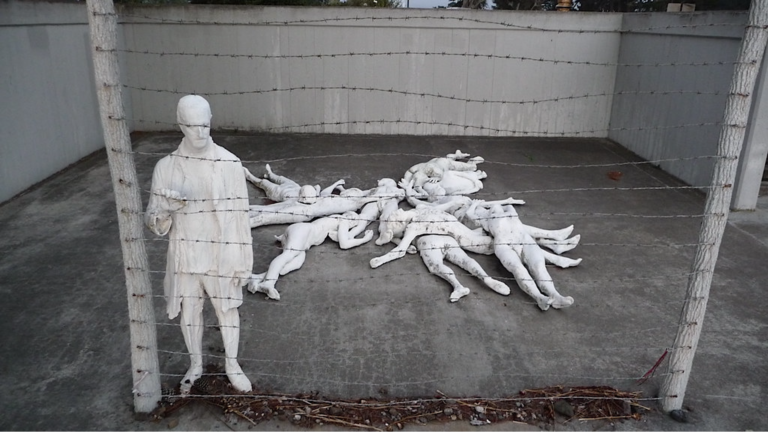
A trend in post-Second World War politics has been to expand the concept of genocide, originally coined to denote the deliberate program by Germany’s Nazi regime to destroy European Jewry, to include other atrocities which, though terrible in their own way, were not aimed at the deliberate annihilation of entire peoples. In Canada, Indigenous and other so-called progressive activists have tried to label the colonial administrations of France and Britain as genocides of native peoples. In 2015 Canada’s Truth and Reconciliation Commission adopted the phrase “cultural genocide” to describe the IRS, inserting a deliberately inflammatory (as well as vague and confusing) term to replace what was previously described as integration or assimilation.
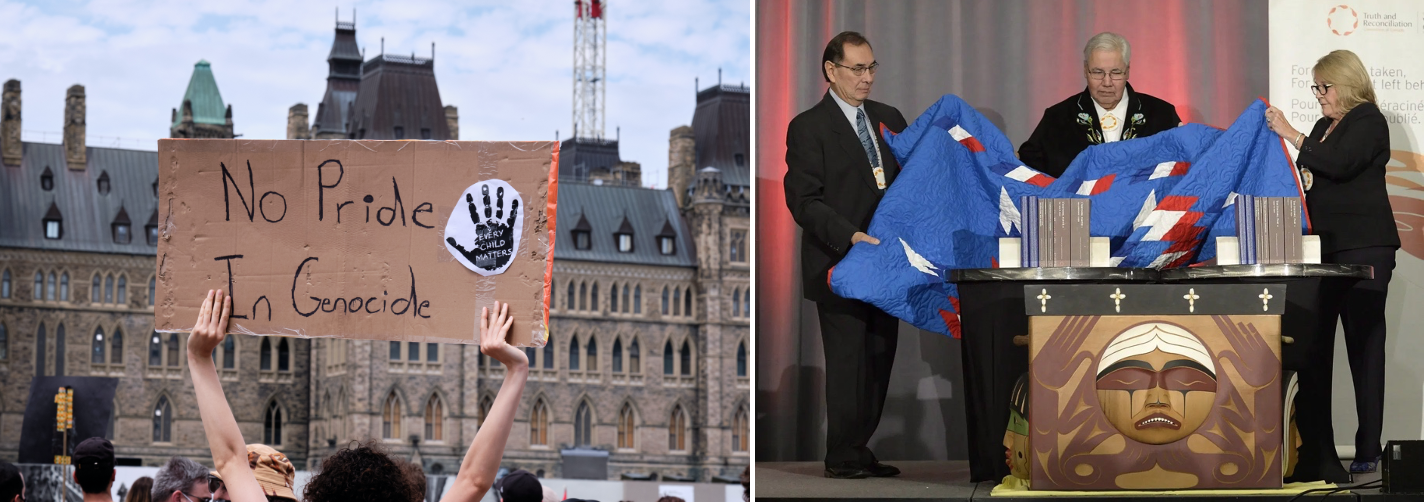 Indigenous and other so-called progressive activists pushed to have the treatment of Indigenous people labelled as genocide; the Truth and Reconciliation Commission (right) adopted the phrase “cultural genocide” to describe the IRS system, a deliberately inflammatory and one-sided term. (Sources of photos: (left) Wandering views/Shutterstock; (right) Mikayla Grimes/National Centre for Truth and Reconciliation)
Building off these developments is Frances Widdowson’s scholarly analysis of the charge of residential school “denialism”, which is being used by true believers in the Kamloops narrative to shut down any criticism or questions. It illustrates how, in the absence of good evidence and arguments, proponents inevitably turn to the power of the state to choke off discussion. The aforementioned Murray is, not surprisingly, in the thick of the movement to condemn “denialism” – which often includes the false charge that “denialists” somehow deny that residential schools even existed.
The Kamloops narrative presented an opportunity for inflation of vocabulary with reports of secret deaths and burials to support claims of genocide. In 2022 NDP MP Leah Gazan, who has both Jewish and Indigenous ancestry, persuaded the House of Commons to give unanimous consent to a resolution on residential school genocide: “That, in the opinion of the House this government must recognize what happened in Canada’s Indian residential schools as genocide, as acknowledged by Pope Francis and in accordance with article II of the United Nations Convention on the Prevention and Punishment of the Crime of Genocide.”

Consent to the resolution was deemed unanimous, but it is better described by the Latin phrase nemine contra, “no one against.” Parties in the House of Commons often agree among themselves not to oppose motions of this type because they are expressions of sentiment, not binding legislation. There was no recorded vote by individual MPs.
Earlier that year, an amendment to the Criminal Code outlawed willful promotion of anti-Semitism “by denying or downplaying the Holocaust,” the latter being defined as “the planned and deliberate state-sponsored persecution and annihilation of European Jewry by the Nazis and their collaborators from 1933 to 1945.” Introduced as a private member’s bill by a Conservative MP, this legislative amendment said nothing about a Canadian genocide of Indigenous people. Still, it provided a platform for Gazan to argue that, once Parliament had recognized the existence of an Indigenous genocide, it should also move to criminalize denial of it.
While the wheels of legislation and litigation grind and spin, those who wish to limit open discussion of residential schools in general and the Kamloops narrative in particular have developed a formidable rhetorical strategy around “denialism”, drawn from the earlier debates about the Holocaust. Murray Sinclair, the Chairman of the Truth and Reconciliation Commission, for example, labelled Senator Lynn Bayek a “denier” because she had maintained that residential schools had done some positive things. Sinclair portrayed Bayek as slow-minded, dim-witted and delusional.
The most energetic academic purveyor of the “denialism” concept is Sean Carleton, a self-proclaimed “settler scholar” and associate professor of history and Indigenous studies at the University of Manitoba, who defines it as the “the rejection or misrepresentation of basic facts about residential schooling to undermine truth and reconciliation efforts in Canada.” He has been so successful in propagating the term that the invocation of “denialism” has become a routine rhetorical move in the legacy media to avoid questions of fact and logic.

Most of what is written by Carleton and other proponents of the denialism trope follows Sinclair’s ad hominem path. Almost never is there factual engagement on the question of whether children were clandestinely murdered and buried at Kamloops. As the proponents of the Kamloops narrative have failed to provide any convincing hard evidence for it, they are trying to mobilize the coercive authority of the state to stamp out dissent.
In addition to providing the public with critical facts, information and context about this contentious and influential issue, one of the main hopes behind publication of Dead Wrong is to help head off this ominous move toward authoritarianism.
Tom Flanagan is the author of many books on Indigenous history and policy, including the best-selling Grave Error: How the Media Misled Us and the Truth About Residential Schools, which he co-edited with C.P. Champion.
Source of main image: Shutterstock.