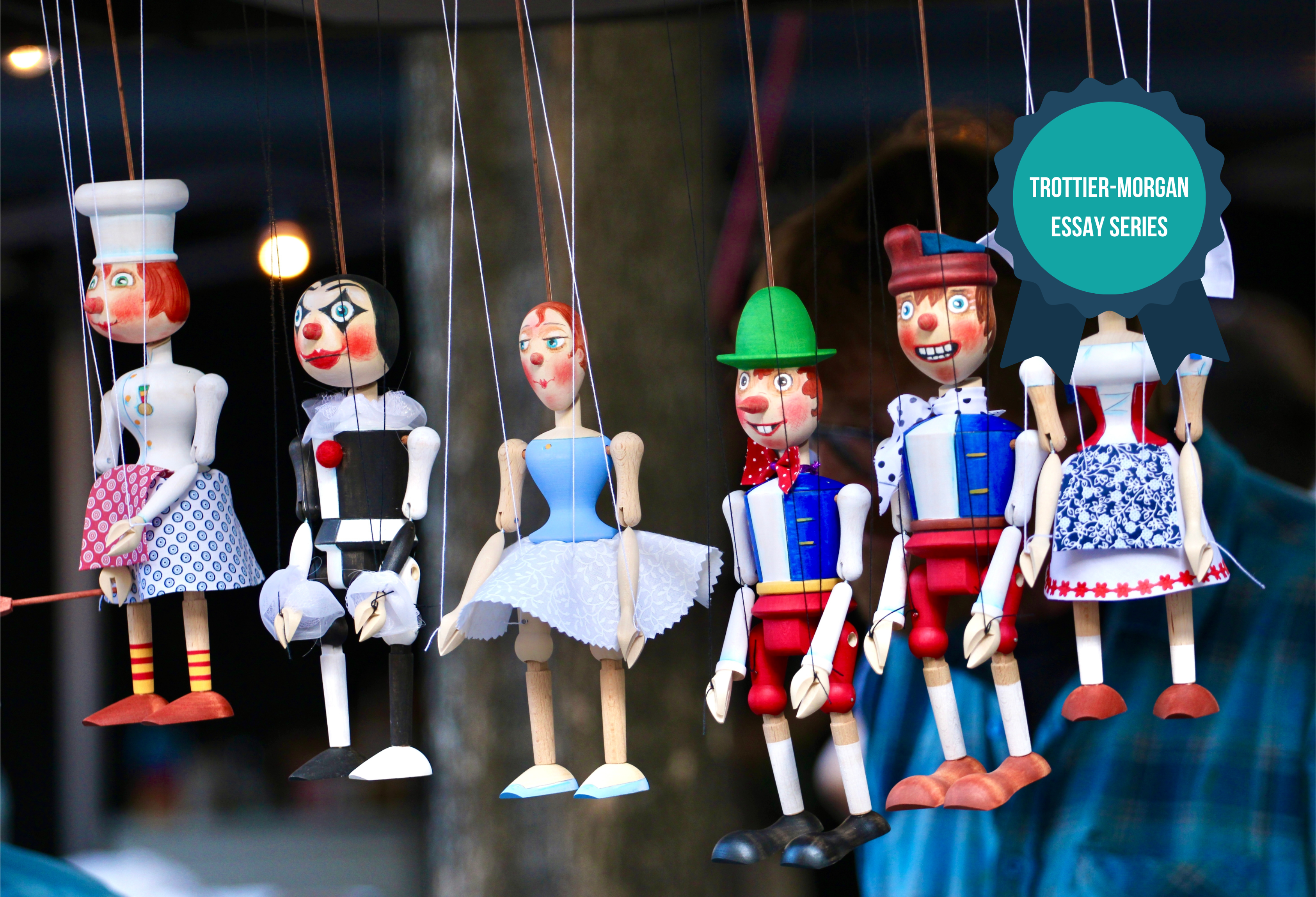

It’s unsettling and confusing the first few times you come up against it. It’s the “Gen Z Stare”: a flat, inscrutable and seemingly unfeeling gaze, delivered in silence or with just a slight murmur, used by today’s twentysomethings and teens for interactions that the rest of us think should come with friendly words and vivid facial expressions. Theories abound over why Gen Z has turned their emotional meter down towards absolute zero. Some say it’s an ironic comment on Millennials’ fondness for maniacal selfie grins and performative positivity. Others see an attempt to reassert authenticity in a sea of fakery. Perhaps it’s a kind of defensive crouch in a confusing and dangerous world. Or a way for the millions of kids damaged by Covid lockdowns and closed schools to mask their poor verbal skills.

Lately though I’ve been wondering whether the non-verbal message conveyed by that Gen Z stare might be deeper than any of that. Whether Gen Z could be quietly signalling something like, “Hey, it was all you guys – Millennials, Gen Xers and Boomers – who spent the first quarter of the 21st century dragging down our country. Now you’re leaving us the wreckage, without even the courtesy of decent jobs to dig our way out.” While I have no way to know if that’s true, there’s a painful amount of evidence that wreckage is indeed what three generations of Canadians are leaving behind for Gen Zers and the following Generation Alpha.
Most of us baby boomers (and I go back to the very beginning of that demographic) followed the education-job-marriage-buy a home pathway of life. For many Gen Zers – those born between 1997 and 2012 and therefore 13-29 years old today – that formerly clear path has become a thicket of thorns. True, many Gen Zers still study for university degrees or trade certifications, while taking entry-level jobs to gain experience. Just as we did. And technically at least, Gen Z is better-credentialled than Boomers were at the same age, with higher rates of high school graduation and post-secondary attendance.
But for many Gen Zers, a combination of stagnant or even declining wages and salaries, rising taxes and relentless inflation afflicting everything from basic groceries to big-ticket items like automobiles to, of course, housing itself, has made a central step on that pathway – owning a home – seem like an impossible dream. According to this Statistics Canada report, “Sustained food inflation, elevated housing prices, and increasingly high rental costs are casting a shadow over the homeownership dream for many households – and, in particular, for young families.” While Canada’s housing affordability crisis affects people of all ages, Gen Z is the hardest-hit.
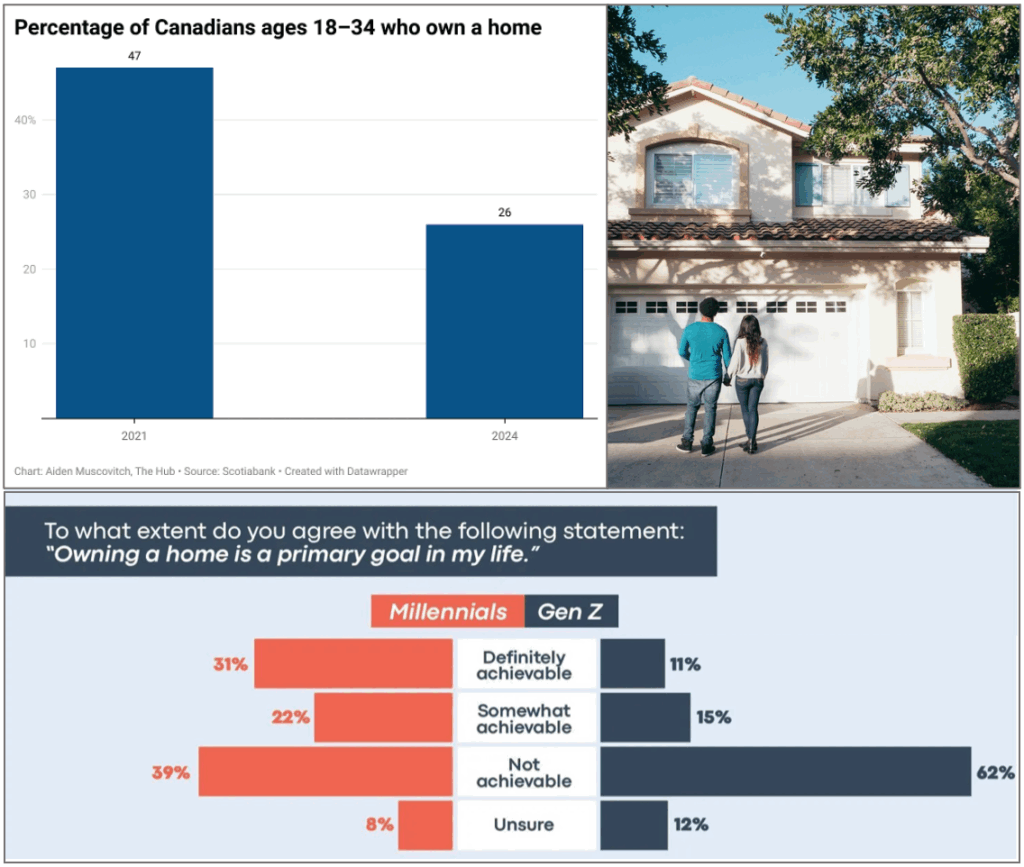
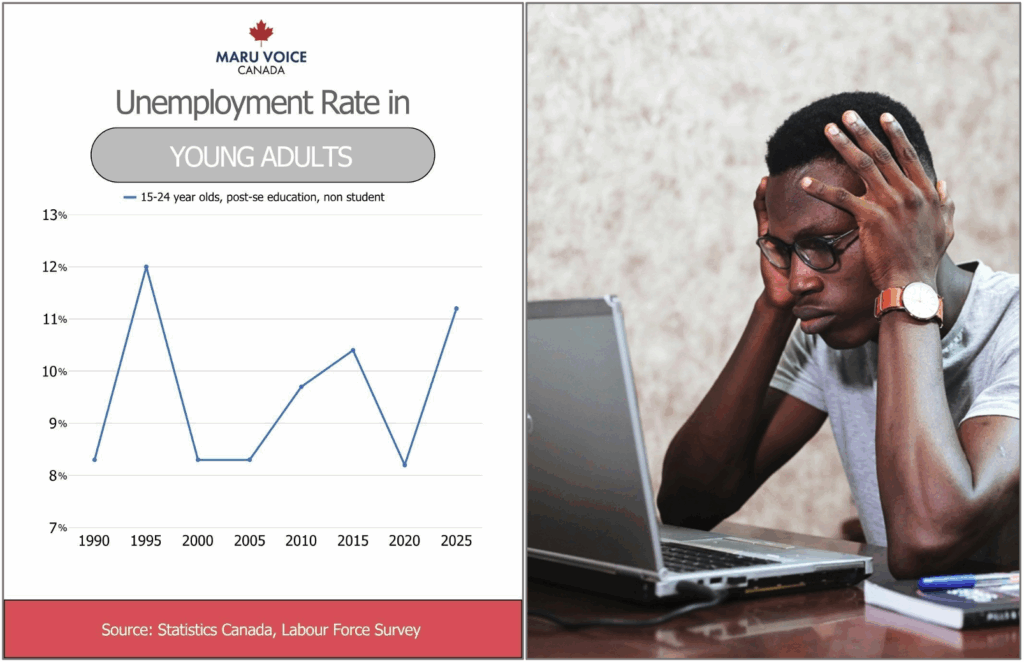
The prospect of being lifelong renters isn’t the only life-altering financial challenge facing young Canadians. The above-mentioned Statcan report goes on to say, “Today, Canada has the highest household debt to disposable income ratio in the G-7, at 185 percent compared with an average of 125 percent for all G-7 countries.” And that’s for those who can get a job. According to the most recently available figures, the rate of unemployment for Canada’s youth is more than 14 percent. For Gen Z as a whole, unemployment is estimated to be a punishing 9.2-9.8 percent.
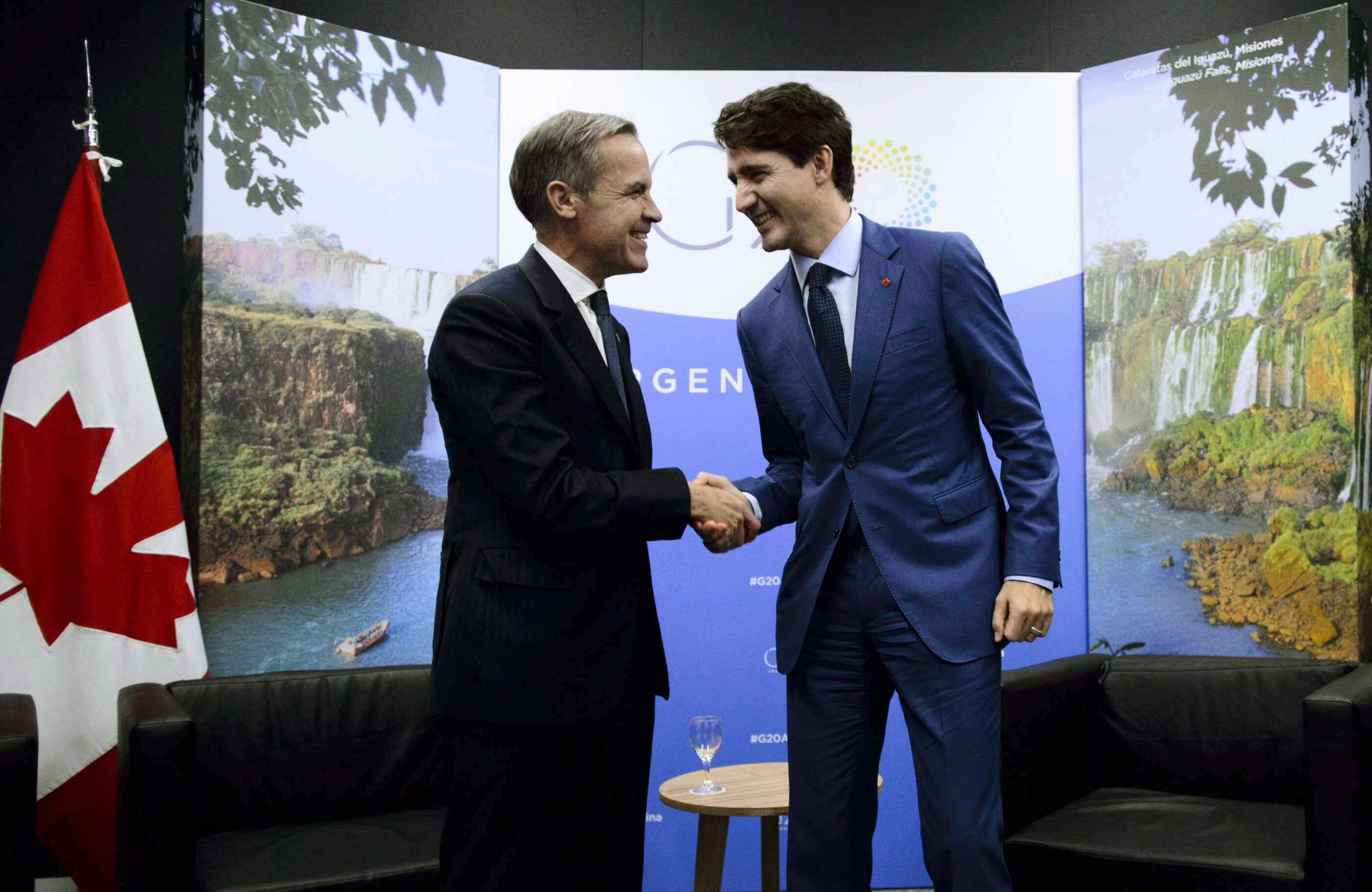
Trudeau then embarked on a spending frenzy that by the 2025 fiscal year-end more than doubled our national debt to $2.2 trillion. Canada’s federal debt to GDP ratio has soared by nearly one-third and is expected to reach 42.4 percent at the end of fiscal 2026. Interest costs alone to service this mountain of debt will reach $55.6 billion this year. And Trudeau’s successor, Mark Carney, has accelerated spending further.
These numbers are so mind-boggling, it’s hard to put them into perspective. When governments run deficits today, workers in future generations must eventually repay them in the form of higher taxes. For example, if you’re a 16-year-old Canadian, you’ll pay about $30,000 more in personal income taxes over your lifetime to service this mountain of debt. That’s on top of any tax-rate increases future governments deem necessary for program spending.
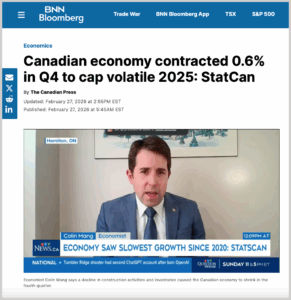
These factors set up perfect-storm conditions for a recession, possibly this year. Just-released figures show that Canada’s economy “unexpectedly” shrank at an annualized rate of 0.6 percent in the fourth quarter of 2025, after also shrinking in Q2. As this Fraser Institute report notes, recessions cause employment insurance and other government payments to automatically increase, driving the nation further into debt and ravaging the value of the Canadian dollar, eroding the foundation for job creation and prosperity. Not a happy scenario, but a reminder of a famous adage from U.S. Founding Father and third president, Thomas Jefferson: “The government you elect is the government you deserve.”
From now on when I walk into a store, restaurant or hotel with a smile and get that unsettling flat stare in response, I’ll need to accept that the person behind the gaze might be thinking, There’s part of the problem. Because that’s what the Gen Z employee sees. She or he has no way of knowing that I spent my whole business career creating good and often downright great jobs for thousands of young Canadians, along with earning money for myself and generating returns for my investors. And, setting aside modesty for a moment, I succeeded at all three. In addition to supporting myself and my own family, I wanted Canada to become even better than it already was, and I wanted our country’s next generations to have even better opportunities than I did when I was starting out. So it pains me greatly to see that wreckage is indeed what Canada’s Boomers, Gen Xers and Millennials are leaving behind.
Gwyn Morgan is a retired business leader who was a director of five global corporations.
Source of main image: physiognomist, licensed under CC BY 2.0.