Saving Our Economy

The Lockdown Contrarians Were Right

Gwyn Morgan
June 10, 2020
The days are at their longest, everything’s blooming, summer is nigh and Canadians are increasingly going about their regular lives. Spirits are lifting. And serious questions are being asked. Like Plato’s cave-dwellers emerging out of the darkness, we are blinking in the dazzling light of our 5 am northern dawns. What just happened? Do the claimed but unprovable benefits of the pandemic response stack up against the staggering quantifiable damage? Could we have done better? Gwyn Morgan takes a clear-headed look at these questions and prescribes some principles to dig our way out and avoid a needless repeat.
Saving Our Economy

The Lockdown Contrarians Were Right

Gwyn Morgan
June 10, 2020
The days are at their longest, everything’s blooming, summer is nigh and Canadians are increasingly going about their regular lives. Spirits are lifting. And serious questions are being asked. Like Plato’s cave-dwellers emerging out of the darkness, we are blinking in the dazzling light of our 5 am northern dawns. What just happened? Do the claimed but unprovable benefits of the pandemic response stack up against the staggering quantifiable damage? Could we have done better? Gwyn Morgan takes a clear-headed look at these questions and prescribes some principles to dig our way out and avoid a needless repeat.
Share on Facebook
Share on Twitter

After being all-but locked down since mid-March, Canadians are emerging to face the incomprehensible damage that has occurred in just 12 weeks. Besides the patients and valiant front-line workers who succumbed to the Covid-19 virus, shutting down large sectors of the economy caused thousands of lost businesses, millions of lost jobs, and billions (perhaps trillions) in lost savings. The Prime Minister’s spending announcements, delivered from in front of Rideau Cottage, added more than $20 billion to our national debt – per week.

With the benefit of hindsight, let us examine two vital questions.

Was confining much of the working-age population the right decision?

xThe living should get easier this summertime, but the economic devastation of Canada’s pandemic response will be felt for a long time.

According to Public Health Agency of Canada data, there had been 7,773 Covid-19 deaths in Canada as of June 7. Federal Chief Medical Officer Theresa Tam has confirmed that 81 percent of them were linked to long-term care facilities. Of the remaining 1,482 deaths, most were people over the age of 70. Only 229 of the total deaths were aged under 60 and almost all of those had pre-existing health conditions. Clearly, for a healthy working-age person, the risk of dying from Covid-19 is significantly lower than dying by accident or from other diseases.

If Canada’s working-age people hadn’t been removed from the workforce plus been subjected to such severe general restrictions – everything from being barred from medical and personal care appointments, to cancelling travel and being unable to go about their daily lives, nearly all of which involves economic activity of one sort or another – Canada’s economy would have continued to function without the job losses, bankruptcies and tragic social impacts including mental health deterioration, suicides and family violence. And without the need for the crippling increases in our national debt. In hindsight, keeping healthy working-age people away from their jobs – the first such quarantine ever undertaken – may be the most damaging decision in Canadian history.

 Did the shutdown of surgical wards to prepare for Covid-19 victims cost more lives than were saved?

These shutdowns came as Canadians in need of health care were already suffering on long waiting lists. A December 2019 Fraser Institute report found that waiting lists averaged 20 weeks and totalled more than 1 million people. Cancer, cardiac and other patients who had finally been given a surgical date were sent notices of indefinite postponement. The mental anguish of knowing that a tumour continues to grow or a blocked artery might cause a heart attack adds even further medical risk. Now, three months later, no one knows how much longer their wait will be. B.C., for example, has announced that it will take as long as two years to work through its 30,000 cancelled surgeries. Ironically, B.C. Health Minister Adrian Dix has now turned for help to the same private clinics he’s been trying to shut down.


Picture of empty hospital hallway as governments attempted to prevent healthcare systems from being overrun by pandemic patients.
Picture of waiting room in private clinic, an alternative for governments looking to treat the backlog of patients as a result of the lockdown.
Waiting for a wave that never came: With Covid case modelling off by orders of magnitude, tens of thousands of other patients lost their much-needed health care.

Preparing for the possibility that hospitals could become overwhelmed by Covid-19 victims was a prudent decision. The problem is that our medical system went into the crisis with essentially zero unused capacity and the longest waiting lists in the OECD.

Statistics Canada data shows that, in 2018, cancer and cardiac deaths totalled 132,699 nationally. Delays in treating these diseases seem likely to overwhelm the lives saved from focusing on Covid-19.

Did Sweden get it right?

Severe impacts of the lockdowns are also being seen in other Western countries, except one. Sweden adopted a no-lockdown policy that Norway’s State Epidemiologist criticized as “going against the whole world”. Sweden has seen a relatively high death rate compared to its Scandinavian neighbors, but it is well below that of Britain, Spain, and Italy, and about the same as France. And Quebec, with 2 million fewer inhabitants, has had more deaths than Sweden.  

While unemployment has risen, the Swedish economy remains essentially intact and there’s been no need for massive increases in public debt. Also noteworthy about Sweden’s response to the coronavirus was that it was implemented largely through persuasion and suggestion, and succeeded through social consensus, rather than through government edicts as in Canada. These at times seemed erratic and arbitrary as well as heavy-handed, and some are now facing constitutional legal challenges.

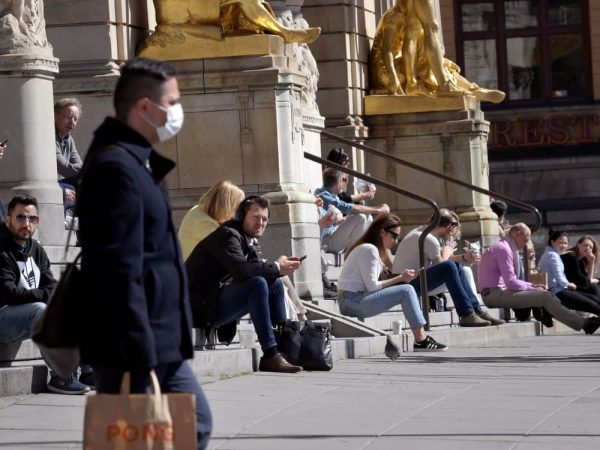
Picture of square in Sweden where the government did not implement a lockdown in response to the pandemic.
Picture of open cafe in Sweden where they did not force citizens into a lockdown to fight this pandemic.
Although its approach came at a cost, Sweden’s daily life went on — and its economy remained intact. Below, Sweden’s State Epidemiologist, Anders Tagnel.

What were the main elements of Sweden’s “going against the whole world” policy?

Swedes were encouraged to work from home, follow good personal hygiene and practice physical distancing. They were instructed to self-isolate if unwell. The elderly and immune-compromised were advised to stay home. Universities were closed, but schools for children under 16 remained open. Shops, daycares, bars, restaurants, and gyms also remained open. Gatherings were limited to 50 people. 

xWhy reopen? Governments must assure Canadians there won’t be another lockdown, or many businesses will simply stay closed forever.

These mid-pandemic measures are virtually the same as those planned in Canada for the phased reopening our economy. And that raises a crucial point. Epidemiologists are warning, “The virus is still out there”. But with relatively few Canadians having gained immunity by contracting the virus, there’s no reason for our susceptibility to be any different than it was before the shutdowns. So why should we expect the final death toll to be any different than if, rather than impose the general lockdowns, Canadian governments  had taken a more restrained approach and implemented those measures in the first place? What is dramatically different between Canada and Sweden is that we face the huge challenge of restarting a severely damaged economy. As Sweden’s State Epidemiologist Anders Tagnel notes, “It’s very hard to stop a lockdown”.

Here are some items I believe are crucial as we take on that challenge.

 Governments must immediately declare that the lockdowns will not be reinstated. Fear of another lockdown will hold the economy in a debilitating limbo because businesses cannot afford to take the risk of reopening. Many will simply close down permanently, adding to the already-immense toll. Few new projects will be started, because investors will remain on the sidelines.

xNot at significant risk: Schools should reopen as soon as possible, while we focus on protecting those who are actually vulnerable.

 Open the secondary schools. There have been zero deaths of children under age 16 in Canada. And there’s a growing consensus that their light viral load makes children unlikely spreaders of the virus. Rather than being the most vulnerable, as they were to the Spanish Flu a century ago, they appear to be the least vulnerable to Covid-19. Reopening schools therefore poses low risks. When summer ends, many parents need to get back to work, rather being kept home supervising their children.

Students should bypass universities. Universities and many colleges have announced that in-person classes will not reopen in September (even if governments fully reopen the rest of society), while simultaneously increasing tuition. Students shouldn’t simply accept this reduction in teaching quality combined with the affront of higher costs. Since they’ll be forced to learn in a virtual environment anyway, they should take advantage of other online learning opportunities to bypass universities and their high tuition fees. To support this choice, and signal to colleges and universities that their selfish tactics are unacceptable, governments should mandate the recognition of online credentials from credible providers.

xRight all along: The pandemic response should have taken other critical factors into account. There’ll be no excuse next time.

 Don’t leave pandemic response measures solely in the hands of Chief Medical Officers. They did their job of “flattening the curve” well. But the measures taken should have also considered the impact of hospital bed closures on treatment of other diseases, small business owners who face losing everything, stress-induced mental health deterioration, suicides, family violence, long-term unemployment and massive public debt.

The strategy to cope with any new outbreak should include our best financial, business, education and mental health experts working as a team. These teams should be assembled immediately as we navigate the unknown course of the corona virus. There’s little point to sweeping measures that over-protect the entire population against a single virus if the resulting damage is so severe that the nation in its weakened state can’t cope with future crises, whether those are health-related or otherwise. For such crises will surely occur.

Gwyn Morgan is the retired founding CEO of Encana Corporation.

Love C2C Journal? Here's how you can help us grow.

More for you

What’s Yours is Ours: Why Canada’s Charter Ignores Property Rights and What That Means for Everything You Own

“The whole meaning of life,” famed comedian George Carlin once observed, “is trying to find a place for all your stuff. That’s what your house is, it’s a place for your stuff with a cover on it.” If so, then Canadians should be very concerned about their stuff. Unlike nearly every other modern nation, Canada lacks constitutional affirmation of the right to own property and as protection against its unjust seizure. With a recent B.C. Supreme Court ruling putting the very notion of home ownership at risk, Peter Shawn Taylor seeks out legal opinions on Canada’s surprisingly lax attitude towards property rights, how it differs from other countries and what that means for everyone’s possessions. If Canadians really want to protect their homes, belongings and personal finances, Taylor concludes, now’s the time to get loud.

The Righteous Response: What Canada Can Learn from America’s Fight Against Antisemitism

Canadians frequently criticize U.S. President Donald Trump’s projection of American power. But in the fight against anti-Semitism, Canada could learn a thing or two from our neighbour to the south. In Part One of this series, Lynne Cohen revealed how Canada’s political and civic leaders have chosen to ignore or even abet the hate crimes and abuse Jews have suffered since October 7, 2023. In this second installment, she shows how the U.S. – from the President on down to local officials and law enforcement – has fought back. Where Canada has been cowering and cowardly, the U.S. has resolved to fight anti-Semitism, protect its Jewish citizens and defend Israel’s right to live freely as a Jewish state.

One Free Miracle: Towards a Theory of Everything

A new year has dawned and, as the light strengthens across the Northern Hemisphere, David Solway reminds us that how we choose to experience our world is at least as important as understanding how it came to be. In the first instalment of this two-part series, the writer illuminated the irreducible paradox at the heart of all theories concerning the universe’s creation, then scrutinized the seemingly unbridgeable gap between quantum physics and the physical world we live in. In Part II he considers an even tougher and, so far, unsolved scientific challenge: gravity. Some of the finest minds in science think it actually is insoluble without some kind of creative intelligence to oversee it. In other words, a miracle. To Solway, the true miracle is the fact of a marvellous world and our freedom to experience and wonder at it.

More from this author

The Price of Foolish Pride: What Germany’s Social and Economic Decline Can Teach Canada

Germany was postwar Europe’s most successful nation – until it was seized by an arrogant leftist ideology that led it down a ruinous path. Its government abandoned safe, zero-emission nuclear power for inefficient wind and solar plus natural gas from Vladmir Putin. It threw open its borders to millions of asylum-seekers with barely a thought to the enormous costs or the difficulties of social integration. Today, at the 11th hour, Germany is at last struggling to turn around its decade of economic decline and social disintegration. In this cautionary tale, Gwyn Morgan sees a profound warning for Canada.

Socialist Shakedown: It’s Finally Time to End Supply Management in Agriculture

U.S. President Donald Trump’s trade policy may be chaotic and punitive, but he’s right about one thing: Canada’s agricultural supply management system has to go. Not because it’s unfair to America, though it is, but because it punishes Canadians. The price-fixing scheme limits consumer choice, requires a huge bureaucracy and prevents farmers from producing more in the face of shortages, forcing them instead to dump excess production. Worst of all, writes Gwyn Morgan, it drives up prices for milk, cheese, chicken, eggs and other essential foods — all for the benefit of a few thousand farmers, largely in Quebec. For Canada’s trade negotiators, argues Morgan, ending this mad racket should be job one.

Climate Climbdown: Sacrificing the Canadian Economy for Net Zero Goals Others Are Abandoning

Climate-obsessed politicians – Justin Trudeau in the vanguard – nearly destroyed the Canadian economy chasing emissions targets that are both unrealistic and pointless. Ottawa and the four biggest provinces have squandered $158 billion to create just 68,000 “clean” jobs. Meanwhile, fossil fuels are supplying a bigger share of Canada’s energy needs than ever. And now, leading U.S. officials and even eco-zealots like Bill Gates are re-evaluating their net-zero ideology. But that hasn’t gotten through to Prime Minister Mark Carney who, warns Gwyn Morgan, intends to inflict further punishment on an ailing country in pursuit of a delusional cause.