


Liberal Corruption

The Biggest Question Mark in Trudeau’s Latest Ethics Scandal

Gwyn Morgan
July 24, 2020
We are now onto Prime Minister Justin Trudeau’s third official ethics imbroglio. Mr. “blind spot”, as a previous ethics commissioner termed him, is back at it, once more trailing cabinet ministers and political flunkies. The blind leading the blind, as it were. This time around it’s a close to billion-dollar sweetheart deal offered to WE Charity – an organization with close ties to Trudeau and cabinet ministers. As the Opposition and media focus on the mechanics and legalities of the growing scandal, Gwyn Morgan probes the deeper question of why anyone would think shovelling vast sums into yet another summer jobs program for students was a good idea. The possible answer is downright diabolical.
Liberal Corruption

The Biggest Question Mark in Trudeau’s Latest Ethics Scandal

Gwyn Morgan
July 24, 2020
We are now onto Prime Minister Justin Trudeau’s third official ethics imbroglio. Mr. “blind spot”, as a previous ethics commissioner termed him, is back at it, once more trailing cabinet ministers and political flunkies. The blind leading the blind, as it were. This time around it’s a close to billion-dollar sweetheart deal offered to WE Charity – an organization with close ties to Trudeau and cabinet ministers. As the Opposition and media focus on the mechanics and legalities of the growing scandal, Gwyn Morgan probes the deeper question of why anyone would think shovelling vast sums into yet another summer jobs program for students was a good idea. The possible answer is downright diabolical.
Share on Facebook
Share on Twitter

Conflict of interest revelations surrounding the selection of WE Charity to administer the Canada Student Service  Grant have dominated recent media coverage and prompted investigations by parliamentary committees and the federal Conflict of Interest and Ethics Commissioner. While getting answers on how WE Charity was selected are essential, there’s been scant focus on the most fundamental question: Why was this $913 million program conceived in the first place?

The Prime Minister stated it was needed so students would have summer jobs. But in many cases, despite a youth unemployment rate that topped 27 percent in April, students are declining to take jobs that already exist. A prime example is agriculture. Covid-19 has caused farmers to face delays in getting temporary foreign workers, leaving crops spoiling in their fields. Students whom beleaguered farmers did manage to attract either failed to show up or quit after deciding the work was too hard, a phenomenon that reflects our coddled Generation Z’s widespread aversion to physical labour.

Justin Trudeau and his family's history of speaking at WE events has become a centre point of the ethics scandal.
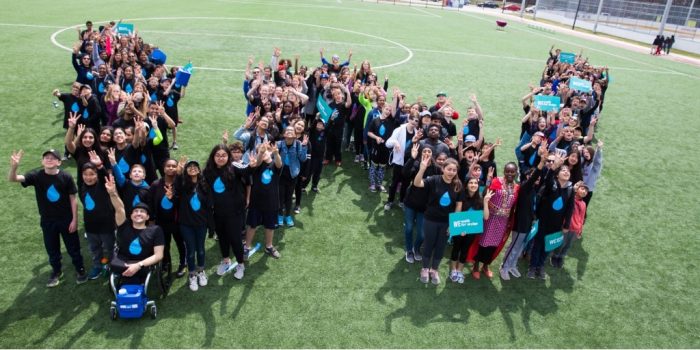
Picture of WE event at school. The government claims this school outreach made it a prime candidate for administering the program at the centre of Trudeau's third ethics scandal..
Third time’s a charm: Prime Minister Justin Trudeau is once again being investigated by the federal ethics commissioner, this time for his role in awarding a major contract to WE Charity, an organization with close ties to his own family.

Examination of the support already available to post-secondary students makes it even clearer why students opted out of available jobs. Here’s a condensed list of programs, all of which have been increased in size due to Covid-19:

  • The Canada Student Grant, a non-repayable program for lower-income students, has been doubled from $3,000 to $6,000 per student;
  • The Canada Student Loans weekly maximum limit has been raised from $210 to $350 and the requirement for students to contribute any portion of their educational costs has been waived;
  • The Canada Emergency Student Benefit provides up to $1,250 every four weeks from May through August for students who claim they’ve looked for work but haven’t landed a job;
  • Colleges and universities alike are increasing the normal size of bursaries for students in financial need. Additionally, individual scholarships are available for high-performing students; and
  • The well-known Canada Emergency Response Benefit (CERB) was recently extended by eight weeks to a maximum of 24 weeks and pays $2,000 every four weeks to students who have earned at least $5,000 over the past 12 months.

Clearly, the need to create summer jobs isn’t a credible answer to the why question concerning the Canada Student Service Grant. Prime Minister Justin Trudeau’s other attempt at justifying it is the need to provide charities with “paid volunteers” (a term that perfectly meets the definition of an oxymoron) to help them deliver their programs.

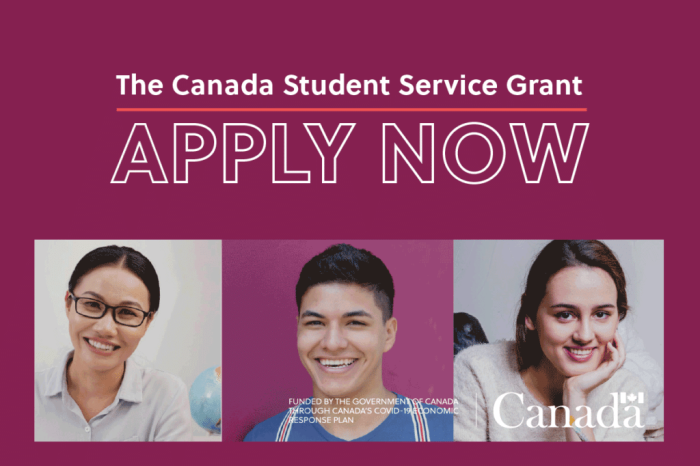
The Canada Student Service Grant is at the centre of Trudeau's ethics scandal
With paid opportunities across some sectors going unfilled, what was the point of the program at the heart of Trudeau's ethical scandal?
With many summer jobs already going unfilled, particularly in the agricultural sector, why do we even need a Canada Student Service Grant?

There’s no doubt the non-profit sector has been devastated by Covid-19. Imagine Canada, an organization that helps charities to organize and raise funds, estimates the pandemic’s financial impact is between $9.5 billion and $15.7 billion due to a reduction in donations and revenue from the sale of goods and services, worsened by the inability to hold fundraising events. (WE Charity is a member of Imagine Canada but did not complete the organization’s Standards accreditation process, unlike some 200 other members.) 

Many charities are facing existential crises and the casualties have already been severe, with an astounding one out of every five Imagine Canada members having suspended or ceased operations. The sector, which employs 2.4 million people, provides services that form a vital element of every community’s social support fabric. The non-profit sector desperately needs help. But after being forced to lay-off thousands of employees, the last thing needed are volunteers to carry out programs the charities don’t have money to fund. Dispersing that $913 million directly among hundreds of needy and qualified charities would have been a great help.

But sadly, Ottawa decided not to do that. Now, despite Trudeau’s previous statement that WE Charity is the only organization capable of administering the Canada Student Service Grant, the job of wasting that $913 million has been handed to the public service. And the scrapping over the spoils has already begun, with the Canadian Federation of Students recently launching a petition to have the funds added to the Canada Emergency Student Benefit.

xThe $913 million set aside for the Canada Student Service Grant program would be better spent offering direct aid to the hard-hit volunteer sector.

It seems obvious that Trudeau’s rationalization for the Canada Student Service Grant is preposterous. So what could have motivated him to implement the program in the first place? Answering that question leads to a more diabolical reason than just handing a huge plum job to his financially strapped friends, the brothers Craig and Marc Kielburger.

At the end of June, after having handed out some $170 billion in Covid-19 support programs over the previous three months, Trudeau ended his daily Rideau Cottage press briefings. That largesse, together with his mantras of, “We’ll get through this together” and “We’re here to help”, had lifted the Liberals well above the Conservatives in the polls. That even raised the prospect of a snap fall election, reinforced when Trudeau’s daily media shows shifted from Rideau Cottage to campaign-style events at the workplaces of what he called “Canadian business champions”.

The Liberals won the 2019 election despite losing the popular vote, largely due to the advantageously distributed support of the traditionally left-of-center youth demographic. Exceptional intelligence is not considered one of Trudeau’s leading characteristics, but his populist acumen together with a dramatic and, ostensibly, sincere communications style brought him to power. What better way to reinforce the chances of regaining his coveted Liberal majority than to engage those many hundreds of thousands of hyped-up youth voters who have attended WE Charity events?

xWhy risk a political scandal? WE Charity founders Marc and Craig Kielburger (left and right, respectively) offer direct access to an ample and enticing supply of young, left-of-centre, potential Liberal voters.

But if this form of vote-buying was Trudeau’s real objective, how did he possibly expect to get away with it? The answer to that question is captured in the ancient Greek concept of hubris. To the Greeks, hubris referred to “pride and over-confidence so great that it offends the gods by overstepping the boundaries of human limitations in an attempt to assume god-like status”. Hubris was a character flaw seen in the heroes of Classical Greek tragedy, including Oedipus and Achilles. The old adage, Pride goeth before a fall, came to describe the inevitably catastrophic consequences of hubris. 

In retrospect, those months of appearing daily in front of Rideau Cottage playing the sincere, empathetic, cash-gushing saviour freed from the tedious boundaries of parliamentary democracy might have led to fantasizing about the achievement of god-like status. It will be up us mere humans to judge his ethical worthiness. One such mortal is the federal Ethics Commissioner, who will now launch his office’s third probe of our prime minister’s conduct in office.

Gwyn Morgan is the retired founding CEO of Encana Corp.

Love C2C Journal? Here's how you can help us grow.

More for you

The Other Right to Choose: Reversing the Trudeau Immigration Fiasco

Canada’s immigration system was once the envy of the world. Based on the notion that those who get into the country are those who determine its future, the system chose people best able to contribute. Then the Trudeau Liberals blew it up, opening the gates to just about anyone – including literal terrorists – wreaking economic havoc and breaking Canadians’ faith in the value of citizenship. John Weissenberger, who served as chief of staff to the federal immigration minister in Stephen Harper’s Conservative government, has watched it happen with growing dismay, and argues for a return to sanity – centred on the sensible “points” system that served Canada so well for decades.

Suffer the Little Children: The Liberals’ $10-a-Day Childcare Disaster

Waiting lists stretching years. Plummeting quality. Outraged parents. Providers slowly strangled by red tape. The federal Liberals’ vaunted $10-a-day childcare program has proved an expensive disaster. Five years in, Matthew Lau digs into the many problems and inequities this landmark social policy has delivered. Lau finds B.C., which had a three-year head start on the rest of the country and an enthusiastic NDP government leading the way, in the worst straits of all. With an irretrievably flawed system clearly failing Canadian families, Lau argues that Prime Minister Mark Carney should pivot to a fairer, cheaper and more effective alternative.

From the Strait of Hormuz to Cuba, Net Zero is Dying – Mark Carney Needs to Let Go

After decades spent pursuing net-zero dreams at great cost to their economies and social fabric, most of the world’s industrialized nations are waking back up. War with Iran and the threat of tanker blockades have everyone worried about oil and natural gas supplies and clamouring for energy security. Or nearly everyone. Not Mark Carney, though. Canada’s prime minister keeps pushing industrial carbon taxes higher and insists on wasting taxpayers’ money on windmills that make no difference. Gwyn Morgan recalls his own observation of the global warming movement’s original rise, its morphing into the radical “net zero” cult – and its spectacular global disintegration. It is high time, Morgan writes, that Canadians demand Carney also drop his delusions.

More from this author

From the Strait of Hormuz to Cuba, Net Zero is Dying – Mark Carney Needs to Let Go

After decades spent pursuing net-zero dreams at great cost to their economies and social fabric, most of the world’s industrialized nations are waking back up. War with Iran and the threat of tanker blockades have everyone worried about oil and natural gas supplies and clamouring for energy security. Or nearly everyone. Not Mark Carney, though. Canada’s prime minister keeps pushing industrial carbon taxes higher and insists on wasting taxpayers’ money on windmills that make no difference. Gwyn Morgan recalls his own observation of the global warming movement’s original rise, its morphing into the radical “net zero” cult – and its spectacular global disintegration. It is high time, Morgan writes, that Canadians demand Carney also drop his delusions.

Future Tense: Why Gen Z is Right to Feel Betrayed

Older generations often roll their eyes when young people seek to blame them for their woes. But if Canada’s Gen Zers feel betrayed by the Boomers, they are right to do so, argues Gwyn Morgan. Years of irresponsible fiscal and regulatory policies have hamstrung the Canadian economy and left younger generations facing a bleak future of stagnant wages, rising taxes and shrinking opportunities. A former business leader who created more than his share of jobs and prosperity during his long corporate career, Morgan casts a worried eye over the next generation – and offers sympathy for the situation they’re inheriting.

The Price of Foolish Pride: What Germany’s Social and Economic Decline Can Teach Canada

Germany was postwar Europe’s most successful nation – until it was seized by an arrogant leftist ideology that led it down a ruinous path. Its government abandoned safe, zero-emission nuclear power for inefficient wind and solar plus natural gas from Vladmir Putin. It threw open its borders to millions of asylum-seekers with barely a thought to the enormous costs or the difficulties of social integration. Today, at the 11th hour, Germany is at last struggling to turn around its decade of economic decline and social disintegration. In this cautionary tale, Gwyn Morgan sees a profound warning for Canada.