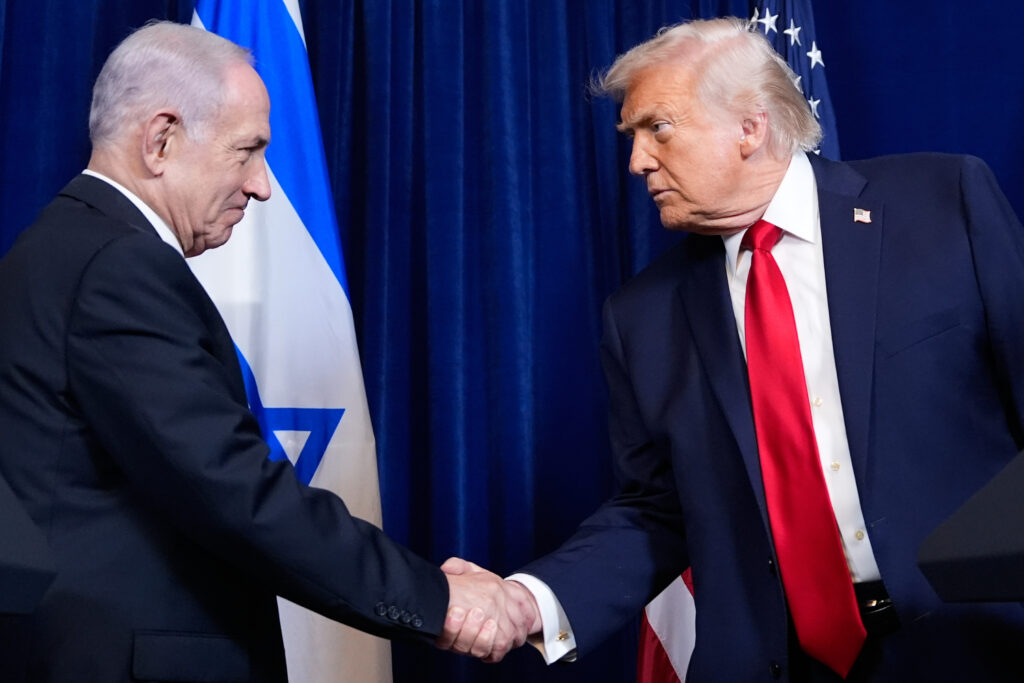
It was a handshake that perhaps didn’t quite shake the world – but still carried outsized diplomatic and symbolic significance for friends, enemies and observers at home and abroad. At a news conference following meetings at his Mar-a-Lago, Florida club just before New Year’s, U.S. President Donald Trump warmly shook hands with Israeli Prime Minister Benjamin Netanyahu, after the two men had walked with arms on each other’s shoulders. Trump effusively praised Israel for doing everything asked of it to advance the peace plan for Gaza. But not so Hamas. If the terrorist group didn’t live up to its Phase 1 commitment “in a short period of time”, Trump warned, it would be “wiped out”. And if Iran should seek to restart its nuclear weapons program, Trump continued, it too would be struck again. After the meetings, the two leaders and their wives went on to celebrate New Year’s Eve together.
The Mar-a-Lago meeting was the latest in a series of statements and actions making it unmistakeably clear – to actors across the political spectrum – that the United States with Trump at its head is resolutely committed to defending Israel’s right to live freely as a Jewish state, to opposing anti-Semitism wherever it might occur worldwide, and most of all to protecting the rights and security of America’s Jewish population. Recall that it was only under Trump’s relentless pressure that Hamas last year finally agreed to release its remaining Israeli hostages and deceased remains. Such linkage between the security of Israel and the safety of Jews elsewhere is not coincidental, but deliberate U.S. policy. As Secretary of State Marco Rubio has declared, “Those who call for violence against Israelis are calling for violence against Jews. Those who call for the destruction of Israel are calling for the destruction of the Jewish people.”
Trump’s warm meeting with Netanyahu also underscores the stark contrasts between the U.S. and Canada in their respective approaches to countering anti-Semitism – by turns heartening to America’s estimated 7.5 million Jews and deeply worrying for Canada’s approximately 400,000 Jewish citizens. In Canada, Netanyahu would risk being arrested under a legally baseless warrant from the International Criminal Court (ICC). It is part and parcel with the Liberal government’s systematic distancing of Canada from Israel while promoting Palestinian statehood and turning a blind eye to the UN’s anti-Israel biases. The U.S., by contrast, has moved to sanction the ICC’s judges. As the Trump Administration sees it, first Hamas must be disarmed and the West Bank’s PLO regime definitively renounce terrorism and accept Israel’s right to exist as a Jewish state, before there can be serious talk of Palestinian statehood.
Canada’s egregious under-performance in the face of rising domestic anti-Semitism – not merely by the Liberal government of Prime Minister Mark Carney but at all governmental and institutional levels, with a few exceptions – was the focus of this series’ first instalment. The concerted U.S. campaign to counter anti-Semitism is the focus of Part II.
A Bigger Problem, a Much Bigger Response
As mentioned in Part I, anti-Semitism on the face of it is worse in the U.S. than in Canada. In Canada, Jews have been forced to tolerate thousands of instances of intimidating pro-Hamas “protests”, illegal but long-tolerated university encampments, insults, taunts, shunning, vile social media posts, threats and vandalism. But America’s Jews have endured everything mentioned above and they have been hit with multiple violent physical attacks and murders motivated by Jew-hatred.
Already before the Hamas atrocities of October 7, 2023, U.S. Jews had suffered at least 14 murderous attacks. The worst came in October 2018 when a white supremacist gunned down 11 and wounded six during Shabbat services at the Tree of Life Congregation in Pittsburgh, Pennsylvania. Since October 7, there have been at least four more serious attacks, three of them resulting in fatalities.

But while the U.S. arguably has a worse problem, what is inarguable is that the U.S. federal government and senior political leaders, as well as numerous states and cities plus well-organized voluntary organizations, are collectively responding much more vigorously, sincerely – and effectively – than anything seen in Canada. While some municipal and state governments headed by left-wing Democrats dither or excuse anti-Semitism as mere criticism of Israel, the overall difference between the U.S. and Canada is like night and day. The U.S. campaign to counter anti-Semitism has made such significant gains that Jewish leaders in Tulsa, Oklahoma are now marketing their city as a safe and welcoming “exit strategy” where concerned Canadian Jews could come and resettle.
The U.S. campaign to counter anti-Semitism begins at the top.
The Most Pro-Jewish President in U.S. History
George Washington was famously welcoming toward his infant country’s small Jewish population. In word and deed, Trump is well on his way to eclipsing the first U.S. president in that regard. Despite concerns early in his political career about some of his associates – whom he soon discarded – and recent media reports possibly aimed at scaring the Jewish community by purporting to show Trump weakening his support for the Jewish state, his track record is unambiguous.
As with so many aspects of Trump the politician, personal experience shapes his policies. His daughter Ivanka converted to Judaism in order to marry Jared Kushner, an Orthodox Jew. The couple has three children and, by all reports, Trump adores his grandkids, while Kushner remains a close confidant. Numerous friends, business associates and senior Administration officials also are Jewish. Even before his dramatic November 2024 election victory that propelled him to a second term, Trump was making it crystal clear where he stood.
![Calling the October 7 Hamas attack “one of the darkest hours in all of human history,” Trump condemned the “effort by some to deny [its] horrors.” At top, posters showing kidnapped hostages outside the Kirya military base in Tel Aviv, Israel. At bottom, the Trumps laying a wreath in the Hall of Remembrance at Yad Vashem, Israel, May 2017; behind them are (l-r) Rabbi Yisrael Meir Lau, Jared Kushner and Ivanka Trump, and Benjamin and Sara Netanyahu.](https://c2cjournal.ca/wp-content/uploads/2026/01/Inset3-1.png "antisemitism_Canadian_law_hate_crimes_3")
Speaking in Florida at the first anniversary commemoration for the October 7 massacre victims, he called the day “one of the darkest hours in all of human history,” one that unleashed “an evil so absolute” that “it seemed as if the gates of hell had sprung open.” Reiterating “the strong and enduring” bond between the U.S. and Israel, candidate Trump condemned the “effort by some to deny the horrors of October 7th.” He forcefully reminded audiences that “Hamas raped, tortured, maimed, and murdered innocent civilians in the most barbaric ways imaginable.” He then clearly signalled the linkage between support for Israel and opposition to anti-Semitism generally. “Almost as shocking as October 7th itself is the outbreak of anti-Semitism that we have all seen in its wake,” Trump declared. “We certainly never thought we’d see it in this country.”
And he soon proved himself determined to do something about it. A few months into Trump’s second term came the murders of Lischinsky and Milgrim. “These horrible D.C. killings, based obviously on antisemitism, must end, NOW!” Trump fumed on Truth Social. Rubio, meanwhile, posted on X: “Make no mistake: we will track down those responsible and bring them to justice.” And Jeanine Pirro, the interim U.S. Attorney for the District of Columbia, announced that the murders were “a death penalty-eligible case”.
But talk is cheap, and many dismiss Trump as the world’s most incorrigible blowhard. Where’s the beef? Turns out, there is plenty of it, and it started in his first term. Trump moved the U.S. embassy in Israel to Jerusalem, something promised but never fulfilled by previous presidents. He issued a presidential proclamation recognizing Israel’s sovereignty over the Golan Heights, taken from Syria in the 1967 Six-Day War and physically critical to Israel’s defence. And most significantly, he drove the Abraham Accords, an extended diplomatic process that is persuading more and more Muslim countries to formally accept Israel’s right to exist as a Jewish state. Some say the last move should have landed Trump the Nobel Peace Prize.
On January 29, 2025 – just over one week after his second Inauguration – Trump issued a sweeping Executive Order (EO), Additional Measures to Combat Anti-Semitism. Building on an EO from his first term aimed at protecting students from anti-Semitic harassment, the new EO first decries the Joe Biden Administrations’ refusal to enforce those provisions, then declares, “It shall be the policy of the United States to combat anti-Semitism vigorously, using all available and appropriate legal tools to prosecute, remove or otherwise hold to account the perpetrators of unlawful anti-Semitic harassment and violence.” The document directs the entire U.S. federal apparatus to make systematic inventories concerning ongoing anti-Semitism, to determine the legal mechanisms available to counter it – and to take action. Universities are a particular area of focus.
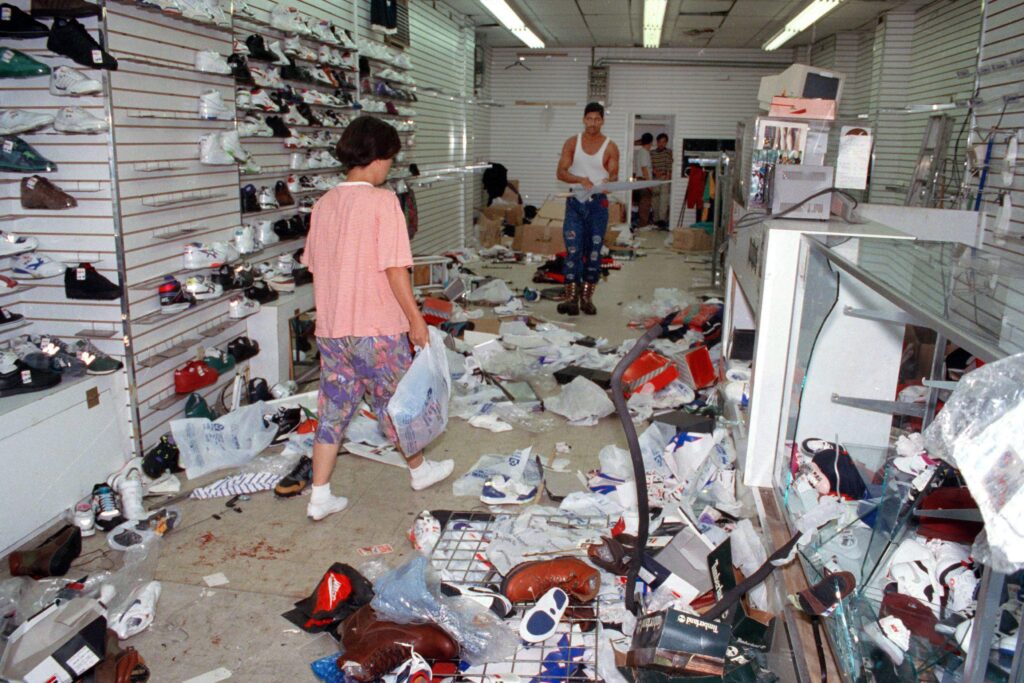
Kalman Rosenfeld, my son-in-law who now lives in New Jersey with my daughter and their two children, calls Trump “nothing short of a hero”. Rosenfeld has seen vicious anti-Semitism first-hand. He grew up with 10 siblings in Crown Heights, a Brooklyn neighbourhood long described as “90 percent black, 10 percent black hat.” It also became the scene of the notorious Crown Heights riots of 1991, which began when local blacks, seeking revenge for the death of Gavin Cato, a seven-year-old black child who had been accidentally run over by a local Chasidic Jew, murdered Yankel Rosenbaum, a Jewish student visiting from Australia. Incited by the Reverend Al Sharpton, the riots went on for three days, during which angry blacks attacked local Jews and destroyed Jewish-owned homes, businesses and institutions.
“Deep down I sometimes fear a repeat of that long-ago violence,” Rosenfeld confesses. He calls October 7 “a smack across the head, for sure” for America’s Jews. “We were even more shocked at the intense Jew-hatred that arose after, immediately and everywhere.” But he and his family are taking heart from the leadership shown by the president as well as other official actions to counter anti-Semitism. “My wife and I have been quite happy with the recent responses of our governments at every level,” Rosenfeld says. “There is no question, President Trump makes the Jewish community in the U.S. feel quite protected.” It is difficult to imagine a Canadian Jew saying the same of their federal government.
Bench Strength: U.S Federal Efforts to Counter Anti-Semitism
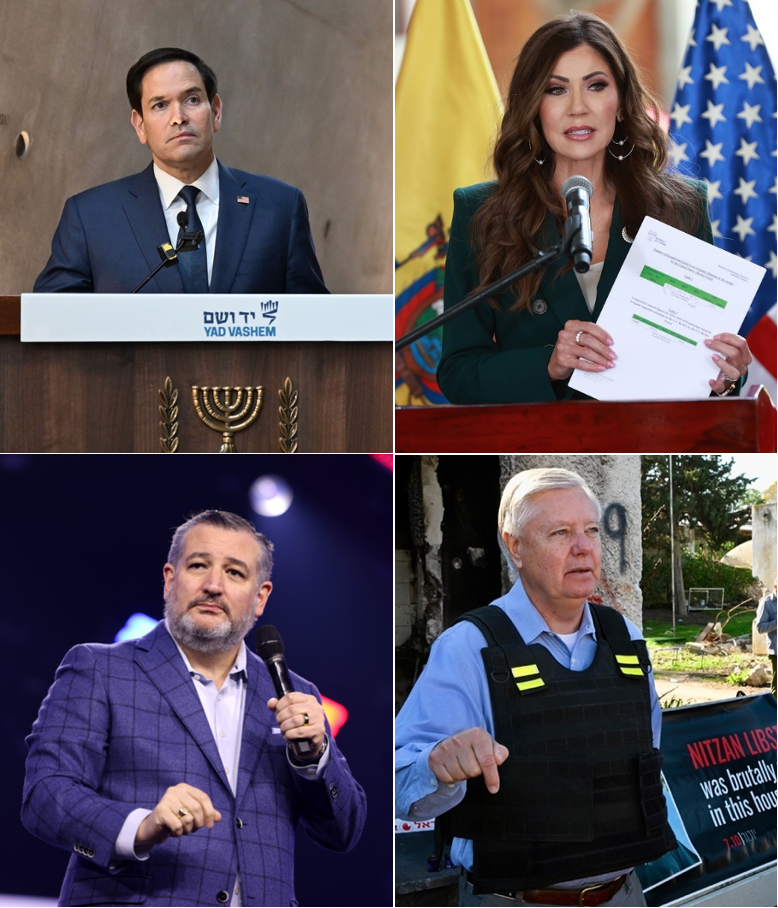
An important difference from Trump’s first term – and a further distinction from the shambolic efforts of Canada’s federal government – is the unity of purpose, vigour and competence shown by the president’s cabinet secretaries, the heads of key federal agencies and the senior officials who report to them. Rubio has been prominent in this regard, as have Attorney-General Pam Bondi and Department of Homeland Security (DHS) Secretary Kristi Noem, and there are numerous others.
Senior elected federal Representatives and Senators have also been highly active, still another contrast both to Canada, where federal power is concentrated in the Prime Minister’s Office, and to the Biden Administration. For example, 2024 Senate hearings called in response to October 7 descended into vitriol and farce as the key Democrats in charge of committees, such as Illinois Senator Dick Durbin, sought to dilute attention on anti-Semitism by making the hearings about “hate crimes” in general and drawing a moral and functional equivalence between anti-Semitism and so-called “Islamophobia”.
“Prioritizing which group is being discriminated against the worst, I don’t believe is a valid exercise of our authority here,” said Durbin of an issue that featured over 10,000 anti-Semitic incidents in the year after October 7, with Jews enduring more than two-thirds of America’s hate crimes. Durbin’s moral equivalence included calling a witness representing Arab interests who initially refused to answer whether she supported Hamas, claiming the question itself revealed “Islamophobia”. Meanwhile, keffiyeh-wearing anti-Zionist agitators were somehow allowed into the visitors’ gallery to disrupt the hearing, one shouting “F— Israelis” and yelling at a Republican Senator that he didn’t care about “F—ing Jews”.
With the Republican Party regaining the Senate majority in November 2024, committee chairmanships have switched over and several Republican Senators who were already prominent in their opposition to anti-Semitism – such as Ted Cruz of Texas, Louisiana’s John Kennedy and South Carolina’s Lindsey Graham – are wielding real authority once more. Cruz has distinguished himself in constantly condemning the “poison” of anti-Semitism and forcefully debating critics of Trump’s policies, including vocal influencers on the right who have begun claiming there are Jewish conspiracies warping U.S. foreign policy.
In February, the House of Representatives reintroduced the Antisemitism Awareness Act of 2025, which largely reaffirms Trump’s main EO on anti-Semitism plus commits Congress to abide by the International Holocaust Remembrance Alliance’s (IHRA) definition of the term. In March, the Senate’s Judiciary Committee held hearings entitled Never To Be Silent: Stemming the Tide of Anti-Semitism in America, chaired by Chuck Grassley of Iowa. After reviewing the horrors Hamas inflicted on October 7, Grassley noted that, “This isn’t another generalized hearing on every kind of hate.” Instead, its purpose was “to expose and condemn the recent forms of antisemitism that went unaddressed last Congress.”
In May, Idaho Senator Jim Risch and Republican colleagues introduced the No Official Palestine Entry Act, aimed at cutting off U.S. assistance to entities that give additional rights and privileges to the Palestinian Authority and the Palestine Liberation Organization. And in December, a Democrat introduced the Antisemitism Response and Prevention Act of 2025, now before committee, which would among other things “create a federal coordinator for combating antisemitism, highlighting a push for coordinated government action against rising incidents.”
Following last year’s three serious assaults against Jews, Pennsylvania’s two senators, Democrat John Fetterman and Republican Dave McCormick, put forward a resolution condemning the rise in violent anti-Semitism, which was co-sponsored by more than one-third of U.S. Senators from both parties. The House of Representatives passed a similar resolution 400 to 0. “Amid a despicable rise in antisemitism,” said Fetterman, rhyming off the three incidents, “we are starkly reminded that silence is complicity.”
Fetterman has become an important national figure. In a party that used to be resolutely pro-Israel, he is now an outlier. A maverick who upsets many when he wears hoodies and shorts to Congress, and who won re-election in 2024 despite still obviously recovering from a serious stroke, Fetterman has morphed into one of America’s most vocal defenders of Jews and Israel, despite the increasing hostility of more and more Democrats. Fetterman placed photos of the Israeli hostages on his office walls, and in early 2024 went onto the roof of his house in Braddock, Pennsylvania waving the Israeli flag as pro-Hamas demonstrators screamed abuse from below. Almost alone among Democrats, he backed Trump’s bombing of Iran’s nuclear weapons program, referring to the airstrikes as “peacemongering”.
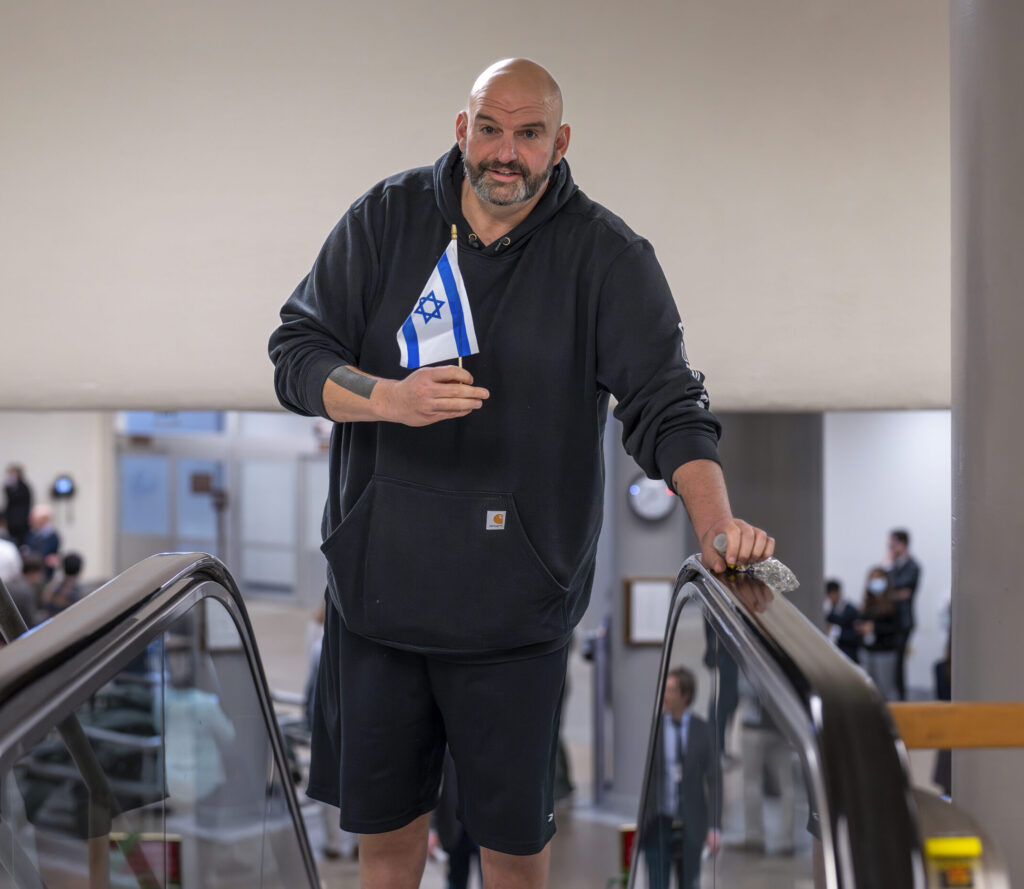
Fetterman has paid for his stands. He is often harassed in public and accused of supporting “genocide”. His chief of staff and several staffers quit, leaking gossip to journalists that his stance on Israel could be indicative of mental illness. There have been other media hit pieces. Pressure is mounting from anti-Israel groups and within his party to prevent him from running for re-election in two years. Fetterman is not only emblematic of the Democratic Party’s internal conflicts and increasing radicalization, but a stirring reminder that courage comes in many forms. Canada could use a few politicians like him.
Federal Law Enforcement Activities
While it’s difficult to generalize accurately in a country as large and diverse as the U.S., the federal law enforcement response to anti-Semitism under the Trump Administration has been characterized by prosecutors moving aggressively and seeking maximum penalties, by a renewed focus on detecting and interdicting external threats, and by growing awareness of the immigration angle in anti-Semitism.
The case of Boulder flamethrower Sabry Soliman is instructive. AG Bondi has stated her department will hold him “accountable to the fullest extent of the law,” widely seen as signalling that federal prosecutors will seek the death penalty. Bondi also bluntly characterized him as the “illegal alien perpetrator of this heinous attack,” drawing attention to the thousands of foreign anti-Semites in the U.S. Soliman entered in 2022 and overstayed both his temporary visa and a short-term work permit. “If the Biden regime hadn’t inundated the country with illegal migrants,” writes Stephen Green in PJ Media, “and if leftist judges hadn’t done all they could to stymie [Trump’s] deportation efforts, the Boulder terrorist attack on Sunday might never have happened.”
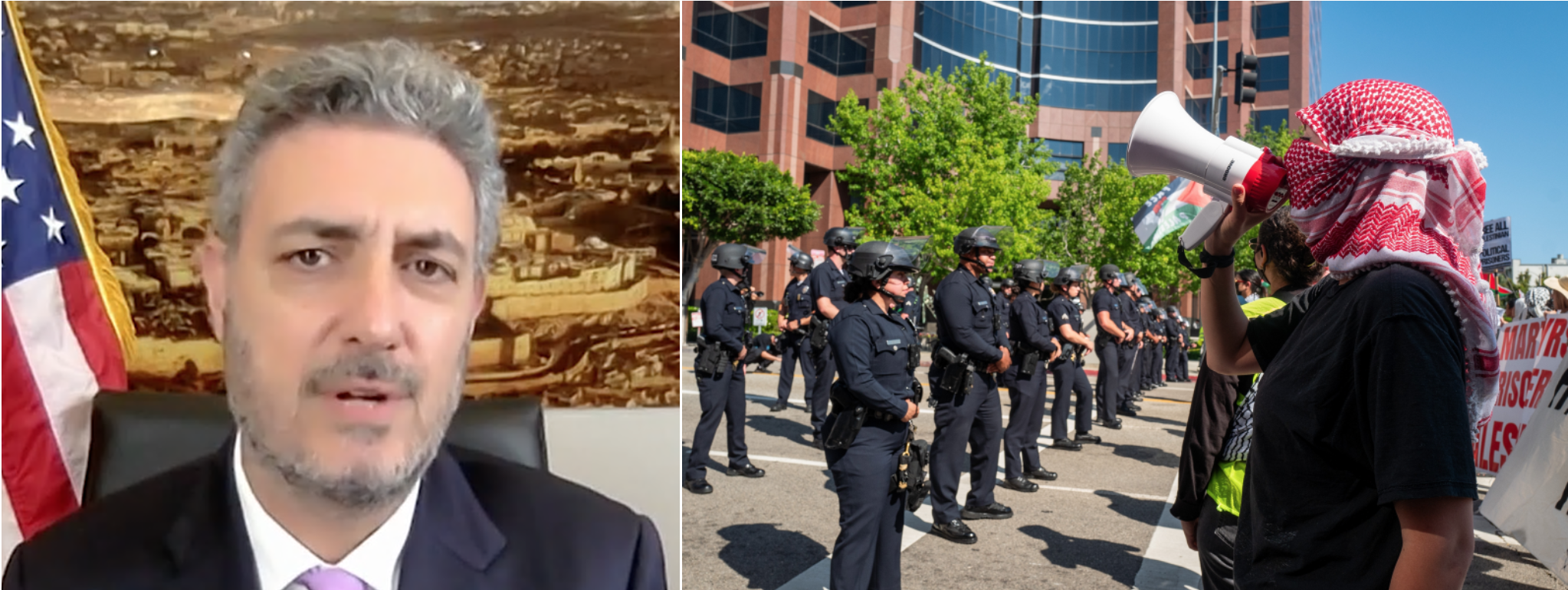
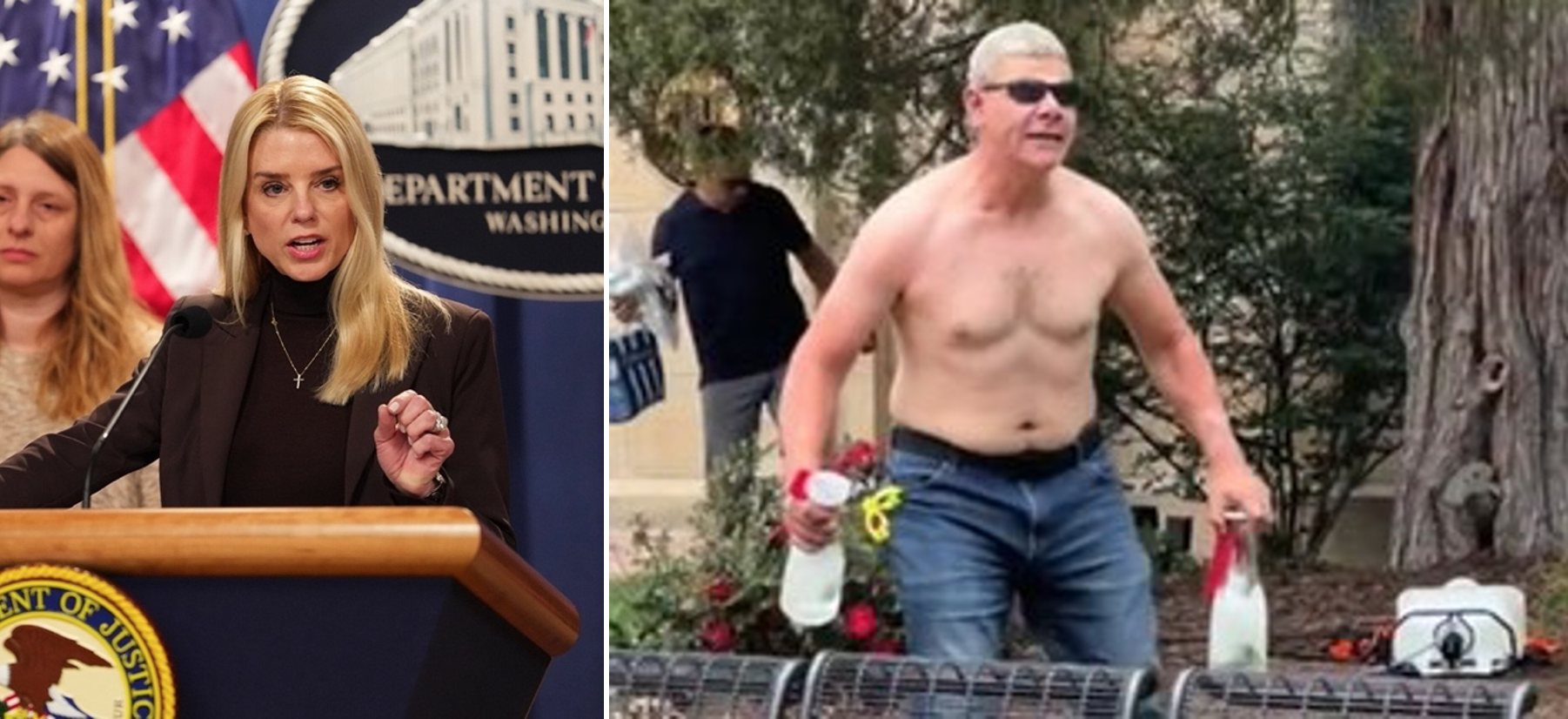 U.S. Attorney-General Pam Bondi (left) has promised to hold Mohammed Sabry Soliman (right) “accountable to the fullest extent of the law”; Soliman, an Egyptian who was in the U.S. illegally, stands accused of using a homemade flamethrower and Molotov cocktails to attack a peaceful march of elderly Jews commemorating the Hamas hostages, wounding 13, one of whom later died. (Source of right photo: The National Post)
In some instances, U.S. law enforcement is even forced to grapple with Canadian anti-Semitic threats. A 2021 U.S. indictment, for example, accuses Iranian intelligence operatives of planning to kidnap and murder Iranian-American journalist Masih Alinejad. The same group, U.S. prosecutors say, was plotting to snatch three unnamed Canadian regime opponents. Last year, U.S. attorneys indicted two Canadian Hell’s Angels members, accusing them of working at the behest of Iranian intelligence to assassinate dissidents in Maryland.
U.S. State Policies
While some states have done effectively nothing, enabling anti-Semitism to metastasize, others are moving vigorously. In June, for example, four Republican Governors – Bill Lee, Sarah Sanders, Kevin Stitt and Glenn Youngkin of Tennessee, Arkansas, Oklahoma and Virginia, respectively – jointly wrote an article entitled “How GOP governors are leading the charge against antisemitism – and for civil rights”, published in the New York Post. “A new generation of Americans has been conditioned to hate Jews with an intense bigotry experienced by no other minority group,” the four governors warn. Accordingly, “We have come to see the struggle against antisemitism as a pillar of American civil rights.”
They go on to describe policies, legislation and executive actions to counter the scourge in their states. Like Trump’s January 29 EO, they are focusing largely on forcing university administrators to grapple meaningfully with campus intimidation and incitement against Jews, illegal protests and anti-Semitic faculty. They are demanding universities comply with longstanding U.S. federal civil rights legislation, and that they operate under the IHRA’s definition of anti-Semitism.
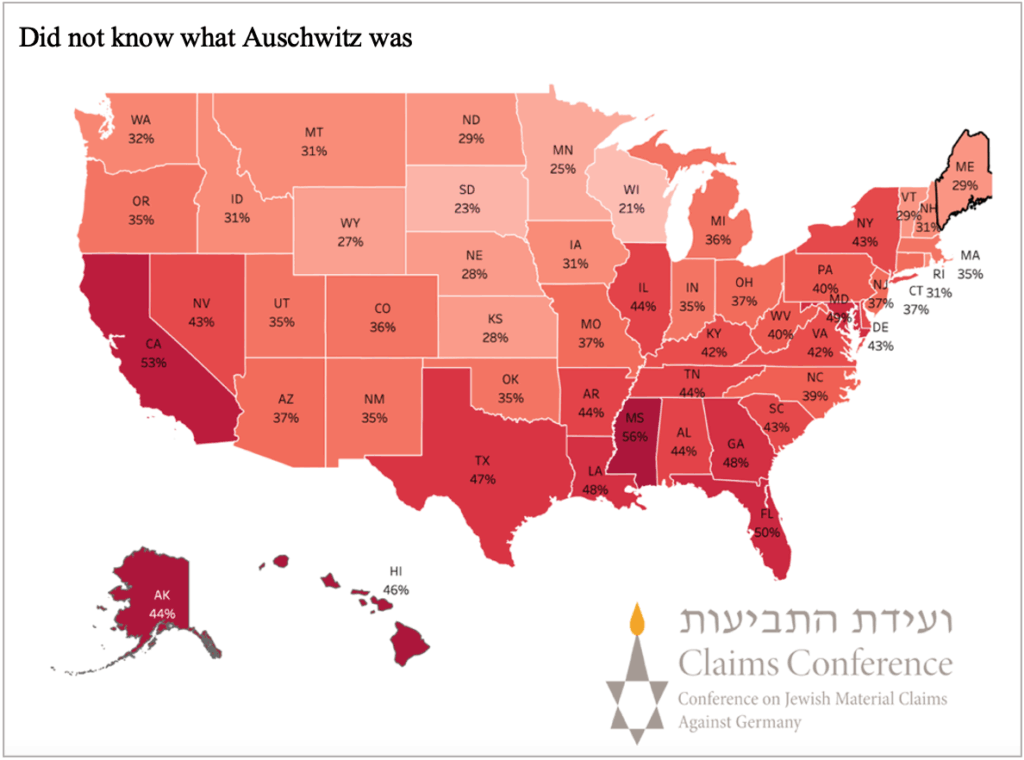
They are also probing and moving to counter anti-Semitism at the K-12 school level, while ordering schools to add new curriculum material on anti-Semitism and Jewish-American history. Why? They warn, “surveys indicate declining knowledge about the Holocaust among American students.” They are backing up their new policies with permanent working groups and oversight mechanisms tasked with implementation, monitoring of results and holding responsible parties accountable.
Mayor Lisa Katz of 20,000-strong New Castle, New York, described the summit as an excellent networking opportunity enabling officials experienced in the issue to “effectively communicate with current mayors to ensure we’re providing them with practical solutions they can implement in their neighborhoods to combat antisemitism daily, right where it happens.” Following October 7, Katz had made the decision to fly the Israeli flag at her city hall, which of course generated opposition and heated council meetings. While of great symbolic importance, countering anti-Semitism clearly also requires practical, day-to-day tools. In one summit panel discussion, Y-Net reported, “Leaders of large cities shared advice with those from smaller municipalities on how to counter antisemitism in their areas.”
Israel Bachar, Israel’s Consul General in Los Angeles, described civic officials as “the daily frontline in protecting the Jewish community” and, thus, as strategic assets. “While they don’t directly influence macro policy, they have tremendous impact on residents’ daily lives, especially the Jewish community’s security,” Bachar noted. “For instance, they can’t affect what happens on campuses directly, but they can decide which protests are approved and how the local police handle events.” Israel’s Palestinian opponents, says Bachar, have taught that an advocacy strategy working “bottom-up” can be more effective than “top-down.” In addition, mayors do often rise higher in politics, becoming Senators, governors or Cabinet secretaries; a mayor fighting anti-Semitism today could become highly influential in a future presidential administration.
Among the most worrisome situations is the stunning turnaround in New York City, home to the world’s second-largest civic population of Jews, 1.4 million, behind only Tel Aviv, Israel. And yet not only has New York not been immune to anti-Semitism – some of the worst campus intimidation and violence occurred at Columbia University – New Yorkers recently elected as their mayor Zohran Kwame Mamdani. Mamdani is a Muslim “democratic socialist” who, among his other worrisome stances, refuses to repudiate the expression “Globalize the Intifada” which, if it has any meaning at all, signifies encouragement of attacks like the recent Bondi Beach massacre.
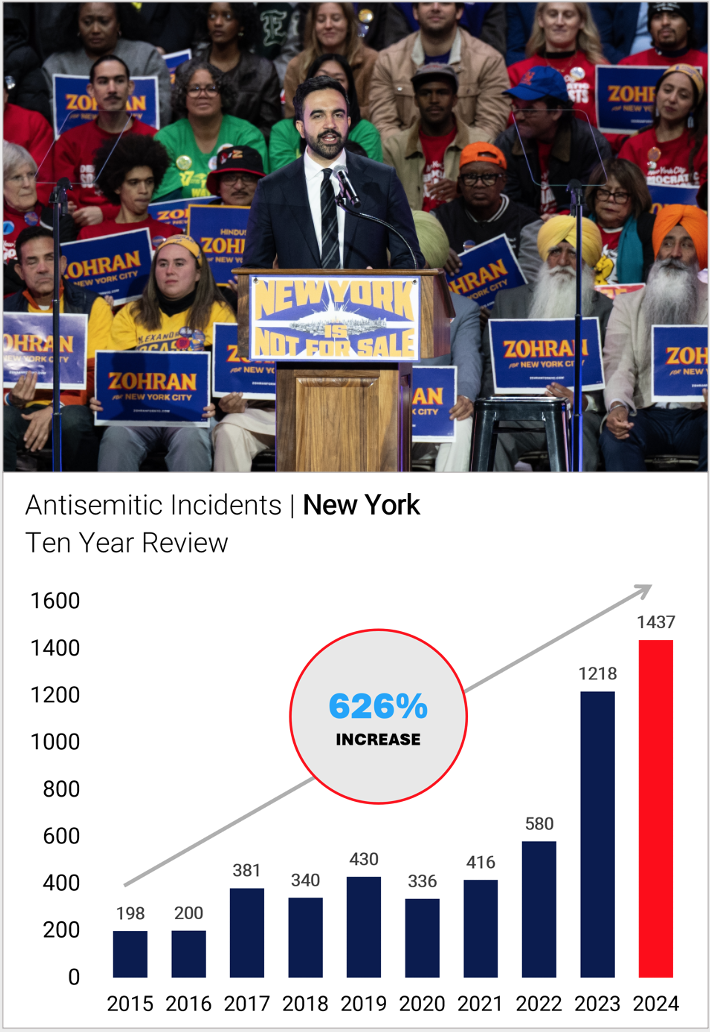
Although Trump has already warned that, “Whoever’s mayor of New York is going to have to behave themselves, or the federal government is coming down very tough on them financially,” only time will tell how far Mamdani will push matters. An embodiment of the so-called “Red-Green Alliance” of hard leftists and Islamists, Mamdani has surrounded himself with radical advisers. One of his senior-most selections, Catherine Almonte Da Costa, named Director of Appointments, was forced to withdraw after it was revealed she had posted about “money hungry Jews smh” on social media. That hardly lessens the problem, however. As columnist Jonathan Tobin notes, “20% of [Mamdani’s] 400 appointees to various transition committees have ties to anti-Zionist and antisemitic groups – or have engaged in acts of Jew-hatred online.”
New York City’s Jews were already leaving the city in droves for Republican-run states like Florida and Texas; the election of Mamdani, whose record suggests he is both a communist and an anti-Semite, may start a stampede. The current situation in New York is probably the largest single rebuke to the U.S.’s overall campaign to counter anti-Semitism.
Plugging the Ideological Font of Anti-Semitism
Some of the Trump Administration’s fiercest battles against anti-Semitism have been with the country’s elite universities. As in Canada, for up to a year after October 7 these schools indulged never-ending anti-Jewish demonstrations and pro-Hamas camps on their grounds. Jewish students were harassed, assaulted and blocked from going about campus. Prominent university presidents denied or downplayed anti-Semitism in their midst.
The silver lining to this disgusting drama was that it became crystal-clear to Americans that the prodigious sums of money flowing from wealthy Arab states to U.S. post-secondary institutions has warped their views, debased their judgment and undermined their loyalty to the intellectual and ethical traditions of the Western university. As British author and journalist Douglas Murray pointed out in the Spectator, “More than 30 Harvard University student organizations signed a letter which claimed to hold the ‘Israeli regime entirely responsible for all unfolding violence.’”
Trump’s responses have included blocking federal aid and research funding to universities, moving to deport foreign students who have been ringleaders of anti-Semitic activities, stopping some prospective international students from entering the country, rousing prominent alumni and private donors to criticize or de-fund their alma mater, and enforcing longstanding federal civil rights provisions to protect Jewish students. While leftists have howled – one Trump-hating critic claiming that his Administration “has launched a comprehensive attack on knowledge itself” – others such as multimedia journalist Joe Battenfeld dismiss Harvard elites as merely playing victim.
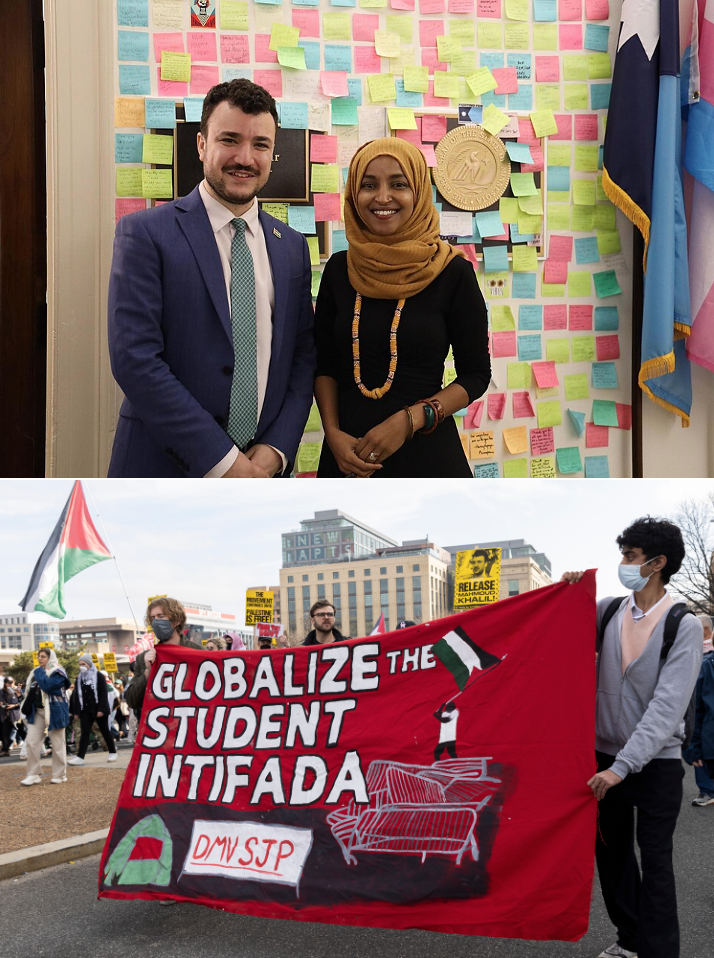
So far, the winds appear to be at Trump’s back. Already last July, the non-Ivy League UCLA capitulated in a lawsuit brought by Jewish students and agreed to a “consent decree” placing it under civil rights supervision by the federal Department of Justice; other California universities were expected to follow suit. Accordingly, writes James Piereson in City Journal: “By freezing billions of dollars in pledged research grants due to be paid to Harvard, Columbia, Princeton, Cornell, and other prominent institutions, on the grounds that the schools have not done enough to counter anti-Semitism on their campuses or have evolved into left-wing hothouses with little diversity of opinion,” Trump is likely to prevail against the Ivies. Adding to the pressure, Jewish students are privately suing Harvard, alleging it “has become a bastion of rampant anti-Jewish hatred and harassment.”
The Administration’s decision to move against anti-Semitic foreign students whose bigotry might spill over into harassment, incitement or violence is hitting the Ivies on multiple levels, from their pocketbooks to their self-righteous self-image as bastions of diversity and protecters of the oppressed. The case of Syrian Mahmoud Khalil is a prominent example. A graduate student and Green Card holder, and married to an American, Khalil helped lead some of the worst anti-Semitic protests at Columbia University and is now facing deportation hearings for his alleged ties to Hamas terrorists.
While the Khalil case quickly became an important symbol to both sides, it actually stands out for being merely one action in a campaign. As Sergio Karas, a Canadian immigration lawyer and past chair of the American Bar Association International Law Section’s Canada Committee, points out, DHS “recently issued a formal demand to Harvard, requiring detailed records concerning its international student visa holders,” including “records of student misconduct, threats to safety, disciplinary actions related to protests, disruptions to learning, and visa-related coursework.”
Public authorities should move immediately and decisively against any blockades of public property by “protesters” spewing hatred and harassing law-abiding citizens. Universities, municipalities and organizations that tolerate/abet anti-Semitism should lose their federal funding, while those that do the opposite should be rewarded. Criminal acts of anti-Semitism should be prosecuted to the fullest extent of the law. Canada’s lax provisions for bail and lenient sentencing and parole should be tightened.

While any criminal law reforms would take months if not years, Canada could make immediate improvements to the physical security and psychological well-being of its Jewish citizens by moving expeditiously to revoke the visas of and deport virulent anti-Semites who are not even Canadian citizens. The U.S. No Visas for Anti-Semitic Students Act, introduced in 2024, could serve as a model (or at least inspiration) for Canada, enabling immigration officials to remove foreign students engaged in illegal activities. While that draft bill was not passed, the U.S. State Department has reportedly revoked the visas of more than 8,000 foreign students it identified as Hamas sympathizers.
Still, it is amply clear that the U.S. campaign to counter anti-Semitism, as impressive and heartening as it is and as much as it has achieved in a brief time, is far from won. As Winston Churchill eloquently stated after the first great British victory in the Second World War: “It is not even the beginning of the end. But it is, perhaps, the end of the beginning.” The years ahead are likely to remain fraught and difficult for Jewish citizens and their vocal supporters in both countries. It is incumbent upon political leaders at all levels to take on the scourge of anti-Semitism so that, at minimum, the coming years are not downright deadly.
Lynne Cohen is a non-practising lawyer and journalist. She has written six books, of which four have been published, including the ghost-written Holocaust memoir The Life of Moshele Der Zinger: How My Singing Saved My Life.
Source of main image: Shutterstock.