The gong show that ousted frisky bachelor Patrick Brown from the leadership of the Ontario Progressive Conservative Party and replaced him with the big lug the New York Times hailed as “the brother of Rob Ford” produced one unifying result: all four candidates who ran to replace Brown renounced his commitment to a carbon tax. This is big news, as unexpected as Justin Trudeau appointing an all-male cabinet.
Initially the media, gorging on their #MeToo twitter feed, hardly noticed the decarbonization of the PC platform. Now, awakened to the possible election of a climate-heretical Ontario government in June, they are energetically assisting the Liberals and NDP in warning voters off the Tories. Their attacks mainly target two themes: first, Ottawa will impose a carbon tax on the province no matter who is running Queen’s Park. And second, how can the PCs balance the budget without the $4 billion Brown said they would get from a carbon tax?
If this is the best the Toriphobes have got, Ontario will soon have a Ford at the wheel, and he won’t be driving a hybrid. His message will be simple: if the federal Liberals want a carbon tax, they should wear it. Let them design, implement, collect, and justify it to millions of Ontario voters who are among the highest-taxed people on earth.
Besides, the Tories have nothing to lose except the blame for a carbon tax because the federal Liberals have promised to return all the revenue to the province. True, a Liberal promise is not something to bank on. But if they renege the PCs can blame them for the deficit too.
Within a couple years it is possible that five provinces (Ontario, Alberta, Saskatchewan, Newfoundland and Labrador, and Nova Scotia) will have governments opposed to a carbon tax. Manitoba’s current Conservative regime is a lukewarm supporter, at best. The United States won’t have a comprehensive national carbon tax. Nor will Russia, India, China, Saudi Arabia, Iraq, Iran, and many other major carbon producing and emitting countries. So by the time the next federal election rolls around in October 2019, the anti-carbon tax Conservative Party may be riding a wave of #NotMeToo that could sink the ruling Liberals.
Does this mean we’re hell-bent for Gaiacide? Beats me. Unlike most Canadians, who apparently fancy themselves as climatological experts, I don’t know whether anthropogenic climate change is real, or whether its more of benefit than a menace to life on earth. But I do know that Canada is such a tiny emitter, there’s nothing we can do to change the climate for better or worse.
So here, with apologies to the great Jonathan Swift, is my modest proposal for an alternative approach to expiating our sins of emission: simply impose an import tariff on manufactured goods from China, and call it a “carbon tax.” The ineluctable logic of this unassailable solution is as follows:
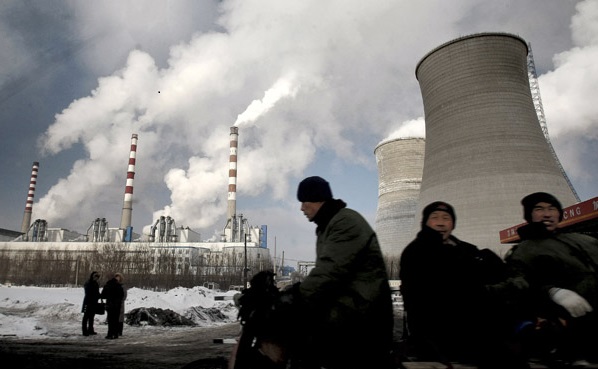
Manufacturing in China relies overwhelmingly on energy from coal power plants – the cheapest but most carbon-intensive source of energy there is. Thus when Canada imports inexpensive manufactured goods from China, we are also, in effect, importing emissions from those coal plants. Adding a large carbon tariff to the cost of manufactured goods from China would encourage that country to convert to lower-emission energy sources, including natural gas power plants. The gas, at least some of it, could come from Canada’s prolific fields. Surely not even the greenest Canadian eco-activist or indigenous extortionist would stand in the way of new pipelines and LNG terminals if they understood the virtuous result would be to reduce China’s dependency on coal power and lower global emissions.
The modest carbon taxes we currently pay, which are slated to rise to genuinely painful levels, have the perverse effect of actually increasing global emissions, because they reduce demand for Canada’s relatively low carbon content products and increase demand for China’s high carbon products. If climate change is a global problem, why on earth do our governments discourage domestic natural gas production and export with taxes and regulation, when this has the effect of incenting China to burn more coal?
Our federal Liberal government may be incapable of processing this inconvenient truth. Prime Minister Trudeau famously admires China’s “basic dictatorship” because he imagines it enables the country to “turn on a dime” and totally greenify its economy. He knows this because somebody (probably Gerald Butts) told him that nearly all of our wind and solar technologies are manufactured in China. So he would resist an import tariff on those products, even though they’re mainly produced by filthy coal power, because it would raise the cost of turbines and panels, and the green energy they produce. That might tip long-suffering Ontarians over the edge from energy price poverty to energy price revolt, which would be problematic for the federal and provincial Liberals. Better to just carry on raising global emissions by taxing carbon in Canada but not in China.
But Chinese cities like Baoding, which is a centre for the manufacture of “green” energy products, are among the most polluted on the planet. The wind turbines and solar panels gleam and sparkle as they roll off the assembly lines, but you can’t appreciate their beauty from any distance because a fog of toxic ground-level pollution and greenhouse gases belches out of the coal power plants that ring the city. Once upon a time Canadian governments discounted the deaths of Chinese labourers who died building our transcontinental railway. Today they have just as little regard for smog-ravaged lungs of the poor Chinese who are building our green energy technologies.
It ain’t easy being green, as Kermit the Frog knew all too well. It’s much easier to pretend to be green, as our carbon-taxing political leaders know all too well. But such virtue-signalling is, as they say, unsustainable. Eventually voters will see through it, and recognize that Canadian climate change policy is having precisely the opposite of its pretended effects.
In the meantime, I’m going to offer this great idea to someone who doesn’t care much about carbon emissions, but has a real problem with cheap Chinese imports. If he takes me up on it, he could become the Leader of the Carbon-Free World.