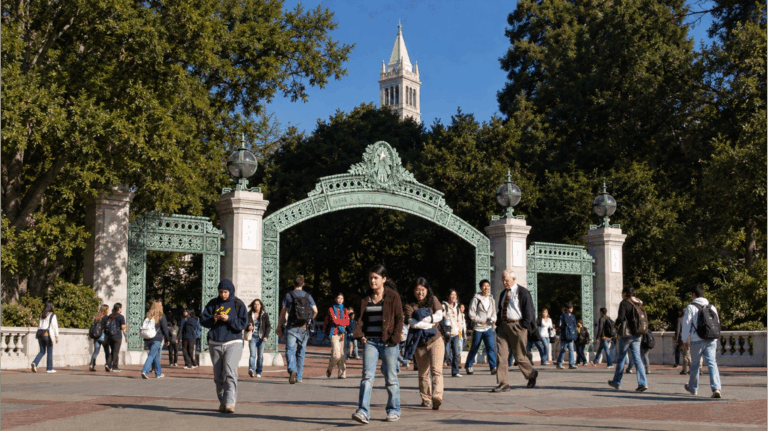
Canadian political culture is undergoing a dramatic shift. Superficially it is a shift to the left, evidenced by Conservative exile to the opposition benches federally and a small-c conservative lockout in all but one provincial government. The recent electoral successes of progressive parties are widely attributed to their near-monolithic support among young, idealistic voters – symbolized by the giddy legions of selfie-seekers drawn to Prime Minister Justin Trudeau like children to the flute-playing rat-catcher of Hamelin.
Most polling confirms that progressive parties and politicians have a decided edge among younger voters, including “Generation Y” or “Millennials” born between the early 1980s and early 2000s, who are voting in increasing numbers as they grow older and whose lifetime support fuels the hegemonic fantasies of left-wing election tacticians. But are they necessarily inaccessible voters for conservatives, now and in the future? More to the point, as the tax burden of an aging population increasingly comes to rest on their shoulders, will they sacrifice their own interests to support their elders?
In July 2014, the Reason Foundation conducted a comprehensive survey of 2,362 Americans between the ages of 18 and 29 years old and issued its findings in a report titled Millennials: The Politically Unclaimed Generation. Unsurprisingly, it found a plurality of support for Democratic President Barack Obama, his party, and many of their policies. But the report also indicated that approximately 57 percent of American millennials favour “smaller government, providing fewer services, with lower taxes”.
This hardly sounds like the rallying cry of left-wing parties on either side of the 49th parallel. On the contrary, it reflects a deep distrust of government among young people. It is rooted in their experience, such as the regulatory failures that led to 2008 world financial crisis and recession, the fitful economic and job growth since then, and revelations about “security state” intrusions into personal privacy and freedom.
Millennials did not take to the streets to protest the Trudeau government’s recent decision to roll back the age of eligibility for Old Age Security from 67 to 65. But that’s a story that probably flies under the radar of most twenty-somethings whose knowledge of economics is (un)informed by the public education system. Still, you don’t have to be an economist to recognize the inverted pyramid of Canadian demographics and be skeptical that government pensions and other social programs will still be around for Generation Y to take advantage of them in their dotage.
Millennials are slightly more likely to have higher personal debt than other generations, fueled in part by student loans and their greater enrollment in post-secondary education. But they are also the most likely of any generation to view debt, both private and public, in a negative light. This is in contrast to Generation X – those born between the early 1960’s and early 1980’s – which is the most debt-tolerant generation, according to the same research.
These concerns about debt are likely to become more acute among millennials as they attempt to retire their student loans and take on home mortgages. Generation X became homeowners during an extraordinarily prolonged period of low interest rates. They will be secured by equity when rates eventually go back up, while home ownership may remain a distant dream for Generation Y.

For all their devotion to equality rights and compassionate causes, millennials are libertarians at heart. They’re behind a huge surge in the popularity of libertarian-minded books such as Ayn Rand’s Atlas Shrugged. In the first 30 years since its release in 1957, approximately five million copies were sold. But in 2009 alone, more than 500,000 copies flew off the shelves, and similarly strong sales have been recorded every year since.
On most moral issues, millennials oppose government interference and support individual freedom; a June 2015 poll by Forum Research found that 75 percent of Canadians aged 18 to 34 years old support same-sex marriage. Only 17 percent disapproved of the practice and supported government action against it. This absolute devotion to personal choice and hostility to state diktats is also characteristic of Generation X.
Another interesting insight into millennial attitudes which suggests a predisposition to conservative or libertarian values can be found in a 2009 report by Canada’s Human Resources Council for the Voluntary and Non-Profit Sector, entitled The ‘New Collar’ Workforce: Understanding the Millennial Mindset. It found that 55 percent of Canadians aged 18 to 34 years old do volunteer work, exceeding any other age group. The data refutes the cliché of millennials as selfish narcissists, and indicates a desire to contribute to the public good, but on their own terms. In other words, they lean towards private charity, rather than paying coercive taxes to fund statist social programs.
One area where millennials and progressives are perfectly in sync is the environment. Exposure from a young age to the emotive power of the climate change Armageddon narrative has fueled an existential fear that is not assuaged by conservative arguments for free market policy responses, adaptation strategies or, certainly, climate science skepticism. A 2011 Pew Research survey found strong support among millennials for stricter state environmental regulation.
On the other hand, Gen Y is by no means immune to eco-hypocrisy: only 33 percent recycle, 40 percent conserve water, and 28 percent actively conserve electricity. Their support for environmental regulation in the abstract declines in relation to its impact on their wallets. This suggests millennials may be open to private sector solutions to environmental problems, especially where it can be shown that government intervention has failed or exacerbated problems.
Conservatives hoping to break the hammerlock that progressives have on millennials’ environmental concerns can take heart from data in the aforementioned Reason study which shows that their political loyalties are fluid and still forming. In the 2011 federal election, overall voter turnout was 61.1 percent. Among those aged 18-24 years old, only 38.8 percent voted, while 45.1 percent of 25 to 34-year-old Canadians voted, according to Elections Canada.
But for conservative parties and politicians to be competitive for the foreseeable future, they will have to improve their standing with younger voters. The hard truth is that their traditional single most reliable voter cohort – seniors – is increasingly filled with baby boomers who seem determined to go to their graves as progressive voters.
They will certainly become a greater proportion of the total Canadian population in the coming years, with some projections placing the number of those at or over the age of 80 years old growing to be 2.6 times higher in 2036 than it was in 2009. Over three-quarters of Canadians between the ages of 65 and 74 years old voted in the 2011 federal election, as did more than 60 percent of those 75 and over.
Boomers will make up an increasingly smaller proportion of the total ballots cast in elections starting in the early 2020s, however. This should create opportunities for parties and politicians that cater to the millennials’ demand for less government and greater economic and social freedom. That may not seem obvious today, when the unabashedly socialist Bernie Sanders is running a surprisingly competitive campaign for the Democratic presidential nomination in the United States that is fuelled by support from millennials. But Sanders, like Donald Trump on the Republican side, appears to have tapped mainly into anger with the political status quo. In the long run, conservative and libertarian parties and politicians should bet that millennials will vote for less government and more freedom.
~
Millennial Paul Pryce is Political Advisor to the Consul General of Japan in Calgary. A graduate of the University of Calgary and Tallinn University, he writes frequently on foreign policy and Canadian politics.