The case of Medhani Yohans ought to be both a teaching moment and a vivid red flag for Canadians. Fleeing his troubled homeland of Eritrea in 2017, Yohans managed to get himself smuggled through Egypt, Israel and one or more European countries before somehow flying to Canada, where he was “sponsored” as a refugee by still-undisclosed parties. Yohans apparently didn’t feel bound to return the favour; within a year he was committing crimes – sexual assaults, to be precise. Since then Yohans has accumulated a lengthy rap sheet and a similarly long string of media reports bemoaning his “catch-and-release” relationship with Canada’s justice system. His latest such interaction came just in August.
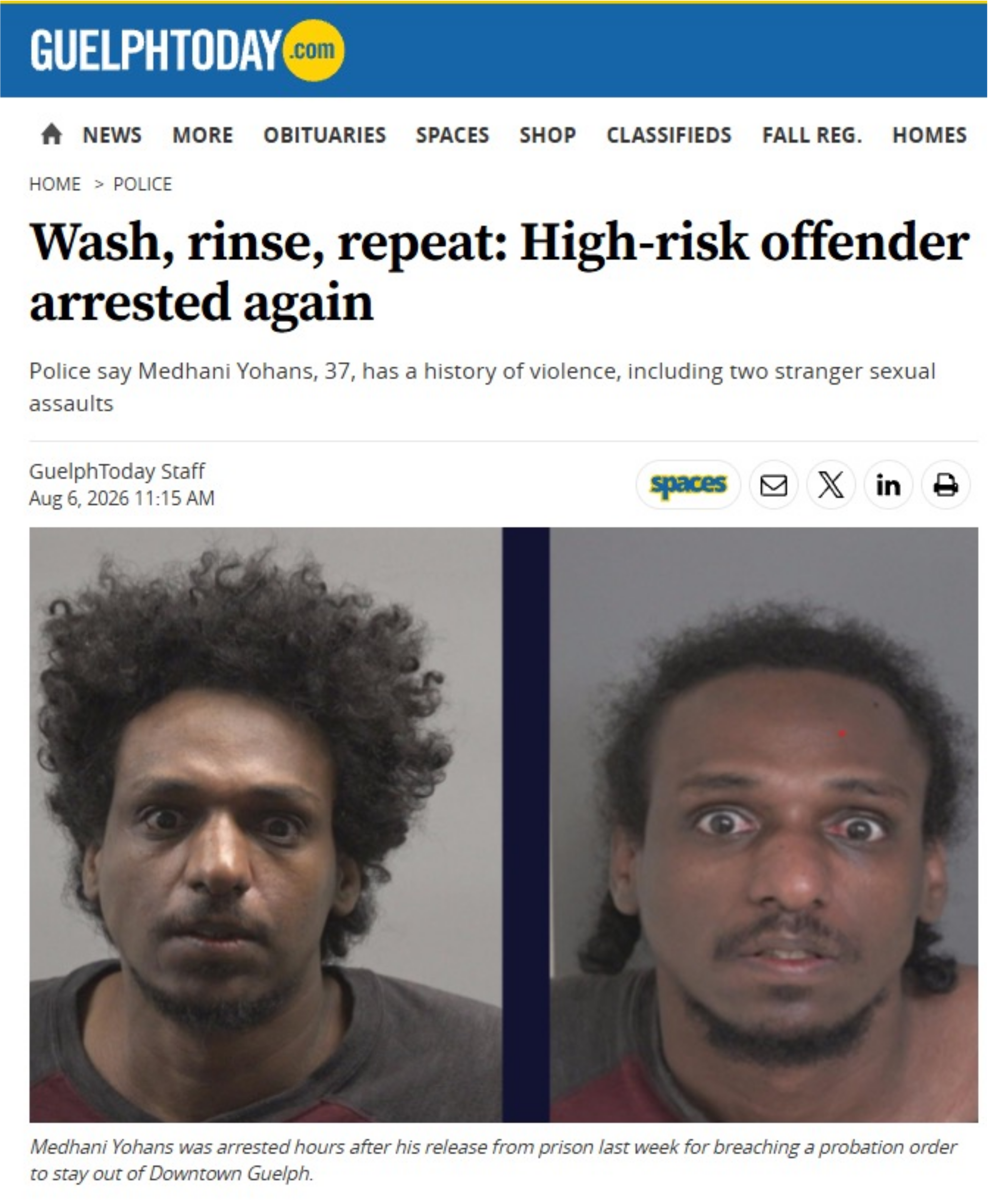
Yohans is considered a high-risk offender and has been ordered deported. But because the situation in Eritrea is “volatile” (though not actually war-torn) and Yohans is officially a “protected person”, the courts have barred authorities from shipping him back. Despite having committed infractions punishable by up to 10 years’ imprisonment for a regular Canadian, Yohans has served remarkably little time – just months – in prison. Canada’s courts apparently do not regard his past and potential future victims as “protected persons”.
Canada’s cascading institutional failures are disturbing enough. With its judicial system having largely inverted victim and perpetrator, immigration status has been elevated into a new class of victimhood rather than a privilege demanding better-than-average behaviour. But the Yohans case illustrates something far larger and more threatening, something Europeans have been living with and paying the price for over close to two decades now.
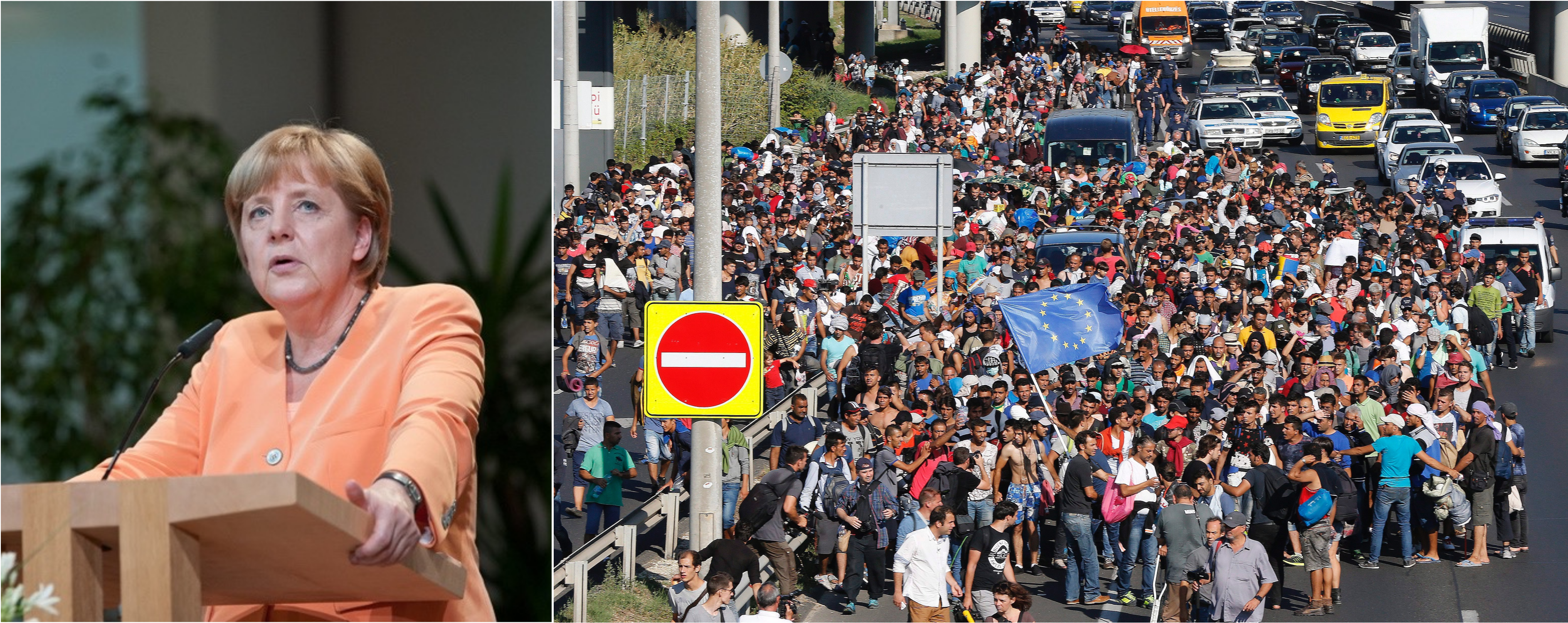
The flood of foreigners who have entered Europe as legal immigrants, asylum-seekers, smuggled or trafficked “migrants” and plain gate-crashers is a by-now familiar sight. Whether it was the more than 1 million invited in by German Chancellor Angela “Wir schaffen das” Merkel in the mid-2010s, the 70,000 Moroccans bypassing border fences and rushing into Spanish Ceuta in a 24-hour period this July, or the boatloads who still cross the English Channel almost nightly to claim “asylum” in the UK, the influx goes on and on.
Far less well-known to Canadians is that these migrants – who come predominantly from the Middle East, South Asia and Africa and a high proportion of whom are unattached males of military age – have brought with them a disturbing propensity to take liberties with women and girls in their host countries. And where mere liberties don’t suffice, to commit sexual assaults and rapes, often accompanied by beatings and even sexual torture. In Europe alone, based on police-recorded offences, there were over 2.5 million sexual assaults and rapes in 2014-2024. The figures don’t include the UK, and also omit European women who have been otherwise abused or outright murdered by migrants, some of whom operate as rape gangs.
 Swamped and scared: Millions of military-aged men from the Middle East, South Asia and Africa have entered Europe as migrants over the past decade, coinciding with a shocking increase in the number of sexual assaults across the continent. Shown at bottom, illegal migrants storm the border crossing between Morocco and the Spanish enclave of Melilla, June 2022. (Sources: (photo) AP Photo/Javier Bernardo; (chart) Eurostat, modified by C2C Journal)
 The Silenced No More report documents many horrifying incidents of sexual violence committed by Hamas during its October 7, 2023 atrocity in Israel, and against those later taken hostage. A pattern of rape and sexual degradation targeting women and girls, the author argues, has become a common component of modern terrorism and war. (Source of photos: civilc.org)
It would be an insult to the victims of October 7 to suggest I experienced anything like their pain, horror, humiliation or lasting scars. During that atrocity, hundreds of innocent Jewish women were raped, many repeatedly, with some publicly paraded showing horrific injuries, and others murdered through beheading or even shooting through the vagina. The depravity and barbarity have been meticulously documented in Silenced No More, The Civil Commission’s Report on Oct 7 Sexual Violence.
Importantly, however, the incident I experienced jolted me into a deeper recognition of a major tragedy of our time. The failure to address anti-Semitism is a failure to address not only the existential crisis facing the Jewish people and Israel’s right to exist; it is also a failure to address even broader issues facing Western civilization, whose women and girls are increasingly on the front lines as sexual assault is weaponized.
An occasional or isolated sexual assault by a foreign-born man is hardly unusual in any host country. A pattern of behaviour that raises the aggregate rate of sex crimes above that of the native-born population is disturbing and calls for decisive action by border agencies, courts and elected representatives. But the scale at which such crimes are happening in many European countries, the perpetrators’ attitudes and utterances, plus the often-organized nature of the crimes, suggest that the rape and sexual degradation of Western women are no longer explicable as simple criminality. As in Israel, they are becoming an instrument of invasion and of war itself.

Canada is still in a generally safe enough state that such a comparison may strike some readers as excessive. But the evidence from multiple European countries is compelling. And while some European countries, as well as the U.S., have moved decisively to protect their populations (with a couple, like Poland, preventing the problem entirely), the trend in Canada is in the wrong direction. In Ottawa, for example, women have reported over 150 sexual assaults just since June, at least some of which were perpetrated by “strangers”. The “small fraction” I mentioned above is an already unacceptably large number – and growing.
Canada’s Immigration Picture
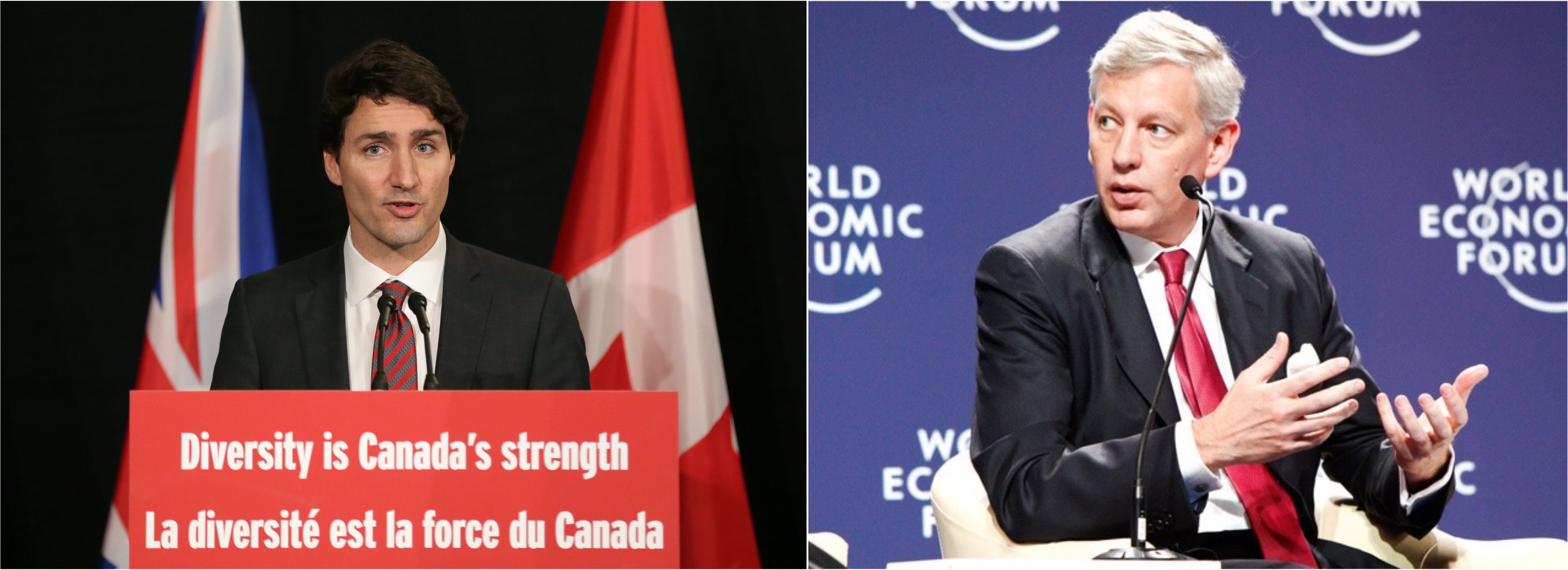
From relatively stable and manageable numbers of carefully vetted newcomers in previous decades, Canada’s net immigration started rising even before Justin Trudeau became prime minister in 2015 and declared Canada a post-national state fully attuned to internationalist prescriptions for the free movement of populations from poor to rich countries. The Century Initiative, a group of prominent Canadians advocating population growth to 100 million by 2100, had been established in 2009 by co-founders Dominic Barton, then managing director of globalist consultancy McKinsey & Company, and the financially connected Mark Wiseman.
By 2017, when Trudeau’s Advisory Panel on Economic Growth, now headed by Barton, recommended that immigration be increased, numbers had already risen steeply. Trudeau played his part in welcoming those “fleeing persecution, terror and war” regardless of their faith, reassuring Canadians and newcomers alike that, “Diversity is our strength.”
Two factors intervened to cap the migration surge. First, the Covid-19 pandemic briefly disrupted global travel in general, then the popular backlash created by housing shortages, soaring youth unemployment, worsening health-care waiting times and increasing urban crime forced the federal government to rethink its numbers.
Even today, however, Canada’s annual intake before outflows will be just over 750,000 – the population of a fair-sized city. And that is before asylum claims, which totalled 114,515 in 2025. Despite the Mark Carney government’s “cutbacks”, Canada is still very much a pro-immigration country. Just two weeks ago, Statistics Canada revised its population estimates for the three most recently available quarters upwards by over 700,000 people. And even if popular doubts are growing, there has been nothing earth-shattering to turn Canadians wholly against immigration.
Europe and the UK: The Shape of Things to Come?
If Canadians want to know where uncontrolled mass immigration can lead, they need to look at developments over the last decade in Europe and the UK.
It was in late September 2015 when Aylan Kurdi, a three-year-old migrant child who drowned as his parents tried to get him from Turkey to Greece, came to instantly personify Europe’s migrant crisis. The family was fleeing violence between Kurdish fighters and ISIS terrorists in lawless Syria; only the father survived. Later that month, Merkel announced that Germany would accept hundreds of thousands of Syrian refugees. Her seemingly humanitarian but deeply reckless undertaking would affect not only Germany but the rest of Europe as even greater waves of migrants surged throughout. From 40 million in 2010, the total of foreign-born EU residents rose to 64 million by 2025. For Germany alone, 10 million foreign-born expanded to 18 million over the same period.
In the UK, having successfully resettled 20,000 Syrian refugees, successive governments took it even further than Germany. Foundational to this were policy changes in 2000 by the Tony Blair government effectively enabling mass migration. Critically, rather than being driven by Great Britain’s interests and its people’s needs, the motivation was primarily ideological or moralistic. In fact Andrew Neather, a close adviser to Blair, would later describe the policy’s “driving political purpose” as being “to make the UK truly multicultural.” And Labour’s partisan intention? To “rub the Right’s nose in diversity.”
 Beware the Boriswave: Under Conservative Prime Minister Boris Johnson (bottom left), 4.2 million mostly low-skilled immigrants entered Britain between 2021 and 2024, many from India and Pakistan. At bottom right, migrants are brought to a compound in Dover after illegally entering Britain, August 2025. (Sources: (graphic) Telegraph, modified by C2C Journal; (bottom left photo) UK Prime Minister, licensed under CC BY-NC-ND 2.0; (bottom right photo) Gareth Fuller/PA Wire)
Even that wasn’t enough, however; the UK outpaced Germany in accepting some 1.2 million Ukrainians fleeing Russia’s invasion. Importantly for the issue we are examining in this article, however, Ukrainians arrived primarily not as military-age unattached men but as intact families, or as women and children whose men remained behind to fight the Russians or had already perished. Not so the increasing numbers of other refugees streaming into the UK, first by sneaking onto lorries or trains or, latterly, by paying human smugglers for a lifejacket and a ride in a rubber dinghy across the English Channel. The accelerating tide of asylum-seekers mostly comprises Eritreans, Afghanis, Iranians, Sudanese and Somalis – all from violence-wracked, failed states.
Today the UK’s small-now-large-boat crisis continues unabated as its current Labour government makes no effort to prevent or even discourage the arrival of thousands of mostly military-aged males. To the contrary, having been generously housed in hotels and availed of every type of social assistance, soon they will be apportioned into cities, towns and even villages, including some numbering just 600 residents where 1,200 single male asylum-seekers are somehow to be housed.
If the UK illustrates the processes and ideas behind uncontrolled migration, the European continent presents more variations on the theme, some of which span decades.
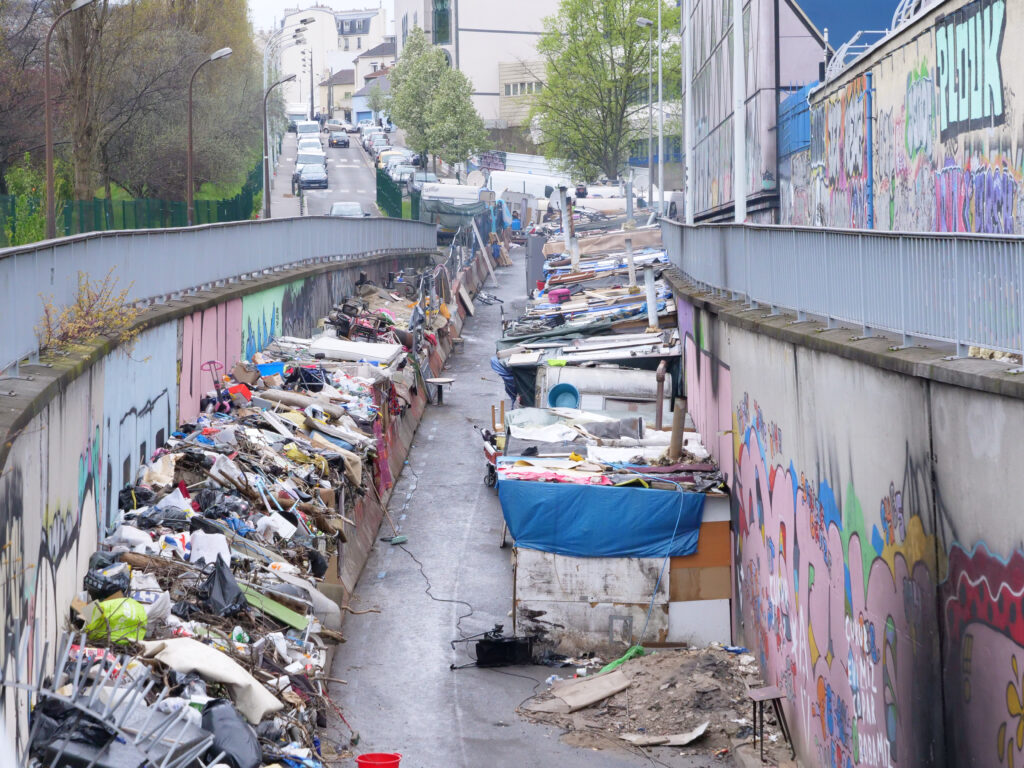
In France, migrants from Francophone West and Central Africa as well as the Maghreb – former French colonies Morocco, Algeria and Tunisia – comprise 48 percent of all the country’s immigrants and are also core constituencies of its troubled banlieues. The result of post-Second World War public and/or low-income housing construction, these suburban areas have been plagued by repeated riots and increasing lawlessness. Yet despite a litany of terrorist attacks over the years linked to and/or facilitated by migrant communities, including the mass-murder at the satirical magazine Charlie Hebdo in 2015, immigration in France has followed Europe’s by-now-familiar pattern, with rape statistics not far behind – and nearly half the victims below the age of 15.

Today in hundreds of districts across France, ethnically organized criminal gangs hold sway, bus drivers and emergency services are routinely attacked and police are unable to consistently enforce the law, often being able to enter only in large and heavily armed teams – and even then subject to violent resistance. Anti-Semitism is rife and Jews are routinely harassed, attacked and even murdered. The mainstream media and academics respond with misdirection, endlessly debating whether such conditions justify the term “no-go zones” or whether such terminology is mere provocation by right-wing extremists.
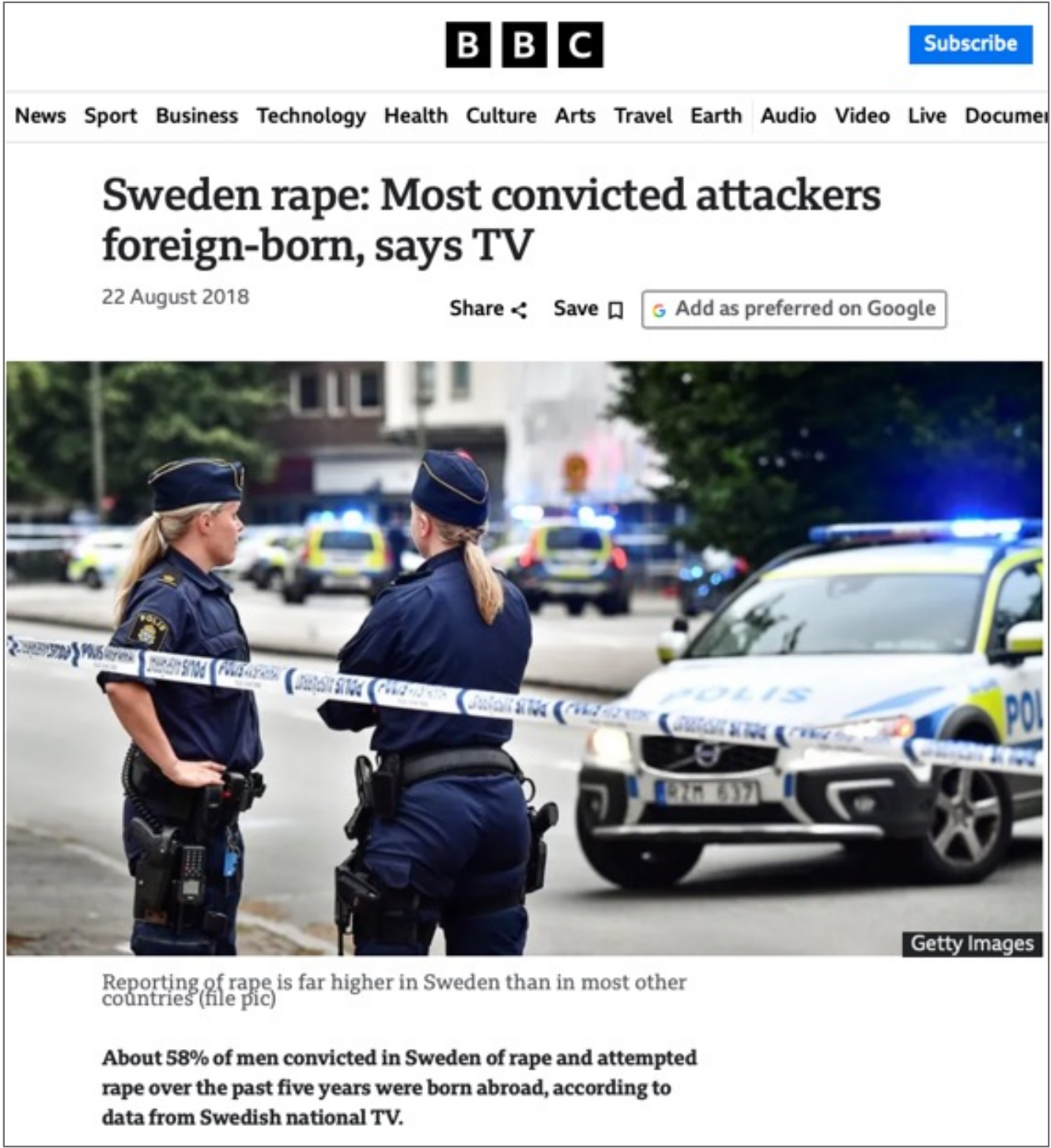
Ditto the Nordic countries. Accepting Europe’s highest rate of asylum-seekers in 2015, Sweden’s famous generosity towards newcomers has been sorely abused. As in France, apologists insist that Sweden has no genuine “no-go zones” – merely an extended list of 165 “vulnerable areas” where most ordinary Swedes happen to fear treading, such as infamously lawless Malmö.
Gang warfare, utterly unknown throughout Sweden’s long history, has become the country’s bane, morphing to facilitate the international drug and weapons trades, along with the recruitment of children as young as 10 to commit their crimes and run their drugs. According to the children’s rights organization Humanium, “One police investigation revealed how a 19-year-old gang member offered an 11-year-old boy 150,000 kronor (approx. €13,600) to carry out a murder. The boy had posted on Instagram, ‘I can’t wait for my first dead body,’ to which the recruiter replied, ‘Stay motivated, it’ll come.’” And yes, there have been many dead bodies, including through literally hundreds of bombings.
Rape in Sweden is also a recurring theme. While experts quibble about reporting measures and definitions, no one can dispute the statement that, “In cases where the victim did not know the attacker, the proportion of foreign-born offenders was more than 80%.” Or as one Afghanistan-born former police officer told the BBC, “Some young Afghans who had come to Sweden in recent years had views that differed significantly from Sweden’s idea of sexual equality.”
As for Germany, the number of foreign-born suspects in German sex-offence cases has more than doubled since 2000. Foreign-born nationals, who make up about 20 percent of Germany’s population, today comprise 40 percent or more of its criminal suspects. In particular, Syrians and Afghans commit crimes at 15 times the national average. On an overall country-by-country basis, France, Germany and Sweden rate highest in sexual violence and rape crimes, while countries like Poland, Malta, Hungary and Luxembourg rate among the lowest. Of course, these are smaller and arguably socially more cohesive countries. They also receive smaller numbers of migrants or, in the case of Hungary and Poland, virtually none at all.
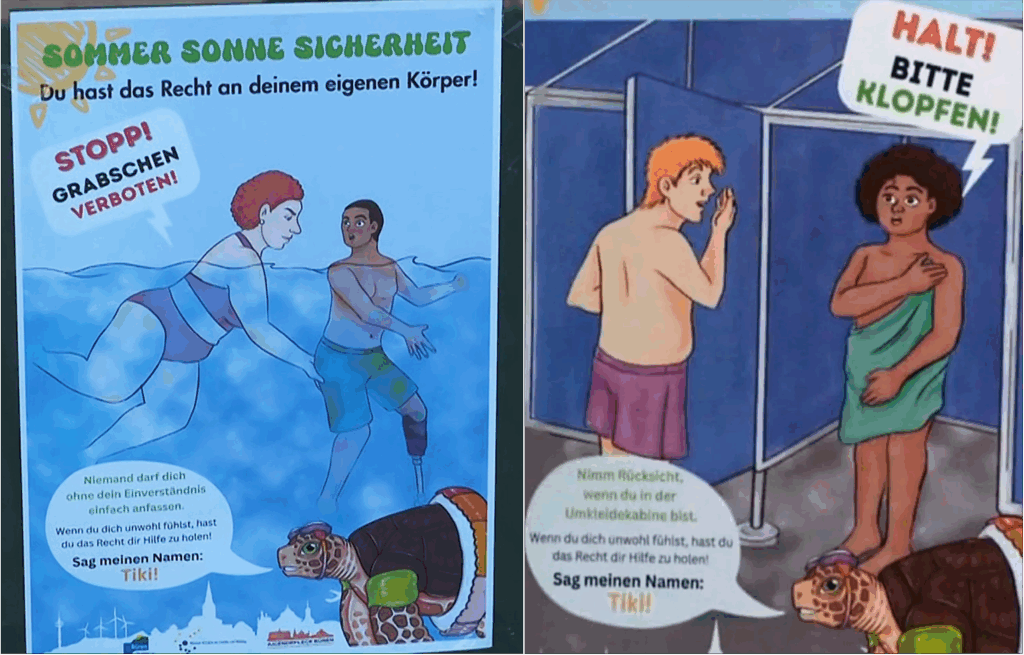
Despite the compelling math as well as essentially unlimited documented and anecdotal evidence, politicians, criminologists and sociologists are quick to make the usual excuses and accommodations for unacceptable migrant behaviour, while the state of denial and outright suppression among established political parties and governments spirals into ever-more-outrageous absurdities. Did that Norwegian judge really let that rapist off lightly because of his culture? You won’t find anything in the official literature about this. And just why did German authorities see fit to publish a series of posters lecturing people against swimming pool “pinching”? Though the very concept of sexual harassment in public swimming pools was unknown until a decade or so ago, the posters depict perpetrators as Caucasian, the victims as brown or black.
Where can all of this possibly lead? And what does it mean for Canada? This concludes Part I. In Part II: Why some migrant males rape, why it is happening in our country, and the gathering pushback by ordinary citizens in the UK and Europe.
Margret Kopala, a longtime journalist and author, was president of the former Centre for Immigration Policy Reform.
Source of main image: AP Photo/Markus Schreiber.