C2C Journal has just released its latest issue: The Last Front Page – The future of journalism and democracy in the post-print world.
Please download the Issue PDF here.

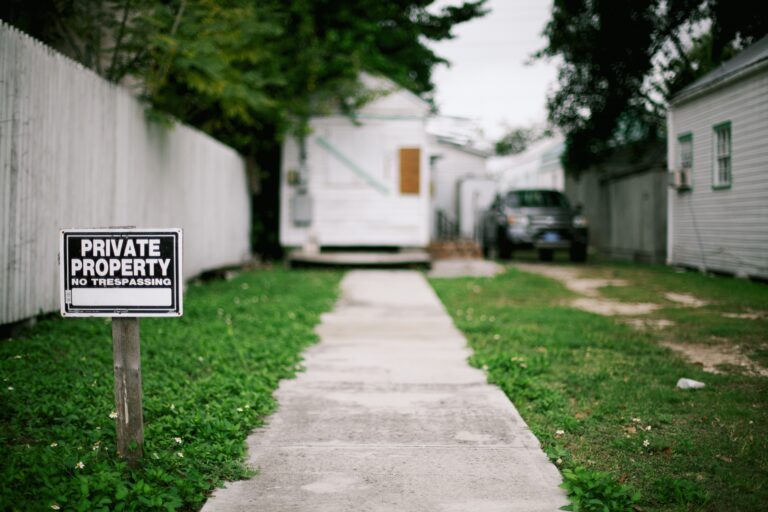
“The whole meaning of life,” famed comedian George Carlin once observed, “is trying to find a place for all your stuff. That’s what your house is, it’s a place for your stuff with a cover on it.” If so, then Canadians should be very concerned about their stuff. Unlike nearly every other modern nation, Canada lacks constitutional affirmation of the right to own property and as protection against its unjust seizure. With a recent B.C. Supreme Court ruling putting the very notion of home ownership at risk, Peter Shawn Taylor seeks out legal opinions on Canada’s surprisingly lax attitude towards property rights, how it differs from other countries and what that means for everyone’s possessions. If Canadians really want to protect their homes, belongings and personal finances, Taylor concludes, now’s the time to get loud.

Canadians frequently criticize U.S. President Donald Trump’s projection of American power. But in the fight against anti-Semitism, Canada could learn a thing or two from our neighbour to the south. In Part One of this series, Lynne Cohen revealed how Canada’s political and civic leaders have chosen to ignore or even abet the hate crimes and abuse Jews have suffered since October 7, 2023. In this second installment, she shows how the U.S. – from the President on down to local officials and law enforcement – has fought back. Where Canada has been cowering and cowardly, the U.S. has resolved to fight anti-Semitism, protect its Jewish citizens and defend Israel’s right to live freely as a Jewish state.
A new year has dawned and, as the light strengthens across the Northern Hemisphere, David Solway reminds us that how we choose to experience our world is at least as important as understanding how it came to be. In the first instalment of this two-part series, the writer illuminated the irreducible paradox at the heart of all theories concerning the universe’s creation, then scrutinized the seemingly unbridgeable gap between quantum physics and the physical world we live in. In Part II he considers an even tougher and, so far, unsolved scientific challenge: gravity. Some of the finest minds in science think it actually is insoluble without some kind of creative intelligence to oversee it. In other words, a miracle. To Solway, the true miracle is the fact of a marvellous world and our freedom to experience and wonder at it.

Celebrating the fact of one’s country’s existence, its survival through the adversities of history and its positive or uplifting attributes is a fact of life the world over, even in tyrannies and oligarchies. Nearly everyone can find something to love about the place they call home. Yet this is apparently not the case for many inhabitants of present-day Canada, who claim that what was once the self-described “greatest country in the world” has suddenly become a systemically racist hell-hole. Despite such pressure from the woke mob and their elite enablers, however, the editors of C2C Journal find much that is not merely defensible about Canada, but praiseworthy and downright glorious.

Aboriginal grievance and entitlement stories made a lot of news in Canada in June. Prime Minister Justin Trudeau renamed National Aboriginal Day as National Indigenous Peoples Day. He also renamed his office to erase its historic link to Hector Langevin, an architect of the residential schools system. And he gave the old American embassy in Ottawa to native groups. Still aboriginal activists weren’t satisfied. So they badgered an apology out of Governor General David Johnston for calling First Nations peoples immigrants. Which left the author of this story wondering, where on or off earth do these insatiably aggrieved activists come from?

In 1972 Lou Reed offended conservatives with his hit Walk on the Wild Side, an admiring ode to his transgendered friend Holly, who left Miami as a he and became a she on the way to New York. In 2017 the song has offended progressives as a transphobic example of cultural appropriation. In this article by C2C Staff, the Journal explains what a long, strange trip it’s been from conservative censorship to progressive censorship.