
Canada is in the vulnerable position of being beset by an array of serious economic pressures all at once. The problems are largely inter-related and reinforcing one another, threatening a financial spiral from which it will be very hard to pull out. Our nation has endured many economic burdens over its history; truly firing on all economic cylinders has been more the exception than the rule. Still, rarely if ever have so many things gone so wrong at the same time. Worse still is that the current government seems unable to grapple effectively with any of it – beyond issuing a stream of announcements, plans and spending commitments.
My usual approach is to dig into one topic in detail. This time I want to touch on several of the worst problems in one article, to underscore the dire situation we’re in.
Food Cost Inflation
Canadians heading to the grocery store are still finding everything getting more expensive. A jar of jam that was $4.99 barely three years ago was $6.99 for most of this year – but is now “on sale” for that price as the “regular” price has just been jacked to $7.99. A lime that could be had for 99 cents in April was $1.49 in July and, last week, $1.69. While economists would scoff at such “anecdotes”, and while some things do fluctuate seasonally and will suddenly come back down, those are still real numbers that cost people real money.
And Canadians aren’t imagining that the aggregate is getting worse. Canada is currently posting the highest annualized food inflation rate among G7 countries – 7.3 percent. According to Canada’s Food Price Report, a typical family of four now spends $17,500 per year on groceries, a year-over-year increase of $1,000.
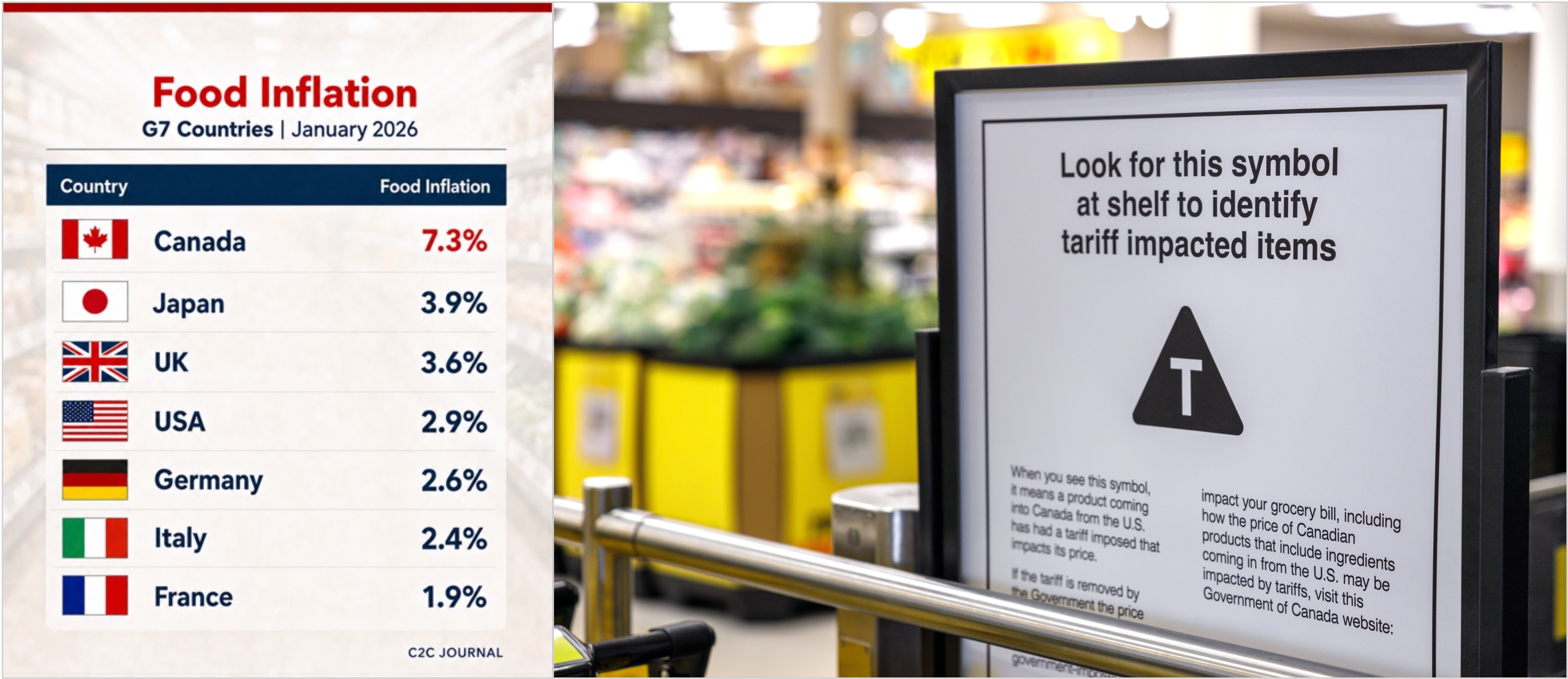
Meanwhile in the United States, despite the Donald Trump Administration’s aggressive tariffs affecting numerous imported goods, the food inflation rate is just 2.9 percent. Our federal government tries to attribute the gap to recent hot summer weather, but the difference has prevailed for several years. Check out the table below displaying the difference in the price of key food items. This shows you what years of higher inflation and a declining currency can do. It is a structural “Made in Canada” issue.
The reasons include:

All of these policies drive up food costs for Canadians. We each pay thousands of dollars per year more than we should for the basic necessities for life itself. It is no exaggeration to call this a crisis.
The Growing Cost of Government
There’s an old adage that “governments spend the money and the private sector pays for it.” A major factor in the rising cost of government is the increase of 36 percent in the number of federal public service employees from 2013-2023. When broader federal agencies are included, the total employee count grew to 368,000. By contrast, private-sector employment grew by just 15 percent over this period, about the same as population growth.
To gauge the overall presence of government in a nation’s economy, economists measure public spending not only in dollar terms but as a share of total economic output. If a country is powering forward with annual economic growth of 3-4 percent, then it’s OK if government spending grows by, say, 2 percent – because the overall presence of government in the economy is actually shrinking.
In Canada, it has been the opposite for well over a decade: the economy stagnates, government spending swells. And twice in the last decade, federal spending has virtually exploded: once during Covid-19 under Justin Trudeau, and again with Mark Carney’s first budget. Most provinces and cities are equally profligate, hiking taxes to spend more and more every year. Consequently, combined federal, provincial and municipal government spending reached 44 percent of Canada’s entire economy in 2024 – a staggering $1.4 trillion.
Disparity in Government versus Private-sector Worker Benefits
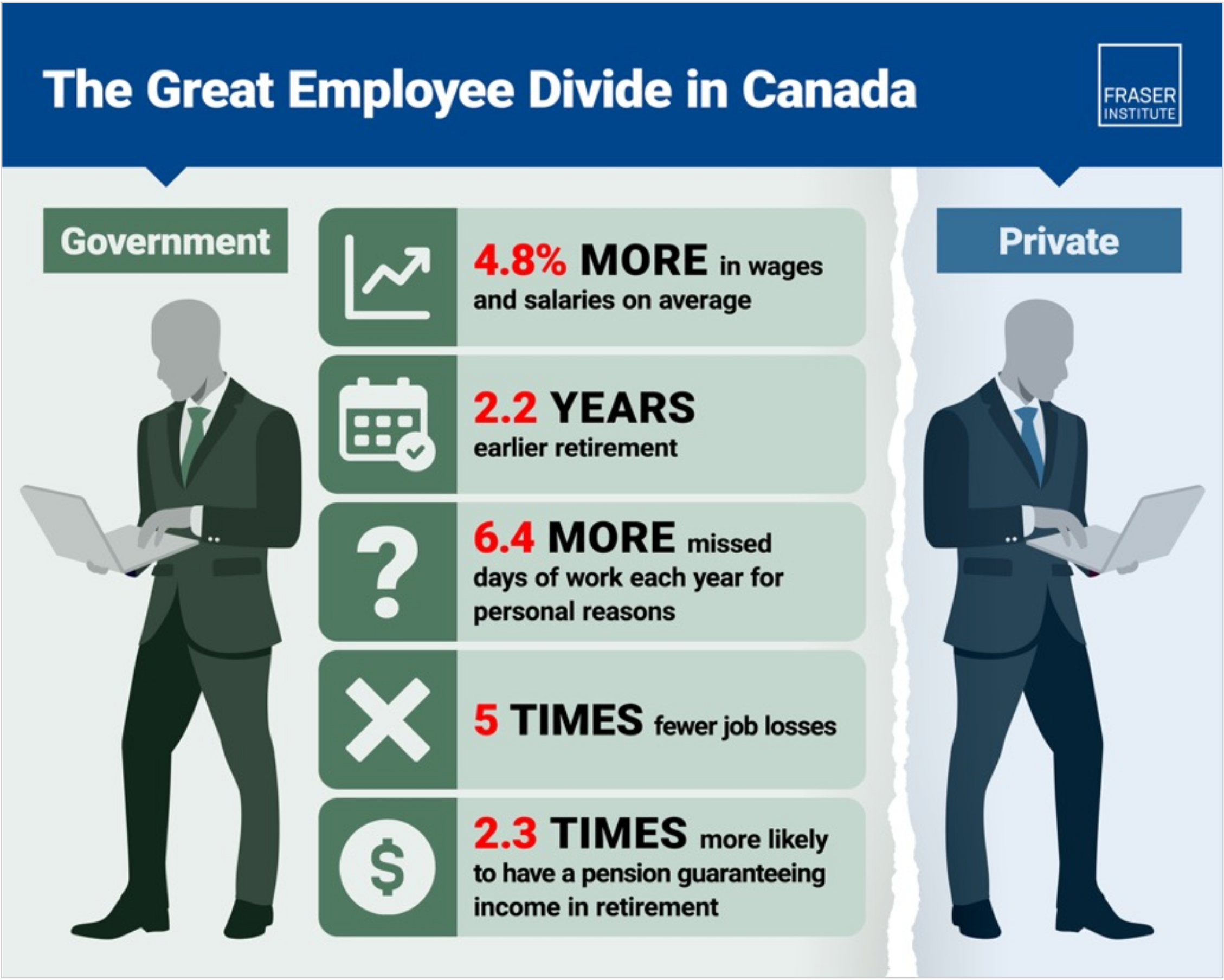
The swelling horde of government workers I mentioned above enjoy employment benefits substantially superior to those of private-sector workers who pay for them. To take just one aspect, a 2025 Fraser Institute study found that 87 percent of government workers are covered by a pension, compared with only 22 percent of private-sector workers.
And while private employers are entirely responsible for gathering pension contributions and ultimately meeting those commitments, governments – meaning taxpayers – pay a large share of their employees’ pension contributions. And these are almost all defined-benefit plans that guarantee the worker a comfortable retirement. Should anything go wrong, again it is taxpayers who are liable. Moreover, government workers retire earlier and are much less likely to lose their jobs along the way. An interesting aside: government workers take almost twice as many sick days as private-sector workers, further reducing productivity and raising the costs of getting anything done.
The Cost of Interest on Federal and Provincial Debt
Since the Liberals gained office in 2015, Canada’s national debt has doubled to a staggering $1.6 trillion – about 50 percent of annual GDP. The all-government debt – encompassing federal, provincial and municipal governments as well as government-created entities – is a hard-to-process $3.9 trillion, or 125 percent of everything the Canadian economy produces in a year.
With numbers that big, it’s no surprise the discussion has shifted from ever paying off the debt principal – which few believe any government except perhaps Alberta’s or Saskatchewan’s could even attempt – to merely stabilizing the annual interest costs before government finances are utterly swamped.
A recent study by the Fraser Institute found that each Canadian taxpayer will pay between $1,825 and $3,348 per year for interest on federal and provincial government debt. “The federal government will spend a projected $54.0 billion on debt servicing charges in 2025/26, which is roughly equivalent to what the government spent on the Canada Health Transfer ($54.7 billion), and significantly more than it expects to spend on childcare benefits ($38.1 billion),” the study observes.
Canada/U.S. Trade Negotiations
As I was working on this column came news that negotiations for a new bilateral trade agreement had fallen apart. Reasons cited by Prime Minister Mark Carney included “online discoverability of French-language media as well as subsidies and support for our culture and the French language, and even the information displayed on Canadian products.” The issue, Carney added, was “simple. That was never on the table for Canada, for my government, or for Canadians.” [Both quotations translated from French]
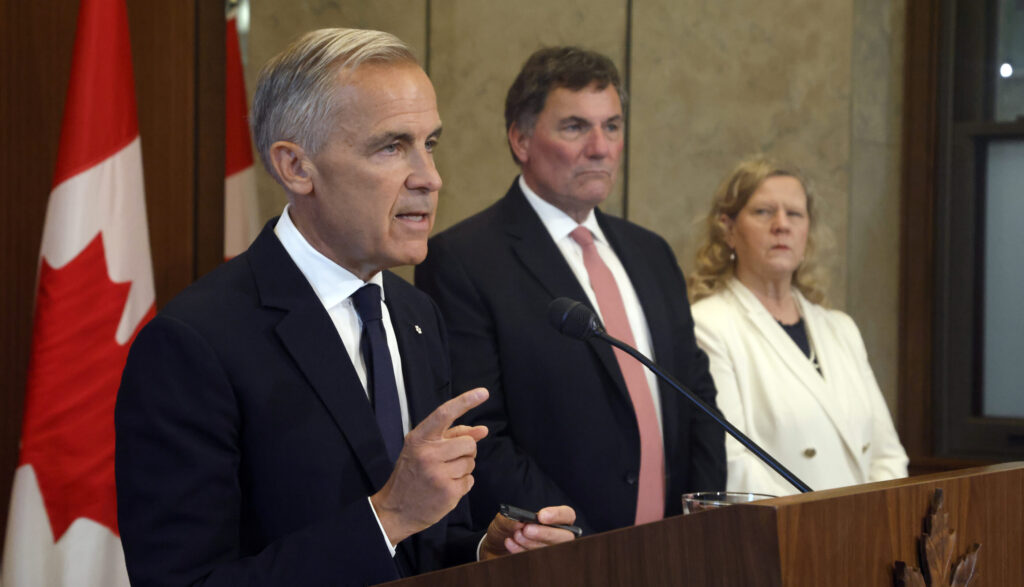 Mais non! Prime Minister Mark Carney has cited Canada’s defence of its “subsidies and support” for French culture as triggering the recent collapse in trade talks; rigid bilingual labelling requirements are yet another reason why Canadians must pay more for their daily essentials. Shown, Carney speaking about Canada-U.S. trade negotiations on August 22, 2026. (Source of photo: The Canadian Press/Patrick Doyle)
This is likely to be tough, or at least economically unviable, for smaller American businesses to comply with. And was, I suspect, exactly the Carney government’s point – all while painting Trump as the erratic, untrustworthy bumbler. As one of my colleagues ruefully stated: “I guess we need a trade agreement allowing imports to all provinces except Quebec.”
Housing
Now I come to what might be the most important issue for young Canadians: the widespread inability to find affordable housing. Very few would dispute that this too is a genuine crisis. One could write thousands of words on this, but let me focus on one area. The Federal Housing Advocate’s 2024-2025 Annual Report reveals a national shortfall of 4.4 million affordable homes. The Canada Mortgage and Housing Corporation estimates that Canada must build 3.5-5.8 million new homes by 2030 to restore reasonable affordability across the country.
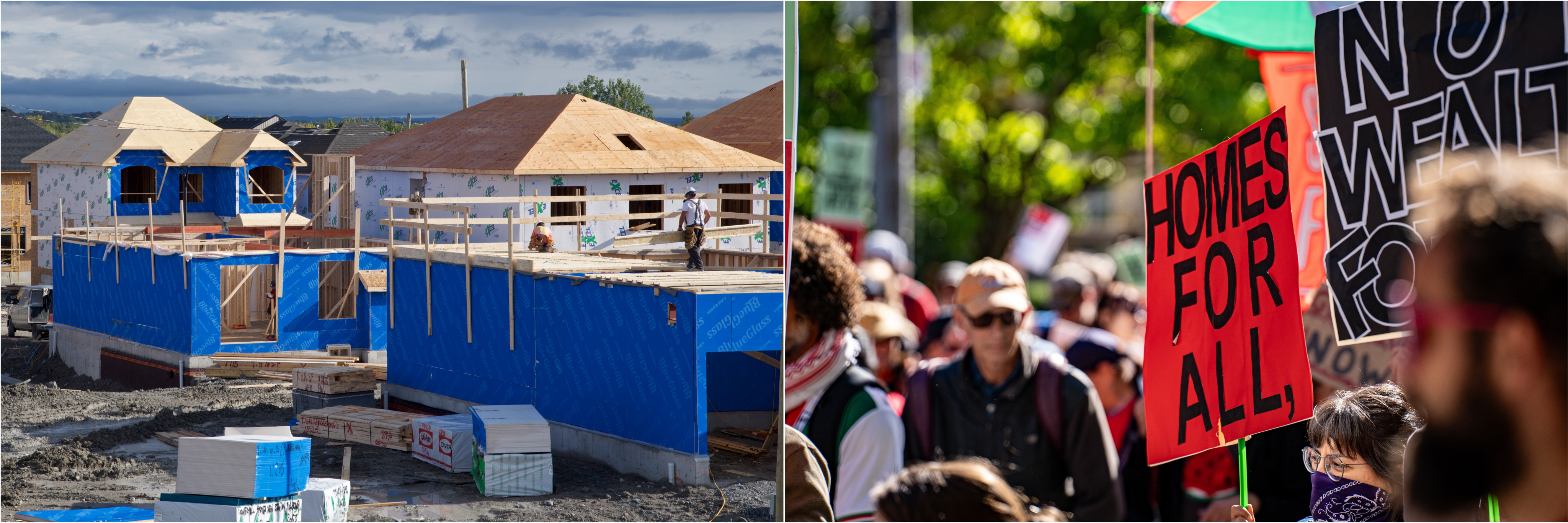
Besides improving access to financing for young people without a previous borrowing record, this demands a muti-faceted approach including removal of municipal zoning bottlenecks that bar “missing middle” housing such as duplexes, townhomes and low-rise apartments from established neighbourhoods. Another option that could play a role in helping families with particular needs, proven effective in the U.S., was recently profiled in C2C – but is being bitterly resisted by all the usual left-leaning suspects. New-home construction is already lagging targets in all but a few markets, so it’s all but assured that Canada will fall short – probably millions of housing units short – of what’s needed.
 Time to bail? Canada’s current economic trajectory, the author observes, is like having a drunken old coureur des bois who forgot the paddles yelling directions from the back of the boat. (Source of image: ChatGPT)