Stories
An expensive Quebec separatist says adieu
January 25, 2012
An expensive Quebec separatist says adieu. C2C Journal’s Mark Milke argues it’s long overdue….
Stories

An expensive Quebec separatist says adieu

January 25, 2012
An expensive Quebec separatist says adieu. C2C Journal’s Mark Milke argues it’s long overdue….
Share on Facebook
Share on Twitter

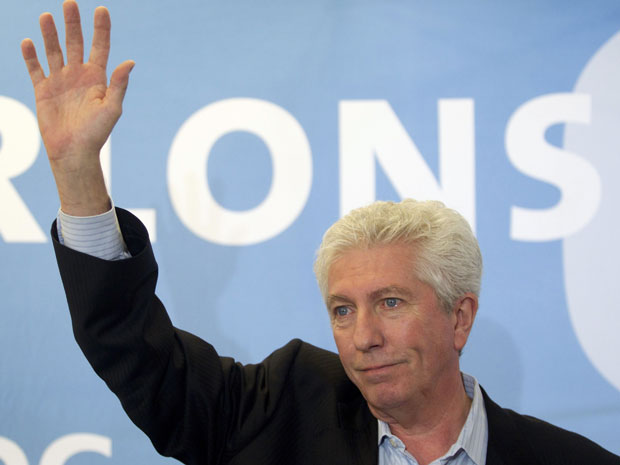
Former Bloc Québécois leader Gilles Duceppe has said goodbye to politics.  After Montreal’s La Presse reported how the Bloc Québécois broke parliamentary rules by paying its party’s general manager out of House of Commons funds for seven years, Duceppe said he would devote himself full-time to “defending my integrity and re-establishing my reputation.” The allegations made it “impossible to envision a return to active politics,” said Duceppe. That means he won’t run for the leadership of Quebec’s Parti Québécois, a Crown that everyone knew he wanted and thought he deserved instead of the current party boss, Pauline Marois.

If Duceppe does actually leave Canadian politics for good, so much the better. Separatists have been costly for Canada and Duceppe was a too-effective advocate for that cause. He even obtained—only in Canada—the official opposition post in Parliament between 1993 and 1997.

Of related note to his time in federal politics, Duceppe’s personal federal pension for his years of “service” in Ottawa is $140,765 annually according to the Canadian Taxpayers Federation. That’s expensive but of more importance, symbolic of the fiscal damage wrought upon the country’s fabric.

The cost to Quebec of separatist chatter has been decades of lost investment, migration of talent out of the province, and public policy within the province that focused on linguistic battles as opposed to fixing Quebec Inc. The cost to Canada has been instability when we could least afford it: think of the 1995 referendum that took place just as Canada was recovering from the sluggish early 1990s.

One doubts this will happen, but perhaps Duceppe will have a quiet retirement in Florida where his hard-left policies (he was a Marxist until his thirties and never broke from that mindset) and his break-up-Canada troublemaking might finally fade into Florida sunsets.

Love C2C Journal? Here's how you can help us grow.

More for you

Wheels of Fortune: The Market-based Revolution in Canada’s Intercity Bus Industry

Taking the bus on a long-distance trip was once a rite of passage – marking a journey to some far-off adventure or the next phase in one’s life. But as cars became more affordable, discount airlines more competitive and government regulations more onerous, the bus industry slowly withered. Industry icon Greyhound’s exit from Canada in 2021 looked like the end of the road for this once-vital service. Yet buses are staging a stunning comeback today. It is once again possible to ride a bus between many Canadian cities in comfort and at a reasonable price. Peter Shawn Taylor gets the innovative – and quirky – entrepreneurs behind Canada’s free-market busing revolution to share the secrets to their success.

The Truest Devotion: How Patriotism Elevates Our Innate Tribalism into a Virtue

There can be no better time than Remembrance Day to consider the essence of patriotism and rediscover its value. Liberal cosmopolitans may sneer at it as an outdated, destructive impulse uncomfortably adjacent to toxic nationalism and colonialism. Political philosopher Renaud-Philippe Garner instead mounts a carefully considered case that patriotism is in fact a timeless virtue, baked into our human condition. Devotion to one’s homeland and fellow citizens can unite people and motivate them to do good. It did eight decades ago when Canadians rallied, at great cost, to stand up to fascism in the Second World War. And it can again, Garner argues. It’s time, he says, to reclaim patriotism and celebrate it as the eternal virtue it is.

The Missing Apprentice: What AI in the Workplace Means for Canada’s Companies

Last week’s announcement that Microsoft will shed a stunning 27 percent of its global workforce seems to confirm popular fears that AI will soon devour virtually every white-collar job on the planet. While such anxiety isn’t entirely baseless, writes Gleb Tsipursky, the evidence so far suggests it is exaggerated. The greater risk, Tsipursky argues, lies in AI’s irresistible allure persuading companies to narrow their incoming “talent pipeline” so much they starve themselves of their own future expertise – the long-serving people who can exercise sound judgment and fix problems. Avoiding such a slow-motion economic apocalypse, Tsipursky advises, will depend on Canadian employers leveraging AI’s impressive productivity-enhancing powers to maintain a hiring flow of novices sufficient to mature into tomorrow’s seasoned hands.

More from this author

Not So Beautiful Minds: Conspiracy Theories from JFK to Oliver Stone and Donald Trump

Shocking events that plunge a country into chaos or destroy a beloved leader are hard for anyone to process. The evil done is so towering it bends the human psyche to accept that the evildoer is utterly banal, a loner walking in ordinary shoes. The cause simply must befit the outcome; thus can a conspiracy theory be hatched. At other times, the cold hope of political or financial gain or simple mischief might be the source. There certainly is no shortage of conspiracy theories. Mark Milke revisits one of history’s most famous political assassinations and the conspiracy theories it spawned to illuminate the ongoing danger this toxic tendency poses to us all.

Picture of Thomas Hobbes frontispiece of Leviathan. A renowned pieceof political work on liberty

Future of Conservatism Series, Part VII: Memo to Politicians: We’re Not Your Pet Projects

Canadian conservatives have most of the summer to ruminate on what they want their federal party to become – as embodied by their soon-to-be elected leader, anyway. Acceptability, likability and winnability will be key criteria. Above all, however, should be crafting and advancing a compelling policy alternative to today’s managerial liberalism, which has been inflated by the pandemic almost beyond recognition. Mark Milke offers a forceful rebuttal against the Conservative “alternative” comprising little more than a massaged form of top-down management.

Leaders_debate_2019_canada_diversity_bias_free_speech_liberal_conservative

So Much for Diversity: The Monochromatic Moderators of Monday’s Debate

Canada is a big, diverse country by virtually any measure, from our no-longer-so-sparse population to our epic geography to the ethnic makeup of our people. Diverse in every way, it seems, except in our elites’ aggressively progressive official-think. Consistent with this is the otherwise bizarre decision to have Monday’s federal leaders’ debate hosted by five decidedly similar female journalists. Mark Milke briefly profiles the five and, more important, advances a positive alternative: five distinguished women diverse in background, hometown and, above all, thought.