Stories

The cursing generation

Mark Milke
April 18, 2012
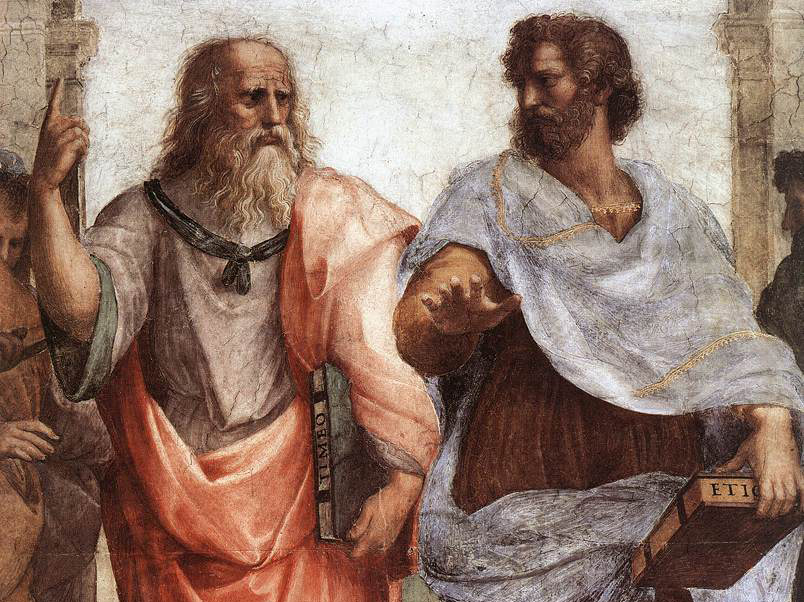
Several millennia ago, Aristotle asserted that man was different from the animals because only he had the gift of (thoughtful) speech. The cursing generation seems intent on erasing that distinction as Mark Milke explains…
Stories

The cursing generation

Mark Milke
April 18, 2012
Several millennia ago, Aristotle asserted that man was different from the animals because only he had the gift of (thoughtful) speech. The cursing generation seems intent on erasing that distinction as Mark Milke explains…
Share on Facebook
Share on Twitter

Several millennia ago, Aristotle asserted that man was different from the animals because only he had the gift of (thoughtful) speech. The cursing generation seems intent on erasing that distinction. The blanketing of everyday conversation with curse words and crudities is so common that few people stop to question it, or tell people to zip it.

The relentless torrent of swear words, used as if they were punctuation marks in a sentence, was again made real to me recently courtesy of two unrelated episodes.

Episode one brought three youngish women along my path while I was nearing the University of Calgary’s library. “This bi**h needs to eat” exclaimed one gal—about herself—loudly. 

The second reminder took place as I was stuck on a chairlift at Lake Louise ski resort. Some young man behind me cursed three times in five minutes. He repeatedly urged the motionless mechanical object to “‘effing’ move!” It eventually did, perhaps reinforcing a correlation-causation error in his mind: “I curse, the object moves; therefore my cursing was cause to the effect.”

A few years back, a political operative who shall remain nameless but was known for his drinking and colourful language was a fellow patron at a small Italian restaurant, converted from a house to its current use. So the four of us were at a table in a small room; a family with young kids and a couple lingering over a romantic dinner sat at two other tables.

The more my fellow dinner companion drank, the bluer his language became; he was oblivious to the frequent dark stares from the family and irritated glances from the couple.

Finally—being embarrassed for us but especially sorry for the other patrons with children, I blurted out with some frustration, “Would you please shut up already?! There are other people here and with kids.” He looked around with the then-dawning wakefulness that perhaps the wine had masked his own self-awareness. He mumbled his regrets.  

The swearing virus is not limited to undergraduates, frustrated skiers and politicos. Historian Niall Ferguson prints the F-word (as an action) in his recent book, Civilization. While he is quoting someone else, past historians would have put part of that word in asterisks.

I won’t claim I never swear. I do try and limit it to private, consenting episodes between me and my slow computer (and I realize it won’t help but everyone needs to be occasionally irrational).

Still, to curse is to admit that one has become lazy; that the effort to find the right words and to engage in the act of reason has been abandoned.

Maybe that’s why swearing most often takes place when people are frustrated or angry. Insofar as the curses are directed at others, it’s an attempt to skip past reason and enter the realm of intimidation, just with harsh words instead of fists. 

But that’s not much different from the animal world. As Aristotle also pointed out, once you abandon the act of speech with logic and thought behind it, all you’re left with is mere voice and its primal grunts.

Mark Milke is the editorial board chair of C2C Journal.
Love C2C Journal? Here's how you can help us grow.

More for you

We Have Ways of Making You Talk: The Tyranny of Land Acknowledgements and Other Compelled Speech

Indigenous land acknowledgements have become so common that many Canadians no longer give them a second thought – simply accepting a kind of tuneless new national anthem before events of all sorts. And that’s why they’re so dangerous. The enforced conformity and compelled speech they depend on are not just threats to individual freedom, writes George Ramsay, they also create a divisive moral hierarchy based on race. In this originally reported story, Ramsay delves into the dangers posed by Canada’s broader shift to enforced verbal compliance, reveals the inspiring stories of a few brave souls who have dared to challenge this social tyranny and offers practical tips on how the rest of us can fight back too.

Take This Algorithm and Shove It: Gen Z Wrestles with Digital Privacy

Generation Z should know better than anyone the risk that technology poses to personal privacy. They are after all the first generation to grow up entirely in the digital age. Jessica Nwaefidoh knows from personal experience how vulnerable your most intimate information can be. With companies anxious to profit from everyone’s personal data, politicians happy to play along for their own selfish reasons and most people willing to sacrifice their own privacy for convenience, amusement or just to get by, Nwaefidoh argues that it’s time to fight back. The right to be left alone, she finds, requires constant vigilance – and she offers some practical tactics to reclaim that right.

Future Tense: Why Gen Z is Right to Feel Betrayed

Older generations often roll their eyes when young people seek to blame them for their woes. But if Canada’s Gen Zers feel betrayed by the Boomers, they are right to do so, argues Gwyn Morgan. Years of irresponsible fiscal and regulatory policies have hamstrung the Canadian economy and left younger generations facing a bleak future of stagnant wages, rising taxes and shrinking opportunities. A former business leader who created more than his share of jobs and prosperity during his long corporate career, Morgan casts a worried eye over the next generation – and offers sympathy for the situation they’re inheriting.

More from this author

Not So Beautiful Minds: Conspiracy Theories from JFK to Oliver Stone and Donald Trump

Shocking events that plunge a country into chaos or destroy a beloved leader are hard for anyone to process. The evil done is so towering it bends the human psyche to accept that the evildoer is utterly banal, a loner walking in ordinary shoes. The cause simply must befit the outcome; thus can a conspiracy theory be hatched. At other times, the cold hope of political or financial gain or simple mischief might be the source. There certainly is no shortage of conspiracy theories. Mark Milke revisits one of history’s most famous political assassinations and the conspiracy theories it spawned to illuminate the ongoing danger this toxic tendency poses to us all.

Picture of Thomas Hobbes frontispiece of Leviathan. A renowned pieceof political work on liberty

Future of Conservatism Series, Part VII: Memo to Politicians: We’re Not Your Pet Projects

Canadian conservatives have most of the summer to ruminate on what they want their federal party to become – as embodied by their soon-to-be elected leader, anyway. Acceptability, likability and winnability will be key criteria. Above all, however, should be crafting and advancing a compelling policy alternative to today’s managerial liberalism, which has been inflated by the pandemic almost beyond recognition. Mark Milke offers a forceful rebuttal against the Conservative “alternative” comprising little more than a massaged form of top-down management.

Leaders_debate_2019_canada_diversity_bias_free_speech_liberal_conservative

So Much for Diversity: The Monochromatic Moderators of Monday’s Debate

Canada is a big, diverse country by virtually any measure, from our no-longer-so-sparse population to our epic geography to the ethnic makeup of our people. Diverse in every way, it seems, except in our elites’ aggressively progressive official-think. Consistent with this is the otherwise bizarre decision to have Monday’s federal leaders’ debate hosted by five decidedly similar female journalists. Mark Milke briefly profiles the five and, more important, advances a positive alternative: five distinguished women diverse in background, hometown and, above all, thought.