
This Changes Everything: Capitalism vs. Climate
NAOMI KLEIN
Knopf Canada, 2014
566 pp., $36.95
Review by Colman Byfield
It might be tempting to dismiss Naomi Klein’s heavy new tome, This Changes Everything: Capitalism vs. The Climate, as just another enviro-pap triviality. For starters, she employs chapter subheadings like “Growing the Caring Economy, Shrinking the Careless One,” and titled an entire chapter “Love Will Save This Place.” She is enamored of co-ops of all sorts, and frets that her infant son may never get to see a moose. She calls black people (over and over and over again) “communities of color.” The rampant hypocrisy and absurdity that has riven Man’s response to climate change, which she quite skillfully skewers throughout, is often downright riotous, but over a cloyingly earnest 500 pages written in a broad, conversational (this book is for the masses) style, it’s striking how rarely she cracks a smile or attempts a joke, and no one is more ripe for ridicule than the humorless.
But whatever one thinks of climate change or basing complex economies on the currency of Love, this is an important book.
In Klein’s view, cataclysmic climate change is just the hammer needed to shutter-up free markets once and for all. From the horse’s mouth: “… when climate change deniers claim that global warming is a plot to redistribute wealth, it’s not (only) because they are paranoid. It’s also because they are paying attention.”
Klein first sets out to establish that most remaining warming skeptics (who she refers to as denialists or deniers but treats much more charitably than, say, David Suzuki does) are funded by oil companies. She then illustrates in gory technicolor the medium-to-worst case scenarios projected by climate scientists, and quotes several authorities who predict that we have about a decade to limit warming to 2 degrees Celsius over this century, which could well be catastrophic but about the best that can be done at this point.
She lists off the sins of industry, government inaction, United Nations’ failure, and the buying-off of mainstream environmental groups. Some of her best work is in reporting the sham that is the European Union cap-and-trade scheme and exposing the habitual collusion between government, industry, and “Big Green.” (You can tell something is bad in a Klein book when she capitalizes it and prepends “Big”.)
Klein concludes, or more likely, had predetermined, that free market capitalism caused the global warming crisis, and the only way to address the crisis is mass socialization. In her view, the 1980s ushered in an era of unfettered deregulation, reckless trade agreements and privatization of public assets, accompanied by a sudden societal carelessness and greed.
This coincided with a global explosion in greenhouse gas emissions (see!), a surge which the modern world has yet to stem. Further, since Bill Gates began to appreciate the problem, and Al Gore patiently explained it all to Richard Branson in the latter’s private screening room, and all three billionaires have thus far failed to induce a market solution to carbon pollution or even lower their personal emissions, capitalism must be crushed. The only possible solution Klein can conceive of is a wholesale restructuring of the global economy, tightly controlled and rigidly planned, along with a massive redistribution of wealth. And what will power this revolution? Why, People Power, of course.
Through it all, Klein fails either to admit or notice that humanity’s greatest poverty alleviation has come with free markets and trade. In a quick condemnation of manufacturers leaving South Korea for cheaper Chinese pastures, and now uprooting there for Bangladesh, she neglects to point out the simultaneous rise in the standard of living in South Korea and now China.
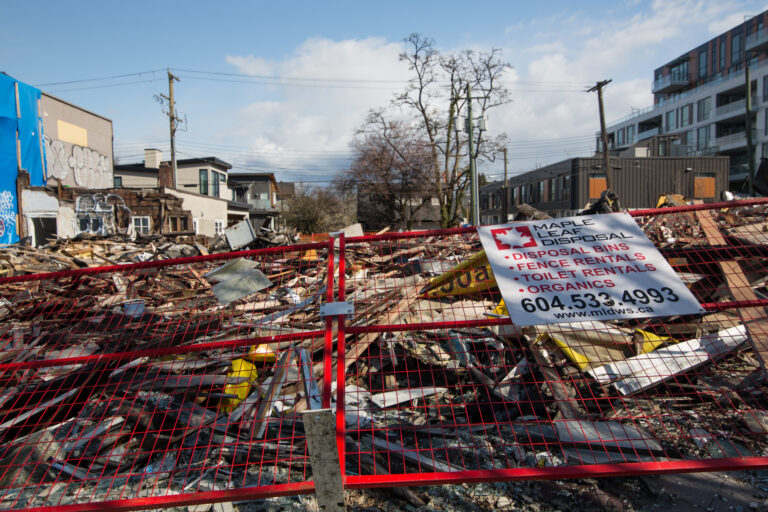
Yet, Klein is talking about real problems. Governments have generally been far too lax in letting corporations lie, cheat, and run roughshod over private citizens. Klein holds up the atrocities (I don’t use the word lightly) committed in the interests of oil extraction in the Niger Delta as a particularly horrific example. On a much less grievous scale but still worrisome for Canadians concerned about property rights, more Albertans than most of us realize have been effectively chased off their ranches and farms by the oil industry.
And, of course, man made climate change. While there is still some question as to what degree humans are driving it, there is little doubt that it’s happening. Warming skeptics point out that the earth has actually been cooling of late, and attribute weather trends to solar activity and the natural climatic cycles of an ever-changing planet, while mocking the still limited predictive powers of contemporary climate modeling. Even some prominent “warmists” caution their colleagues against exaggeration and alarmism. The bulk of the evidence, though, as interpreted by the majority of experts, suggests man-produced greenhouse gas emissions threaten both our environment and very existence.
Yet, somehow, as Klein attests, almost nothing is being done about this. While cap-and-trade was employed successfully in the United States to combat acid rain, the complexities of imposing such a regime internationally are probably insurmountable, and Klein expertly details how recent efforts devolved into a multi-billion dollar shell game.
Klein is also correct that the market has thus far failed to provide an answer. The geo-engineering schemes she reports being lobbed around by eggheads are, frankly, terrifying. The idea that emissions can be cut relatively painlessly is a fantasy. The best solution, I’d submit, is a hefty global carbon tax, but it remains a political non-starter, whereupon we cross our fingers in hope of a cheap technological leap.
It would seem that we’re fated to taste the fruits of global warming firsthand. From there, anything can happen, including the great Klein love revolution, which presumably ends in the hanging of Richard Branson and his class from the LED lampposts.
No doubt much of the left and the usual grievance-harbourers will find This Changes Everything thoroughly convincing, if they weren’t already convinced. Free market devotees may dismiss Klein’s prescriptions as reheated Marxist dialectics, mashed and greened for a new generation, but they should be paying attention. The simplest, least intrusive measure available to address climate change is a serious carbon tax, and for anyone who cares about climate and free markets, it’s something they should start advocating for yesterday.
~
Colman Byfield is an Alberta writer and columnist with SunMedia newspapers.