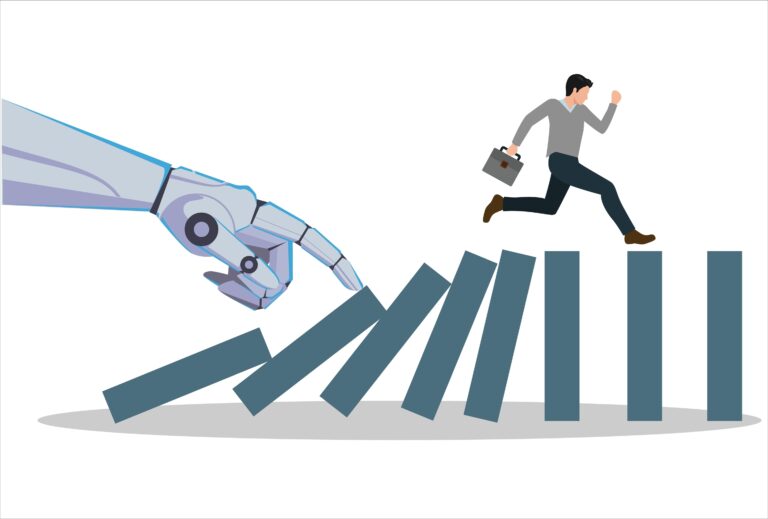
It now seems clear that what’s been labelled the worst financial crisis since the Great Depression will be far less painful than predicted. Economic data from around the globe indicates the worst may be over. But the big question is: how long and grinding will the recovery period turn out to be? The answer will be dramatically impacted by the actions of governments.
Root causes of this economic meltdown include U.S. government policies that encouraged and supported hundreds of billions of dollars in mortgage loans to people who should never have qualified in the first place, as well as unaccountable Wall Street investment bankers who packaged and sold these allegedly creditworthy loans to unsuspecting investors. Some blame is also attributed to the failure of both American and European bank regulators.
Then there is the political left who say the crisis is proof that free market capitalism is a failure and applaud the biggest economic intervention by global governments since the Second World War. Enormous stimulus programs, bailouts or de-facto nationalization of failing businesses, huge deficit spending and kneejerk regulatory responses seem to have reversed all the hard earned lessons of the past. There is good reason to believe that recovery would have occurred without these government actions and even more reason to believe that, unless governments withdraw from intrusion into business ownership and reverse their spending spiral, the so-called “green shoots” of recovery may wither into a second and even more disastrous global downturn.
Preston Manning’s September 17, 2009 Globe and Mail commentary, entitled How to recover from the Recovery, captured this dangerous situation well: “Rapid expansion of the money supply can lead to a tsunami of inflation. Government ownership of businesses can lead to unhealthy dependencies, unfair competition … and serious conflicts of interest.” Pointing out that it took 14 painful years to balance the books following the Trudeau government’s decade long spending orgy, Manning stated: “Heavy deficit spending leads to increased public debt, increased interest payments, and the necessity of cutting services and/or raising taxes.”
Assessing the Recession and Navigating the Recovery is the subject of the current series of articles currently being published in C2C: Canada’s Journal of Ideas.
Here are a few highlights:
- Niels Veldhuis and Charles Lammam point out that the Canadian economy is recovering despite the fact that most of the stimulus money hasn’t been spent. They say that taxpayer money will be hitting when it is no longer needed, crowding out private projects and de-stabilizing instead of stabilizing the economy. Rather than rolling out the stimulus money, they believe government should get set to reduce the size of government. They back this up by pointing to historical evidence that the economy does best when governments’ share of the economy is smaller. After peaking at 53% of GDP in 1992, cuts to federal and provincial spending reduced government’s share of GDP to 39% in 2007. Yet capital investments and productivity gains by individuals and businesses drove economic growth above all other G-7 countries, providing 15 prosperous years.
- Continuing the theme of how governments can extract them selves from this massive intervention, William Robson writes: “Further out, one possible impact looms large: a step increase in the power and cost of government that shrinks the freedom and resources of citizens. Skill substitutes for power in any craft. A smart small government can do more good than a clumsy large one. It was victories by smaller government advocates that enabled Canada to enter the downturn with lower public debt and balanced budgets. The need to revert to our wiser course is a compelling story, superior Canadian performance before the crisis as prelude to superior Canadian performance after it.”
- Brian Lee Crowley provides an excerpt from his new book Fearful Symmetry: the Rise and Fall of Canada’s Founding Values. Responding to “reports of capitalism’s death,” he points out that only two short and mild U.S. recessions occurred in the 25 years before the current downturn, and during that period global real GDP growth averaged a robust 3.4 % per year. “The so-called capitalist greed that motivated business people and ambitious workers helped hundreds of millions (in countries such as China and India) climb out of grinding poverty,” he writes.
- Paul Beaudry points out that, contrary to popular impression, President Roosevelt’s New Deal did not bring America out of the Great Depression, but rather “led to the dramatic destruction of wealth, the cartelization of many industries and high unemployment” that was only ended by the Second World War. “Economies cannot be fixed by massive government spending programs that rescue inefficient corporations and create deficits to be paid off by future generations,” Beaudry states.
This C2C series is required reading for anyone who worries that the medicine will prove to be more damaging than the illness. It was only a year ago when the failure of Lehman Brothers exploded an American mortgage fiasco into a global economic meltdown. And it’s staggering how, over that brief period, so many of the hard lessons learned from past big government folly on the importance of balanced public budgets, governments staying out of the business of business, free trade and free markets were suddenly thrown from the parapets in defence against a dreaded depression. For those with short memories, it’s time for a refresher course. The best of times have been when governments lived within their means and allowed business the economic freedom to create wealth and prosperity.