Consider it a safe space for people who don’t believe in safe spaces. The Centre for Heterodox Social Science’s (CHSS) second annual conference – “Post-Progressivism: Toward a New Social Science” – held at the University of Buckingham, England in late July brought together several hundred academics, public intellectuals and interested observers from around the world. All were in agreement on the need to push back against the cultural socialism that has come to dominate Western universities – what some call the “Great Awokening”. But unlike most discussions of this kind, the mood at the CHSS conference was decidedly upbeat.
“The Heterodox social science movement is trying to rebalance the production of knowledge through a new post-progressive agenda,” announced Eric Kaufmann, the Canadian-born founder of CHSS, in his opening address. This new agenda is specifically meant to replace the intolerance endemic to the Great Awokening. “Its two pillars are the critical study of woke ideology and exploring knowledge beyond the progressive frontiers across all areas of social research,” Kaufmann explained. “Let’s get started!”
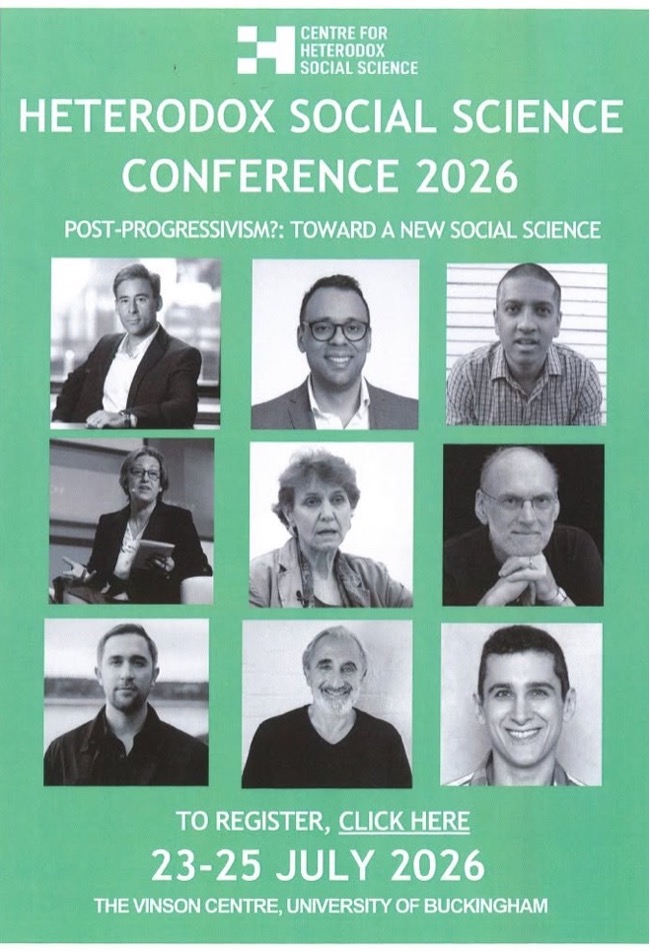
Such bold talk might seem foolhardy given the ample supply of grim news regarding wokism on campus. Yet the mood among conference attendees was that an end to the woke era is coming – even if they disagreed on its timing and the source of its demise. As director of CHSS, Kaufmann is among the leading voices in opposing wokism at universities throughout the English-speaking world. And he was one of the first to predict its incipient decline in a much-cited Wall Street Journal article last year that popularized the term “post-progressive”. The recent conference built on this viewpoint.
Many participants promoted the idea of internal reform – that universities themselves hold the key to changing course. University of Hawaii sociologist Ashley Rubin summarized this as the “recurring recognition that no one is coming to save us except us.” Others, including Canadian political scientist Frances Widdowson, who was fired by Mount Royal University (MRU) in Calgary because her views angered faculty and students, argued that because the rot runs so deep at most schools, external political force will be necessary.
What united them all was a collective interest in building an academic ecosystem to connect organizations and individuals interested in fighting the ideological monoculture plaguing academia and to share evidence on their various efforts. As the conference heard, some of these plans are still at the theoretical stage. A few are just getting started or finding their footing. Others have already shown real progress. Based on the early returns, the process appears most advanced and vigorous in the U.S. That seems wholly appropriate, given that the U.S. is where the malign concept of “woke” appeared in the first place.
A Saad State of Affairs
Set against the optimism of Kaufmann’s conference is an array of evidence that the Great Awokening has deeply infected most Western universities. The most obvious proof is the vast supply of campus offices dedicated to enforcing diversity, equity and inclusion (DEI) policies, including by specifically excluding candidates of certain races or sexes – most often white men – from job postings. Other telltales include research agendas obsessed with gender and race as well as “decolonization”, homelessness, social justice and Zionism/Palestine. This narrowing of focus along with a dismissal of merit, outright discrimination and censorship has deeply eroded the moral authority and research capabilities of higher education throughout the West – not least in Canada.
Those most affected include students like myself with right-leaning political views. A 2025 survey by the Fraser Institute found that nearly one in every three Canadian university students fear the consequences of expressing their personal views in class. The percentage of right-leaning students who feel this way greatly exceeds the share of left-leaning students.
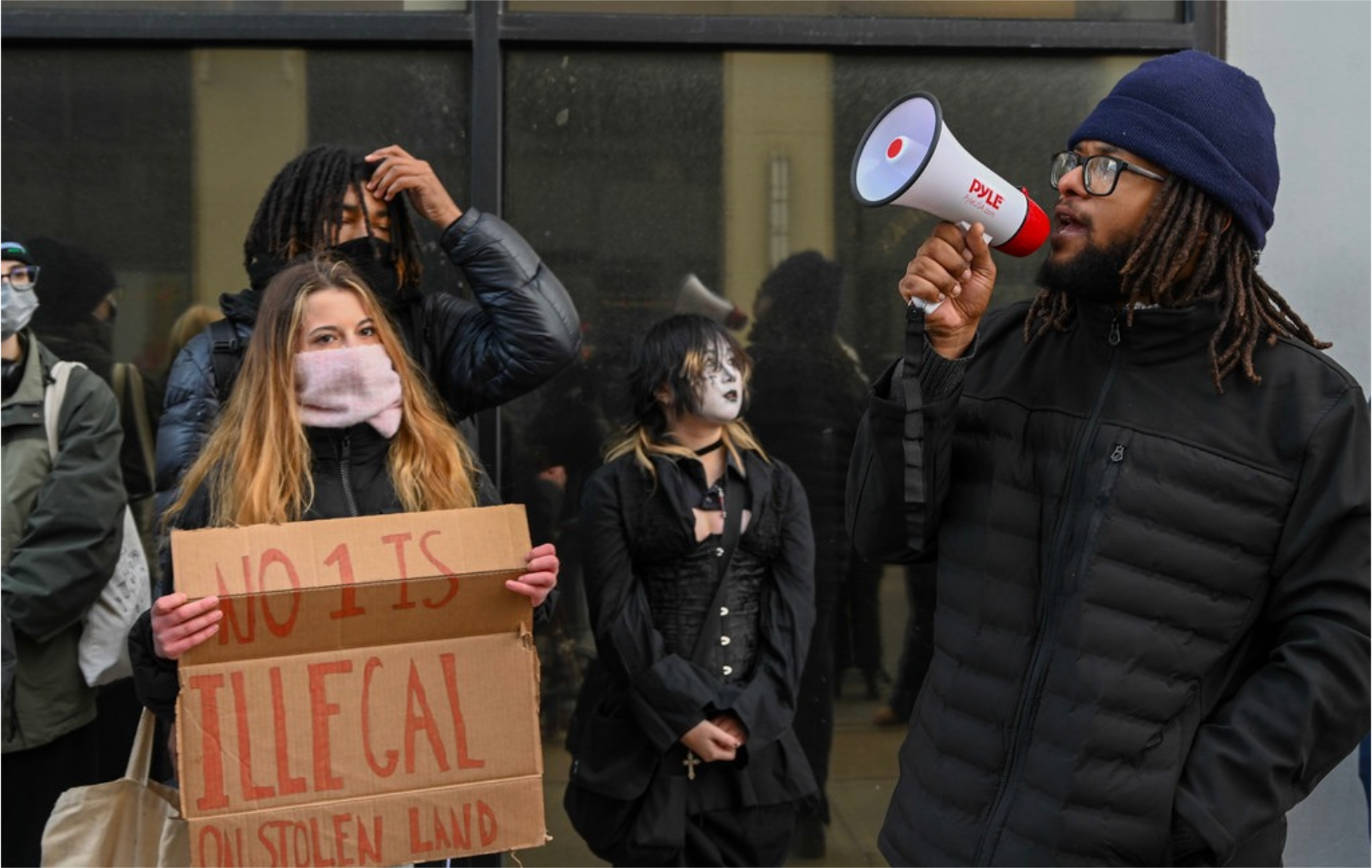
In the U.S., the 2026 College Free Speech rankings of 257 top-rated universities produced by the Foundation for Individual Rights and Expression (FIRE) found that for the first time ever, most American students now support preventing speakers who express “controversial” (i.e., conservative) views from even setting foot on campus. Nearly one-third said it was acceptable to use violence to stop such appearances. The full impact of wokism on university campuses has been well-documented by C2C Journal beginning in 2020 (including here, here and here).
Further evidence of this destructive process can be seen in the recent departure to the U.S. of high-profile conservative Canadian voices such as Jordan Peterson and Gad Saad. Peterson was hounded out of the country for his political views, while Saad left in response to intolerable levels of anti-Semitism at Concordia University, where he taught for many years. (Saad was scheduled to speak at the CHSS conference but had to drop out at the last minute.)
Finally, the recent scandal regarding University of Cambridge professor Jason Arday suggests that even clear evidence of malfeasance can’t shake proponents’ belief in the justice of DEI programs. After Arday was exposed as a serial plagiarist and liar, it was his primary accuser who was attacked; meanwhile, supporters of Arday have used his tragic suicide to call for a redoubling of efforts to promote DEI-based discrimination on campus.
Given such attitudes, it probably isn’t just rank pessimists who might ask: “How can something so entrenched and resistant to logic ever be rolled back?” Here’s how.
Dangerous Ideas and Other Innovations
The most common form of pushback against ideological intolerance can be found in the many recently established seminars, workshops and courses that expose participants to a greater range of opinions on campus. Sometimes these come from internal pressure; other times, the schools must be dragged kicking and screaming towards enlightenment. Harvard University is an example of the latter. The Ivy League school was ranked dead last on FIRE’s 2024 and 2025 national free speech leaderboards for its refusal to protect heterodox opinions among staff and students.
Much of this appeared driven by rampant anti-Semitism. Following the re-election of President Donald Trump, and in conjunction with a high-profile boycott by fundraisers, such bigotry suddenly became a serious liability. The school responded with “Harvard Dialogues”, a series of talks, grants and other efforts meant to “foster a culture of constructive dialogue and building bridges across differences.” Harvard is now slowly clawing its way up FIRE’s rankings – although it still earned an F in 2026.
In Canada, improvements have mostly come from within. Victoria College, the University of Toronto’s oldest, offers students a weekly lunchtime seminar focused on difficult or controversial topics. College president Rhonda McEwen created the seminars after some students asked her to “cancel” another student because they disliked his views. As she recounted to The Globe and Mail, “I told the students ‘I’m not cancelling anybody. He’s a student here like you are. You don’t have to agree with him, and I don’t have to agree with him, but that doesn’t mean you can’t find a way to talk to each other.’”
McEwen’s workshops lure students with free food; in exchange for lunch, they must participate in a civil and respectful discourse on gender identity, affirmative action, religion or other similarly hot-button issues. Despite the topics’ polarizing nature, second-year student Areen Khan told the Globe that “90 per cent of people are right there in the middle.” This suggests there’s ample ground for respectful discussion if students are prepared to sit down and engage rather than merely complain.
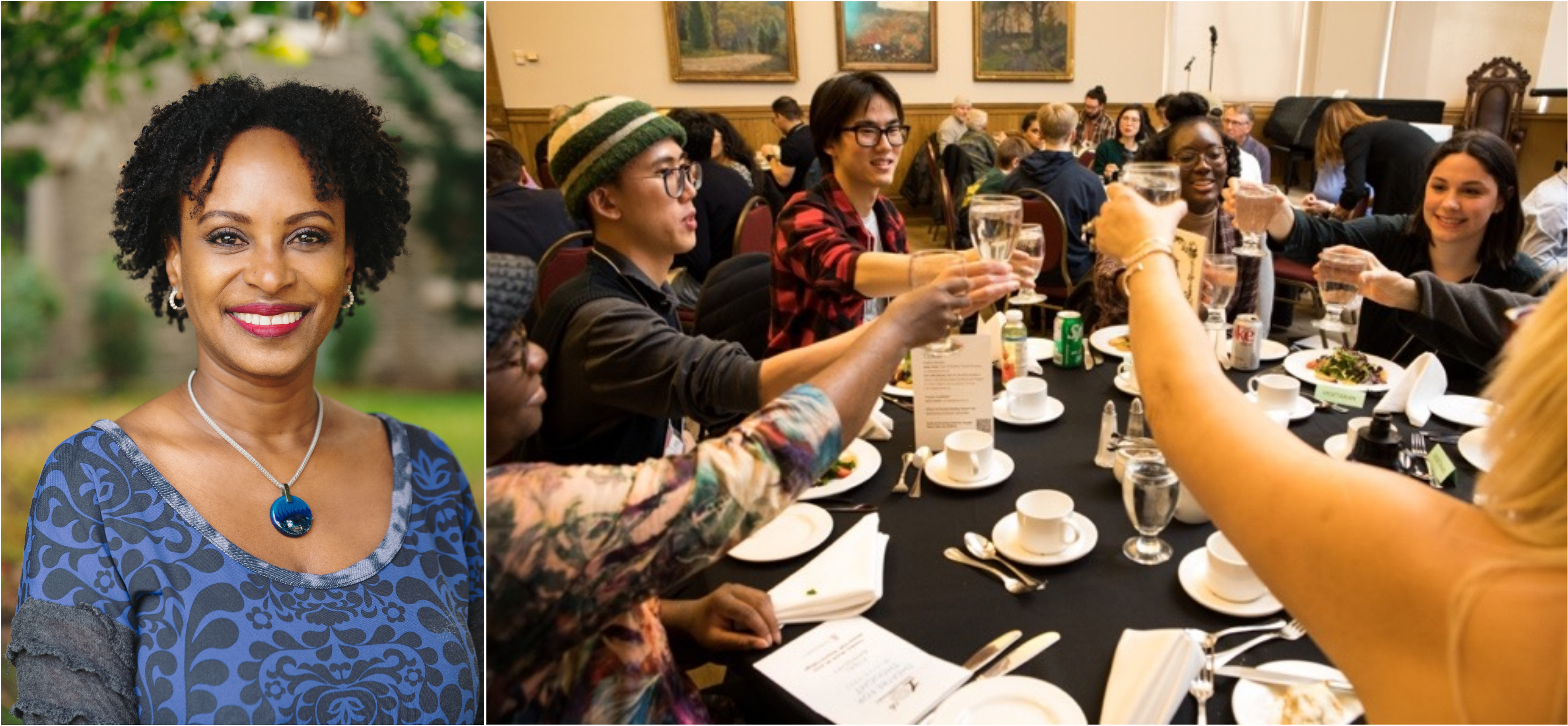
At the University of British Columbia’s Okanagan campus, philosophy professor Renaud-Philippe Garner and political scientist Brad Epperly created a new course called “Dangerous Ideas” similarly meant to force students to discuss controversial issues in a novel way. Structured as a debate seminar, participants – who must promise to be tolerant and respectful of others’ views – are randomly assigned to argue one side or the other of the weekly topics. Students may thus find themselves promoting an idea they personally find repulsive. The course credits count towards a degree, making the stakes higher than with Victoria College’s lunchtime confabs.
The Constructive Dialogue Institute (CDI), founded by social psychologist Jonathan Haidt, attempts to link small-scale seminar-style efforts together across institutions by offering instructors and schools an established workshop system for bridging students’ cultural and political differences. The CDI claims to have helped hundreds of universities, as well as other organizations and businesses, promote the values of open dialogue. Haidt began his career as a left-leaning public intellectual investigating the origins of human morality. His best-selling 2012 book The Righteous Mind: Why Good People Are Divided by Politics and Religion argues that the varying foundational beliefs of conservatives, liberals and libertarians are all crucial to achieving a prosperous and successful society.
Classes or workshops meant to foster dialogue on campus are, however, unlikely to change the fundamental structure of universities or defeat wokism on their own. In fact, the format can easily be co-opted by those opposed to intellectual diversity. The University of Calgary’s “Courageous Conversations” speaker series, for example, claims to promote civil discourse. But rather than encouraging a plurality of opinions, the program habitually promotes tiresome DEI fixations such as “systemic racism”, Indigenous victimhood and so on.
Institutional Neutrality
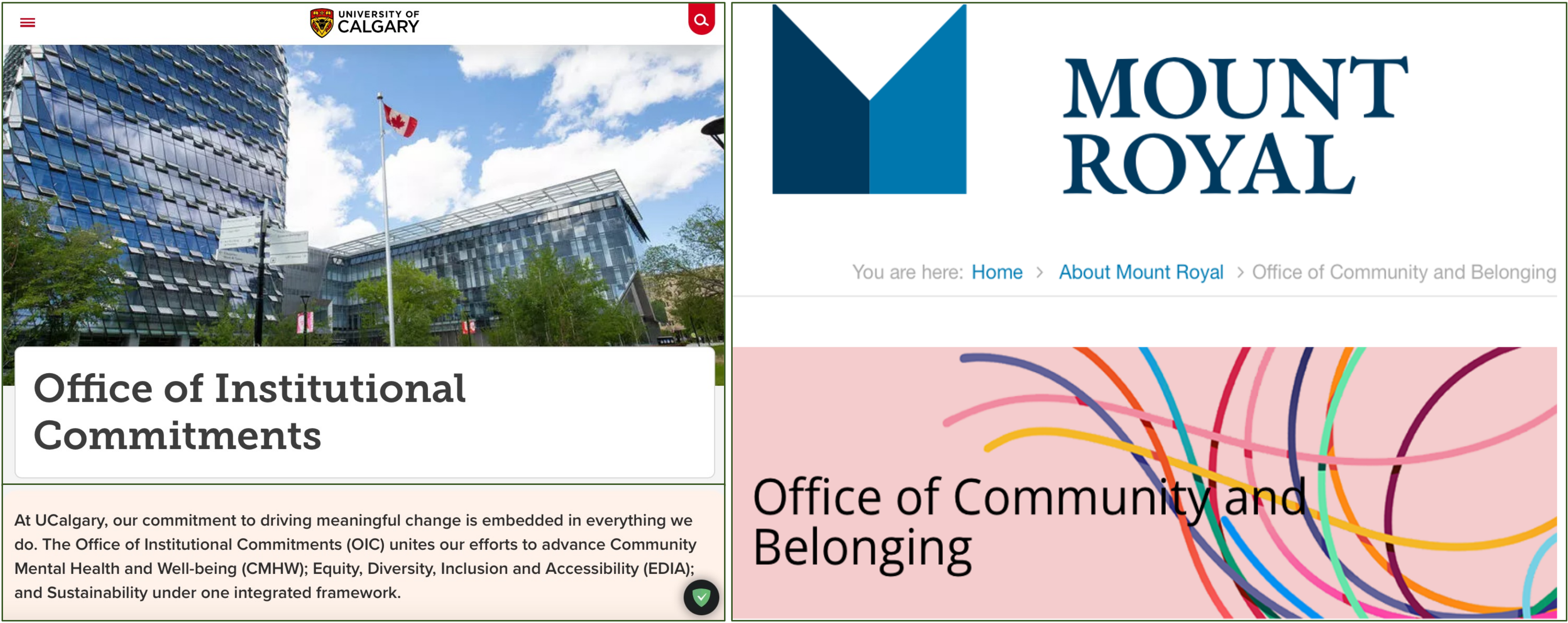
Given the key role played by DEI policies in the Great Awokening, it seems significant that some schools are distancing themselves from this divisive acronym. In 2025, the University of Alberta announced it was replacing its DEI policies with a focus on “access, community, and belonging.” Following suit, the University of Calgary now calls its DEI office the Office of Institutional Commitments, while Mount Royal University has a new Office of Community and Belonging. While this suggests the schools have come to properly regard DEI as a liability to their image as centres for serious thought, some observers suspect it’s merely a rebranding exercise without any commitment to real change. The name on the door may be different, but the same people remain inside, enforcing official discrimination, exclusion and inequity as before.
More hopefully, in the U.S. there are signs of a substantive shift away from DEI diktat. Many universities have eliminated their DEI offices entirely, largely due to pressure from the Trump White House over anti-Semitism and other activist disruptions on campus. In March 2025, for example, the University of Virginia’s governing board voted unanimously to close its Office of Diversity, Equity and Inclusion forever. Other universities across the country have acted similarly, including the University of Michigan, the Massachusetts Institute of Technology and George Mason University.
Further, many universities are embracing the long-lost notion of institutional neutrality. This requires university administrators to abstain from participating in political debates not directly related to their own operations, and further to refrain from imposing their opinions on staff or students. The concept dates back to the University of Chicago’s 1967 Kalven Report, which came in response to widespread campus activism during the Sixties.
The Sixties was an era not unlike today, with student protesters loudly demanding that school administrators join their campaigns against the Vietnam War, nuclear weapons and other popular crusades. The Kalven Report strongly rejected such officially-sanctioned activism. “A university, if it is true to its faith in intellectual inquiry, must embrace…the widest diversity of views within its own community,” the report stated. “It is not a club, it is not a trade association, it is not a lobby.”
So far this century, however, many universities have been acting as if they were a club, trade association and lobby group all rolled into one. The University of Michigan’s administration routinely made its views known on controversial political issues, including the killing of George Floyd and the broader Black Lives Matter movement. In Canada, universities also got into the habit of taking stances far beyond their educational remit. In 2024, for example, UBC Okanagan’s Senate condemned Israel for committing “genocide” in its incursion into Gaza.
 Not a club, trade association or lobby group: The University of Chicago’s landmark 1967 Kalven Report called on universities to reject political activism in favour of institutional neutrality. Such policies are again becoming popular, as the above chart reveals. At top left, committee chair and legal scholar Harry Kalven; at top right, students protesting the Vietnam War, October 1965. (Sources: (top right photo) AP Photo/Frank C. Curtin, File; (chart, modified by C2C) Institutional Neutrality Report, by Heterodox Academy)
Thankfully, many U.S. schools are now rediscovering the benefits of keeping their thoughts to themselves. The University of Michigan made headlines in 2024 by shifting to institutional neutrality, stating that university leaders “will not issue statements on behalf of the University…unless such statements directly relate to matters of internal governance.” Over 150 U.S. universities have adopted such a policy – with more than 120 making the move in 2024 alone.
The practice is less prevalent in Canada, but still visible. Financially-troubled Laurentian University committed itself to official institutional neutrality in 2023 and Simon Fraser University did so in 2024. In 2025 both the University of Waterloo and McMaster University said they were aligning themselves with these principles. Then again, the University of Waterloo’s commitment sits within a framework called “Freedom of Expression and Inclusive Engagement” which suggests two diametrically opposed policies under one heading. There is clearly still work to be done.
Cross-University Pollination
Another avenue for change lies in bringing together dissenting scholars from different schools. One of these earliest efforts is the Heterodox Academy, known as HxA. It was founded in 2015 by Haidt along with fellow social psychologist Chris C. Martin and law professor Nicholas Quinn Rosenkranz, all of whom were disturbed by the disappearance of viewpoint diversity on their campuses. The organization’s slogan is “Great Minds Don’t Always Think Alike” and it boasts over 8,400 members spanning 82 schools across the U.S., Canada and Great Britain. HxA has chapters at eight Canadian universities including McGill, UBC and the U of T.
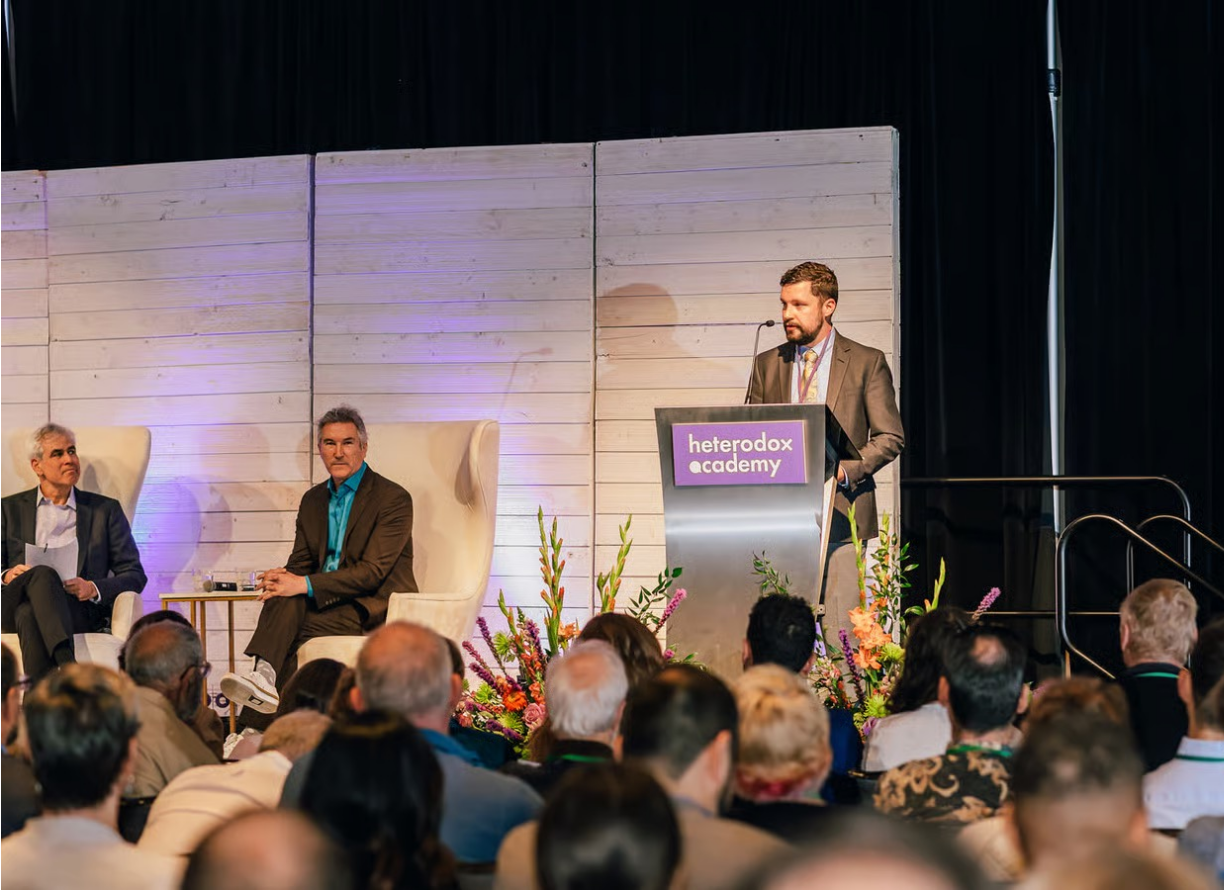
HxA promotes open inquiry and intellectual diversity by organizing conferences that enable members to network and share ideas. It also publishes reports on topics such as DEI hiring and students’ ability to discuss controversial topics. The organization welcomes anyone who supports freedom of expression, regardless of their political persuasion. Because of this, however, it has come under fire for what some see as a reluctance to pursue the most controversial topics, such as gender identity, since that might cause a stir among some portion of its membership.
Other groups seek to grapple with the full gamut of wokist issues. The brightest example of this sort of institutional fearlessness can be found in Kaufmann’s CHSS. Kaufmann grew up in Vancouver, began his higher education at the University of Western Ontario and subsequently received a full professorship at the University of London as an expert in comparative politics. He left for the University of Buckingham in 2023 to start up CHSS because he said he was “repelled by cancel culture and attracted by the chance to help build Buckingham as the ‘only free speech university’ in Britain.”
In an interview conducted prior to CHSS’s July conference, Kaufmann explained that he created CHSS “to promote viewpoint diversity and really ask the questions and pursue the viewpoints that have been either actively discouraged or shut down in mainstream academia.…My centre is an attempt to provide a different view of social problems.”
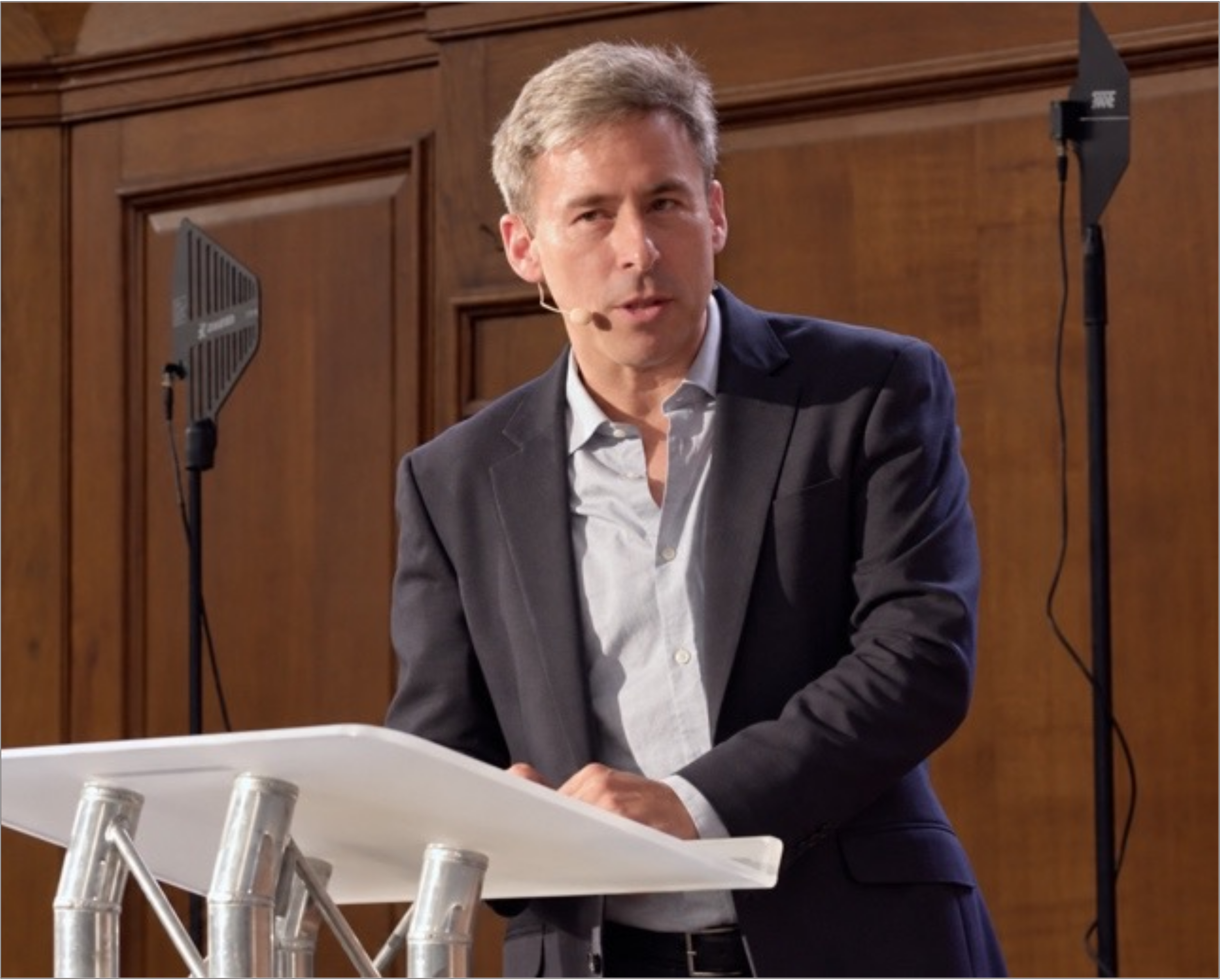
Research supported and/or published by CHSS tackles head-on the most problematic topics, including whether racial or gender income gaps might be caused by something other than systemic discrimination, and whether the connection between LGBTQ identity and mental health problems is due to factors other than prejudice. CHSS scholars have analyzed the politicization of research funding and trends in transgender identification. Kaufmann’s frontal-assault style has proven popular with donors, as CHSS now has the financial muscle to provide generous research awards and scholarships as well as organize its annual conference.
Kaufmann argues that the creation of semi-autonomous institutions such as CHSS that are capable of producing original research is crucial to enabling his post-progressive agenda. “I’m relatively pessimistic about the mainstream system being able to change,” he says. “I don’t believe that mainstream academia is going to become tolerant anytime soon, and actually the generational dynamics are going in the opposite direction. I think the only way to do this is to have separate centres…that can create entire atmospheres that are non-progressive.” In other words, external force will be necessary.
Legislative Responses
Widdowson also accepts the necessity for external political pressure, but recognizes its inherent risks as well. “There’s all sorts of dangers to the political side,” she says in an interview conducted at the CHSS conference. “Because you can actually have politicians start to use universities for their own political objectives. And you don’t want that.” She notes, however, that given the “massive failures that are happening, the [schools] won’t self-correct. You need the politicians to step in.”
The most recent spate of commitments to institutional neutrality and the closure of DEI offices across the U.S. have coincided – not coincidentally – with enormous pressure applied by the Trump Administration, including withholding federal grants and initiating formal legal investigations. Despite this progress, further and permanent solutions are more likely to come from lower levels of government, given that higher education is primarily a state and provincial responsibility.
In Canada, Ontario and Alberta have led efforts to impose legislative obligations on universities. In 2018 Ontario required that every publicly-funded university and college publish a free speech policy. Alberta has adopted a similar measure. While welcome, both requirements lack functional enforcement mechanisms necessary to ensure students or faculty who’ve had their speech rights infringed by mobs or school administrators are properly protected. Again, there’s more work to be done.
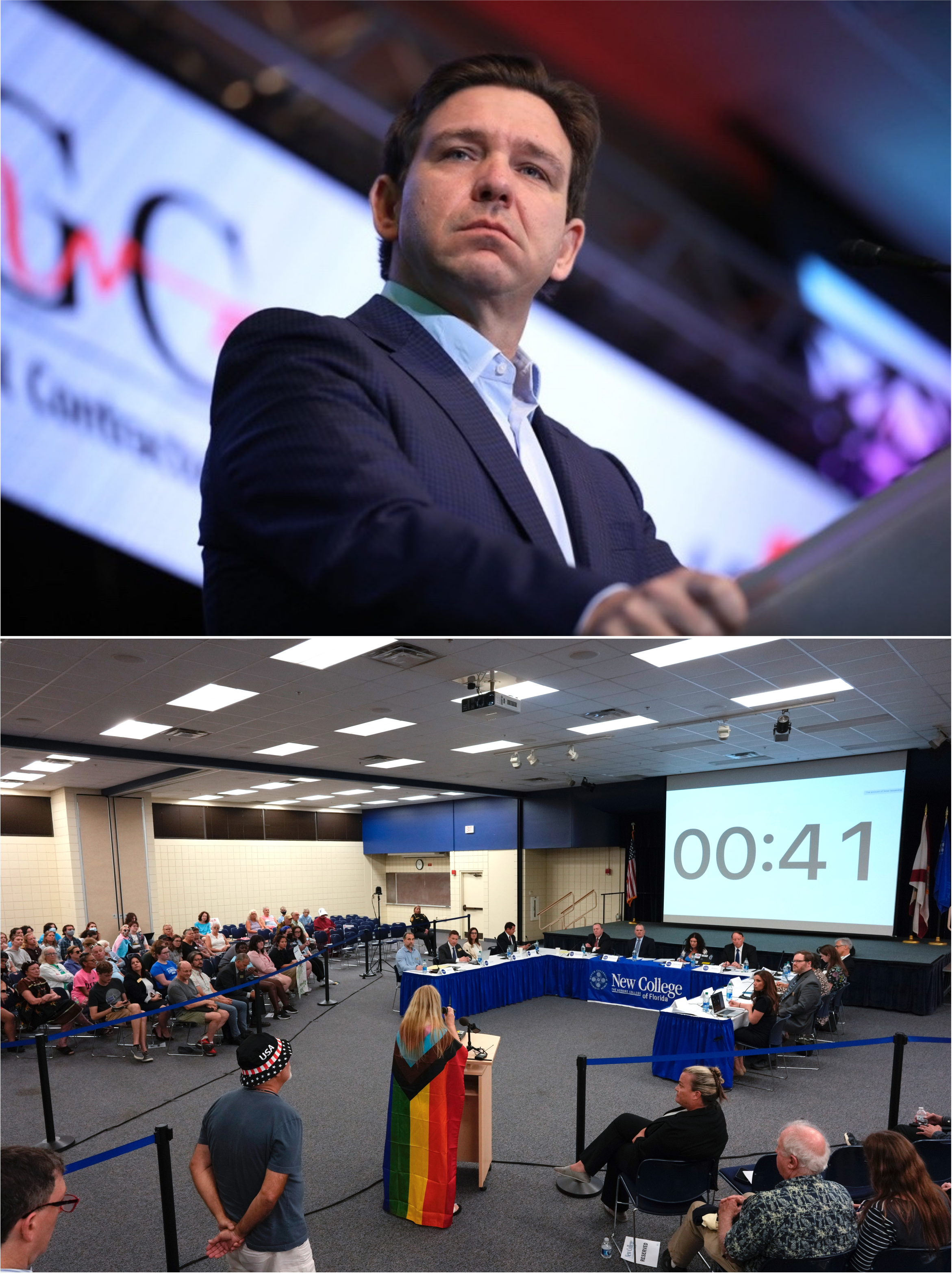
U.S. states have been far more aggressive in this regard. Florida, in particular, has enacted a suite of anti-woke education policies, with Governor Ron DeSantis signing bills defunding DEI initiatives, outlawing the imposition of ideological positions on students and faculty, and encouraging students to seek “more employable majors” instead of niche degrees in critical race theory or gender studies. While some measures have been struck down by the courts, the campaign overall has achieved a remarkable rebalancing of the state’s education establishment.
The highest-profile example may be New College of Florida, a small liberal arts college within the state university system that was long known for its fealty to radical left-wing causes. In 2023, DeSantis replaced New College’s entire board of trustees, who then fired the school president and committed the college to greater intellectual balance. Naturally enough, the reborn college has attracted critics; HBO talk show host John Oliver predictably smeared the incoming trustees with Nazi comparisons. The results three years later, however, reveal a school that now acts more like an institution of higher learning than an indoctrination factory.
Another Florida example is the newly-created Hamilton Center for Classical and Civic Education. Also part of the state university system, it supports “teaching and research concerning the ideas, traditions, and texts that form the foundations of Western and American civilization.” The Hamilton Center has helped create new courses and majors for the much bigger University of Florida, including a civil discourse class.
From Whole Cloth
The surest response to the scourge of institutionalized academic leftism is a root-and-branch rethink of the entire concept of a university. A few private Christian colleges in the U.S. – most notably Hillsdale College in Michigan and Liberty University in Virginia – have styled themselves as explicitly conservative institutions, and thus serve as a bulwark against wokism in higher education.
Given that explicitly Christian colleges are likely to be overlooked or avoided by many students and parents, however, the optimal solution probably lies in the creation of non-sectarian schools dedicated to the fundamental principles of open inquiry within the Western tradition, and entirely unencumbered by past decades of institutional drift. The most ambitious example of this clean-slate approach is the University of Austin at Texas (UATX).
The creation of a brand-new university as pushback against the “rising tide of illiberalism and censoriousness prevalent in America’s universities” was announced in 2021 on journalist Bari Weiss’ Substack in a post by the school’s future president, Pano Kanelos. Three years later, UATX enrolled its inaugural class of 94 students. Each student received a copy of Homer’s Odyssey in recognition of the school’s debt to the Western canon.
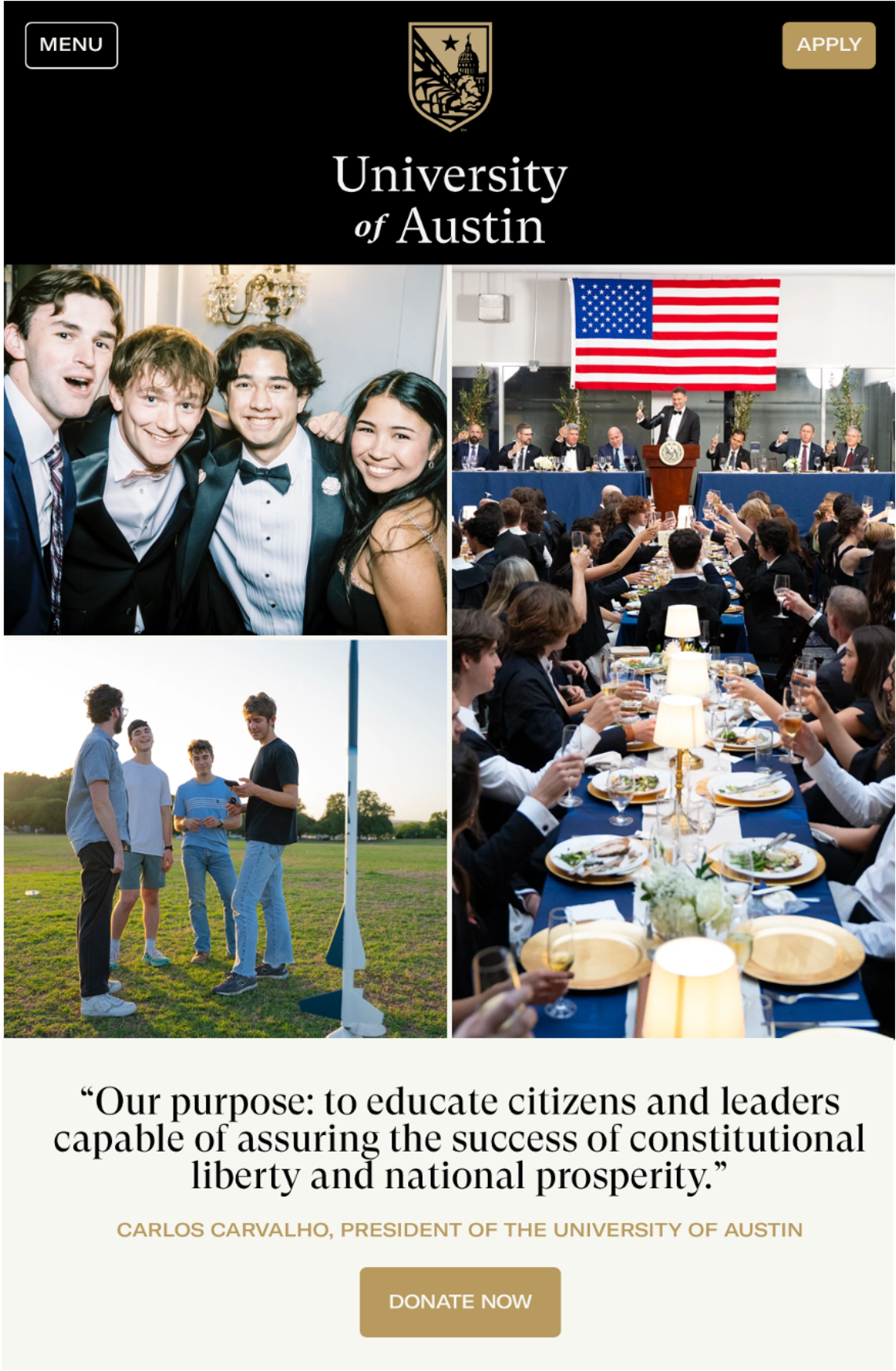
Today UATX (not to be confused with the vastly larger and conventionally structured University of Texas at Austin) has about 150 students and recently received state approval to grant degrees. To earn a B.A. in Liberal Studies, UATX students must take 15 core courses covering a liberal arts classical education, with the option to specialize in the humanities, social sciences or science and technology. The institution expects to receive full accreditation by 2028.
UATX is notable for its “liberal” admissions policy. Marketing itself as having “the fairest and most honest admissions in America,” the school’s race-neutral entrance requirements are based entirely on test scores. Applicants who score above 1460 on the SAT (formerly the Scholastic Aptitude Test), 33 on the American College Test or 105 on the Classics Learning Test are automatically granted admission. For context, a SAT score of 1460 puts the applicant in the 96th percentile of all undergraduate applicants – but is still a more generous cutoff than for America’s most elite schools like Harvard, MIT and Yale. Furthermore, everyone attends UATX for free, with their tuition fully covered by donors. This is another major departure from the traditional university model, in which basic annual tuition tops US$60,000 at the elite schools. Such generosity helps maintain UATX’s commitment to the pursuit of excellence above all.
While many aspects of UATX’s educational experience are similar to those at other universities, there are some deliberate differences. One is the use of the Chatham House Rule in classrooms. This rule states that, “Participants are free to use the information received, but neither the identity nor the affiliation of the speaker(s), nor that of any other participant, may be revealed.” It enables students to speak freely without suffering any negative consequences from those who disagree.
As with any new offering, UATX has faced challenges. The most significant has been an apparent internal battle over whether the institution should commit itself exclusively to the principles of open inquiry and free expression, or whether it should actively promote a conservative perspective as a counterbalance to the rest of the woke-minded academy.
According to a long takedown in the left-wing media outlet Politico, UATX is now clearly a conservative institution following the departure of Michael Lind, the left-leaning founder of the New America think tank. That said, even Politico’s jaded reporter had to admit that, “At its inception, UATX constituted a sincere effort to establish a transformative institution, uncompromisingly committed to the fundamental values of open inquiry and free expression.” Regardless of any growing pains, UATX offers perhaps the most ambitious solution to the Great Awokening: bypassing the tired old model to create something entirely new.
Sustaining the Momentum
The expanding range of anti-woke pushback shows that the mechanism for dewokifying universities and restoring diversity of viewpoint can come from both internal and external sources. A university, department or individual professor can help usher in a new era by requiring students to engage with ideas or concepts that they personally disagree with and by burying the discreditable notion of cancellation and censorship that pervades campuses today. Schools can make further progress by removing their DEI offices and committing themselves to decisions on the basis of merit rather than identity. They can also repudiate their habit of political posturing by enshrining institutional neutrality – a policy that would also help protect political dissidents among their faculty.
All of this would go a long way to improving life for students and staff with heterodox views. Over time, such views might no longer even need to be labelled “heterodox”, since that university would have shed the orthodox dogma it once propounded.
Still, most universities are unlikely to have the capability or inclination to make such sweeping changes on their own. The seeds of wokism were sown over many decades and its roots and vines have grown entrenched and extensive. It seems far more likely that external pressure will be required. While Canada has done little in this regard, the U.S. offers much more to appreciate and emulate. A sustained barrage of legislation, legal action and bully-pulpit demands has pushed many American schools to make important changes to their policies and practices.
That said, the distinction between internal and external pressure is not the only way to view the problem and its potential solutions. Widdowson, who has perhaps the most experience of anyone in Canada regarding the dangers of wokism on campus, conceptualizes three fronts in this war against intellectual tyranny. There is, she says, “The political front, the legal front and the cultural front.”
The political front involves actions by sympathetic politicians to enact legislation that requires universities to go back to their original focus on merit, ideological neutrality and open discourse. As shown above, Florida has been the most active jurisdiction in this regard. The legal front entails using the courts to force schools to abide by their obligations to students, staff and society at large, both via specific legislation and Canadians’ Charter rights. In Widdowson’s case, this includes her long legal battle against her dismissal from MRU. In the most recent development, an arbitrator ruled that her firing was “disproportionate”; she continues to fight for full reinstatement to her teaching post.
But it is on the cultural front that Widdowson is most active, and it may hold the most promise more generally. What she calls “direct action” involves showing up on campus to engage with students and faculty. In doing so, she seeks to expose the intolerance and hatred inherent to the Great Awokening. She has applied this technique most notably at the University of Lethbridge. When she arrived at the school’s campus in April to discuss, in a rational manner, the accusations about children’s graves at the former Indian Residential School in Kamloops, B.C., the result was a full-on, student-led riot. Later, school administrators had Widdowson charged with trespassing simply for trying to discuss the issue with students and staff.
 No time to talk: To expose the essential intolerance of modern universities, Frances Widdowson (pictured in all three photos) seeks to engage university students and staff in respectful dialogue; the result is often utter chaos. At top right, Widdowson meets with Indigenous students at the University of Lethbridge in 2023; at bottom, Widdowson is carried away by RCMP officers during a 2026 protest at the University of British Columbia. (Sources: (left screenshot, enhanced) YouTube/Tammy Peterson; (top right photo) Sarah Jones/Lethbridge News Now; (bottom) Ben Nelms/CBC)