 The People’s Platform
ASTRA TAYLOR
Toronto: Random House Canada, 2014
267 pp., $24.95 CAD
Review by Jackson Doughart
Astra Taylor believes that today’s discourse about the Internet is crowded by two groups: “techno-utopians”, who promote the web as a new dawn of freedom, democracy, and cultural exchange, and anti-digital naysayers who see information technology’s march as a threat to cultural diversity and freedom. She hews to the latter, contending that while the Internet holds great promise as a democratic and egalitarian instrument, its present trajectory supports and exacerbates the ancien regime of corporate media power. This is a menace, in Taylor’s view, that justifies a mass incursion of government into the online world.
Her statist inclinations come as no surprise: the Winnipeg-born, U.S.-raised writer and filmmaker has written for the Occupy movement, made a documentary film about the Marxist philosopher Slavoj Žižek, and holds in esteem such figures as Julian Assange and Laura Poitras. Her prescriptions for a better world follow those of democratic socialism to a T: more government involvement, more public spending and subsidy, more emulation of Scandinavia. But her book is nevertheless an important and thoughtful one which conservatives as well as liberals should read. Taylor writes very well, melding reportage, research, and argument in a clear moral voice.
Her argument amounts to a defence of mediating institutions designed to aid the creators of “content” in ways that the Internet’s present model not only fails to support, but actively seeks to defeat by eliminating the intermediaries, connecting producers and consumers of culture directly, and blurring the distinction between them. And she sees the increasing deployment of individualized content – which delivers to people what they already know and like instead of a diverse blend of material – as disruptive to the relationships that are vital to culture.
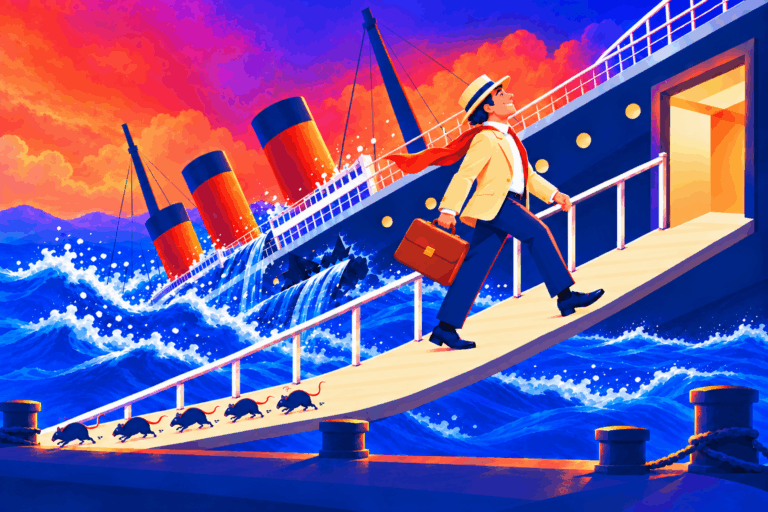
Taylor suggests the Web-speak language of “openness”, “free culture”, and “flat” platforms misrepresents the Internet as egalitarian. These are actually Orwellian platitudes designed to mask the exploitation of ambitious, young, and cheap “creators” by those who profit from their labour. Media interns produce free material in the hope that it will build their resumes toward future work. But the work will never be there because the businesses running the platforms are relentlessly squeezing their creative budgets so they can put more money into marketing, executive salaries, and shareholder dividends.
Ironically, this suits the techno-utopians just fine, as they dismiss the very notion of professional journalism. Writers, artists, and filmmakers should create for the love of it, for “hobbyism”, content to know that their work is theoretically available for anyone to see, while the gatekeepers benefit without sharing the rewards.
Little do the utopians realize it, but the narrow group of controlling interests on the Internet also limit the available perspectives, according to Taylor. Popular for-profit websites such as Gawker, Vice, and Buzzfeed shy away from producing anything that might alienate customers. Thus they create a feedback loop, an echo chamber of “likes” which is substantially anti-democratic, and actively works against the “cultural democracy” that the author hopes for:
Cultural democracy means that a diversity of voices and viewpoints is expressed and accessible, that visibility and notoriety should not be the consequence of cumulative advantage alone, and that influence within the cultural field is achieved by a variety of factors, not simply ceded to those who can afford to pay to be seen and heard. . . . [It] entails supporting work that not everyone will like and some may even despise—and ensuring that citizens will occasionally be exposed to things they don’t necessarily agree with or want to see.
Taylor’s best chapter, titled “The Double Anchor”, is a lengthy discussion on the dilemma of copyright. Intellectual propertarians, such as the barons of the recording industry, want to commodify culture, restrict distribution, and perpetuate revenue imbalances between creators and marketers of content. Meanwhile, the “free culture” partisans who support Internet piracy would deny creators what pittance they get from marketers.
Among other suggestions, Taylor endorses a greater role for government in funding and regulating a cultural commons, with subventions for writers, filmmakers, artists, and the like. That would solve the copyright conundrum: as taxpayers funding a public good, they would already own the product, and the creators would be duly paid. As hard as it to imagine Gordon Lightfoot and Rush as civil servants, one imagines that this proposal would be welcomed by Canadian supporters of the CRTC and the Canada Council for the Arts, which aim to ensure a proportion of “Canadianizing material”, often at state expense.
Taylor tries to pre-empt opposition from conservative readers, offering the example of Norway, whose cultural spending regime she deems worthy of the expense. Here she explores the theme of “public goods”. This language might attract some conservatives, except that she intimates an equivalence between such things as education (a consensual public good) and journalism, which is more contentious. No doubt some believe watching CBC news should be a mandatory part of the public school social studies curriculum, but it’s doubtful they go that far even in Norway.
So her rather nonchalant attitude toward an ambitious government program of this kind is more than a bit concerning, as the initiative would further meld the domains of state power and civil society – a distinction upon which not only the success of journalism, but the preservation of liberty, depends. Most importantly, it is far from guaranteed that this kind of program would produce the kind of diversity of thought and creativity that she desires. What entity, after all, could be more reliant upon or supportive of political consensus, or more indisposed to creativity, than government?
If Taylor’s prescriptions are misguided, perhaps it’s because they flow from a fundamentally flawed diagnosis. What worries me is not so much that the gatekeepers of the Net are uneager to pay content producers, but that readers and viewers have so little willingness to pay for articles and book reviews and documentaries and so on. Before the Internet, consumers had to pay more for newspapers, magazines, books, films, and music, and so valued them to a greater degree.
With so much digital content effectively available for free, it is now individual citizens, not just evil corporations, that are plundering the valuable produce of public-minded creators. A more modest, and perhaps more realistic starting point would be to reform this broken relationship, such that the users would actually pay for the content they enjoy, and the creators actually able to see a fair return on their labour.
~
Jackson Doughart is an editor of the Prince Arthur Herald.