Stories

The Real Campaign Begins Now

Paul Bunner
September 1, 2015
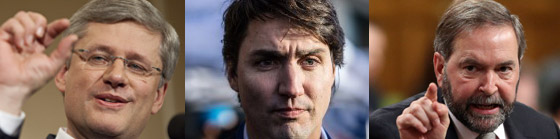
Even if you spent the month of August on a golf course, cottage deck or Pluto, the noise from the first month of the 2015 Canadian federal election campaign probably interrupted your summer reverie, at least a bit. First impressions: Conservatives had a good start, but got knocked off message by the Duffy trial. Justin Trudeau is exceeding expectations, not just because he wore pants to the first leaders’ debate. And the NDP is still riding the orange wave that swept Quebec in 2011 and Alberta this year. But forget all that: the real campaign begins now that summer’s over, and C2C Journal is going to be all over it during the next six weeks with a dozen unique election analyses and regional pre-vote profiles. In other words, it’s mandatory reading if you want to win the election night pool.
Stories

The Real Campaign Begins Now

Paul Bunner
September 1, 2015
Even if you spent the month of August on a golf course, cottage deck or Pluto, the noise from the first month of the 2015 Canadian federal election campaign probably interrupted your summer reverie, at least a bit. First impressions: Conservatives had a good start, but got knocked off message by the Duffy trial. Justin Trudeau is exceeding expectations, not just because he wore pants to the first leaders’ debate. And the NDP is still riding the orange wave that swept Quebec in 2011 and Alberta this year. But forget all that: the real campaign begins now that summer’s over, and C2C Journal is going to be all over it during the next six weeks with a dozen unique election analyses and regional pre-vote profiles. In other words, it’s mandatory reading if you want to win the election night pool.
Share on Facebook
Share on Twitter

C2CJournal-Bunner Editorial

By the end of the 2006 federal election campaign that first brought the Conservative Party of Canada and Stephen Harper to power, a young woman who worked on the Conservative leader’s tour was so exhausted she had to be hospitalized. Eight weeks of gruelling 18-hour work days, junk food, trying to sleep on planes and buses, and unrelenting stress will do that to any human. Now try to imagine doing it for 11 weeks and mark my words, the 2015 Canadian federal election campaign is not a sprint but an endurance race, and the winner will be the leader and the campaign team that staggers across the finish line on October 19 before succumbing to complete mental and physical exhaustion.

Those are the people who should be complaining about this marathon, not the armchair critics who moaned on about the Conservatives’ diabolical scheme to outspend their rivals and marginalize third-party advertisers with the longest campaign in more than a century. More evidence of the Harperists’ nefarious conspiracy to subvert Canadian democracy, they said. Oh please. If anything, a 78-day campaign featuring as many as five nationally televised leaders’ debates and daily policy announcements on every imaginable issue is a feast of democracy, a riot of enfranchisement, an orgy of political engagement. Even the most determinedly apathetic voter will not be able to escape it, and it is a safe bet that election turnout will not only increase, but more voters will know more than they’ve ever known about the parties and their platforms when they mark their ballot. And that is a good thing.

In our infotainment-saturated world, democracy competes for attention with celebrities, sports, weather, stupid cat videos, ISIS beheadings, and the Ashley Madison hack. Donald Trump understands this, and he has climbed into the lead of the Republican presidential nomination contest by being louder and more outrageous than anyone else in the field. Canada’s aspiring political leaders have been milquetoasts by comparison in the first month of the 2015 campaign, but the promises, insults, accusations and fabrications are all going to get bigger and noisier from here on out. In other words, the real show begins now, and with the three main parties currently running neck and neck, it promises to the most exciting, interesting and entertaining Canadian election in years.

The fall edition of C2C Journal is going to cover Campaign ’15 with a dozen feature articles that aim to cut through the noise and zero in on the issues and strategies that will shape the outcome. If you’re betting on the election, you can gain an edge on fellow punters from the political intelligence that is being gathered by the veteran journalists and politicos from across Canada who are contributing to this edition. To ensure our coverage is as current as possible, we have structured the deadlines and rollout schedule to provide up-to-date articles twice a week over the next six weeks.

We begin today with Framing the Ballot, a stage-setter by long time Sun Media editor Paul Stanway that examines the positioning narratives the parties have developed over the last year or so and their success – or failure – in getting their messages out in the first month of the campaign. Superficially, the choice on October 19 will be between “Real Change”, “Ready for Change”, or “Proven Leadership”. Beneath that, each party has a short list of key message objectives: the Liberals want to be branded as champions of the middle class; the NDP as a fresh approach to activist government; and the Conservatives as protectors of the economy and national security. Deeper still are the micro-targeted platforms with a chicken for every pot, from subsidized daycare to gouging the rich to tax credits for home renovations.

Swirling around all those tightly scripted narratives and improbably costed promises are all the stories the parties can’t control – the Duffy trial, candidate bozo eruptions, global financial market gyrations. These are the true tests of campaigns, and victory often goes to the nimblest.

In the weeks ahead C2C’s election edition will also provide a detailed look at the competition for ethnic votes – a story that has been largely overlooked by most pollsters and pundits – and an assessment of the Air War, where television advertising and social media bombardment could be unusually influential in a long campaign. We’ll also look at the importance of messy, oppositional ideology in modern politics and campaigns, contrasting it with the utopian promise of non-partisan technocracy.

Then, as the race enters the home stretch, we will provide detailed analyses of the pre-vote electoral landscape in each of Canada’s six regions. Writers based in each region are currently tracking polls, monitoring swing ridings and separating reality from spin in conversations with campaign insiders. If you read all these pieces we can’t guarantee you’ll win the election night pool but we’re certain you’ll do better than the oft-flummoxed pollsters.

Finally, we’ll wrap the Fall 2015 edition of C2C Journal with a campaign post-mortem by the ever erudite Colby Cosh. Generally he prefers his election entrails stirred, not shaken, but depending what happens October 19, Canada may emerge from the 2015 federal election very shaken indeed.

~

Paul Bunner is the editor of C2C Journal and has participated in numerous federal, provincial and municipal elections as a journalist or campaign worker.

Love C2C Journal? Here's how you can help us grow.

More for you

Canada’s Other Productivity Crisis: The Daily Irritants That Slow Us Down and Sap Our Spirit

Multi-factor verification. Customer surveys. SMS alerts. Endless online check-ins. Technology was supposed to free up our time for better things. Instead, it has created endless obstacles to getting anything done. Plus there’s the constant impact of government regulations and questionable safety measures that further rob us of our valuable time. Peter Shawn Taylor looks at the absurd and annoying ways that 21st-century life ties us up and grinds us down. While some examples seem faintly comical, taken together they comprise what Taylor argues is a micro-productivity crisis of national proportions that is no laughing matter.

A Mess and Minefield: Ottawa’s Clarity Act on Provincial Separation is Anything but Clear

Proponents of independence for Alberta seem to believe the federal Clarity Act provides a sure pathway to secession should they win a referendum vote. But as Jim Mason and George Koch explain, the Act is less pathway than political minefield. It demands a clear question with a clear majority vote – but offers no criteria for either. It provides no instructions on how separation negotiations should proceed, but it does allow other provinces, Indigenous groups and others to intervene. And it assigns virtually all decision-making to Ottawa. It is, Mason and Koch find in the first of this two-part series, a formula not for resolution but deadlock, virtually certain to frustrate any constitutional effort to secede. Almost like it was designed that way.

Bubble-Wrapped World: How Safety Culture Has Destroyed Our Sense of Adventure

Why were our forebears more adventurous than we are today? Was it just that they had more empty space to explore, no GPS or instant communications to keep them safe, no social welfare state to protect them? It’s all that and more, writes Murray Lytle. The derring-do of days past, he argues, sprang from a value system that admired courage and saw risk-taking as a social virtue – even a duty – that could expand knowledge and build a better world as well as protect the nation. Lytle urges our society to shake off its smothering safety culture and rediscover a sense of adventure.

More from this author

Good News From C2C Journal

C2C Journal is pleased to announce that thanks to the loyal and generous support of our readers, contributors and donors, the Journal is immediately increasing volume and frequency of original stories and essays, expanding staff, unveiling a redesigned website, and launching a sustained social media marketing push on multi-media platforms. Editor Paul Bunner has the details.

One step forward, two steps back for freedom

When he wasn’t kayaking on or swimming in the North Saskatchewan River near his home in Edmonton, C2C Journal editor Paul Bunner spent some of his summer fighting two battles for little freedoms in his local community. He won one and lost one. Although he’s a veteran political activist at the federal and provincial level, Bunner contends that the lifeblood of democracy must be nurtured at the foundations of society if it is to flourish at the top.

The Last Front Page

The rapidly shrinking newspaper business raises all kinds of questions. What will we wrap fish guts in? How will we light backyard fires? And where will we get reasonably accurate and important stories about what’s going on in our community, our country, and the world? The internet? Where global editor-bots decide what’s news? Where politicians can lie with impunity? Where fake news outsells real news? The short answer is yes. The longer and more encouraging answer is in the Spring edition of C2C Journal, which launches today with editor Paul Bunner’s lead editorial and career newspaperman Paul Stanway’s lament for the ink-stained wretches of yesterday’s news.