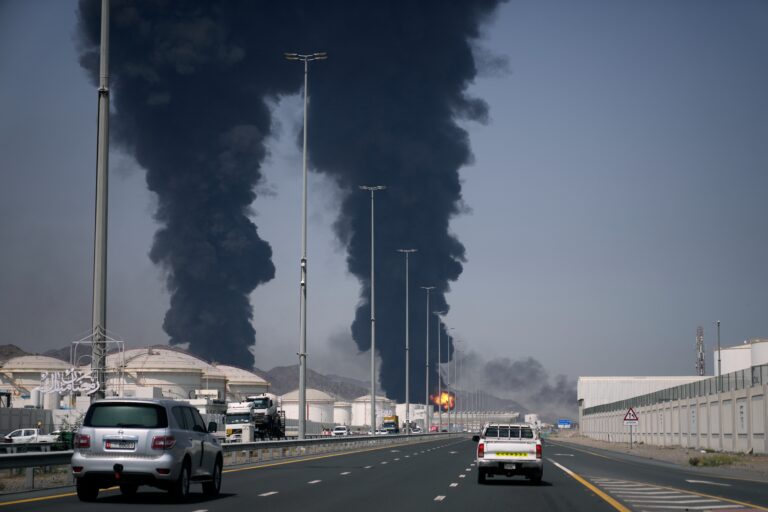
Wildfires in Canada and unseasonably high temperatures in parts of Europe are being blamed on climate change, further escalating the frenzied sense of urgency propounded by governments, activist groups and the mainstream media to “do something” about carbon emissions. In Canada, it seems no volume of emissions is too small to worry about. B.C. taxpayers, for example, will be paying an estimated $25 million to connect cruise ships docking in Victoria to electric shore power so the ships’ diesel generators can be shut down. This is surely establishing a world record in the cost per unit of avoided emissions.

Speaking of world records, our country is on also on-track to establish a much larger cost record on emissions reductions – spanning the entire nation – through a combination of ever-rising carbon taxes on motor fuel and deliberate debilitation of the oil and natural gas industry, which contributes Canada’s largest share of both GDP and export revenue.
Motorists in B.C., Manitoba, Ontario and Quebec are already paying average federal and provincial gasoline and diesel fuel taxes of 15.4 cents/litre plus carbon taxes of 14 cents for a total of 29.4 cents/litre (Alberta’s government is currently foregoing the provincial tax component in an effort to help consumers). The federal carbon tax is scheduled to increase to 37 cents/litre by 2030, taking average gasoline taxes to 52.4 cents/litre.
But that’s not enough for Trudeau-ite zealots. The feds are also imposing a scheme called the “clean fuel standard,” which came into force on Canada Day requiring providers of motor fuels to progressively reduce the “carbon intensity” of their products. Environment and Climate Change Canada says the clean fuel standard will increase gasoline costs by 17 cents/litre and diesel fuel by 16 cents/litre.
Six provinces – the four Atlantic provinces, joined by Saskatchewan and, just last week, Alberta – have banded together at the 11th hour to push back against the long-planned scheme. “Canadians are already struggling with high inflation,” wrote Rebecca Schulz, Alberta’s Minister of Environment and Protected Areas, in a letter to federal Minister of Environment and Climate Change Steven Guilbeault on June 29. “Adding fuel to the fire by hiking the cost of gasoline and diesel will be devastating.” While these six provinces are to be applauded, they may not get far. Guilbeault is a hardcore ideological green zealot and unlikely to be moved by questions of practicality and economics. If the provinces try the legal route, they’ll be up against a Supreme Court of Canada that usually sides with the federal government against the provinces in jurisdictional disputes. Lastly, the Atlantic provinces are perennially vulnerable to being bought off or bullied by Ottawa, which would fracture the current alliance.

Adding all the aforementioned taxes together means that motorists in provinces making up 80 percent of Canada’s population will be paying average motor fuel taxes, plus artificially raised costs, of 69.4 cents/liter by 2030. In the U.S., by contrast, total federal and state gasoline taxes average just 44.6 cents per U.S. gallon (about 11.7 cents per litre), with absolutely no sign of increasing. Looking province-by-province, this item from the Canadian Taxpayers Federation notes that the costs will be highly uneven geographically, ranging from “just” $384 per average household annually in B.C. and $436 in Quebec all the way to $1,157 in Alberta.
Not surprisingly, the Parliamentary Budget Officer has concluded that these rising motor fuel taxes are “broadly regressive,” meaning that the economic impact will fall disproportionately on lower-income people already struggling to pay the rising cost of groceries and other necessities. His report estimates that lower-income people will be paying 0.6 percent of their annual income just on these increases in fuel taxes. And the cost of all their necessities will, in turn, be driven even higher by carbon taxes levied on the fuels used in their production and delivery. How ironic that a self-described “progressive” Liberal government kept in power by the deeply socialist NDP – both of which are allegedly dedicated to protecting the poor – is fighting a war on carbon emissions on the backs of those who can least afford it.

And speaking of people who can least afford the carbon taxes, a just-published study from the Canadian Energy Centre, entitled How will Atlantic Canada fare under the carbon tax? found that the two most populous Maritime provinces will be the hardest hit. Nova Scotia’s reliance on power generated from coal (which is even more heavily targeted by carbon taxes than oil and natural gas) will see its costs to produce electricity rising by an estimated 109 percent, while power production costs in New Brunswick will rise by 42 percent.
That’s the direct impact on individual Canadians. What about damage to the businesses that employ them? Members of the Canadian Federation of Independent Business (CFIB) struggling to recover from the pandemic now face bankruptcy due to the year-end deadline to pay back Canada Emergency Business Account loans. And by “members,” we’re not talking about a few dozen or few hundred businesses – which would be bad enough. The CFIB estimates that a staggering 250,000 Canadian small businesses are at risk of failure in our post-Covid-19 era of alleged growth and recovery. Ironically, escalating federal fuel taxes imposed by the same government they are required to repay are raising virtually all of their operating costs at a time when many teeter on the brink of bankruptcy.
Then there’s the impact on our exporters. Cross-border trade with the U.S. accounts for the lion’s share of our exports. Business investment per worker is an important predictor of economic prosperity and competitiveness. A just-published study by the Fraser Institute found that Canadian business investment per worker was $14,687 in 2021 compared with $26,751 in the U.S. Rising carbon taxes are certain to widen that gap, driving more Canadian factories south of the border – and further driving down our living standards.

But will all this economic sacrifice make any difference whatsoever to climate change? Hardly. First, Canada accounts for only 1.6 percent of global carbon emissions. Of that, cars and trucks account for about one-eighth, or just 0.2 percent. Meanwhile, Canada imports most of its manufactured goods (including many of the components and equipment needed to generate our supposedly “green” wind and solar energy) from China, a country that generates by far the largest share – 27 percent – of global carbon emissions.
Calculations that I’ve performed using data from the Government of Canada’s Greenhouse Gas Emissions website show that, if all our gasoline and diesel-powered cars and trucks were taken off the road for one year, the total emissions avoided would offset China’s emissions for just 58 hours. But where are the calls for a carbon-intensity tax on Chinese imports?
 Calculations performed by the author using Government of Canada data. Where, he wonders, are the calls for a carbon-intensity tax on Chinese imports? Instead, the Trudeau government makes excuses for China. (Source of graphic: C2C Journal)
Equally if not more important, the scientific evidence is overwhelming that wildfires both in Canada and worldwide are actually in a multi-decade-long period of decline in number and total area burnt per year. Even the Intergovernmental Panel on Climate Change, the source of “official” science for the climate-obsessed, declines to attribute wildfire patterns to rising greenhouse gas emissions. This recent article in the Financial Post by statistical expert Ross McKitrick has much more on these points.

How ironic that a nation with one of the world’s greatest endowments of energy resources – including natural gas that, if exported, could help other countries reduce their carbon emissions – deliberately drives the costs of energy to among the world’s highest. It brings to mind the ancient Japanese practice of Hara-Kiri, meaning “disembowelment with honour.” The ritual suicide of Hara-Kiri was a voluntary choice. The difference is, Canadians have no choice in the Trudeau government’s disembowelment of the country’s economic well-being.
Gwyn Morgan is a retired business leader who was a director of five global corporations.
Depicted as main image is Bubbly Self Destruction, a painting by Kelly Butz.