
Stories

End food waste, starve a dumpster diver

Matthew Lau
June 4, 2018
Another day, another crisis. Last month it was plastic straws, so many of them they are getting stuck up sea turtles’ nostrils. This month it’s “food waste” allegedly contributing to the “food insecurity” of millions of Canadians, according to a Trudeau Foundation scholar. The solution is said to be found in government intervention to reduce food waste, drawing on Indigenous knowledge and “the principles of the circular economy”. Matthew Lau is skeptical of this month’s crisis and recommended solution.
Stories

End food waste, starve a dumpster diver

Matthew Lau
June 4, 2018
Another day, another crisis. Last month it was plastic straws, so many of them they are getting stuck up sea turtles’ nostrils. This month it’s “food waste” allegedly contributing to the “food insecurity” of millions of Canadians, according to a Trudeau Foundation scholar. The solution is said to be found in government intervention to reduce food waste, drawing on Indigenous knowledge and “the principles of the circular economy”. Matthew Lau is skeptical of this month’s crisis and recommended solution.
Share on Facebook
Share on Twitter

If Smith can’t afford a new bicycle, is it because Brown owns two? If Smith’s bookshelf is empty, is Brown’s complete Margaret Atwood collection the reason why? If Smith has no new suits, is it because Brown has four Armanis hanging in his closet? And if Smith can’t afford three square meals a day, is Brown’s habit of wasting food to blame?

The last question has been pondered at length by Tammara Soma, research director at the Food Systems Lab at the University of Toronto. In a recent article published in Policy Options, Soma estimates the value of annual “food waste” in Canada at $107 billion, and alleges that this is a contributing factor to four million Canadians living in households that suffer from “food insecurity”. (A household is defined as food insecure if it “lacks money to purchase food, misses meals to cut costs, reduces food intake, or compromises the quality of the food it consumes.”)

Now you might expect Soma, who is also a Doctoral Scholar with the Pierre Elliot Trudeau Foundation, to recommend taking from the food-rich and giving to the food-poor. She carefully notes, however, that simply redistributing excess food from the wasters to the hungry is a bad solution.

Such a solution wouldn’t work in the long run, is unsustainable, and offends the dignity of the poor by treating them as a waste bin into which the rich dump their unwanted food. Instead, writes Soma, “We need to pause and go back to our collective creativity to truly understand the root cause of the problem.”

Whatever “collective creativity” is, surely it does not take much of it to figure out that poor people would be better able to afford food if they had higher wages and better jobs. But even if they did, Soma argues that “it is impossible to ignore the fact that there is also a significant amount of food wasted” – and this is a critical problem requiring urgent attention and action.

Soma’s recommended solution is an economic transformation away from our current “paradigm of wastefulness into a paradigm that is based on the principles of the circular economy. In essence, we need to close the loop between the production and consumption in our food system.”

Just as “Indigenous knowledge” will be part of Ottawa’s proposed new assessment process for pipelines and other resource development projects, Soma holds up the Indigenous principle of respect for plants as an example of how to reduce food waste: “From a policy perspective, ensuring collaboration with Indigenous elders, Indigenous enterprises, and Indigenous knowledge keepers is key to developing a framework of food waste prevention and reduction that is in tune with the principles of the Truth and Reconciliation Commission.”

Indigenous wisdom won’t solve the problem on its own, however, so corporate welfare for food innovation is also suggested as an appropriate government action to nudge private sector food retailers and restaurateurs into wasting less food.

These efforts might possibly reduce food waste, but of course would do nothing to reduce hunger. After all, Smith’s hunger can no more be blamed on Brown’s food waste than Smith’s lack of bicycles, books, and suits can be blamed on Brown’s abundance of these goods. Just as Brown’s latest bicycle purchase does not deprive Smith of bicycles, Brown’s food profligacy is not the source of Smith’s hunger pangs.

Indeed, bicycles, books, and clothing are widely available to the vast majority of Canadians for the same reason that the most extreme forms of hunger have been nearly eradicated in Canada and throughout the developed world. Both are the happy consequences of capitalism and private industry.

However, when government interferes with private industry in attempt to reduce food waste and food insecurity, the inevitable result will surely be more waste and not less.

Grocery stores, restaurants, and households only discard food when it is more economically advantageous – in other words, requires less resources – to produce or acquire new food than it is to salvage old food. Any government action to salvage old, unwanted food will consume more resources and exacerbate the “paradigm of wastefulness”.

It’s not just wonky left-wing Trudeau Foundation scholars who are advocating for bigger government and more economic intervention to reduce food waste. Recently Toronto Mayor John Tory declared “Stop Food Waste Day in the City of Toronto.”

But there is possibly one economic reason for the mayor to order his citizens to stop throwing out food. A recent news video featured a raccoon breaking into one of the City of Toronto’s new household green food waste bins. The bins were supposed to be “raccoon-proof,” and cost taxpayers $31 million. If Torontonians threw out less food, maybe the city could save some money on the next green bin upgrade.

Love C2C Journal? Here's how you can help us grow.

More for you

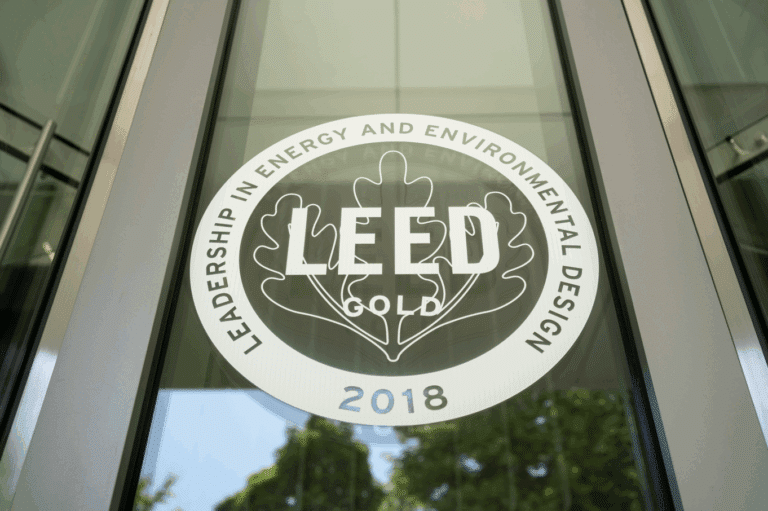
The Ultimate Green-Washing: how LEED certification raises construction costs and worsens housing affordability while sidelining genuinely sustainable architecture.

The Ultimate Green-Washing: The False Promise of LEED Certification

Builders, developers and politicians have all avidly pursued LEED certification of major buildings and housing over the past several decades. Meant to be the pinnacle of “green” construction standards, LEED demands not just energy efficiency but the pursuit of many nakedly ideological goals like public transit use and even social equity. And its effects go far beyond virtue signalling and woke positioning. As this investigation by engineer Greg Wilson reveals, not only does LEED certification drive up construction costs and make housing affordability even more problematic, but buildings constructed to display its contradictory desires often consume more energy than traditional ones. Wilson calls for a return to sanity and a true form of sustainability: buildings that work well and will last for centuries.

B’nai Brith Canada and other Jewish groups back Canada’s “anti-hate” laws, including the Combatting Hate Act and Online Harms Act – a bet on state power that Ezra Levant and John Carpay warn will backfire.

Misplaced Faith: Why B’nai Brith Canada and Other Jewish Groups Should Oppose “Anti-hate” Laws

That free speech has been fundamental to Judaism for over 3,000 years is especially admirable considering the innumerable anti-Semitic attacks that uncontrolled public discourse has emboldened over the centuries. The courage it takes to defend that principle in present-day Canada is beginning to fray, however, as prominent Jewish organizations like B’nai Brith Canada are backing Ottawa’s recurring expansion of “anti-hate” laws – most recently with the Combatting Hate Act and Online Harms Act. But such legislative cudgels never work, writes Lynne Cohen in this originally reported essay – and often end up being used to batter their original proponents. Seeking safety behind the power of the state, Cohen argues, is exactly the wrong approach. Free speech can be messy, unpleasant – and very hard to extend to one’s enemies – but the alternative is far worse.

“First One to Shine”: Reflections on My Indian Residential School Experience

If you want to learn the truth about a time and place, it would make sense to ask some of those who were there. In this heartfelt memoir, Elaine Ayoungman Clifton, who was born into the Siksika First Nation near Calgary, tells a story today’s activists don’t want you to hear. Far from an instrument of repression and evil, the Indian Residential School she attended for a decade was warm and welcoming, the teachers caring and conscientious. They instilled in her a love of reading, did not try to crush her language and culture, and did not try to separate her from her large family. “I am grateful for what they taught me and the care, friendship and love they gave to me over many years,” Ayoungman Clifton writes. If Canadians really want to respect the lived experience of all Indigenous people, hers is an authentic voice we should listen to.

More from this author

Suffer the Little Children: The Liberals’ $10-a-Day Childcare Disaster

Waiting lists stretching years. Plummeting quality. Outraged parents. Providers slowly strangled by red tape. The federal Liberals’ vaunted $10-a-day childcare program has proved an expensive disaster. Five years in, Matthew Lau digs into the many problems and inequities this landmark social policy has delivered. Lau finds B.C., which had a three-year head start on the rest of the country and an enthusiastic NDP government leading the way, in the worst straits of all. With an irretrievably flawed system clearly failing Canadian families, Lau argues that Prime Minister Mark Carney should pivot to a fairer, cheaper and more effective alternative.

Let Free Markets Reign: How Capitalism Protects Workers, Consumers and the Environment

It has become widely accepted that capitalism has failed – that free markets exploit workers, hammer consumers and can’t be trusted as the bedrock of a liberal democracy. It’s why an unrepentant “democratic” socialist, Zohran Mamdani, can be elected mayor of New York and why Mark Carney can produce a budget with massive spending and increased government meddling yet still be hailed as a prudent manager. Matthew Lau isn’t having it. In this incisive critique, Lau demolishes four myths driving the modern attack on capitalism and explains how it is only free markets that make people richer, happier and more equal.

Something to Cry About: The Disastrous Rollout of Canada’s $10-a-Day Childcare

Low prices and high volumes can be a successful business model in the right hands. Just think Costco or Walmart. But should anyone trust government to pull off such a strategy? As the early returns on the Trudeau Liberals’ $10-a-day childcare program reveal, Ottawa is utterly incapable of delivering on such a promise. While offering childcare at a fraction of its true cost has led to a massive increase in demand, the country is now beset by disastrous childcare shortages and ever-lengthening waiting lists. In fact, more parents are looking after their own kids at home now than was the case in 2019. As Matthew Lau reports, there’s a solution to Canada’s childcare supply woes, but the Liberals refuse to consider it.