Coronavirus Isolation

Life Interrupted – Again: On Being a Millennial in a Time of Pandemic

Aaron Nava
April 8, 2020
No postwar generation has endured more delays and interruptions than the Millennials. A lack of permanency − in jobs, housing, education, relationships and everywhere else – is often considered their defining characteristic. So how are the cataclysmic disruptions of the coronavirus affecting Canada’s Millennials? Aaron Nava offers a revealing personal take on the generational costs imposed by social distancing and economic shutdown. And manages to find a welcome message of hope.
Coronavirus Isolation

Life Interrupted – Again: On Being a Millennial in a Time of Pandemic

Aaron Nava
April 8, 2020
No postwar generation has endured more delays and interruptions than the Millennials. A lack of permanency − in jobs, housing, education, relationships and everywhere else – is often considered their defining characteristic. So how are the cataclysmic disruptions of the coronavirus affecting Canada’s Millennials? Aaron Nava offers a revealing personal take on the generational costs imposed by social distancing and economic shutdown. And manages to find a welcome message of hope.
Share on Facebook
Share on Twitter

When the first case of COVID-19 hit Ottawa on Wednesday, March 11, and public health experts told everyone to head indoors and socially isolate themselves, I obeyed. Despite the obvious inconvenience, it felt virtuous to be sacrificing something for a higher purpose and the greater good. And I certainly wasn’t alone. Aside from essential workers, it seems the most important thing Canadians can be doing right now is staying away from each other – regardless of one’s life stage or situation.

As a Millennial, I recognize that I’m not a member of the highest-risk category. According to credible global statistics, the mortality rate among those infected aged 80 and over is nearly 14 percent, compared to 1.4 percent for the population-at-large. And while I’m thankful that my immediate family has been spared so far, the broader non-medical implications arising from the coronavirus are also unequally distributed across the generations. 

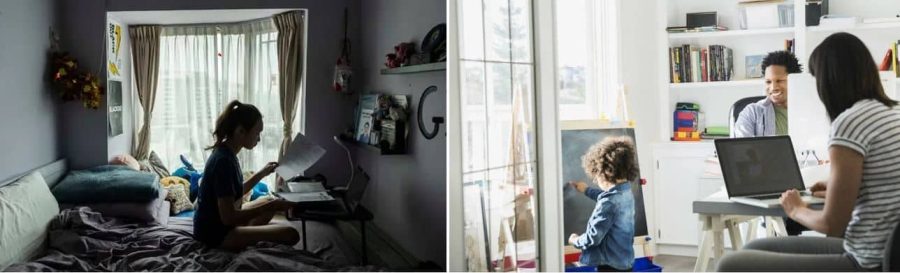
Experiences vary: Social isolation feels quite different for single Millennials compared to Boomer and Gen Z families.

For a comfortable and secure Boomer or Gen Z nuclear family with ample space at home, a full house of children to occupy and amuse each other and a home office to retreat to, the hardship of social isolation will be considerably different from that experienced by my generation. Many of us live alone in small rental apartments and rely on public spaces for all our in-person socialization. Physical distancing and social isolation effectively mean we’re cut off from face-to-face contact. 

Millennials have a reputation for bemoaning the lack of permanence in our lives, our jobs, our relationships, our housing options and on and on. And while long-term goals are not top-of-mind for most people right now, many of the things I care deeply about have been delayed yet again. I suspect the same is true for a lot of others in my cohort.

Earlier this month I finally received my official offer from the federal government for a full-time contract position with Natural Resources Canada. While the letter had taken longer than expected to arrive, its appearance meant I would soon be leaving gig work behind and starting a career. But as the panic unfolded, my start date of April 6 was pushed back to April 14 , then May 4. In all likelihood, it will be delayed even further. Perhaps indefinitely. For now, it’s back to the freelance grind.

And while learning French is essential to keeping my new job, I cancelled my French lessons at Algonquin College. This was a hard decision at first, but attending class in a small room with a couple dozen students closely packed together just seemed too risky to me. A few days later, my decision became rather less anguished as classes were suspended, along with all other schooling in the province. For now, I’m listening to French podcasts and trying out online programs.

xMemories of a bygone age: Millennials have typically depended on public spaces for their physical interactions.

 One of my hobbies is playing bass guitar and singing in a cover band. We’d been looking forward to playing our first show soon, but in mid-March our lead singer didn’t join us for practice because she’d been to see a show earlier that week and didn’t want to risk infecting us. We’re still working individually on our song list (including this early Boomer classic), but we’ve agreed to postpone practices until the quarantine measures are lifted.

Then my sister invited me to dinner at her place; I’d figured a meeting with just the two of us would be an acceptable risk. (Though I’d question that now.) But that afternoon, she called to warn me that her boyfriend, who was with her that week, had come down with a cold of some kind. She asked if I still wanted to come to dinner. I decided against going. 

I’d been looking forward to attending some social events on Meetup and maybe finding myself a date. But all these activities have been cancelled too. I can still use dating apps, and the thought of messaging a woman I wouldn’t meet for several weeks – maybe developing a Jane Austen-style relationship, as if through handwritten letters – had some initial appeal. Maybe the dating market would finally swing in favour of someone articulate like me! But I haven’t had luck with that either. I guess meeting someone special will have to wait, as well.

xAdvantage Jane Austen: Finding love in the time of COVID-19 means writing letters instead of arranging meet-ups. (A scene from the 2008 movie Miss Austen Regrets with Olivia Williams as famous letter-writer Jane Austen.)

I’ve also stopped going out to play Magic, a trading card game I play about once a week at local tournaments and with friends. I tried to capture some of the experience by watching people play the game on Twitch (a streaming app), which is fun up to a point. Normally when I’m indoors for a while, I go through my card collection to improve my decks for future games. But since I won’t be meeting anyone for the foreseeable future, my cards have been collecting dust.

Like many Canadians, I’ve been smoking more weed during my isolation. These evenings, spent watching Netflix or playing a newly-downloaded video game, are fine ways to pass the time when you’re not planning to accomplish much. They say it’s a bad sign if you’re getting high or drinking alone, but lately that’s been the only way to do it in my tiny apartment.

xWatching Netflix alone, smoking weed and staring at your phone are fine distractions when you’re not planning to accomplish much, but not very satisfying as long-term goals.

I’ve had signs of carpal tunnel syndrome since starting a desk job last fall. I’ve made some changes, but most of the things I want to do indoors strain my wrists — chores, using my computer, playing video games, doing push-ups, reading books, and especially using my damned smartphone. According to my usage logs, my phone use was down by 50 percent the week I started isolating − to 2 hours, 9 minutes per day as I tried to control myself. But the device connects me with important distractions, and it’s become the primary way I reach my family and friends. I can’t seem to put it down. 

Before the COVID-19 craziness, I was exercising regularly in my living room and successfully dieting; I’ve lost 30 pounds since January. (Yes!) But after having several Greek platters delivered to my apartment to supplement my dwindling supply of groceries, I entered an extended period of physical distancing – from my diet. I’ll have to figure out grocery pickup next time, but with a more serious application of healthy habits, I should be able to stave off the so-called “Quarantine 15”. Others in my situation who rely on gyms to work out or who snack at Starbucks as their “third space” are probably having a much tougher time.

xKeeping the Quarantine 15 at bay: Author Aaron Nava sticks to his regular exercise routine.

To be honest, isolation hasn’t been all bad. I’ve kept in touch with family, and that’s been very nice. I’ve had video chats with both sides of my family, sometimes with as many as a dozen people at a time. These group contacts have the feel of in-person social gatherings, which I thought would be harder to replicate digitally, and I’ve chatted with many relatives I haven’t spoken to in a while, who now are as accessible as anyone in my own city. So that’s been a lot of fun, even though everyone I talk to is disappointed to be stuck inside. Overall, life is now more about killing time than self-improving. I used to think I was pretty good at relaxing in my downtime, but the added pressure of social isolation has replaced the pressure to succeed. The best I can say is that I’m enduring. 

xVideo chats have become a vital lifeline for isolated Canadians.

 But no one wants to simply endure. At some point we will need to start growing again. And for Millennials, who’ve already suffered so much delay and deferral, particularly in the wake of the 2008 financial crisis and the backlog of Boomers in the workforce, the COVID-19 interruption seems like one more generational sucker-punch. Our careers are on hold. Relationships are on hold. Hobbies and meaningful social interaction (except the digital kind) are on hold. Even our endless parade of further education is on hold. 

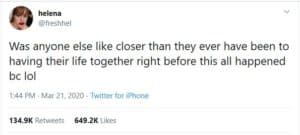
If you’ve already got a career, a family, a nice house and the rest of your life in order, social isolation entails a certain set of obstacles and inconveniences. Being placed in coronavirus stasis before your life is even on track means something completely different. If ever there was an excuse for Millennials to slip into self-pity – and have we ever needed an excuse? − this is it. “Was anyone else like closer than they ever have been to having their life together right before this all happened?” asked one much-reposted Millennial on Twitter last month. So I’m clearly not the only one. It seems that we Millennials were just shaking off the last crisis only to have entered a new one. 
But this is not the time for easy excuses. To be honest, these struggles seem less and less important as the global health crisis grows. Yes, Millennials are struggling in objective terms, but relatively speaking the new restrictions and sacrifices arise from a belief that the value of human life transcends your birth year. We all need to keep that in mind. 

Unlike the financial crash, which supercharged the cultural battles of the 2010s, our current problem was not caused by institutional decay or policy failures that can be blamed on one generation or another. Social media incentivize picking fights to gain attention, but this crisis has sucked all of the air out of that room. Look at how short-lived and embarrassing the “boomer remover insult has proven to be, especially compared to the long, drawn-out conflict over the earlier “ok boomer quip. This is no time for intergenerational warfare. 

I also take some comfort in my generation’s flexibility. It’s a defining characteristic of ours. We’re the ones cobbling together multiple gigs to make a living, or juggling a wide variety of activities, causes and crusades, or monitoring a host of different social media feeds and trends. We’ve been forced to constantly adapt to a changing world. And this is just one more really big change. As for enforcing the rules of social isolation, no group is better suited to calling out the faults of others as a way to signal their own virtue than Millennials. Expect to see us policing the protocols of pandemic behaviour with extreme vigour. 

xNot the time for intergenerational warfare: Despite the hardships faced by Millennials, society’s focus must be on helping those facing the greatest medical risks.

When I get frustrated about living in isolation, or start thinking about what I’d be doing if people could still gather in groups of five or more, I try to remember that we’re doing this so that we can all return to that world as soon as possible, with as many of our older loved ones alive and well as possible. Delaying so much of what I’ve been working towards has been hard, but it is likely even harder for people who struggle at the best of times. So reach out however you can to friends and loved ones. Especially the elderly. Or those with mental health issues. They need support. In this time of isolation, we all need each other more than ever.

Aaron Nava is a writer, social media and political manager living in Ottawa.

Love C2C Journal? Here's how you can help us grow.

More for you

The Ultimate Green-Washing: how LEED certification raises construction costs and worsens housing affordability while sidelining genuinely sustainable architecture.

The Ultimate Green-Washing: The False Promise of LEED Certification

Builders, developers and politicians have all avidly pursued LEED certification of major buildings and housing over the past several decades. Meant to be the pinnacle of “green” construction standards, LEED demands not just energy efficiency but the pursuit of many nakedly ideological goals like public transit use and even social equity. And its effects go far beyond virtue signalling and woke positioning. As this investigation by engineer Greg Wilson reveals, not only does LEED certification drive up construction costs and make housing affordability even more problematic, but buildings constructed to display its contradictory desires often consume more energy than traditional ones. Wilson calls for a return to sanity and a true form of sustainability: buildings that work well and will last for centuries.

B’nai Brith Canada and other Jewish groups back Canada’s “anti-hate” laws, including the Combatting Hate Act and Online Harms Act – a bet on state power that Ezra Levant and John Carpay warn will backfire.

Misplaced Faith: Why B’nai Brith Canada and Other Jewish Groups Should Oppose “Anti-hate” Laws

That free speech has been fundamental to Judaism for over 3,000 years is especially admirable considering the innumerable anti-Semitic attacks that uncontrolled public discourse has emboldened over the centuries. The courage it takes to defend that principle in present-day Canada is beginning to fray, however, as prominent Jewish organizations like B’nai Brith Canada are backing Ottawa’s recurring expansion of “anti-hate” laws – most recently with the Combatting Hate Act and Online Harms Act. But such legislative cudgels never work, writes Lynne Cohen in this originally reported essay – and often end up being used to batter their original proponents. Seeking safety behind the power of the state, Cohen argues, is exactly the wrong approach. Free speech can be messy, unpleasant – and very hard to extend to one’s enemies – but the alternative is far worse.

“First One to Shine”: Reflections on My Indian Residential School Experience

If you want to learn the truth about a time and place, it would make sense to ask some of those who were there. In this heartfelt memoir, Elaine Ayoungman Clifton, who was born into the Siksika First Nation near Calgary, tells a story today’s activists don’t want you to hear. Far from an instrument of repression and evil, the Indian Residential School she attended for a decade was warm and welcoming, the teachers caring and conscientious. They instilled in her a love of reading, did not try to crush her language and culture, and did not try to separate her from her large family. “I am grateful for what they taught me and the care, friendship and love they gave to me over many years,” Ayoungman Clifton writes. If Canadians really want to respect the lived experience of all Indigenous people, hers is an authentic voice we should listen to.

More from this author

A Kingdom of One: The Great Loneliness Pandemic and What (Not) to do About it

In a digitized world where you can connect instantly with almost anybody – often by mere voice command – it seems hard to imagine anyone could ever feel alone. Nevertheless, our era’s widespread and chronic sense of loneliness is inescapable. Despite our natural human drive to seek happiness and fulfilment through contact with others, Canadians find themselves suffering from the physical and mental damage wrought by social isolation. But is this a problem government can fix? Aaron Nava lays out the evidence of our “other” pandemic – loneliness – and why some experts think we need a national strategy to help Canadians make friends again.

Advertising Our Diversity: What TV Commercials Say About Mixed Marriages in Canada

From its origins flogging patent medicines in the early 19th century, corporate advertising has never been just about the product. Rather, it is meant to promote a sense of awareness and desire. With this in mind, what should we make of the recent deluge of TV commercials that suggest Canada is populated almost entirely by mixed-race families? With the fantasyland of advertising as his starting point, Aaron Nava probes the state of intermarriage in Canada, looking closely at our statistical record, what it means on a personal level and what it holds for our country’s future.

Entertainment Tribalism and the Loss of Common Ground

Politics may divide us, but what brings us together? With traditional cultural institutions such as religion in decline, sports and entertainment were filling the breach – generating a set of shared experiences crucial to a cohesive society. Lately, however, these pastimes have become poisoned with the same partisan rancour and division familiar to politics and the news media. But as conservative entertainers find themselves cancelled by corporate wokeism, their fans are finding new ways to push back. As right and left seek their own separate sources of entertainment, Aaron Nava ponders whether our future might even include a common culture.