Stories

Atheism’s artificial morality chatter

Mark Milke
April 8, 2010
If, as atheists claim, there is no other reality beyond our physical world, why are they so intent on using moral language? C2C's editorial board chairman delves into the morality chatter...
Stories

Atheism’s artificial morality chatter

Mark Milke
April 8, 2010
If, as atheists claim, there is no other reality beyond our physical world, why are they so intent on using moral language? C2C's editorial board chairman delves into the morality chatter...
Share on Facebook
Share on Twitter

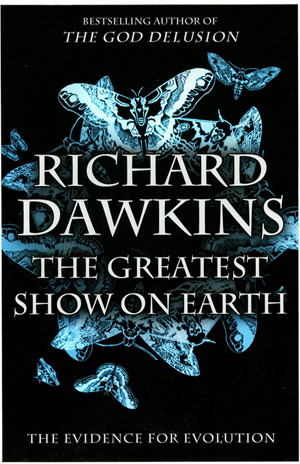
In his recent look at the case for evolution in The Greatest Show on Earth: The Evidence for Evolution, Richard Dawkins ponders why an evolutionary explanation took so long to arrive.

He surmises maybe it was due to what he labels religious indoctrination. Or perhaps the mismatch between our short lifespan and the immensity of natural history’s timeline.

Tempting as these explanations are for Dawkins, he instead places the blame elsewhere — on the ancient Greek philosopher, Plato, and his notion that what our eyes observe are mere imitations of a more real world, one which exists apart from our physical one.

For example, we call a painting beautiful but conceive that beauty exists as a more perfect concept “out there,” apart from any physical limitations. Problematically, for understanding evolution, the notion that perfection of some sort exists trips us up.

Quoting from Ernst Mayr’s work, Dawkins gives the example of rabbits. If we treat rabbits akin to a mathematical formula — perfect “rabbitness” is possible — we will find it difficult to accept evolution. Such imagining of perfection, Dawkins writes, “regards any change in rabbits as a messy departure from the essential rabbit.”

As he points out, this is opposite the evolutionary view of life, where descendants depart from the ancestral form and each departure becomes a potential ancestor to future variants.

In other words, the point in science is not to imagine perfect “rabbitness,” or perfect anything else; it is to accept that the physical world varies and evolves. To imagine perfection as desirable or possible misses real-world messiness, including our evolutionary history.

So what has this to do, this Easter season, with religion? Plenty. Religion by its nature asserts the existence of another realm beyond our physical world.

Dawkins would argue this belief, this imagining of another reality, is what lands us in trouble, and not just for understanding evolution but for life. Insofar as men and women try to live up to a code they think delivered by God, they might ignore the world they can see — the real and only one according to the atheist.

In extreme conceptions of another reality — my example here, not his — think of theocratic states such as Calvin’s Geneva or Saudi Arabia’s fundamentalist approach to Islam; there, human beings are allowed few foibles.

They are instead forced to live in obedience to extreme dictates, conceived of as following the perfection imagined in this other, spiritual world, the one created by God.

Dawkins is persuasive as an observer. His analysis of why evolution took so long to appear as an explanation is convincing. His understated belief (in this book) in how thoughts of another realm can provoke extremism in this one is also not far off the mark, though that applies not just to some on the extremes of religious communities; atheistic Marxists spent the 20th century forcing entire populations into their imagined ideal.

But Dawkins creates a trap on another level. Atheist disbelief in another realm doesn’t help defend morality in general or give atheists or anyone else a clue as to how to determine wrong and right.

Faith traditions, obviously, have less of a problem here on specifics. For example, in another new book, The Bishop or the King, written by an Anglican priest and a friend, Ron Corcoran describes how and why he left the Anglican Church of Canada. He simply couldn’t agree to where the Anglican communion was heading on gay marriage.

For those outside of any faith, or even within faith depending on one’s views, such specific debates over morality are not problematic.

The Platonic ideal here — believe in a book inspired by God and how it forbids homosexual acts — can be dismissed as artificial. The created injunction ignores the real world — some people are gay.

So that approach works, most days, in a society committed to pluralism and separation of church and state. But it doesn’t work on a deeper, more general level, not for someone who asserts no other realm exists, Platonic or divine, and yet uses the language of good and evil.

The use of moral language presumes a standard, another reality apart from the physical world. And it’s not sufficient to offer the reply that morality evolved, or that human beings are hardwired for co-operation, or that morality is a reflection of our need for self-preservation.

Those are only descriptions of morality’s journey, not justification for the use of the language of good and evil; not if the terms are meant to be more hefty than transitory, more consequential than just a passing dependency on one’s own bias or culture.

I’m not claiming atheists cannot be moral. Or that one should believe in God, or because without that, our moral language is unsupportable. Or even that atheists shouldn’t use such language.

My observation is simply that despite his other insights, when Dawkins uses the language of morality, it carries little weight.

The language of morality used by an atheist is as artificial as the very realm which Dawkins claims is only in our imagination.

Love C2C Journal? Here's how you can help us grow.

More for you

The Other Right to Choose: Reversing the Trudeau Immigration Fiasco

Canada’s immigration system was once the envy of the world. Based on the notion that those who get into the country are those who determine its future, the system chose people best able to contribute. Then the Trudeau Liberals blew it up, opening the gates to just about anyone – including literal terrorists – wreaking economic havoc and breaking Canadians’ faith in the value of citizenship. John Weissenberger, who served as chief of staff to the federal immigration minister in Stephen Harper’s Conservative government, has watched it happen with growing dismay, and argues for a return to sanity – centred on the sensible “points” system that served Canada so well for decades.

Suffer the Little Children: The Liberals’ $10-a-Day Childcare Disaster

Waiting lists stretching years. Plummeting quality. Outraged parents. Providers slowly strangled by red tape. The federal Liberals’ vaunted $10-a-day childcare program has proved an expensive disaster. Five years in, Matthew Lau digs into the many problems and inequities this landmark social policy has delivered. Lau finds B.C., which had a three-year head start on the rest of the country and an enthusiastic NDP government leading the way, in the worst straits of all. With an irretrievably flawed system clearly failing Canadian families, Lau argues that Prime Minister Mark Carney should pivot to a fairer, cheaper and more effective alternative.

From the Strait of Hormuz to Cuba, Net Zero is Dying – Mark Carney Needs to Let Go

After decades spent pursuing net-zero dreams at great cost to their economies and social fabric, most of the world’s industrialized nations are waking back up. War with Iran and the threat of tanker blockades have everyone worried about oil and natural gas supplies and clamouring for energy security. Or nearly everyone. Not Mark Carney, though. Canada’s prime minister keeps pushing industrial carbon taxes higher and insists on wasting taxpayers’ money on windmills that make no difference. Gwyn Morgan recalls his own observation of the global warming movement’s original rise, its morphing into the radical “net zero” cult – and its spectacular global disintegration. It is high time, Morgan writes, that Canadians demand Carney also drop his delusions.

More from this author

Not So Beautiful Minds: Conspiracy Theories from JFK to Oliver Stone and Donald Trump

Shocking events that plunge a country into chaos or destroy a beloved leader are hard for anyone to process. The evil done is so towering it bends the human psyche to accept that the evildoer is utterly banal, a loner walking in ordinary shoes. The cause simply must befit the outcome; thus can a conspiracy theory be hatched. At other times, the cold hope of political or financial gain or simple mischief might be the source. There certainly is no shortage of conspiracy theories. Mark Milke revisits one of history’s most famous political assassinations and the conspiracy theories it spawned to illuminate the ongoing danger this toxic tendency poses to us all.

Picture of Thomas Hobbes frontispiece of Leviathan. A renowned pieceof political work on liberty

Future of Conservatism Series, Part VII: Memo to Politicians: We’re Not Your Pet Projects

Canadian conservatives have most of the summer to ruminate on what they want their federal party to become – as embodied by their soon-to-be elected leader, anyway. Acceptability, likability and winnability will be key criteria. Above all, however, should be crafting and advancing a compelling policy alternative to today’s managerial liberalism, which has been inflated by the pandemic almost beyond recognition. Mark Milke offers a forceful rebuttal against the Conservative “alternative” comprising little more than a massaged form of top-down management.

Leaders_debate_2019_canada_diversity_bias_free_speech_liberal_conservative

So Much for Diversity: The Monochromatic Moderators of Monday’s Debate

Canada is a big, diverse country by virtually any measure, from our no-longer-so-sparse population to our epic geography to the ethnic makeup of our people. Diverse in every way, it seems, except in our elites’ aggressively progressive official-think. Consistent with this is the otherwise bizarre decision to have Monday’s federal leaders’ debate hosted by five decidedly similar female journalists. Mark Milke briefly profiles the five and, more important, advances a positive alternative: five distinguished women diverse in background, hometown and, above all, thought.