Throughout human history, men and women have struggled to tear themselves free from concentrated power and its ill effects. While many people in developed, democratic and capitalist countries often take their freedoms for granted, history is filled with tyrants and bullies who stand between citizens, their freedom and their prosperity.
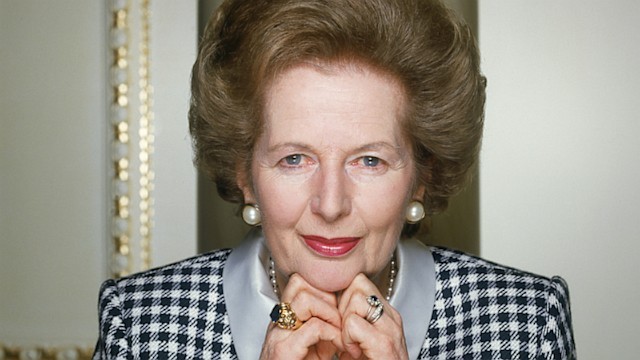
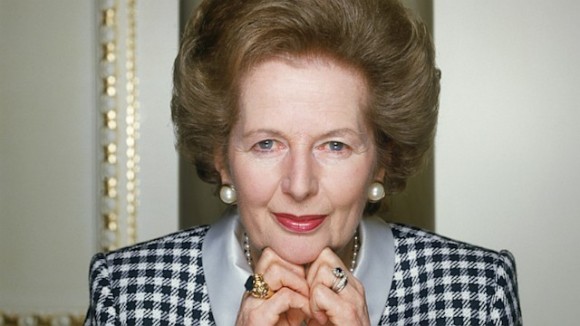
Margaret Thatcher, Great Britain’s Prime Minister between 1979 and 1990, and who recently died, understood—perhaps better than any other leader in the modern world, why governments ought not to have day-to-day control over the economic aspects of citizen’s lives.
The reason for that limited approach to government is simple: governments already have 100 per cent of the political power. By necessity, a national government also has 100 per cent of a nation’s military power. Thus, it is a grand mistake to also allow government involvement in the economic lives of citizens. Such involvement has often meant that citizens have nothing left—not only figuratively, but often literally.
In Thatcher’s lifetime, the most extreme example of the concentration of political, military and economic power was the Soviet Union. There, poverty was rampant and freedoms were non-existent.
In the West, less extreme forms of concentrated power existed, but they nevertheless also produced disastrous consequences.
For example, pre-Thatcher, the United Kingdom’s Labour party had long advocated state ownership of “the commanding heights of the economy.” That was a 1918 phrase and program of action from Vladimir Lenin; in Canada, it was adopted by the Waffle wing of the New Democratic Party in the 1970s.
In practice in the United Kingdom, this meant government ownership of major sectors and industries: those in the production of coal, iron and steel and which ran the railroads, utilities, and international telecommunications.
In the 1970s, much of the British economy was tied to government and thus to the decisions of politicians. That, and laws that gave labour leaders extreme leverage over state companies, meant regular and sometimes lengthy strikes. Strikers included miners, train staff, hospital workers, garbage collectors, truck drivers and even grave-diggers who refused to bury the dead.
The result was economic paralysis, stagnation and weakened prosperity. In 1976, the economy was so poor that Britain, once a world-spanning power, borrowed money from the International Monetary Fund to support the British pound.
Margaret Thatcher changed all that. After her 1979 election win, she set about freeing Britain’s economy. That included an attack on inflation (reduced to 2.4 per cent by 1986 from 22 per cent six years before); getting public finances under control; and cuts to high marginal tax rates (down to 25 per cent from a pre-Thatcher high of 83 per cent).
The Iron Lady also promoted private enterprise. That meant privatizing state ownership of companies in the aerospace and shipbuilding sectors. It later included returning British Telecom, British Airways, Rolls-Royce, parts of British Steel, Leyland, the airports, and later, gas, water and electricity utilities to the private sector where they belonged.
Thatcher attacked over-regulation and labour agreements that dampened the creation of new businesses, more jobs and a wider prosperity. Trade union members were given more power over union leaders (thanks to the introduction of the secret ballot, among other reforms). The British Prime Minister also cut off taxpayer subsidies to failing industries such as money-losing coal mines; she sold government housing to the (often poor) inhabitants so they could finally have property of their own and a real stake in Britain’s future.
All of it worked to restore Britain to prosperity. While Britain is currently in recession (as is much of Europe) it is better off relative to many European countries. This is so despite past attempts by the previous Labour government to undo some Thatcher policies on deficits and taxes.
Thatcher’s influence was profound. It resulted from her clear understanding about what works in the real world. That understanding had its genesis in youthful observances of how her father ran his small grocery store.
As Lady Thatcher wrote in her 1993 book, The Downing Street Years, “I knew from my father’s accounts that the free market system was like a vast sensitive nervous system.” That system, wrote Thatcher, was able to respond to events and signals all over the world. Thus, the system could “meet the ever-changing needs of peoples in different countries, different classes, of different religions, with a kind of benign indifference to their status.”
That open system, Thatcher rightly asserted, was much preferable to top-down attempts where “governments acted on a much smaller store of conscious information and, by contrast, were themselves ‘blind forces’ blundering about in the dark, and obstructing the operations of markets rather than improving them.”
As Thatcher concluded, “the [negative] economic history of Britain for the next forty years confirmed and amplified almost every item of my father’s practical economics.” Indeed—until Margaret Thatcher redirected and transformed Great Britain.
~
Mark Milke is a Senior Fellow with the Fraser Institute, the editorial board chair of C2C Journal, and author of Why Margaret Thatcher Mattered: The Iron Lady for a New Generation