Stories

WikiLeaks: Tearing at the face of diplomacy

Mark Milke
December 14, 2010
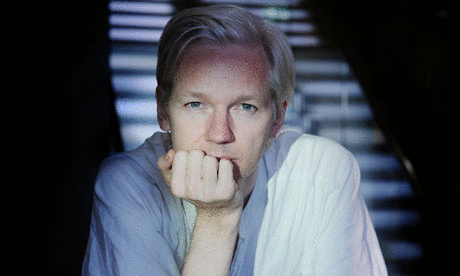
Julian Assange has made war more—not less—likely
Stories

WikiLeaks: Tearing at the face of diplomacy

Mark Milke
December 14, 2010
Julian Assange has made war more—not less—likely
Share on Facebook
Share on Twitter

Most efforts to gain a window into political affairs are useful in the effort to keep democracies and their leaders accountable. As someone who has filed multiple information requests of governments over the years, I know it doesn’t matter which party is in power, they all seek to delay requests for information that they think may affect their popularity.

So it’s no surprise some in the public welcome the disclosure of secret diplomatic cables between governments of the sort Julian Assange has just dumped into full public view over the last month. The public bias—more openness is better than less—is a fundamentally healthy impulse.


But there’s a world of difference between the information that WikiLeaks just released and the day-to-day games governments play when it comes to non-security related information. For instance, on the disclosure of Indian reserve salaries, no harm comes from transparency on politicians’ salaries; on the contrary, much good (hopefully) will result from such disclosure, perhaps more modest compensation in the future and redirected resources to those in need.


Similarly, in the case of Wiki leaks, some good will result. If we believe the secret whispers from the Saudis—not a given, since they may sometimes say what the West wants to hear—they apparently think Iran is the real problem in the region, and not as they and other Arab states so often proclaim publicly, Israel. That’s helpful. It may even reduce tensions as the nonsensical claim Israel is the problem can be punctured with such now-public information about Saudi views.


But in general, to blow open secret correspondence between diplomats risks great harm to informants. Think it interesting to know who leaked information on internal Iranian human rights abuses, Russia’s killing of journalists, or Syrian torture chambers? Those repressive regimes also would like to know; so they will now ferret out and kill those who give an accurate account of the internal dynamics of such regimes. So those channels will close up if one’s identity can’t be protected.


Imagine if, back in the Iranian hostage crisis in 1979-80, where Canada’s diplomats secretly hid American staff in our Tehran embassy, what would have happened had someone like Assange obtained and released cables that hinted what Canadian ambassador Kenneth Taylor was up to in the Canadian embassy in Tehran? The result might have been another embassy—ours—held captive by the Iranian students, or worse.


By releasing private diplomatic cables, the very point of diplomacy—the attempt to avoid letting irritations between nations spiral into war—is undermined. Diplomacy necessitates conversations with those on the other side. That includes a dance of hypocrisy some days, and frank assessments to one’s own superiors. Undermine that and the distance between peace and war is shortened.


It’s important in crises to keep talking, to not pander to immediate public opinion (which may be justifiably outraged over a recent event), and to avoid war, and even at the cost of duplicity in the public realm.


During the Cuban missile crisis, one secret deal struck by the Kennedy administration was that if the Soviets backed off from their attempt to install missiles in Cuba, the United States would, at a later date after the crisis abated, quietly remove its own missiles from Turkey. President John F. Kennedy’s administration understood not only the necessity of drawing a line in the Atlantic Ocean and enforcing a naval embargo on Soviet ships headed to Cuba—that was the “stick”; they also understood the very helpful value of the carrot of private diplomacy that offered a quid pro quo. This helped moderates in the Kremlin ward off hardliners who might have otherwise have bluffed the Americans and blundered into thermonuclear war.


Is this duplicitous? Diplomacy is that almost by definition. It is similar to social interaction that at times is necessarily so to help others save face. Only a fool would answer a woman’s query–“How do you like my new haircut?”—with anything less than an affirmative answer, even if the questioner looks as if she visited the same salon to which she normally takes her canine.


Private diplomacy allows governments to match the occasional very public and understandable outrage with creative solutions that can avoid war. That alone is worth keeping diplomatic correspondence private. Shorten the time between public outrage and the necessity for governments to act, and one risks cold hostilities becoming hot. That is to no one’s advantage.


“Hypocrisy is the tribute vice pays to virtue” someone once said. Diplomatic hypocrisy is the tribute diplomats must pay in order to gain time and slow the emotions of politicians and the rest of us in tense situations, ones that otherwise might explode. WikiLeaks has done the world no favours in avoiding such outcomes.
Love C2C Journal? Here's how you can help us grow.

More for you

Freedom Fighters: The Pushback Against Universities’ Woke Agenda

That a liar and fraud such as the late Jason Arday has become a martyr to “progressive” academics is evidence enough of how thoroughly universities have been captured by wokism. But all is not lost. Jonathan Barazzutti recently travelled to England for the annual conference of the Centre for Heterodox Social Science and spoke to those fighting back. Their weapons? Courses and workshops encouraging open inquiry, a push for policies enshrining political neutrality in institutions of higher learning and the creation of brand-new centres or entire universities dedicated to academic freedom. Much more needs to be done if universities are to rediscover the one form of diversity that really matters in higher education – diversity of thought.

Canada’s Economic Web of Woe

In these “Elbows Up” times, when so many Canadians act so eager to tout Canada’s resilience and potential, veteran business leader Gwyn Morgan points to a troubling list of economic woes that tell a different story. Canada is indeed among the world leaders – in food costs, taxation, government debt, the regulatory burden on business and the crippling shortage of affordable housing. Meanwhile, the private sector is neglected and trade talks prioritize political goals. All that, and a government that lacks the ability or courage to take effective action. It is a veritable web of woe – one in which each strand worsens the other.

A girl sits alone against a brick wall, bullied – an image of how the HWDSB treated one parent who challenged compelled speech.

School Board Bullies: One Parent’s Fight Against Compelled Speech and a Woke Education System

Catherine Kronas joined the school council at her son’s Hamilton, Ontario high school for the same reason most parents do – to have a say in their children’s education. Having read the relevant provincial legislation, Kronas thought she knew how the council was supposed to work. But rather than giving parents a voice in the school system, it turned out to be one more way for Canada’s education bureaucracy to impose its woke worldview on kids, staff and parents, including via compelled speech. In a soul-baring first-person account, Kronas reveals the many deceptive, manipulative and punitive ways in which school administrators tried to shut down her efforts to hold them to account.

More from this author

Not So Beautiful Minds: Conspiracy Theories from JFK to Oliver Stone and Donald Trump

Shocking events that plunge a country into chaos or destroy a beloved leader are hard for anyone to process. The evil done is so towering it bends the human psyche to accept that the evildoer is utterly banal, a loner walking in ordinary shoes. The cause simply must befit the outcome; thus can a conspiracy theory be hatched. At other times, the cold hope of political or financial gain or simple mischief might be the source. There certainly is no shortage of conspiracy theories. Mark Milke revisits one of history’s most famous political assassinations and the conspiracy theories it spawned to illuminate the ongoing danger this toxic tendency poses to us all.

Picture of Thomas Hobbes frontispiece of Leviathan. A renowned pieceof political work on liberty

Future of Conservatism Series, Part VII: Memo to Politicians: We’re Not Your Pet Projects

Canadian conservatives have most of the summer to ruminate on what they want their federal party to become – as embodied by their soon-to-be elected leader, anyway. Acceptability, likability and winnability will be key criteria. Above all, however, should be crafting and advancing a compelling policy alternative to today’s managerial liberalism, which has been inflated by the pandemic almost beyond recognition. Mark Milke offers a forceful rebuttal against the Conservative “alternative” comprising little more than a massaged form of top-down management.

Leaders_debate_2019_canada_diversity_bias_free_speech_liberal_conservative

So Much for Diversity: The Monochromatic Moderators of Monday’s Debate

Canada is a big, diverse country by virtually any measure, from our no-longer-so-sparse population to our epic geography to the ethnic makeup of our people. Diverse in every way, it seems, except in our elites’ aggressively progressive official-think. Consistent with this is the otherwise bizarre decision to have Monday’s federal leaders’ debate hosted by five decidedly similar female journalists. Mark Milke briefly profiles the five and, more important, advances a positive alternative: five distinguished women diverse in background, hometown and, above all, thought.