Stories

The Welfare State was Always an Illusion

Mark Milke
August 9, 2011
Some think the welfare state was the 20th century’s greatest achievement; Mark Milke thinks it was achieved by putting future generations deep in hock….
Stories

The Welfare State was Always an Illusion

Mark Milke
August 9, 2011
Some think the welfare state was the 20th century’s greatest achievement; Mark Milke thinks it was achieved by putting future generations deep in hock….
Share on Facebook
Share on Twitter

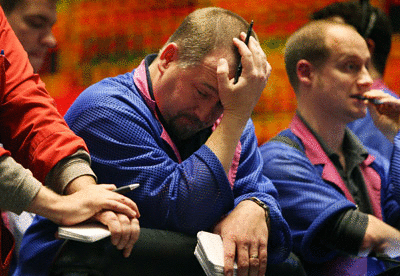
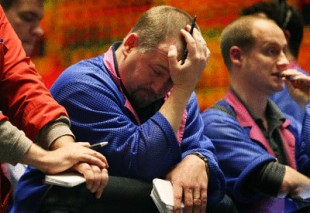
The recent stock market meltdown—a result of a credit downgrade to the U.S. government and deals to “save” American and Greek public finances which mean even more debt —should puncture the illusion the welfare state was ever a success; fact is, it was always built on borrowed time and borrowed money.
That intergenerational sleight of hand worked for a while. Successive post-war generations went to the doctor, availed themselves of government services, built roads and enjoyed other partially debt-financed benefits. Problematically, they handed part of the bill for the same to future generations. It’s akin to buying an expensive home and handing the delayed mortgage payments to your kids when they turn eighteen.

Greece is merely the most dramatic example of this intergenerational public finance “con job”. The recent European Union deal for Greece, where $109 billion Euros will be lent to tide that profligate country over yet again, is equivalent to (Canadian) $149 billion. Put another way, every Greek just borrowed another C$13,847.

To put the worldwide rise in government debt in some historical perspective, consider the debt trajectory of the U.S. and selected European countries since 1995. That’s about the time many Canadian governments began to grapple with our red ink problem.

In 1995, Greece’s net liabilities already amounted to 81 per cent of GDP. (A country’s net liabilities are arrived at by subtracting assets from liabilities; GDP is the value of a country’s economy). Back then, Canada’s net-debt-to-GDP figure was 71 per cent; Italy stood at 99 per cent; France, Germany and the United Kingdom had net liabilities of 38 per cent, 30 per cent and 26 per cent respectively. Portugal’s was 24 per cent and the U.S. debt figure was 54 per cent of GDP.

Fast forward to 2011 and all the countries on that list are deeper in debt as a percentage of GDP, save Canada: Greece: 125 per cent; Italy: 101 per cent; France 60 per cent; Germany: 50 per cent; Portugal: 76 per cent; the United Kingdom: 62 per cent; the United States: 75 per cent.

In Canada, our net liabilities are 34 per cent of GDP, substantially down from 1995, though up from the low-point in 2008 when the figure was just 22 per cent. (Between 1995 and 2008, our lowered ratio was helped both by a growing economy and some debt payback. Most other countries just kept borrowing.)

For the record, the fault for the ramped-up public debt cannot be placed on “too low” taxes. A variety of countries with widely differing tax levels all continued to borrow massively over that period.

For example, since 1995, and as a percentage of its economy, Greece’s total tax take has been about one-eighth to one-fifth higher than the United States (depending on the year). But high-tax Greece put itself into more debt as did the (relatively) low-tax U.S. Or consider the UK. Its tax rates rose steadily since 1995 but so too its red ink problem.

In other words, the assumption that higher tax revenues will save a country from its spending and borrowing addiction is mistaken. That’s not any more likely than a modest raise for a consumer maxed out on her credit cards whose real problem is overspending.

Besides, higher tax rates do not necessarily equal higher revenues when compared with a moderately taxed nation. A high-tax, inefficient tax regime can slow economic growth and encourage tax cheating and depress tax receipts—another one of Greece’s many problems, actually.

In Canada, despite our relatively low net debt-to-GDP ratio at present, in most years, our governments played the same pay-the-social-welfare-bill-forward game.

Since 1961 up to the present, the federal government ran deficits in 37 of 50 years (never mind provincial or local red ink or unfunded liabilities on top of all this). Problematically, the federal Conservatives in Ottawa are now in their fourth consecutive red ink year and forecast deficits until at least 2014/15. At that point, the federal debt will stand at $615 billion up from $457 billion in 1998, a one-third increase over that period.

Looking back over post-war years, there were always alternative policy options to the welfare state, ones that would have yet provided security to citizens in Europe, the U.S. and Canada. For starters, options included mandated private savings accounts for health and pensions. Had such accounts been started decades ago, each generation would have been forced to finance its own major social benefits through pre-funding; that would have been superior to the intergenerational transfer of wealth through the politicized tax-and-spend system.

Instead, for decades, government borrowed massively to finance current social programs out of future tax revenues and handed the bill to future generations. It led to the illusion that the welfare state was sustainable.

Mark Milke is the Alberta director of the Fraser Institute, www.fraserinstitute.org.
Love C2C Journal? Here's how you can help us grow.

More for you

Ego Over Everything: How the Progressive Fixation on Identity Perverts the Arts

Artists once understood they were serving something greater than themselves – truth, beauty, memory – things universal and transcendent. No longer. In a culture where imagination is cast as “cultural appropriation” and exploitation, what matters is not art but the artist. Ego, self-regard and “lived experience” are paramount. In this searing critique, T. G. Kelemen uses recent examples of cancellation in the arts to explain how “progressive” pieties have inverted the very foundation of the arts, fuelling not just a culture war, but a war on culture.

Culture Beyond Politics and State Control: The Life of the Apolitical Man

You may not be much interested in politics, but politics – to borrow from the famous dictum on war by Leon Trotsky – is most definitely interested in you. With land acknowledgements to stand up for, rainbow-coloured sidewalks to stride over, garbage to sort and slogans like “Elbows up!” to recite, politics in today’s world is virtually inescapable. But is there any point in even trying? David Solway argues that the answer is an emphatic “Yes”. In a transcendent essay that ranges from idyllic Aegean islands to crumbling 19th-century communes, Solway paints a vivid portrait of the nature and meaning of apolitical life in its full sense, charting its evolution and blind alleys in literature, art and real-world attempts – and issuing a rallying cry for its centrality in building and, he still hopes, saving the greatest civilization the world has ever known.

Sign on the Dotted Line: How B.C.’s Latest Indigenous Outrage Threatens Freedom of Contract Across Canada

As if the mayhem created by the 2025 Cowichan decision regarding property rights wasn’t enough, the B.C. court system has now declared its readiness to undermine legal contracts as well. As Peter Best reveals, a January 2026 decision to allow a contentious Indigenous lawsuit to proceed threatens to upend centuries of contract law. At issue is a small B.C. First Nation’s claim it has an aboriginal title right to export propane on an industrial scale, one that should overrule a signed, legal contract between the port of Prince Rupert and a billion-dollar energy project that itself is providing major aboriginal benefits. Acceding to such an outrageous demand, Best warns, will plunge relations between natives and the rest of Canada further into chaos and mistrust.

More from this author

Not So Beautiful Minds: Conspiracy Theories from JFK to Oliver Stone and Donald Trump

Shocking events that plunge a country into chaos or destroy a beloved leader are hard for anyone to process. The evil done is so towering it bends the human psyche to accept that the evildoer is utterly banal, a loner walking in ordinary shoes. The cause simply must befit the outcome; thus can a conspiracy theory be hatched. At other times, the cold hope of political or financial gain or simple mischief might be the source. There certainly is no shortage of conspiracy theories. Mark Milke revisits one of history’s most famous political assassinations and the conspiracy theories it spawned to illuminate the ongoing danger this toxic tendency poses to us all.

Picture of Thomas Hobbes frontispiece of Leviathan. A renowned pieceof political work on liberty

Future of Conservatism Series, Part VII: Memo to Politicians: We’re Not Your Pet Projects

Canadian conservatives have most of the summer to ruminate on what they want their federal party to become – as embodied by their soon-to-be elected leader, anyway. Acceptability, likability and winnability will be key criteria. Above all, however, should be crafting and advancing a compelling policy alternative to today’s managerial liberalism, which has been inflated by the pandemic almost beyond recognition. Mark Milke offers a forceful rebuttal against the Conservative “alternative” comprising little more than a massaged form of top-down management.

Leaders_debate_2019_canada_diversity_bias_free_speech_liberal_conservative

So Much for Diversity: The Monochromatic Moderators of Monday’s Debate

Canada is a big, diverse country by virtually any measure, from our no-longer-so-sparse population to our epic geography to the ethnic makeup of our people. Diverse in every way, it seems, except in our elites’ aggressively progressive official-think. Consistent with this is the otherwise bizarre decision to have Monday’s federal leaders’ debate hosted by five decidedly similar female journalists. Mark Milke briefly profiles the five and, more important, advances a positive alternative: five distinguished women diverse in background, hometown and, above all, thought.