Stories

The Aboriginal-China game on human rights

Mark Milke
February 17, 2012
When Canada’s Aboriginal population suffers these days, at least some Aboriginal leaders are to blame—and not racism or a denial of rights. That’s why a recent open letter to China’s president from some native chiefs was disingenuous. Mark Milke explains ….
Stories

The Aboriginal-China game on human rights

Mark Milke
February 17, 2012
When Canada’s Aboriginal population suffers these days, at least some Aboriginal leaders are to blame—and not racism or a denial of rights. That’s why a recent open letter to China’s president from some native chiefs was disingenuous. Mark Milke explains ….
Share on Facebook
Share on Twitter


Just before Prime Minister Stephen Harper’s recent visit to China, several Aboriginal politicians sent a “letter” to Chinese President Hu Jintao to complain about Canada’s treatment of Aboriginals.

Native politicians from five reserve governments in British Columbia, known as the Yinka Dene Alliance, complained about how Aboriginals are statistically over-represented in prisons, BC treaty negotiations, the proposed Northern Gateway pipeline and Saskatchewan police among other grievances.

If the idea of a “human rights” letter sent to China’s president sounds a tad too cute, that’s because it is.

The Globe and Mail interviewed several signatories and one openly admitted the game in play. Chief Larry Nooski argued this was “tit for tat.” The letter just brought up “the facts of life as we see it as First Nations,” said Nooski.

Fair enough. So let us consider the facts of Canada’s recent treatment of Aboriginal Canadians, and compare to China’s treatment of its own citizens.

In 1960, just as Prime Minister John Diefenbaker restored the vote to status Indians (a long overdue restoration of their civil rights), China’s dictator, Mao Tse-Tung, had already imposed the “Great Leap Forward” on his citizens. It was a repressive ideological attack on the Chinese people that included gulags, to which 10 per cent of the country’s intellectuals, technicians and engineers were eventually sent.

Another feature was collectivized land which produced a devastating famine. French author Jean-Louis Margolin, writing in 1999, described it as the greatest man-made famine in history with estimates of the death toll at “somewhere between 20 million and 43 million people.”

In Canada, in the late 1960s and early 1970s, Pierre Trudeau argued for classic liberal freedoms for status Indians, for rights and responsibilities based on everyone’s shared humanity. But too many native leaders rejected that in favour of so-called “group rights” that ultimately harm the individual, including and especially individual Aboriginals on reserve.

Meanwhile, in China, the Chairman was at it again with another ideological terror, the Cultural Revolution, which ran from 1966 until 1976. One could be an enemy of the state for practicing “foreign” activities such as drinking coffee or wearing high heels. Between 12 million and 20 million people considered too urban or too intellectual were forcibly relocated to the countryside for re-education.

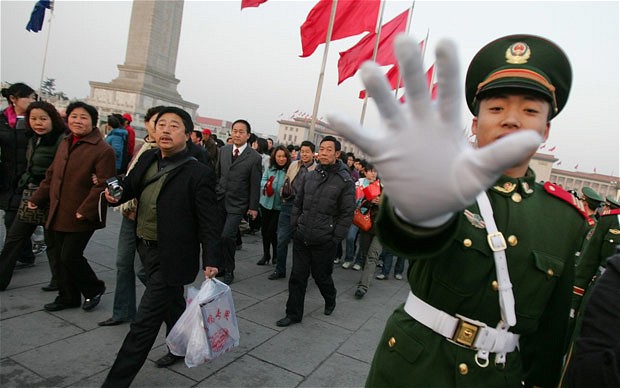
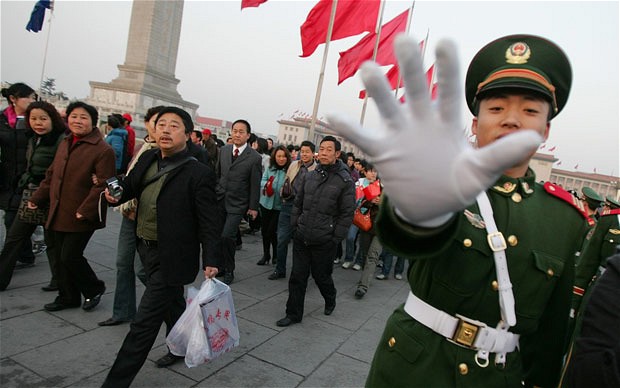
More recently, despite the economic reforms introduced in China after 1979, social and political freedoms are still heavily restricted. The Chinese cannot surf the internet freely or change the party in power. In the background are the limits on dissent, made clear by the government’s 1989 Tiananmen Square massacre.

Back to Canada. The Yinka Dene Alliance’s Nooski claimed he wanted Hu to know “that First Nations are not being treated fairly in Canada in terms of their aboriginal rights.”

If Nooski were describing Canada around Confederation, he would have a solid point. Canadian society and government policy were shot through with racism. But as applied to recent history, such rhetoric is nonsense on stilts.

To use two examples, on-reserve treaty Indians are not subject to many of the taxes that other Canadians must pay. In most cases, this results not from treaty or constitutional rights but federal legislation (the Indian Act). Post-secondary tuition is also often free. The fairness argument is more properly applied to non-reserve taxpayers, Native and non-native alike, subject to a raft of taxes and who must pay for their own degrees.

Many of the problems Aboriginals face in Canada today are directly attributable to a reserve system that defies economic logic and too many reserve chiefs who defend it.

Example A: In 2002, accountability legislation proposed by Indian Affairs Minister Robert Nault (and which would have granted greater power to reserve residents vis-à-vis chiefs) was opposed by many native chiefs. Because of that, Paul Martin killed the bill when he became prime minister in 2003.

Example B: When more recently, the Conservative government during its minority phase pushed for matrimonial property rights for women on reserves, the proposed change was fought by plenty of male First Nations chiefs. It had to await the majority Conservative government.

Even the much-noted statistic as regards Aboriginals in prison misses this salient point: much Aboriginal crime is committed against other Aboriginals. What are the courts to do? Tell a native female that her Aboriginal male attacker deserves leniency because some other native male is already in jail and thus the statistics must be evened out a bit?

The “appeal” to a still-repressive Chinese regime and on errant facts is an embarrassment not to Canada but to the chiefs who signed the letter.

Thankfully, in contrast to the Yinka Dene Alliance’s weird appeal to a Chinese autocrat, there are plenty of progressive Aboriginal leaders – Calvin Helin, Manny Jules and selected First Nations reserve chiefs—who push for real and positive change.

-Mark Milke is the editorial board chair of C2C Journal www.c2cjournal.ca where this first appeared.
Love C2C Journal? Here's how you can help us grow.

More for you

Ego Over Everything: How the Progressive Fixation on Identity Perverts the Arts

Artists once understood they were serving something greater than themselves – truth, beauty, memory – things universal and transcendent. No longer. In a culture where imagination is cast as “cultural appropriation” and exploitation, what matters is not art but the artist. Ego, self-regard and “lived experience” are paramount. In this searing critique, T. G. Kelemen uses recent examples of cancellation in the arts to explain how “progressive” pieties have inverted the very foundation of the arts, fuelling not just a culture war, but a war on culture.

Culture Beyond Politics and State Control: The Life of the Apolitical Man

You may not be much interested in politics, but politics – to borrow from the famous dictum on war by Leon Trotsky – is most definitely interested in you. With land acknowledgements to stand up for, rainbow-coloured sidewalks to stride over, garbage to sort and slogans like “Elbows up!” to recite, politics in today’s world is virtually inescapable. But is there any point in even trying? David Solway argues that the answer is an emphatic “Yes”. In a transcendent essay that ranges from idyllic Aegean islands to crumbling 19th-century communes, Solway paints a vivid portrait of the nature and meaning of apolitical life in its full sense, charting its evolution and blind alleys in literature, art and real-world attempts – and issuing a rallying cry for its centrality in building and, he still hopes, saving the greatest civilization the world has ever known.

Sign on the Dotted Line: How B.C.’s Latest Indigenous Outrage Threatens Freedom of Contract Across Canada

As if the mayhem created by the 2025 Cowichan decision regarding property rights wasn’t enough, the B.C. court system has now declared its readiness to undermine legal contracts as well. As Peter Best reveals, a January 2026 decision to allow a contentious Indigenous lawsuit to proceed threatens to upend centuries of contract law. At issue is a small B.C. First Nation’s claim it has an aboriginal title right to export propane on an industrial scale, one that should overrule a signed, legal contract between the port of Prince Rupert and a billion-dollar energy project that itself is providing major aboriginal benefits. Acceding to such an outrageous demand, Best warns, will plunge relations between natives and the rest of Canada further into chaos and mistrust.

More from this author

Not So Beautiful Minds: Conspiracy Theories from JFK to Oliver Stone and Donald Trump

Shocking events that plunge a country into chaos or destroy a beloved leader are hard for anyone to process. The evil done is so towering it bends the human psyche to accept that the evildoer is utterly banal, a loner walking in ordinary shoes. The cause simply must befit the outcome; thus can a conspiracy theory be hatched. At other times, the cold hope of political or financial gain or simple mischief might be the source. There certainly is no shortage of conspiracy theories. Mark Milke revisits one of history’s most famous political assassinations and the conspiracy theories it spawned to illuminate the ongoing danger this toxic tendency poses to us all.

Picture of Thomas Hobbes frontispiece of Leviathan. A renowned pieceof political work on liberty

Future of Conservatism Series, Part VII: Memo to Politicians: We’re Not Your Pet Projects

Canadian conservatives have most of the summer to ruminate on what they want their federal party to become – as embodied by their soon-to-be elected leader, anyway. Acceptability, likability and winnability will be key criteria. Above all, however, should be crafting and advancing a compelling policy alternative to today’s managerial liberalism, which has been inflated by the pandemic almost beyond recognition. Mark Milke offers a forceful rebuttal against the Conservative “alternative” comprising little more than a massaged form of top-down management.

Leaders_debate_2019_canada_diversity_bias_free_speech_liberal_conservative

So Much for Diversity: The Monochromatic Moderators of Monday’s Debate

Canada is a big, diverse country by virtually any measure, from our no-longer-so-sparse population to our epic geography to the ethnic makeup of our people. Diverse in every way, it seems, except in our elites’ aggressively progressive official-think. Consistent with this is the otherwise bizarre decision to have Monday’s federal leaders’ debate hosted by five decidedly similar female journalists. Mark Milke briefly profiles the five and, more important, advances a positive alternative: five distinguished women diverse in background, hometown and, above all, thought.