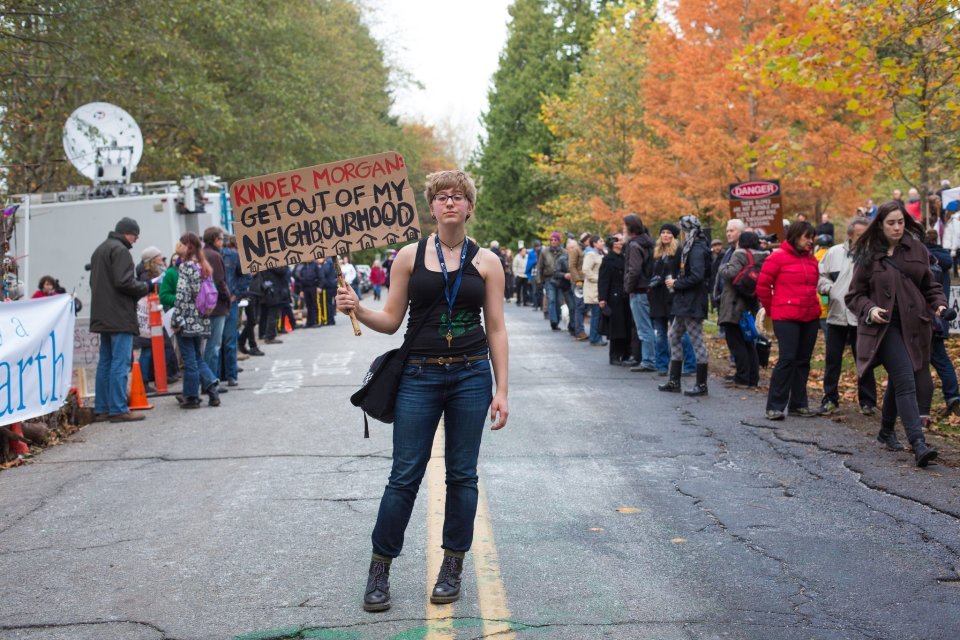
When protesters get in the way of a construction project – a pipeline, for example – it’s often a story. But usually not a very big story: creating a public spectacle may attract media attention, but it rarely stops a project.
It’s a far bigger story when a government – the NDP-Green government of British Columbia, for example – applies all its constitutional powers to an act of civil disobedience.
That is effectively what Premier John Horgan’s government did last month when it proposed to block any increase in the flow of diluted bitumen from Alberta’s oilsands to the West Coast through an expanded Kinder Morgan Trans Mountain pipeline.
Under the Constitution Act, interprovincial transportation infrastructure is federally regulated, and Ottawa has granted approval for the pipeline through the National Energy Board. By law, Kinder Morgan is good to go. Thus Horgan’s action is illegal and unconstitutional, an act of civil disobedience more befitting a ragtag band of furry treehuggers than a sub-national government representing nearly five million Canadian citizens.
What next? Cabinet meetings in a tent on the pipeline right-of-way?
This is a tale of irresponsible if not irrational government. It involves two NDP premiers and a Liberal prime minister all firmly positioned as progressive and deeply committed to protecting the environment, respecting Aboriginal rights, and fighting climate change. Yet Horgan now faces an escalating trade war with his old friend and fellow NDP traveler Rachel Notley, who has parked her progressive priorities because she needs the pipeline to pay Alberta’s bills and protect her political hide. The meat in this sandwich is Justin Trudeau, killer of the Northern Gateway and Energy East pipelines, proud wearer of a Haida tattoo, and apparently an unenthusiastic enforcer of the constitutional rule of law as it applies to the Trans Mountain project.
Let’s start with Horgan. The pained look on his face does not come from the slings and arrows raining down on him from the Alberta side of the Rockies, but from the omnipresent threat of a non-confidence motion. His minority government’s survival depends on three sullen Green Party MLAs, whom he has already made much grumpier by approving resumption of Site C hydroelectric dam megaproject and shilling for global investment in B.C. LNG exports. If Horgan was to roll over for Trans Mountain, his pain would get much worse.
Across the Continental Divide, Alberta premier Notley has reinvented herself as a blonde-haired sheik of the oilsands. Gone are the days when she lamented that the fossil fuel industry made Alberta the “embarrassing cousin” in Canada’s federation and railed loudly against both the Keystone XL and Northern Gateway pipelines.
Today she’s a carbon energy champion. It took a year or so of low oil prices, plummeting tax revenues, soaring provincial debt, fleeing international investment, and frightful poll numbers for her to see the light. Her highest-in-Canada (now tied with B.C.) carbon tax, a tough emissions cap and other regulatory crackdowns on the petroleum industry were supposed to earn Alberta a “social licence” to produce and export oil with impunity, but they cut no mustard with implacable enemies of the “tarsands” at home and abroad.
Mugged by reality, Notley rebranded herself an unapologetic pipeliner. Calling cameras into her kitchen, she recorded a stern Lougheed-esque message to the prime minister which included this thinly-veiled threat: “We can’t continue to support Canada’s economy unless Canada supports us… We must get to ‘yes’ on a pipeline.”
Trudeau seemed to listen. He overturned the previous Conservative government’s Northern Gateway approval, but said yes to Trans Mountain.
It was something. This was late 2016, and the Obama administration was still blocking Keystone XL. The fourth export possibility – TransCanada’s Energy East – looked increasingly unlikely due to mounting political opposition in Liberal-dominated Quebec. Kinder Morgan’s project to triple the capacity of its Trans Mountain pipeline on an existing right-of-way looked like the last, best chance to give Alberta some hope of new export markets, better oil prices, and badly-needed government revenues. It would also give Notley a rare win for her province after a string of economic setbacks and natural disasters, which she dearly needed to have any hope of winning an election due in May 2019.
There is unmistakable cognitive dissonance in the fate of an Alberta premier resting on the munificence of a Liberal prime minister. Especially one named Trudeau. Under normal circumstances, which is to say virtually the entire history of the province until the election of Notley’s NDP government, political success largely derived from enmity with Ottawa. If the current Notley-Trudeau alliance were somehow to succeed in defeating the opposition in B.C. and get Trans Mountain substantially underway before the Alberta and federal elections in the spring and fall of 2019, it might not only get the NDP re-elected but also save and perhaps even expand the federal Liberal four-seat beachhead in Alberta.
But hang on, Trudeau has 17 Liberal seats in B.C. How many of those do you suppose he’s willing to risk in order to defend the Constitution, expand Canada’s oilsands exports and, maybe, make some political gains in Alberta? The answer to that question may determine the fate of Notley’s government.
As of this writing, the prime minister has shown little inclination to engage. He can’t have been encouraged by a recent town hall on Vancouver Island where anti-pipeline ranters called him a petro-criminal. And his government just rolled out a plan to scrap the National Energy Board and replace it with a new energy regulatory process that promises to somehow shorten and de-politicize project reviews while expanding consideration of gender, indigenous and social impacts.
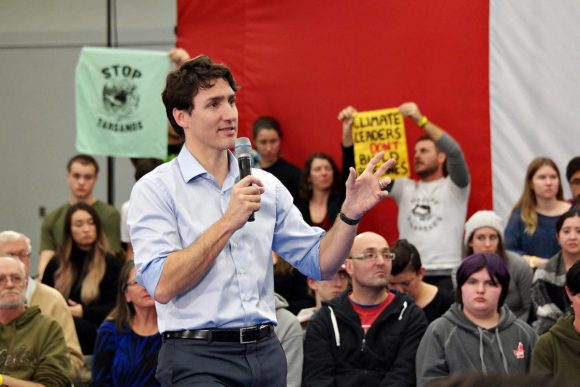
Nobody in his Alberta caucus is saying much. (His two MPs in Calgary can’t speak at all as they have been silenced by sexual misconduct scandals.) His Environment minister, asked recently to explain the gender screen in the new national energy regulation program, said it is intended to address “impacts” associated with projects employing large numbers of males – such as the remote work camps of the oilsands. And the prime minister’s Principal Secretary Gerald Butts, an environmental activist of long standing once said to serve as the PM’s “brain”, is on the record as saying “[we] don’t think there should be a carbon-based energy industry by the middle of this century.”
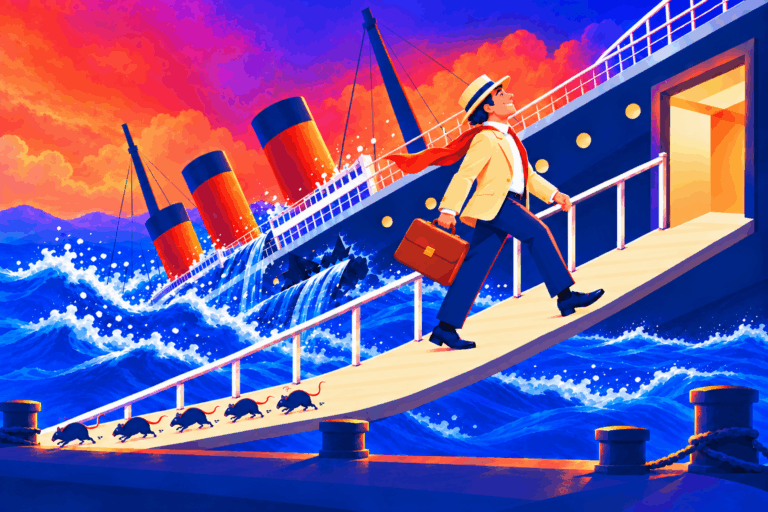
This is also the prime minister who campaigned on, and delivered, a pledge to ban oil tankers from the northern B.C. coastal waters. And who once suggested that Canada’s goal should be to “phase out” oilsands production. By their words and actions, the Trudeau government messages dogmatic opposition to expansion of the fossil fuel industry with just one exception: the Trans Mountain pipeline. Under the circumstances it is reasonable to assume that if Kinder Morgan, like TransCanada before it on the Energy East project, became so fed up with the costs and uncertainty of the approval process that it finally abandoned the project, Trudeau would need no more than 30 seconds to navigate the five stages of grief.
So what comes next?
Let’s say Kinder Morgan stays the course, as company President Ian Anderson has pledged. Let’s also assume Ottawa forces B.C. to respect the Constitution, and that the courts are cleared of various other legal challenges currently being litigated. After all that, the ultimate test of the Trudeau government’s resolve will still be what it does when armies of protesters descend on the pipeline terminus and try to stop construction. Already some are planning for mass civil disobedience on the scale of the “War in the Woods” against logging in B.C. during the 1990s, and last year’s huge pipeline blockade in South Dakota, which only ended when riot police, soldiers and bulldozers removed the demonstrators.
If it comes to it, will Trudeau deploy Canadian troops to fight a “War on the Water”? Or will the protestors, emboldened by the actions of the NDP-Green government of B.C., be allowed to break the rule of law? The political and economic stakes for all concerned are very high, but the stakes for the legal and constitutional integrity of the country are even higher.