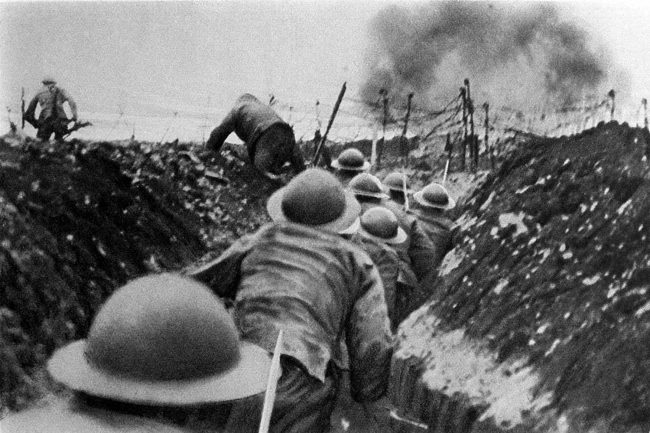
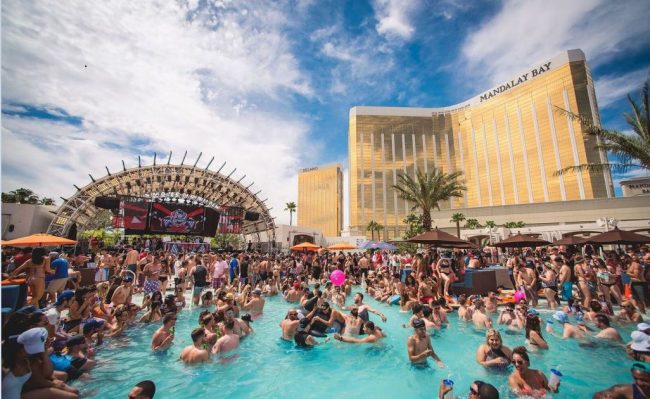
Now, at the conclusion of the first two decades of the 21st century, we can begin to compare our new era with that of the recent past. And so far we have been blessed with a continuation of the previous century’s rapid improvements in material wealth, health sciences, and living standards, again due to the ongoing march of capitalism and free trade. Perhaps even more significantly, we have largely been spared the horrors of mass-casualty conflict. There have been wars and terrible acts of terrorist violence over the past 20 years, to be sure, but nothing to compare with previous global conflicts. And for this, once more, we must thank economic liberalization, globalization, and political pragmatism.
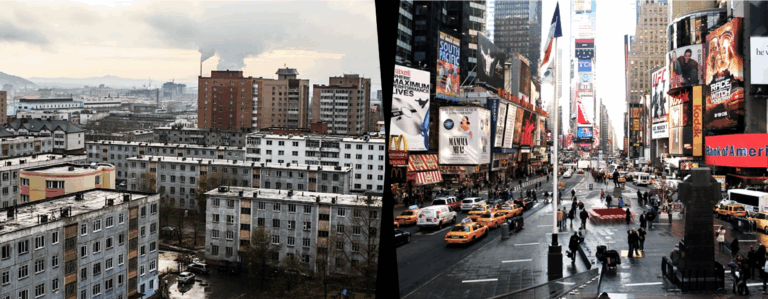
It was in 1996 that New York Times columnist Thomas Friedman first advanced his famous Golden Arches Theory of Conflict Prevention by observing that “no two countries that both have a McDonald’s have ever fought a war against each other.” Sadly, the Golden Arches Theory was overturned several years later by the Kargil War between India and Pakistan, and then by Russia in 2008 during its war with Georgia and again in 2014 when Russia invaded Ukraine. But the broader point still stands. Rising living standards, access to foreign capital, and integration with the global economy all have a prophylactic effect on war; sovereign-nation conflicts and economic openness are in many ways antithetical concepts.

Why? Because the cost of going to war is much higher for the countries involved if they have to rely on each other for economic growth and prosperity; war is also less likely between countries that share similar values, such as a welcome attitude towards fast food and popular western culture. The expansion of capitalism is not only the foundation of our unprecedented levels of global prosperity, but is also behind the blessed lack of global conflict during the past two decades. We are now living in the best of all possible worlds – prosperity without violence. We have become both rich and peaceful.
It is thus beyond curious that so many noisy climate crisis activists and global campaigners now seem intent on reviving the terminology and habits of global war in their efforts to promote the concept of a climate emergency. And further, that they see capitalism not as the saviour of humanity, but as the perpetrator of this crisis.
According to our countless Cassandras, there are storm clouds on the horizon – both metaphorical and literal ones. There will be hurricanes, floods, rising oceans, and a surfeit of precipitation, as well as droughts, fires, disappearing rivers, and insufficient precipitation. This impending climate crisis, we are repeatedly told, presents an existential threat to the planet and we have only 30 years to save it. Or perhaps 12 years. Or 10. Or maybe just six months. Regardless of disagreements over what calamities are looming and how much time we have left, however, there’s widespread agreement on the common enemy – the market economy. And this beast can only be defeated through the mobilization of government to war-like levels of effort and taxation.
The desire to elevate environmental policy to war footing is both puzzling and ubiquitous these days. John Kerry, the former United States Secretary of State and Democratic presidential nominee who lost the 2004 election to George W. Bush, recently declared his own “World War Zero.” Reaching a net-zero carbon economy by 2050 is “critical,” Kerry told The Atlantic. “Let’s get everybody moving in that same direction, agreed that we have to reach that goal urgently – almost treating it like war, literally. Because if we don’t get on a war footing in order to do what we have to do … we’re not going to make it.” Among those enlisted in Kerry’s war is actor Leonardo DiCaprio, who famously described regular chinook winds in Calgary as a “terrifying” sign of climate change.
This fixation with bellicose environmentalism is not limited to former U.S. presidential nominees and A-list celebrities. “We desperately need a new war… total war,” one Halifax writer opined. “Because as I see it, we’ve got the 2020s to engage in a concerted battle against the climate emergency, and not much longer.” Enough of all this boring peace and prosperity – let’s get to war! A recent essay in The Globe and Mail went even further: “The climate crisis is like a world war. So let’s talk about rationing.” Rationing? Leonardo DiCaprio, I’m sure, shudders at the thought.

My own carbon footprint is microscopic in comparison to DiCaprio’s, but I feel no enthusiasm for making significant sacrifices to fight any Climate War − whether via rationing or other measures. Indeed, even the relatively minor inconveniences promoted by environmental activists to date appear of dubious merit. Separating garbage from recycle, for example, as numerous economists have pointed out, often results in more resources being consumed than preserved. If what we are put into our blue bins is really a resource, private companies would be eagerly harvesting those resources to make a profit. The fact we have to pay someone to take it away suggests most of it actually is garbage. By compelling residents to recycle, municipal governments often cause more waste rather than less.
Similarly, I have yet to see any convincing evidence that plastic grocery bags are the environmental horror they’re made out to be. Plastic bag bans are now a policy staple of progressive politicians, but in addition to increasing the inconvenience of shopping, bans may well prove counterproductive to the cause of environmental protection. One of the main uses of plastic bags is to improve cleanliness. People use them to line trash bins, pick up after their dogs, and keep their belongings clean from dust and dirt.
What about the extra taxes we pay to subsidize the electric vehicle purchases of wealthy and virtuous drivers? Estimates, such as from the Montreal Economic Institute and the Ecofiscal Commission, put the cost to taxpayers of these subsidies in the neighbourhood of $400 per tonne of carbon emissions reduced – far more expensive than Environment Canada’s recent estimate of the environmental cost of carbon emissions at less than $60 per tonne.
Of course the bigger goals sought by the environmental war party threaten even greater damage. Destroying specific industries, such as oil and gas, will wreak large-scale havoc on the prosperity of numerous jurisdictions and individuals – both those that produce the resources and those that rely on the energy provided. The same goes for sweeping anti-capitalism projects such as the Green New Deal, that seek to impose government control over the most basic functions of the economy with all the attendant inefficiencies and destruction of wealth that entails. Recall the subtitle of Naomi Klein’s rabble-rousing environmental screed This Changes Everything was Capitalism vs. the Climate.

What those calling for a Climate War want is to reorganize the basic economic and social structure of society, with government commanding and consuming an ever-greater share of resources while imposing significant economic sacrifices on the citizenry. It’s not a particularly inviting scenario. Even the tiniest inconveniences so far proposed as policy are provable nonsense. Tearing down the superstructure of the market economy and replacing it with green-tinted socialism will put our entire era of peace and prosperity in real peril.
The record of history is clear: capitalism is the engine that drives human progress. Anyone seeking to promote new technologies and new forms of energy, deal with natural disasters or generally improve the condition of the Earth and the people on it should review the evidence of the past hundred years. “The worst environmental calamity,” economist Don Boudreaux has observed, “is the absence of capitalism.”
We don’t need a Climate War, just freer markets.
Matthew Lau is a Toronto writer.