Energy and Food Supply

When Intentions Are All: The Disastrous Consequences of the Green Movement’s Actions

Gwyn Morgan
July 17, 2022
It has been said that in the “progressive” mind, intentions matter far more than practical realities. Passion and commitment drive everything, and utopia shimmers on a distant horizon. Who can be against “saving the plant”? The journey may seem pleasant enough for a while, especially in advanced and basically well-run countries whose systems were built with “design margin,” robust enough to absorb some bad contingencies. But that can only carry a country – or a global economy – so far. Gwyn Morgan lays out the awful humanitarian results when unworkable government policies driven by decades of green ideology are compounded by war and geopolitics.
Energy and Food Supply

When Intentions Are All: The Disastrous Consequences of the Green Movement’s Actions

Gwyn Morgan
July 17, 2022
It has been said that in the “progressive” mind, intentions matter far more than practical realities. Passion and commitment drive everything, and utopia shimmers on a distant horizon. Who can be against “saving the plant”? The journey may seem pleasant enough for a while, especially in advanced and basically well-run countries whose systems were built with “design margin,” robust enough to absorb some bad contingencies. But that can only carry a country – or a global economy – so far. Gwyn Morgan lays out the awful humanitarian results when unworkable government policies driven by decades of green ideology are compounded by war and geopolitics.
Share on Facebook
Share on Twitter

That old adage, “The road to hell is paved with good intentions,” may never be proven truer than regarding the disastrous consequences of the green movement’s crusade to replace the 84 percent of global energy supplied by fossil fuels with windmills, solar panels and biofuels. The focus of public discussion today is largely on the energy supply and prices. But there’s also a more profoundly humanitarian impact. Here is my list of green-motivated actions and consequences.

Energy Supply

Action: Germany decides to replace its nuclear power plants with wind farms and solar arrays, which prove both unaffordable and unreliable, leaving no choice but to import Russian natural gas. Russia invades Ukraine. Germany tries to replace Russian gas with other sources.

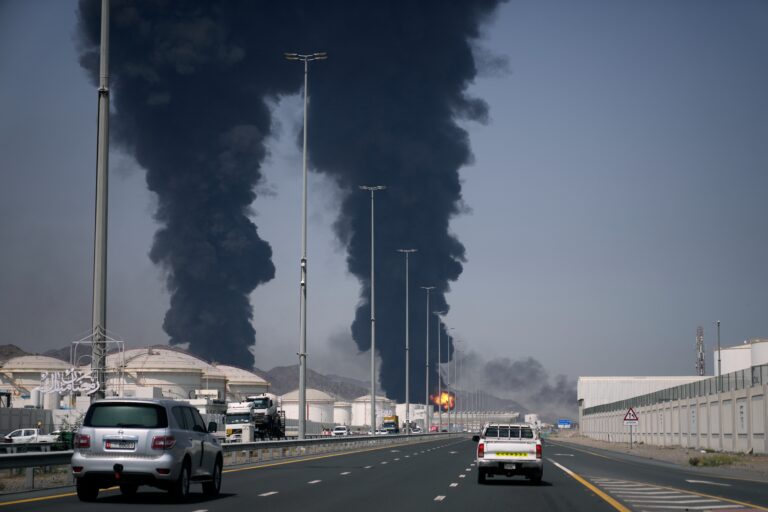
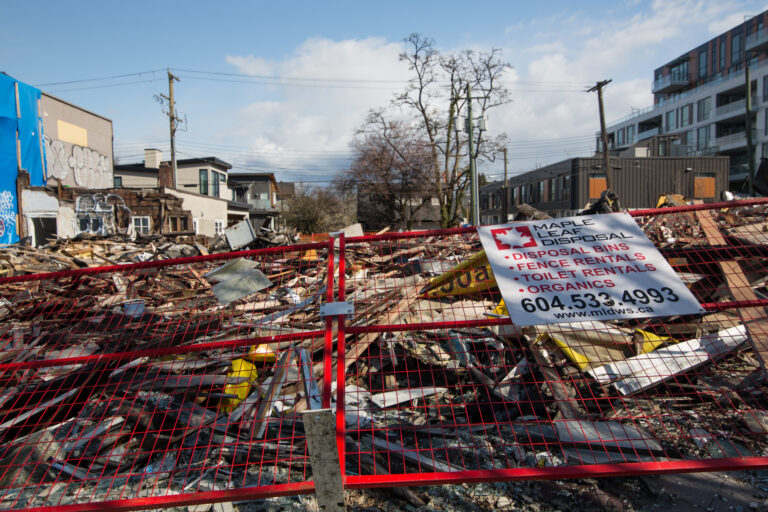
xAs the Russo-Ukrainian war grinds on, European economies are ground down by the worsening energy crisis. Among its effects: natural gas prices rising by 700 percent in Germany and looming gas rationing threaten to force closure of the gigantic BASF integrated chemical facility in Ludwigshafen, with global economic ramifications. It was green policies, however, that made Germany so vulnerable to Russian gas in the first place. (Source of bottom photo: de.kompass.com)

Consequences: Natural gas prices increase by 700 percent, forcing Germany and several other European countries to restart shuttered coal plants. EU economies go into freefall while emissions rise faster than ever.

Action: No fewer than 17 Canadian liquefied natural gas (LNG) projects that, among their other market outlets, could have eliminated the need for Germany to import Russian gas at all were stymied by impossible-to-meet Canadian federal government rules which demanded that the emissions resulting from their construction and operation be “net zero.” The Trudeau Liberals’ delusionary “net zero” target also drives policies that limit exports from the world’s third-largest oil reserves – the Alberta oil sands.

Consequences: Germany faces the Hobson’s choice of continuing to fund Russia’s brutal invasion or face a winter of disastrous energy shortages. Already the creeping scarcity is raising concerns that the world’s largest integrated chemical complex – BASF on the Rhine River in Germany – which has 200 facilities making products and inputs used in nearly everything and without which the world economy can scarcely function, may need to go to 50 percent output or even be closed entirely. The gas situation has also prompted German utilities to announce that residential buildings will only be heated to 17° C at night, raising fears of elderly people falling ill or worse in their apartments come winter.

In addition to holding Europe hostage using its natural gas, Russia also becomes the world crude oil market’s “swing-producer.” Oil prices skyrocket, raising the cost of transportation for industry and individuals. Inflation wreaks havoc around the globe.

Action: China pretends to reduce greenhouse gas emissions while continuing to escalate cheap coal-fired power generation. The inexpensive electricity generated from coal is used by the factories that manufacture the solar panels and wind turbine blades being exported to generate intermittent, costly electricity in Western countries. Green government zealots in those Western countries meanwhile implement policies mandating ever-more wind and solar power generation combined with continually rising carbon taxes.

Consequences: Western manufacturers cannot compete, leaving no choice but importing Chinese goods. China uses the West’s money to produce the weapons systems and infrastructure (like the Belt and Road Initiative) needed for global dominance.

xThe West’s environmental obsessions are convenient – and highly profitable – for China, which uses cheap electricity generated from coal to make solar panels (top) and wind turbine blades for Western countries, using the profits to finance its relentless geopolitical expansion, including the Belt and Road Initiative (depicted on the map at bottom). (Sources: (photo) South China Morning Post/ Xinhua; (map) asiagreen.com)

So that’s how the green movement has paved the road to energy supply and Chinese dominance hell. But there is a further heart-wrenching result of green ideology.

Global Food Supply

Russian President Vladimir Putin’s Black Sea blockade of Ukrainian wheat, corn and vegetable oil exports is being blamed for the current food shortages gripping more and more countries, with concerns growing in some of outright starvation. But as reprehensible as Putin’s actions are, the green movement’s impact on the world’s food supply is profoundly greater than the Ukrainian export reduction. As with energy supply, many of the actions go back years or beyond a decade, while the consequences on global grain supply are now becoming painful.

Action: Policies are implemented in Europe and North America mandating the blending of ethanol produced from corn into gasoline.

Consequence: A disastrous reduction in global grain supply. The U.S. is the world’s largest corn producer, at 384 million tonnes per year. One-third of that, or 128 million tonnes, is currently allocated to producing ethanol. Other countries convert a combined 137 million tonnes of grain into fuel ethanol, for a total of 265 million tonnes. Ukraine’s pre-war production of all grains combined was 74 million tonnes per year. With biofuel production worldwide consuming more than three times that much, the reality is that the blockade of Ukraine’s ports has merely exacerbated a much larger and avoidable problem created by green policies.

xThe global food crisis begins here: A staggering 265 million tonnes of corn (left) annually is used not as food but converted into ethanol for use in blended gasoline (right). This and other Western environmental fetishes, not Russia’s blockade of Ukraine’s ports, are the fundamental cause of rising food prices, increasing scarcity and looming starvation in the poorest countries. (Sources of photos: (left) AP Photo/ Stephen Groves; (right) AP Photo/ Rogelio V. Solis, File)

Cereal Grain Production

Action: Carbon taxes drive up the cost of tractor fuel and grain drying. Nitrogen fertilizer prices shoot up because these fertilizers are made from natural gas. Potash-based fertilizer prices rise due to increased mining, processing and transportation costs.

Consequences: Higher prices and reduced supply of cereal grains. Starvation looms in poor, import-dependent countries.

Action: Environmental zealots campaign for governments to ban a product critical to food supply in developing countries. That product is Roundup. Invented decades ago by chemical company Monsanto, Roundup is well-known as a handy weed-killer to have for the yard but, far more importantly, has dramatically improved crop yields for Third World farmers by killing weeds without the need for heavy physical cultivation that depletes soil nutrients and moisture. Along with other elements of the “Green Revolution,” Roundup has helped chronically under-productive, food-importing countries that were always just one bad harvest from starvation to become solidly self-sufficient in food production, or even net exporters.

x“Our Farmers, Our Future” (translation of Dutch sign at bottom): The green-driven push for “sustainable” agriculture with organic farming (i.e., banning chemical fertilizers and pesticides) is driving down crop yields and crushing export revenues, upending entire developing economies in South Asia and Africa (top). The push for “Net Zero” threatens the same in Western countries, including Holland (bottom), whose world-class agricultural sector faces mandated reductions in livestock to meet nitrogen emissions targets, triggering nationwide protests like this tractor blockade outside Zaandam, north of Amsterdam. (Sources of photos: (top) agroecologyfund.org; (bottom) AP Photo/Peter Dejong)

From the time of its introduction, green activists have attacked Roundup as an allegedly cancer-causing form of “Franken-science.” But decades of experience and authoritative studies by scientists from several countries have found that, when used with the same care as any other chemical product, the health risks of Roundup are extremely low. In any event, Roundup has extended untold millions of lives by enabling many developing countries to provide a steady diet and a healthy number of calories even to their poor.

Consequence: If Roundup is banned or its use sharply curtailed, the consequence will be to set back food production in numerous developing countries by decades, with predictable results including reduced life expectancy for the poor.

Meat Production

Action: The governments of Spain and the Netherlands announce policies to reduce and eventually phase out the use of livestock, partly to drive down the release of nitrous oxides into the atmosphere. Farmers fear the same actions in other EU countries.

Consequence: Reduced supplies of meat and dairy products. Destruction of the way of life, income and property values of farmers. Socio-political chaos as desperate farmers protest in Madrid and Dutch farmers congest highways and block entrances to food warehouses. Police in Holland actually shoot at a 16-year-old farm boy at the wheel of a tractor – but thankfully miss.

The combined impact of the cereal grains diverted to motor fuel, carbon taxation on grain farmers and government policies to phase out animal husbandry are not only tragic for the embattled farmers themselves but are increasing food costs while reducing supply. No wonder conspiracy theorists believe the green movement’s ultimate goal is to save the planet through depopulation.

It’s time for a reality-based fork in the green movement’s road to hell.

Gwyn Morgan is a retired business leader who has been a director of five global corporations.

Source of main image: Shutterstock.
Love C2C Journal? Here's how you can help us grow.

More for you

What’s Yours is Ours: Why Canada’s Charter Ignores Property Rights and What That Means for Everything You Own

“The whole meaning of life,” famed comedian George Carlin once observed, “is trying to find a place for all your stuff. That’s what your house is, it’s a place for your stuff with a cover on it.” If so, then Canadians should be very concerned about their stuff. Unlike nearly every other modern nation, Canada lacks constitutional affirmation of the right to own property and as protection against its unjust seizure. With a recent B.C. Supreme Court ruling putting the very notion of home ownership at risk, Peter Shawn Taylor seeks out legal opinions on Canada’s surprisingly lax attitude towards property rights, how it differs from other countries and what that means for everyone’s possessions. If Canadians really want to protect their homes, belongings and personal finances, Taylor concludes, now’s the time to get loud.

The Righteous Response: What Canada Can Learn from America’s Fight Against Antisemitism

Canadians frequently criticize U.S. President Donald Trump’s projection of American power. But in the fight against anti-Semitism, Canada could learn a thing or two from our neighbour to the south. In Part One of this series, Lynne Cohen revealed how Canada’s political and civic leaders have chosen to ignore or even abet the hate crimes and abuse Jews have suffered since October 7, 2023. In this second installment, she shows how the U.S. – from the President on down to local officials and law enforcement – has fought back. Where Canada has been cowering and cowardly, the U.S. has resolved to fight anti-Semitism, protect its Jewish citizens and defend Israel’s right to live freely as a Jewish state.

One Free Miracle: Towards a Theory of Everything

A new year has dawned and, as the light strengthens across the Northern Hemisphere, David Solway reminds us that how we choose to experience our world is at least as important as understanding how it came to be. In the first instalment of this two-part series, the writer illuminated the irreducible paradox at the heart of all theories concerning the universe’s creation, then scrutinized the seemingly unbridgeable gap between quantum physics and the physical world we live in. In Part II he considers an even tougher and, so far, unsolved scientific challenge: gravity. Some of the finest minds in science think it actually is insoluble without some kind of creative intelligence to oversee it. In other words, a miracle. To Solway, the true miracle is the fact of a marvellous world and our freedom to experience and wonder at it.

More from this author

The Price of Foolish Pride: What Germany’s Social and Economic Decline Can Teach Canada

Germany was postwar Europe’s most successful nation – until it was seized by an arrogant leftist ideology that led it down a ruinous path. Its government abandoned safe, zero-emission nuclear power for inefficient wind and solar plus natural gas from Vladmir Putin. It threw open its borders to millions of asylum-seekers with barely a thought to the enormous costs or the difficulties of social integration. Today, at the 11th hour, Germany is at last struggling to turn around its decade of economic decline and social disintegration. In this cautionary tale, Gwyn Morgan sees a profound warning for Canada.

Socialist Shakedown: It’s Finally Time to End Supply Management in Agriculture

U.S. President Donald Trump’s trade policy may be chaotic and punitive, but he’s right about one thing: Canada’s agricultural supply management system has to go. Not because it’s unfair to America, though it is, but because it punishes Canadians. The price-fixing scheme limits consumer choice, requires a huge bureaucracy and prevents farmers from producing more in the face of shortages, forcing them instead to dump excess production. Worst of all, writes Gwyn Morgan, it drives up prices for milk, cheese, chicken, eggs and other essential foods — all for the benefit of a few thousand farmers, largely in Quebec. For Canada’s trade negotiators, argues Morgan, ending this mad racket should be job one.

Climate Climbdown: Sacrificing the Canadian Economy for Net Zero Goals Others Are Abandoning

Climate-obsessed politicians – Justin Trudeau in the vanguard – nearly destroyed the Canadian economy chasing emissions targets that are both unrealistic and pointless. Ottawa and the four biggest provinces have squandered $158 billion to create just 68,000 “clean” jobs. Meanwhile, fossil fuels are supplying a bigger share of Canada’s energy needs than ever. And now, leading U.S. officials and even eco-zealots like Bill Gates are re-evaluating their net-zero ideology. But that hasn’t gotten through to Prime Minister Mark Carney who, warns Gwyn Morgan, intends to inflict further punishment on an ailing country in pursuit of a delusional cause.