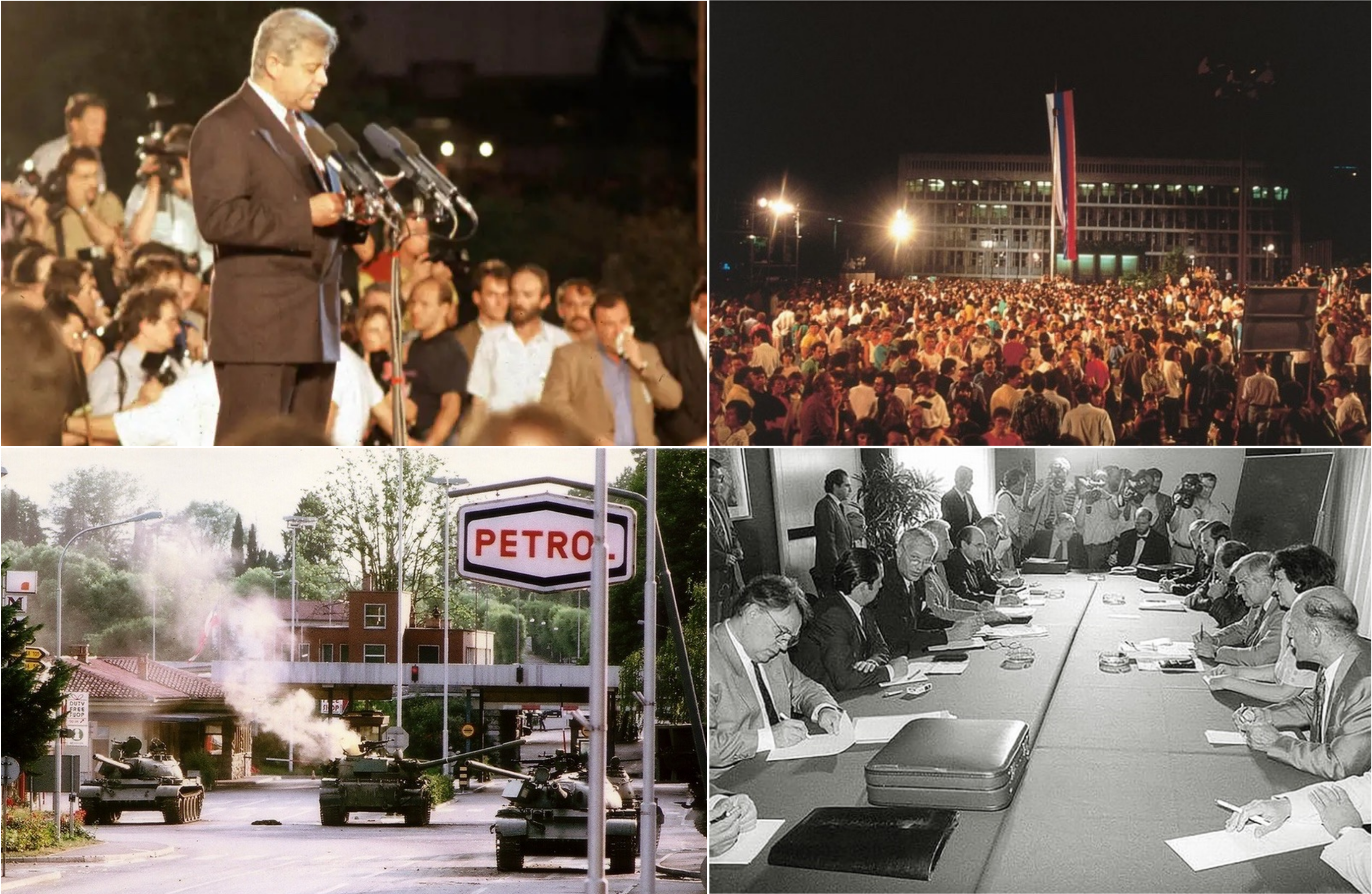
On a cool, crisp autumn afternoon in 1990, beneath the towering grey cliffs of Mount Krn, Lojze Peterle, Prime Minister of the Yugoslav Socialist Republic of Slovenia, cut the ribbon for the newly completed war museum in Kobarid. The town sits at the centre of the First World War confrontation of the same name, history’s largest battle ever fought through mountains, in which thousands of ethnic Slovenes fought under Austrian command and hundreds died. Many Slovenes insist to this day that it was Kobarid which forged their sense of nationhood. Seventy-three years later, their chance to turn a sense into a sovereign state was at hand.
Kobarid, Peterle declared at the ribbon-cutting, should stand forever as a “testament to historical objectivity, vibrant remembrance, and above all, an enduring message of peace for our nation’s future.” To a people who had endured foreign overlords for centuries – most recently the Serbian-dominanted Communist regime – the words “our nation” were electrifying. Yugoslavia was coming apart at the seams, and its central government was threatening war to any republic that tried to leave.
It proved a deciding moment. That December 23, Slovenia held a referendum on independence. More than 93 percent of voting-age Slovenians went to the polls – and a stunning 95.7 percent of those voted “Yes”. The following April, talks to create a looser “confederal” structure with Serbia broke down. On June 26, 1991, Slovenia’s parliament in Ljubljana issued a unilateral declaration of independence. The Yugoslav People’s Army moved immediately to suppress the secession of the second-smallest but most economically productive of Yugoslavia’s six constituent republics. The two sides were at war.
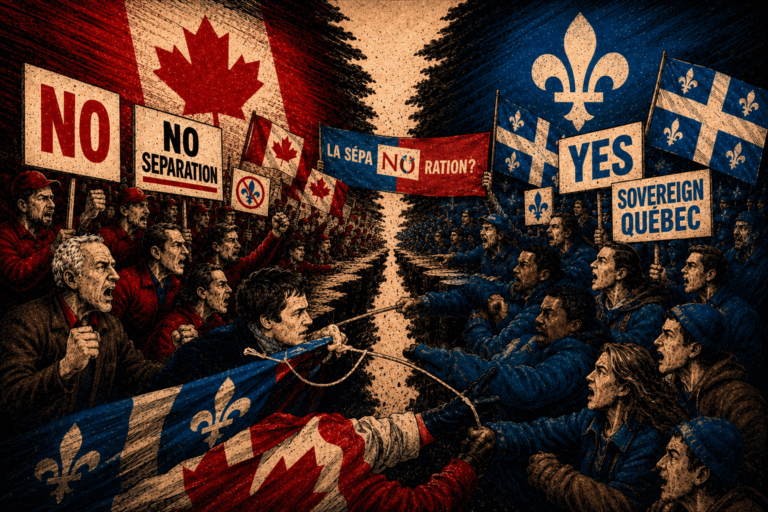
As Part II of this series revealed, Canada’s federal Clarity Act appears designed – and according to some who were involved in bringing it about, was designed – to make the secession of any province from Canada all but impossible to achieve. That is partly because Quebec was the sole focus of the political upheavals leading up to the Act, and nobody at the time of its creation thought any other province might ever wish to leave Canada.
Accordingly, as we discussed in Part I, those currently seeking the independence of Alberta need to be realistic about their chances within the Clarity Act’s framework. While its rules were written to prevent Quebec from gaining independence – including by rattling its voters into voting “No” by making it clear that a “Yes” vote meant only one thing, complete separation – the Act’s provisions are going to have the same effect on Alberta should the province eventually hold a referendum with a clear binary question on independence. For independence advocates to keep claiming that Ottawa will then be “forced” to negotiate and that Alberta will “impose” a deadline is disingenuous and sets up a great deal of heartache after the votes are counted. Not least, an enormous sense of betrayal among “Yes” voters.
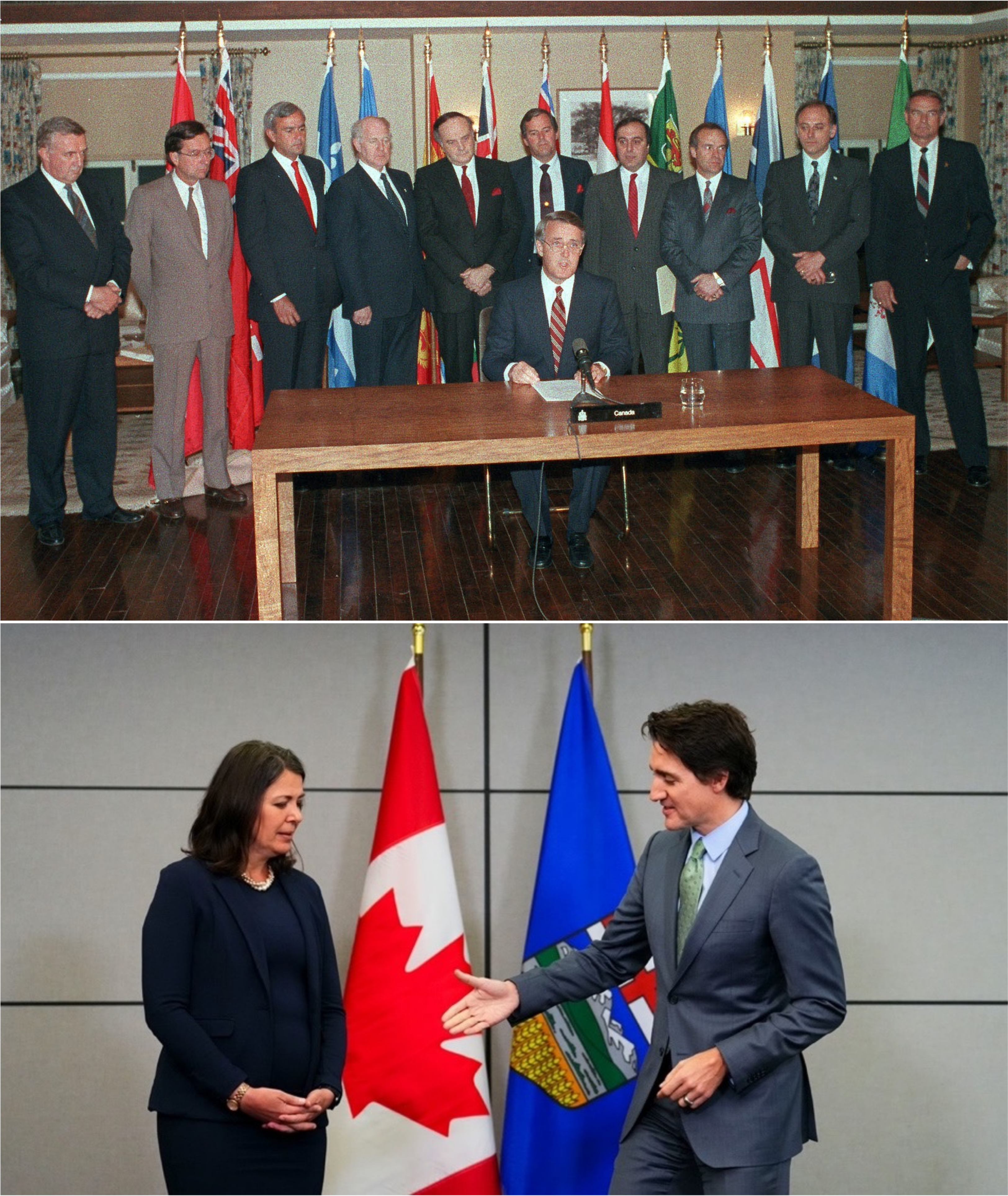
Being in favour of Alberta independence all but necessitates presuming habitual bad faith on the part of Ottawa, Quebec and even Ontario; such bitter experiences are what tend to push Albertans towards separatism to begin with. So why should they now expect good faith and smooth sailing? Albertans clinging to the view that independence can be achieved via the Clarity Act should consider the federal bureaucracy’s and the Liberal government’s standard behaviour. On any other issue, Ottawa will say and do essentially anything to advance its position and get its way.
Or consider the roadblocks Ottawa throws up and the misleading rhetoric it uses in response to any attempt by the province to gain greater jurisdiction or protect the jurisdiction it does have under the Constitution. Recall the barrages of vitriol, dissembling and misinformation unleashed when Alberta opposed the federal carbon tax or raised the mere possibility of leaving the Canada Pension Plan. So why should anyone presume dutiful good faith and goal-oriented urgency regarding something far more momentous and costly to Ottawa?
Alberta’s independence movement also thinks, quite reasonably, that it will be all but impossible to obtain constitutional amendments that address Albertans’ legitimate concerns through the “normal” amending process – the one that failed so spectacularly when attempted for the Meech Lake and Charlottetown accords. Canada’s chronic inability to reform its structural weaknesses is, indeed, another source of the frustrations pushing some Albertans to pursue independence. So how can they now believe constitutional amendments that actually dismember the country are realistically achievable under the Clarity Act?
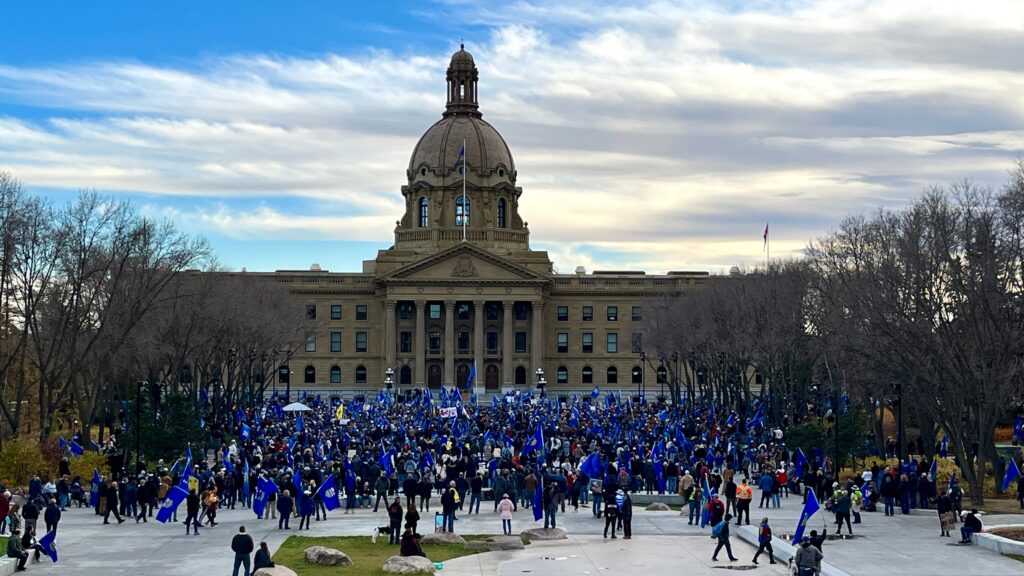 Boomerang effect: By making secession effectively impossible under the Clarity Act framework while engaging in bad-faith tactics in the run-up to the vote, Ottawa risks inadvertently strengthening the separatist cause. Shown, pro-independence rally, Edmonton, October 2025. (Source of photo: Angela Ostafichuk/Shutterstock)
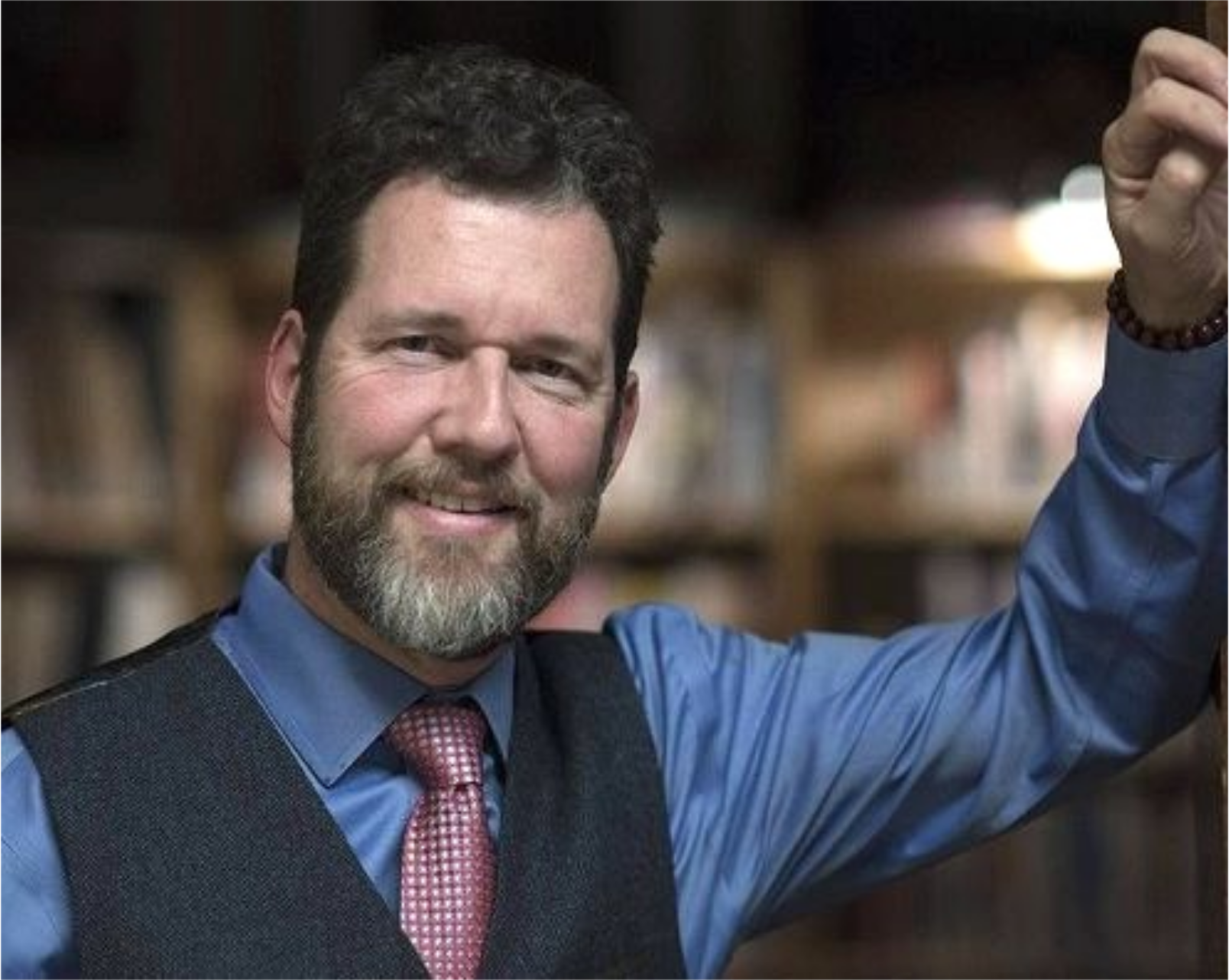 Allowing Ottawa to decide retroactively what constitutes a sufficient “Yes” majority is “incredibly dangerous because it’s so inflammatory,” warns veteran Conservative MP Scott Reid. By fuelling support for independence, the federal Clarity Act could ultimately undermine itself. (Source of photo: scottreid.ca)
Poilievre’s proposals were denounced by prominent Alberta separatists such as Jeffrey Rath, who dismissed the ideas as “hollow rhetoric” and “platitudes”. They may, unfortunately, be right; odds are the Poilievre scenario will fail. Why? Because all such efforts have failed in the past – over and over. And nothing in Canada has changed fundamentally in ways to make implementation of the completely worthy reforms suggested by Poilievre plausible.
A quick look at recent history reminds us that modest improvements by Ottawa under Progressive Conservative Prime Minister Brian Mulroney in the 1980s and Conservative Prime Minister Stephen Harper in the 2010s were directly undone or indirectly negated by Liberal successors, who imposed ever-more damaging policies or stood by as the courts chipped away at century-old provincial jurisdictions. Harper’s successor, Justin Trudeau, mounted an all-out and quite open assault on Alberta’s economy, political autonomy and constitutional jurisdiction.
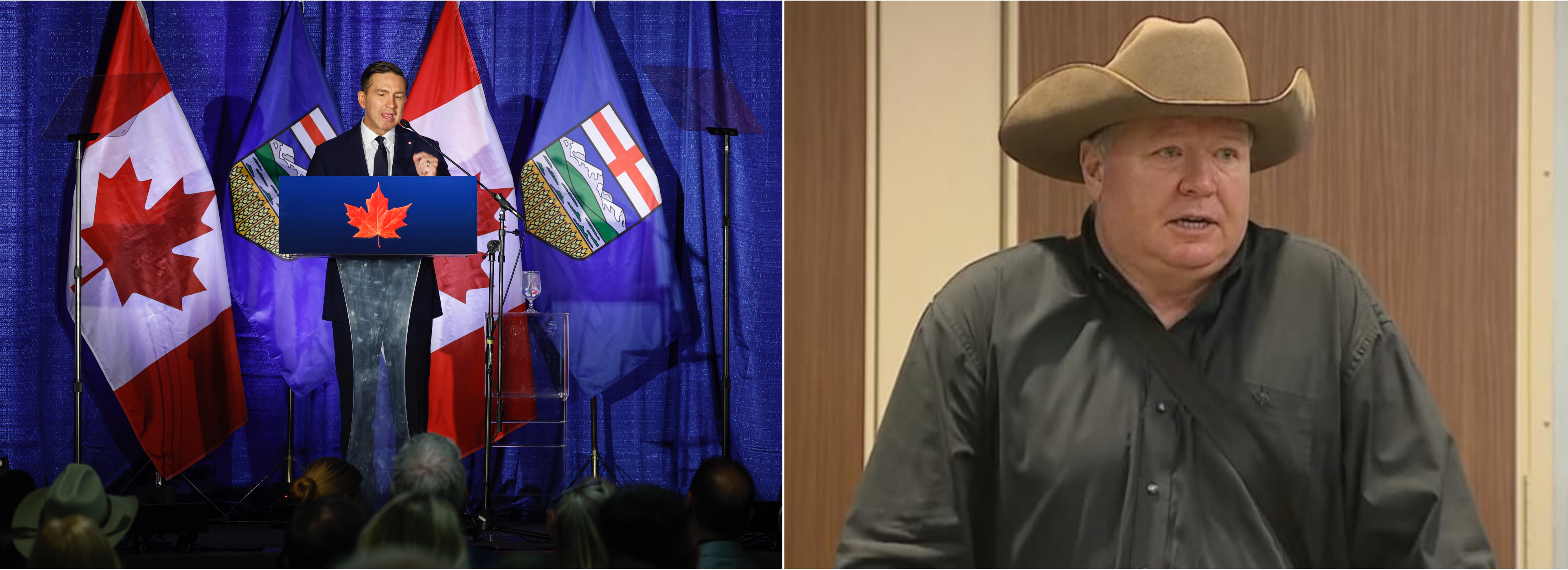
There are those, in fact, who mount a plausible case that Alberta’s political/constitutional position within the federation has worsened materially over the past three decades. And recall both that Poilievre lost the most recent federal election and that the current Liberal government is immensely popular among all those Canadians whom Albertans ostensibly don’t have a problem with. Implementation of Poilievre’s proposals depends on immense goodwill by Ottawa and other provinces to enable Alberta to improve its position within Canada; their survival would depend on the continued goodwill of future federal governments not to undo the reforms.
“As the saying goes, madness is doing the same thing over and over again while expecting a different result,” columnist Caitlyn Madlener recently noted at Juno News. “That increasingly appears to be the position of many federalist Alberta conservatives who now, rather confusingly, find themselves defending the very system they once condemned. After decades spent explaining why Alberta was mistreated within Confederation, many now insist the answer is simply one more election, one more reform proposal, one more promise from Ottawa that things will somehow be different this time.”
Push Hard for a Sovereign Alberta Within a United Canada
Assuming the Poilievre proposals fail to launch, then the almost nuclear-scale landmine that the Clarity Act represents might still be turned to mutual advantage. Alberta Premier Danielle Smith is attempting to maintain a balance between federalists and separatists by stating she supports a “sovereign Alberta within a united Canada” while respecting the right of independence advocates to pursue a citizens’ initiative referendum. She is campaigning hard to demonstrate that Canada can still be made to work, last week citing Alberta’s recent agreements with Ottawa on energy policy that she proudly notes have unleashed “the single-greatest expansion of pipelines in decades.”
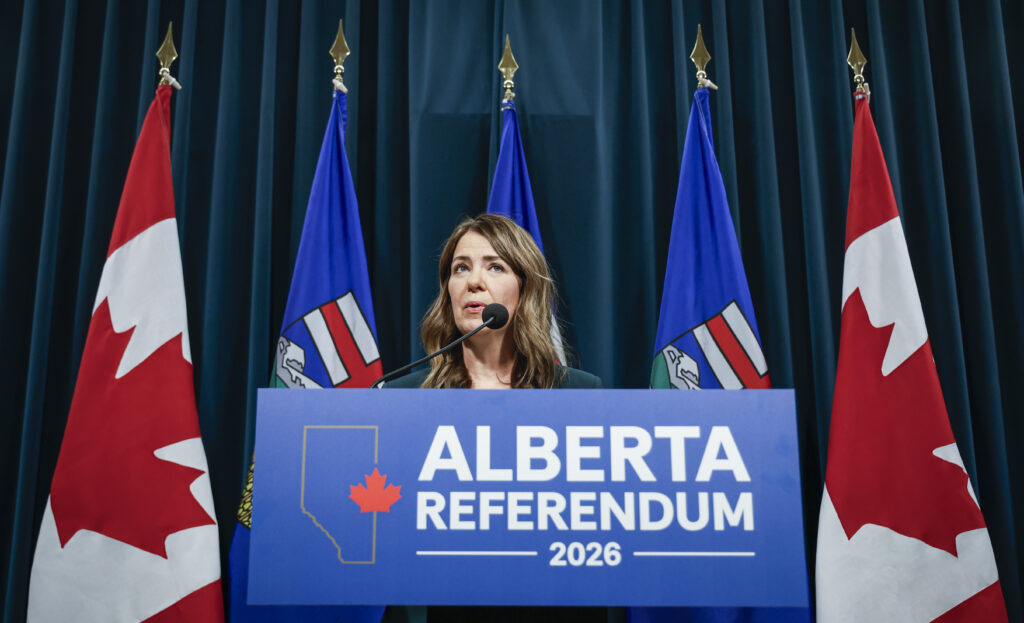
Her government’s current plan, announced on May 21, to hold a non-binding referendum in October to decide on holding a binding separation referendum next year or in 2028, is of a piece with this agenda. The question will read: “Should Alberta remain a province of Canada or should the Government of Alberta commence the legal process required under the Canadian Constitution to hold a binding referendum on whether or not Alberta should separate from Canada?”
For Albertans intent on gaining a better deal from Ottawa but who fear or simply oppose outright independence, Smith’s question removes the downside to voting for moving the process forward, enabling “strategic” or “send a message” votes. It also removes the downsides to her UCP government. A “stay in Canada” majority will furnish evidence that Smith’s approach to date has been the right one – but must be continued in order to keep the separatist genie in its bottle. A “hold a referendum on separation” majority will offer proof that implementing Smith’s agenda even more aggressively is of the utmost urgency, lest Albertans vote to leave altogether.
Preston Manning, the founder and longtime leader of the Reform Party of Canada, which was launched in 1987 specifically to push federal-level policy and constitutional changes that would make the four western provinces want to remain in Canada, argues that Smith’s approach “is a responsible federalist alternative between the secession option and a status quo unacceptable to most Albertans.” He accordingly urges Smith to use the current situation to “push the envelope” across a wide swath.
The UCP government, Manning asserts, should “strengthen the role and activity of the province in every jurisdictional area currently assigned to the provinces by Sections 92, 92A, and 93 of the Canadian Constitution.” That includes taxation, natural resource development, health care, education and social services, municipal government, justice and the courts, and property/civil rights, including firearms regulation. Smith should also push for greater scope in areas of joint federal-provincial jurisdiction, including agriculture, the environment and immigration.
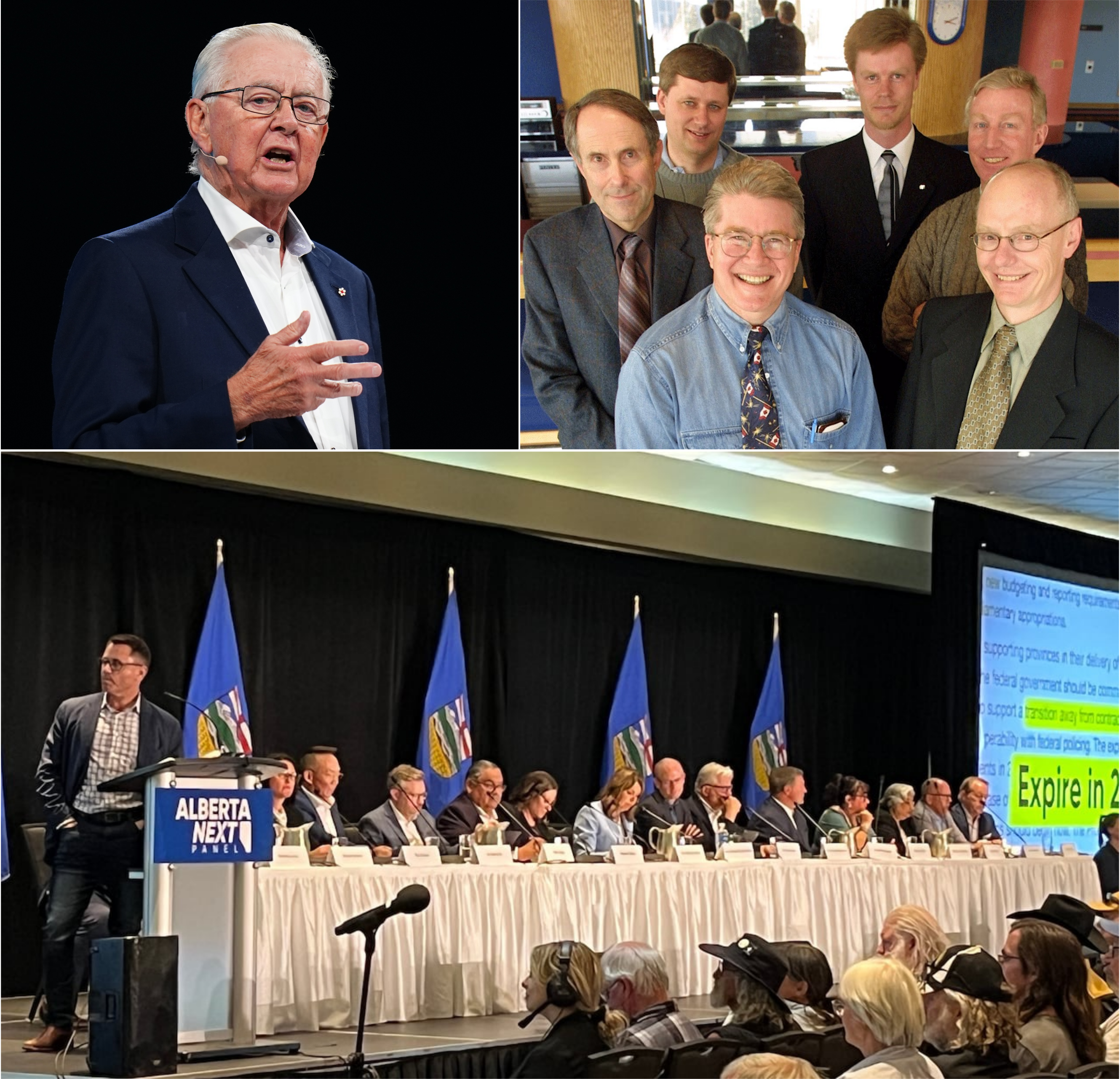 “Push the envelope”: Preston Manning (top left), founder and leader of the Reform Party of Canada, urges Alberta to exploit its October 19 referendum results to aggressively expand its autonomy across every area of provincial jurisdiction, pursuing policies recommended both by the recent Alberta Next Panel (bottom) and the famous 2001 Alberta Agenda or “Firewall” letter (top right; shown, the letter’s authors). (Sources of photos: (top left) Jacob King/PA Wire; (top right) Jeff McIntosh/National Post/File; (bottom) Jason Markusoff/CBC)
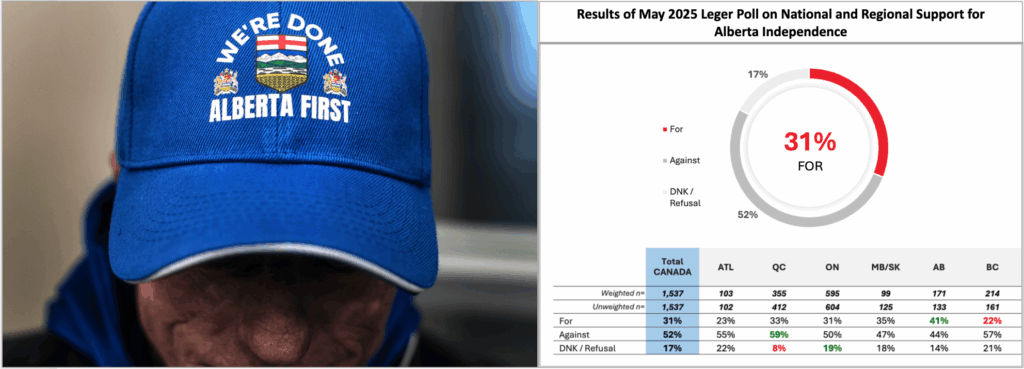 While the most recent polls show declining support for Alberta independence, barely a year ago it stood at 41 percent – representing a remarkable 48 percent of decided voters – and could surge again, the authors argue, if Albertans conclude their legitimate aspirations remain ignored. (Sources: (photo) The Canadian Press/Jason Franson; (chart) Leger)
The aforementioned Conservative MP Reid notes that such votes, even if failing to gain overwhelming majorities, can be highly consequential. One historical example is the statehood of Maine, previously part of Massachusetts, in the 1830s. Although Maine’s residents at first voted mostly against breaking out on their own, support for statehood grew incrementally while life as part of Massachusetts became ever-less attractive. Eventually, as Reid points out, “Maine citizens voted 17,091-7,132 in favor of separation.”
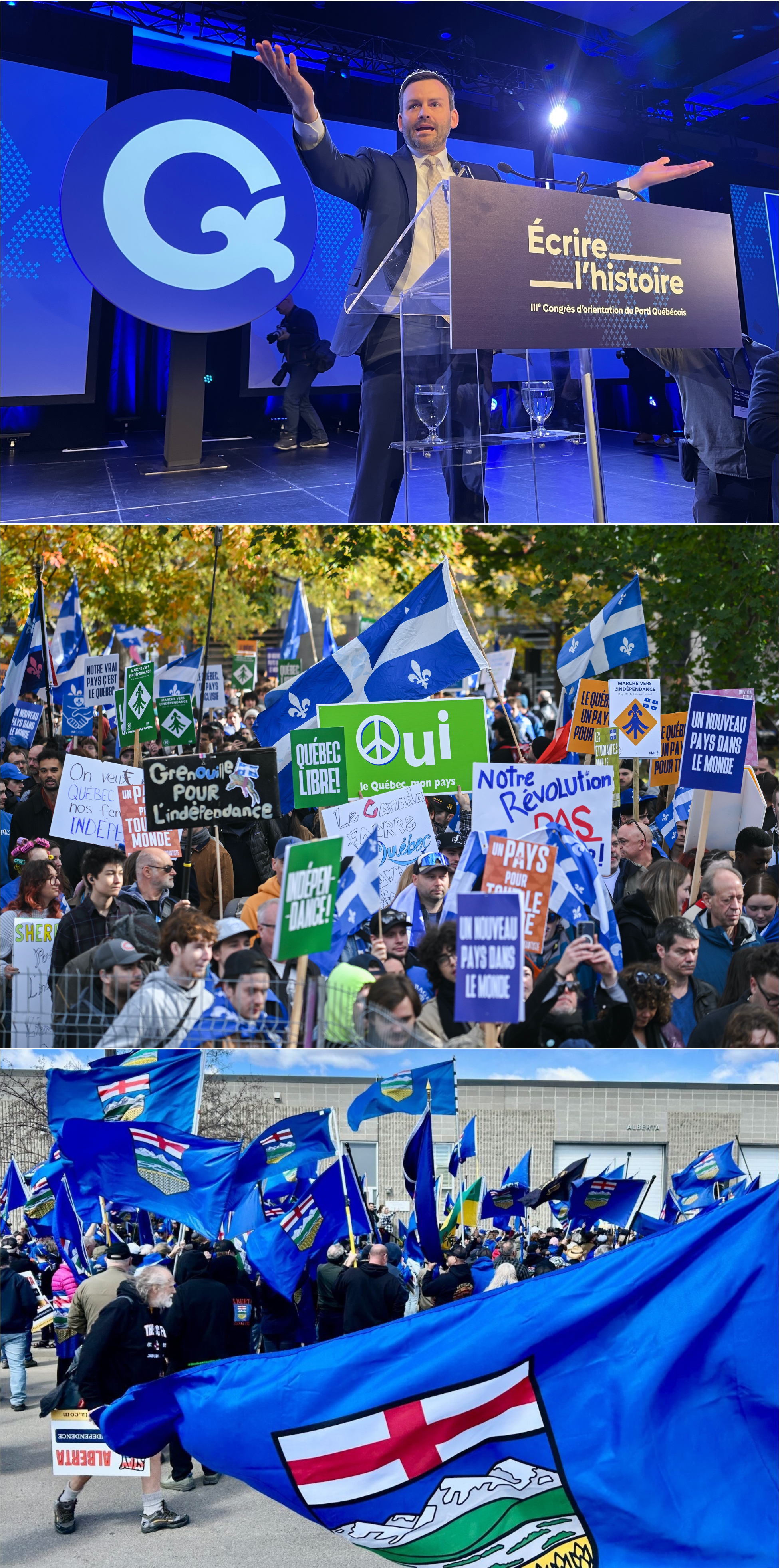
Instead, with the sole legal/constitutional path to independence having been revealed as a mirage, the remaining option for Albertans will be to adopt a process outside Canada’s constitutional framework. Such as was done by Slovenia in 1991, as described above. And just as Quebec’s separatists were planning for the day after their October 30, 1995 referendum vote. Namely, issuing a unilateral declaration of independence (UDI).
Many federalist Canadians will be aghast at the mere mention of such a scenario. A UDI is against the law! The Supreme Court of Canada said so unambiguously in its 1998 reference decision on Quebec separation! But should it come to that, the letter of the law will be almost the least of anyone’s concerns. It certainly did not stop the two million Slovenians, who were being discouraged by the EU and were facing bloody repression by the enormous Yugoslav People’s Army. Their stubborn and ultimately successful bid for freedom in the face of long odds demonstrates that when a people’s determination, frustration, grievance, vision, sense of being, optimism, desperation, anger at their overlord, or some combination thereof, are strong enough, they will risk anything and everything to become independent, including war and even ethnic cleansing.
The point is not that anyone in Alberta wants violence. The point is that if enough Albertans conclude that the laws of Canada are not a balanced instrument of justice, available to all in equal measure, but merely a political tool by which Ottawa exercises power, then all bets are off. The rule of law is already breaking down in Canada. Many of Canada’s judges routinely invent new legal powers and rights. Ottawa demonstrably ignores, undermines or circumvent its own laws. Quebec does what it wants regardless of the nation’s laws. B.C.’s NDP government appears intent on upending 1,000 years of Western law to hand control over the province to its Indigenous minority. And Indigenous organizations threaten “civil disobedience” – i.e., disruptive, costly and potentially violent law-breaking – practically every time they don’t get their way.
Why then, should the government and people of Alberta be virtually Canada’s sole remaining entities to feel bound by the letter of an obviously biased and undemocratic law?
So Alberta holds a referendum on independence, a majority votes “Yes”, and the province declares independence. What then? Now both sides are sailing into entirely uncharted waters. As Reid notes, the very fact that Ottawa’s present-day bureaucracy can’t get anything done efficiently, how so many of its actions are mere posing, pretense and announcements of things that never come about, makes the Government of Canada highly vulnerable to an opposing party that moves fast and decisively.
Thus, in a very real way, the Clarity Act will have accomplished the very opposite of its purpose: it will have visited disaster upon both sides of Alberta’s separation debate. Its manipulative, maximalist, over-determined nature will have ended up demolishing the federalist cause even more than it sabotaged and undermined the separatist one. Short of war, this would be the worst of all worlds: a fractured country with a neutered Constitution.
And given its actions during the 2022 Freedom Convoy protests, war might still be part of the equation as a panicked yet residually arrogant Ottawa felt moved to invoke the Emergencies Act, accuse the Premier and Cabinet of the nascent Republic of Alberta of treason, and send in the remnants of the Canadian Armed Forces to impose order by force.
The 51st State?
Aside from how one might feel about a province of Canada declaring independence unilaterally, once a province did so, it will be hard political realities and not personal sentiments or legal niceties that will govern the dynamic. “In situations such as these around the world,” notes a former senior federal politician, “what has mattered less is legality and more the optionality the jurisdiction in question has, less whether there’s a constitutional process available and more whether the separating entity simply has the raw power to do it.”
In the Canadian context, he adds, “Once you have a population firmly behind such a question, the main issue becomes not whether Ottawa will negotiate, but whether the province has the leverage needed to force Ottawa to do what it wants.” Quebec, for example, already has a police force, pension system, tax system and many of the means to effect separation in substance even if not in form. But it would be an economic basket case outside Canada. So its position would be mixed – and Ottawa knows this.
Alberta’s situation, the former politician asserts, is largely the opposite: it has impressive economic strength but fewer ready-made elements of an independent state. And its diplomatic opponent – Ottawa – will know this as well. But Ottawa’s advantages will diminish with each element of capability that Alberta might add over the next several years.
Newly elected B.C. Conservative leader Kerry-Anne Findlay recent stated that, were she to become premier, she would maintain relations with an independent Alberta. And while media loudly reported one recent poll’s claims to have found that more than 38 percent of Albertans would leave the province in the event of a “Yes” vote to independence, the same poll also found that 10 percent of all other Canadians would want to immigrate into an independent Alberta. Meaning that the nascent republic would stand to gain 1.5 million new citizens.
And what Alberta has that is entirely unlike Quebec is enormous economic attraction to the United States. Past American governments reportedly signalled through diplomatic channels that they would not recognize an independent Quebec, would attempt to freeze Quebec out of international organizations and would continue to recognize the Government of Canada as speaking for Quebec.
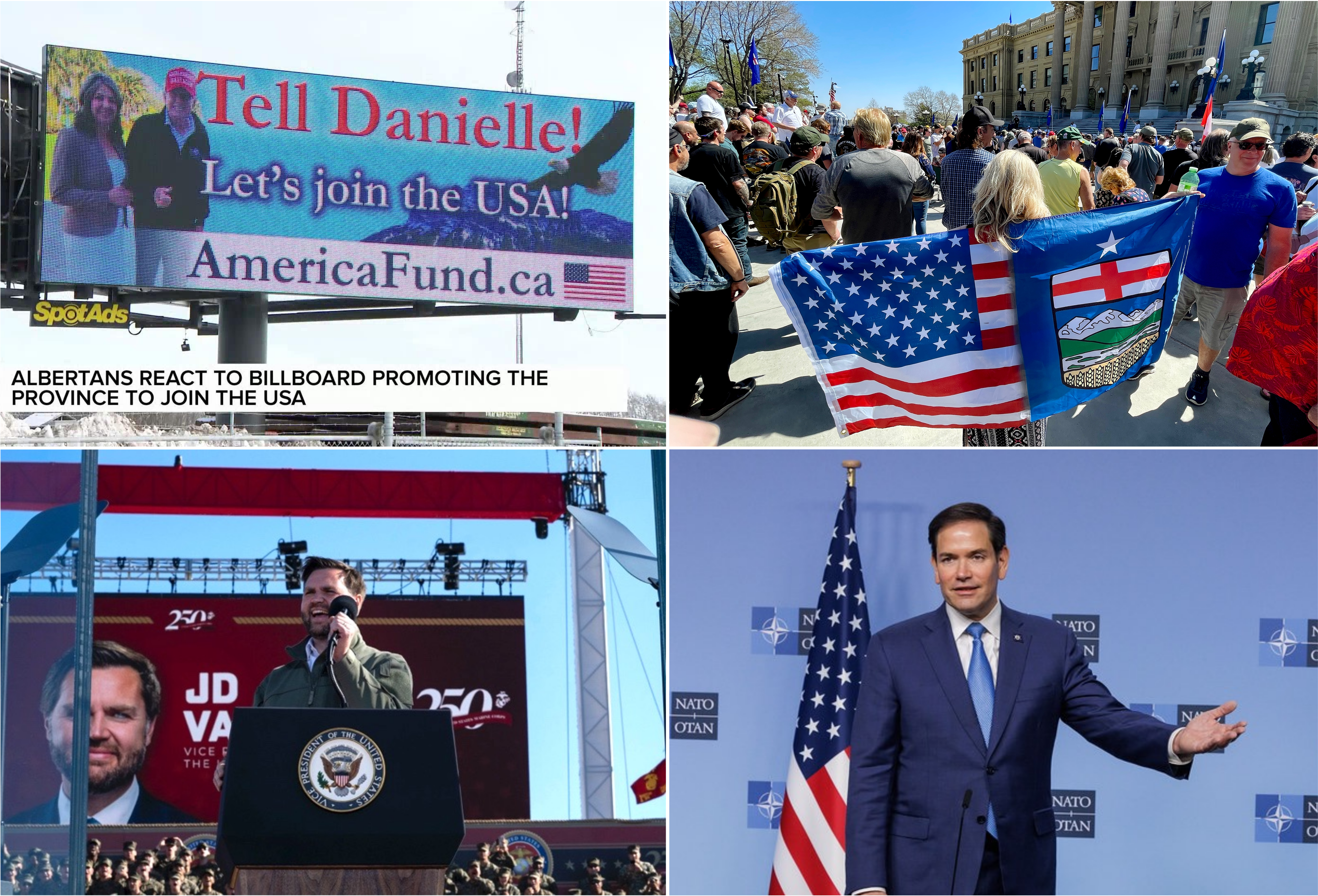
One should expect the response to Alberta’s separation to be entirely different. U.S. President Donald Trump has infamously mused about making Canada the 51st state. But that idea seems absurd, not least because doing so would tilt U.S. federal politics decidedly to the left, all but ruling out another Republican President or Republican-controlled Congress. Not so Alberta.
Much has been made – and many snide comments uttered – about the successive trips taken to Washington by Alberta’s separatist leaders, ostensibly and apparently to meet with various Trump Administration officials to seek their support for an independent Alberta. Nothing reliable has emerged as to the substance of those talks. Media reports have instead tended to emphasize the Opera Bouffe atmosphere generated by the amateurish nature, comportment and physical appearance of Alberta’s secessionist leaders – some of them almost caricatures of rural hayseeds.
But that masks the deadly seriousness of the game in play. Trump’s officials have made clear that they prize the province’s energy resources as well as its entrepreneurial culture and geographic position. Alberta would be a glittering economic jewel in the Administration’s geopolitical crown known as “energy dominance”. Trump, interestingly, recently moved to revive a version of the Keystone XL oil export pipeline out of Alberta into Montana and southward, known as the Bridger Pipeline.
A former federal politician who knows this situation very well, knows all the players, and circulates at the highest levels, is convinced that the U.S. under Trump or a Republican successor such as J.D. Vance or Marco Rubio would snap up Alberta in a heartbeat. And, moreover, would intervene directly to prevent a nascent Republic of Alberta from being physically crushed by Ottawa resorting to the Emergencies Act.
Alberta all by itself might well lack much of the critical leverage to secure its own future as an independent state. But it might have just enough determination to get most of the way there, then find it could only take the last step with U.S. backing. A backing that would come at an enormous price. And then the big question would become: is there a mechanism in the U.S. to absorb Alberta? Similar to its previous acquisitions of Alaska and Hawaii – but with an immediate leap to statehood. If there was, Alberta would be compelled to take whatever terms were offered. Alberta’s history as any independent nation would prove fleeting indeed. A briefly shimmering mirage, flickering out almost the instant it was first glimpsed.
And if any such thing should come to pass, then the federal Clarity Act – passed by a pair of Quebeckers to manipulate and thwart other Quebeckers to the benefit of Ottawa – will have proved possibly the greatest policy disaster in Canadian history.
Jim Mason holds a BSc in engineering physics and a PhD in experimental nuclear physics; he lived and worked in Alberta for 17 years and is currently retired and living near Lakefield, Ontario.
George Koch is Editor-in-Chief of C2C Journal.
Source of main image: CBC.