Alberta Independence

Too Clever by Half: Why Ottawa’s Clarity Act Helps Neither Side in Alberta’s Separation Debate

George Koch and Jim Mason
June 9, 2026
The House of Commons once had an effective law in front of it that laid out clear steps to assure that any provincial referendum on independence would be democratic and any negotiations after a “Yes” vote would be fair. But it wasn’t the current Clarity Act – it was a bill put forward by the Opposition Reform Party in 1996, and the Liberal government chose to ignore it. Instead, it passed its own legislation designed to crush support for any subsequent secession movement. In Part II of their series on what the Clarity Act means to today’s debate over Alberta’s future, George Koch and Jim Mason delve into the Act’s origin story and explain why it’s so blatantly stacked in favour of Ottawa – and how that could inflame separatist sentiment and undermine the federalist cause.
Alberta Independence

Too Clever by Half: Why Ottawa’s Clarity Act Helps Neither Side in Alberta’s Separation Debate

George Koch and Jim Mason
June 9, 2026
The House of Commons once had an effective law in front of it that laid out clear steps to assure that any provincial referendum on independence would be democratic and any negotiations after a “Yes” vote would be fair. But it wasn’t the current Clarity Act – it was a bill put forward by the Opposition Reform Party in 1996, and the Liberal government chose to ignore it. Instead, it passed its own legislation designed to crush support for any subsequent secession movement. In Part II of their series on what the Clarity Act means to today’s debate over Alberta’s future, George Koch and Jim Mason delve into the Act’s origin story and explain why it’s so blatantly stacked in favour of Ottawa – and how that could inflame separatist sentiment and undermine the federalist cause.
Share on Facebook
Share on Twitter

Examination of the federal Clarity Act in Part I revealed a law that is decidedly unclear in critical aspects concerning a provincial referendum on secession. Instead of defining a “clear question” and “clear majority”, providing a specific pathway for secession-related negotiations, or defining an end point, the Act’s provisions assign nearly all relevant decision-making to the House of Commons, meaning in practice largely the Prime Minister’s Office, with mandatory input from other provinces and territories, aboriginal groups and potentially other organizations.

The Clarity Act clearly does not facilitate a province’s exit from Canada, as Alberta separatists have widely claimed and appear to believe. It is instead a mess and a minefield apparently designed to prevent secession. Still, federalists in Alberta and across Canada – like the 79 percent who this poll suggests would actively block the province from leaving – would be premature in folding their arms and declaring this battle decisively won.

Once the Clarity Act’s extreme built-in biases become widely known, once Albertans conclude that the game is rigged, the cards are loaded and the entire process is a sham, it could ignite the very passions the process leading up to the Clarity Act’s passage were designed to dampen. As one former Conservative MP, now retired, warns, “If the federalist position is, ‘Go ahead and vote, but we’re going to block you anyway no matter how you vote,’ then that’s a recipe for goading people into a ‘Yes’ vote.” And more: Alberta might even be provoked into risking the fateful, irrevocable move that Quebec’s separatists were planning in 1995 – issuing a unilateral declaration of independence.

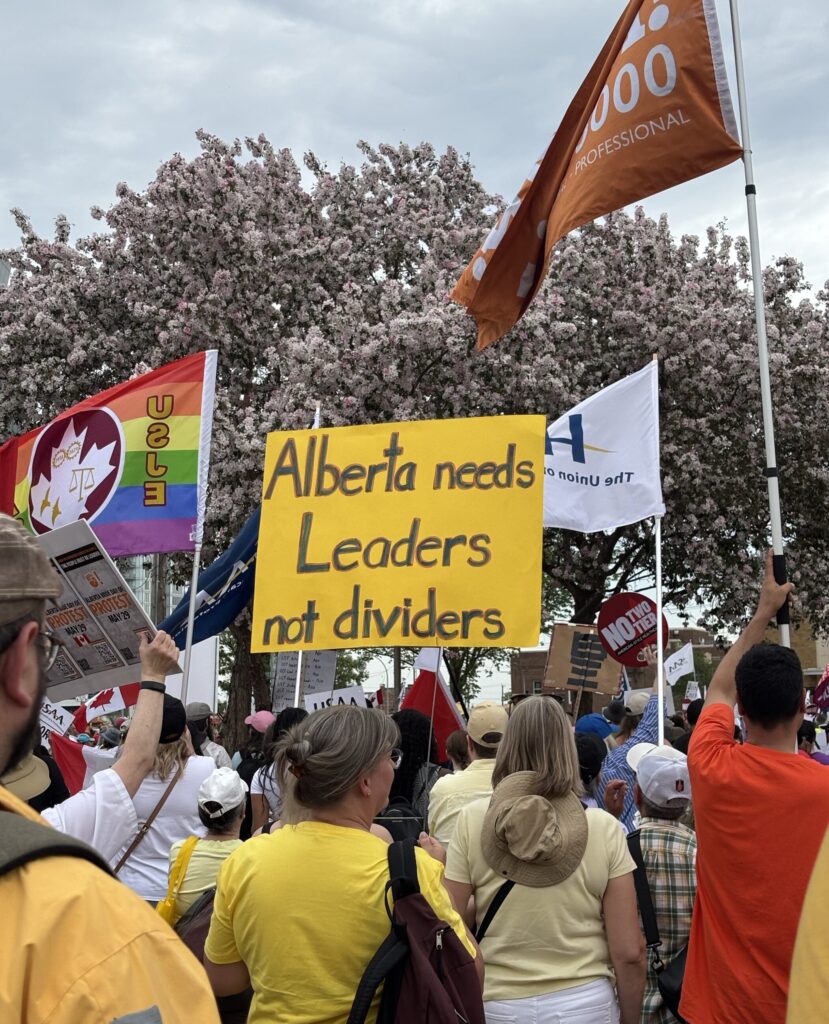
Rigged game: The 79 percent of Canadians who oppose Alberta’s separation would likely applaud the federal Clarity Act’s many built-in obstructions against secession – yet the very strength of that bias, the authors argue, could backfire by inflaming separatist passions. Shown, Alberta Federation of Labour anti-UCP protest, Edmonton, May 2026. Rigged game: The 79 percent of Canadians who oppose Alberta’s separation would likely applaud the federal Clarity Act’s many built-in obstructions against secession – yet the very strength of that bias, the authors argue, could backfire by inflaming separatist passions. Shown, Alberta Federation of Labour anti-UCP protest, Edmonton, May 2026. (Source of photo: Jenari/Shutterstock)

Alberta and Canada’s future would henceforth be decided by unpredictable and uncontrollable processes outside the Constitution. That could bring disaster upon all sides. The Clarity Act as constituted should thus be regarded as a threat not only to separatist Albertans but to federalists inside Alberta and across Canada.

How could such a strange law even come to be? Especially one that purports to grapple with as primordial an issue as the continued membership in Canada of its constituent parts. Such matters have unleashed division, repression, revolution and war throughout history. How is an utter mess like the federal Clarity Act supposed to heal political wounds, preserve the rule of law and prevent bloodshed? While the results of Part I’s examination of the Clarity Act may leave someone trying to make sense of the looming showdown between Alberta and Ottawa baffled or frustrated, one can gain at least some clarity by reviewing how the political upheaval that gave rise to the Clarity Act was focused on a different province, and on that province alone: Quebec.
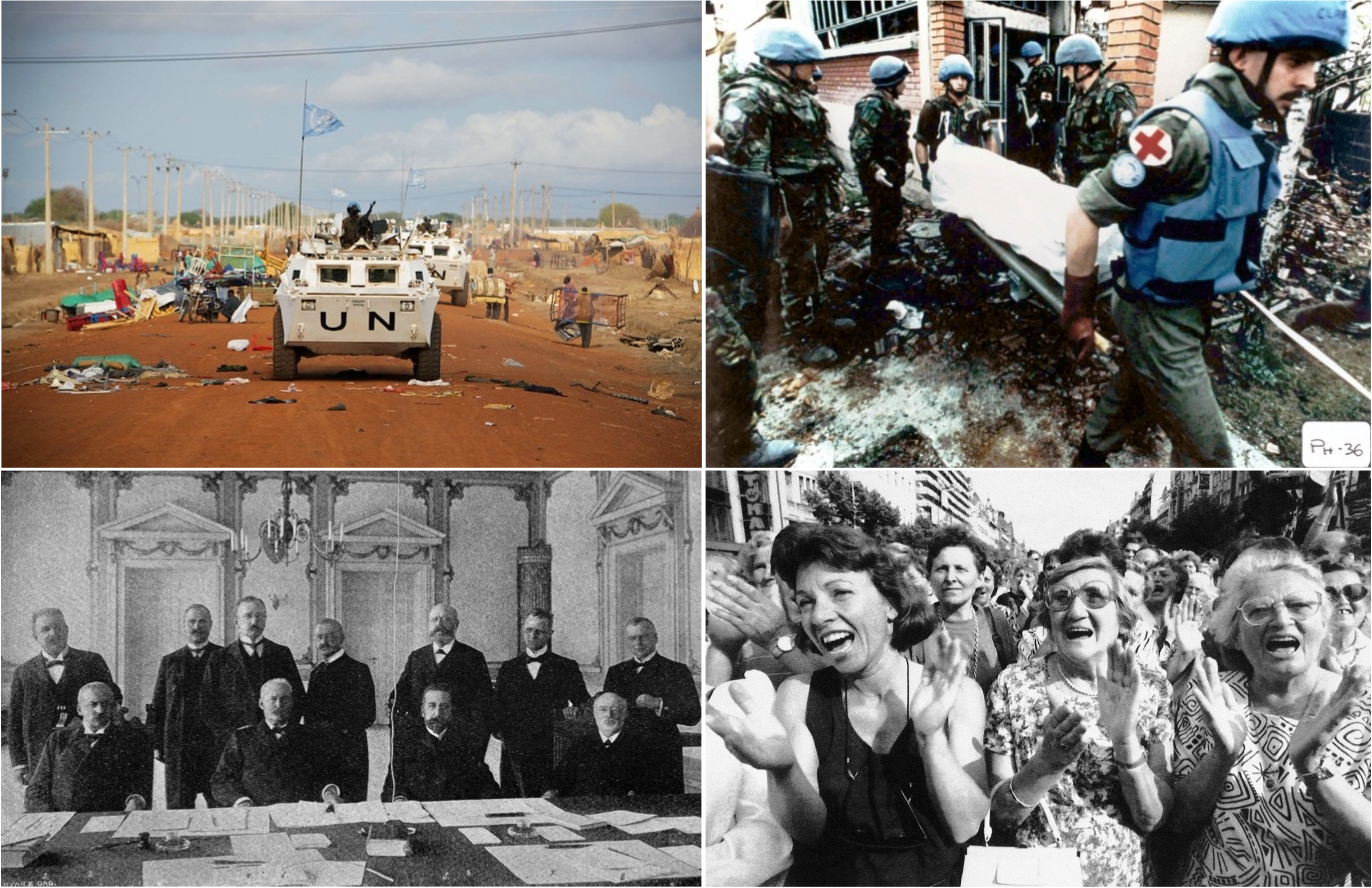
History’s warning: National breakups are innately unpredictable, sometimes accentuating deep divisions and unleashing violence, as in the secession of South Sudan (top left; shown, UN peacekeepers patrol disputed Abyei area on Sudan-South Sudan border, 2011) or during the Yugoslavian civil wars (top right; shown, UN peacekeepers collect corpses after the massacre of Bosniak civilians in Ahmići, Bosnia and Herzegovina, 1993). But countries can also part ways peacefully, as in the dissolution of Norway’s union with Sweden (bottom left; shown, delegates meeting in Karlstad to negotiate the breakup, 1905) or the famous “Velvet Divorce” between the Czech and Slovak republics (bottom right; shown, a pro-separation rally in Prague, 1992).
xHistory’s warning: National breakups are innately unpredictable, sometimes accentuating deep divisions and unleashing violence, as in the secession of South Sudan (top left; shown, UN peacekeepers patrol disputed Abyei area on Sudan-South Sudan border, 2011) or during the Yugoslavian civil wars (top right; shown, UN peacekeepers collect corpses after the massacre of Bosniak civilians in Ahmići, Bosnia and Herzegovina, 1993). But countries can also part ways peacefully, as in the dissolution of Norway’s union with Sweden (bottom left; shown, delegates meeting in Karlstad to negotiate the breakup, 1905) or the famous “Velvet Divorce” between the Czech and Slovak republics (bottom right; shown, a pro-separation rally in Prague, 1992). (Sources of photos: (top left) United Nations Photo, licensed under CC BY-NC-ND 2.0; (top right) Courtesy of the ICTY; (bottom right) AP Photo/David Brauchli)

Canada at the Brink

Younger readers and newcomers to Canada must envision a national scene in which Canada’s political elites from coast to coast – most especially in Ottawa and elsewhere in Ontario – were terrified, indeed close to paralyzed, by the thought of Quebec seceding from Canada. Outside Quebec, “separation” had become unspeakable – almost literally so, a veritable taboo.

Anyone suggesting it might be time to try an approach other than the failed policies of the previous 30 years – continuous self-abasement of the federalist cause and ever-more extravagant appeasement of Quebec’s nationalists – was viciously shouted down, including with words like “traitor” and “treason”. Such an atmosphere discouraged, to say the least, clear thinking about how to protect Canada’s interests should Quebeckers vote “Yes” to leaving Canada.
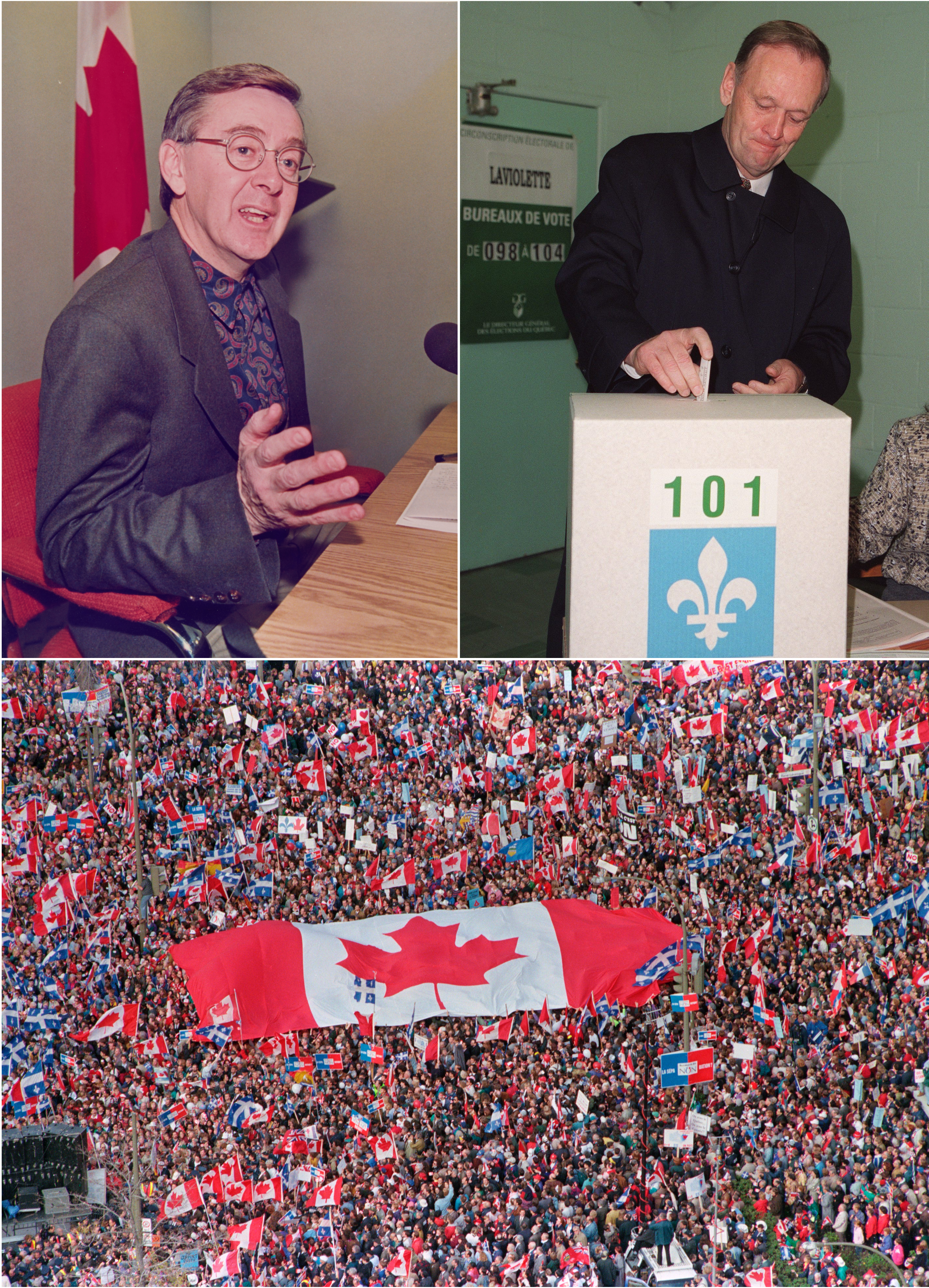
The courage of clarity: As Quebec prepared for another sovereignty referendum on separation in the mid-90s, Reform Party leader Preston Manning (top left) was almost alone in urging the Liberal government of Jean Chrétien (top right, shown casting his ballot on October 30, 1995) to get tough with the separatists; Chrétien merely begged Quebeckers to stay. At bottom, thousands gather at a pro-unity rally three days before the vote.
xThe courage of clarity: As Quebec prepared for another vote on separation in the mid-90s, Reform Party leader Preston Manning (top left) was almost alone in urging the Liberal government of Jean Chrétien (top right, shown casting his ballot on October 30, 1995) to get tough with the separatists; Chrétien merely begged Quebeckers to stay. At bottom, thousands gather at a pro-unity rally three days before the vote. (Sources of photos: (top left) The Canadian Press/files; (top right) CP Photo/Jacques Boissinot; (bottom) The Canadian Press/Ryan Remiorz)

The sole national organization convinced that clarity was exactly what Canada needed was the Reform Party of Canada. Its leader, Preston Manning, and his most important MP, future Conservative Prime Minister Stephen Harper, both elected in 1993 along with 50 other Reform Party candidates, demanded that Ottawa get tough with Quebeckers and their government, including by spelling out what a vote for separation would actually mean. To no avail; Reform was contemptuously waved aside. “Even conceiving of breaking up Canada was treated like treason at the time,” recalls Harper in an interview. But the Parti Québécois government was thinking of nothing but steadily escalating matters and calling a referendum for October 30, 1995.

Canada’s over-confident federalists, including Liberal Prime Minister Jean Chrétien, sleepwalked to the very precipice of disaster, awakening from their complacency only at the last minute and then desperately begging Quebec to stay. It worked – just. With a voter turnout pushing 90 percent, Quebec came within 50,000 ballots of voting for independence, with only 50.58 percent voting “No” against 49.42 percent “Yes”.

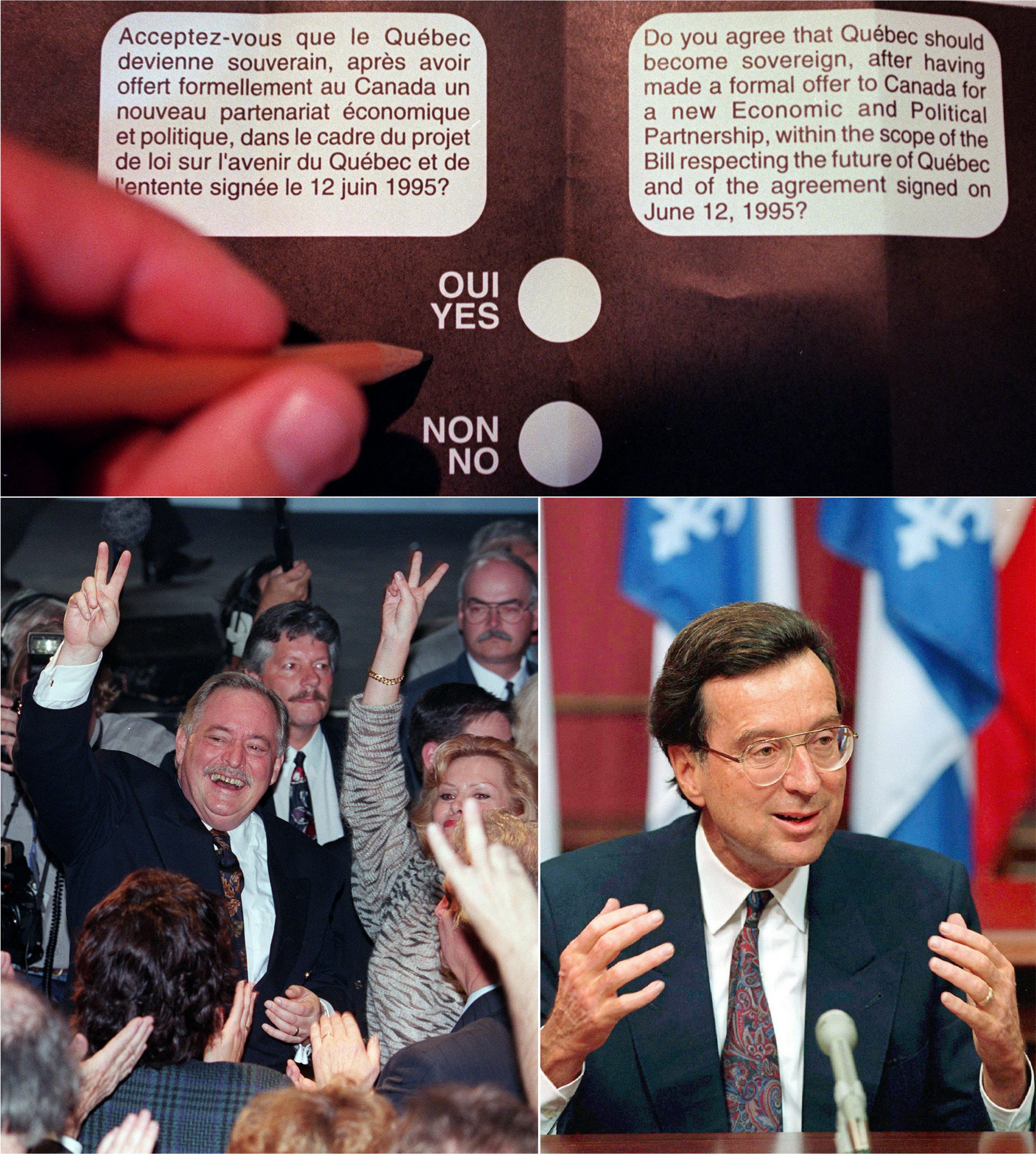
The referendum question had been oddly complex and vague, referring to outside events that required significant political knowledge: “Do you agree that Québec should become sovereign after having made a formal offer to Canada for a new economic and political partnership within the scope of the bill respecting the future of Québec and of the agreement signed on June 12, 1995?” Following the failure of previous constitutional reforms in the Meech Lake Accord and Charlottetown Accord, many Quebeckers surely assumed they were merely being asked to support a better negotiating position to strengthen Quebec within Canada.

The ambiguity was deliberate. Unbeknownst to all but a few insiders, PQ leader Jacques Parizeau and his team had prepared a unilateral declaration of independence to be issued the very day after the vote, recalls veteran Conservative MP (Lanark-Frontenac) Scott Reid, author of the 1994 book Canada Remapped that examined the potential partitioning of Quebec in the event of the province’s separation from Canada. Their strategy was ruthless and deeply cynical.

“The Parizeau government had a very well-thought-out plan to put Canada into a crisis where we wouldn’t be able to refinance our debt, so that Quebec would hold the whip hand in any negotiations,” says Reid in an interview. “You can’t be fiddling around, trying to work out the details of your negotiating process, even as you can’t plug your bonds in international markets anymore, while the only people who can bail you out are the people who are your opponents. That’s what would have happened.” Quebec could have all but dictated its terms to the Government of Canada, becoming an independent state while cherry-picking a few convenient ties to Canada.
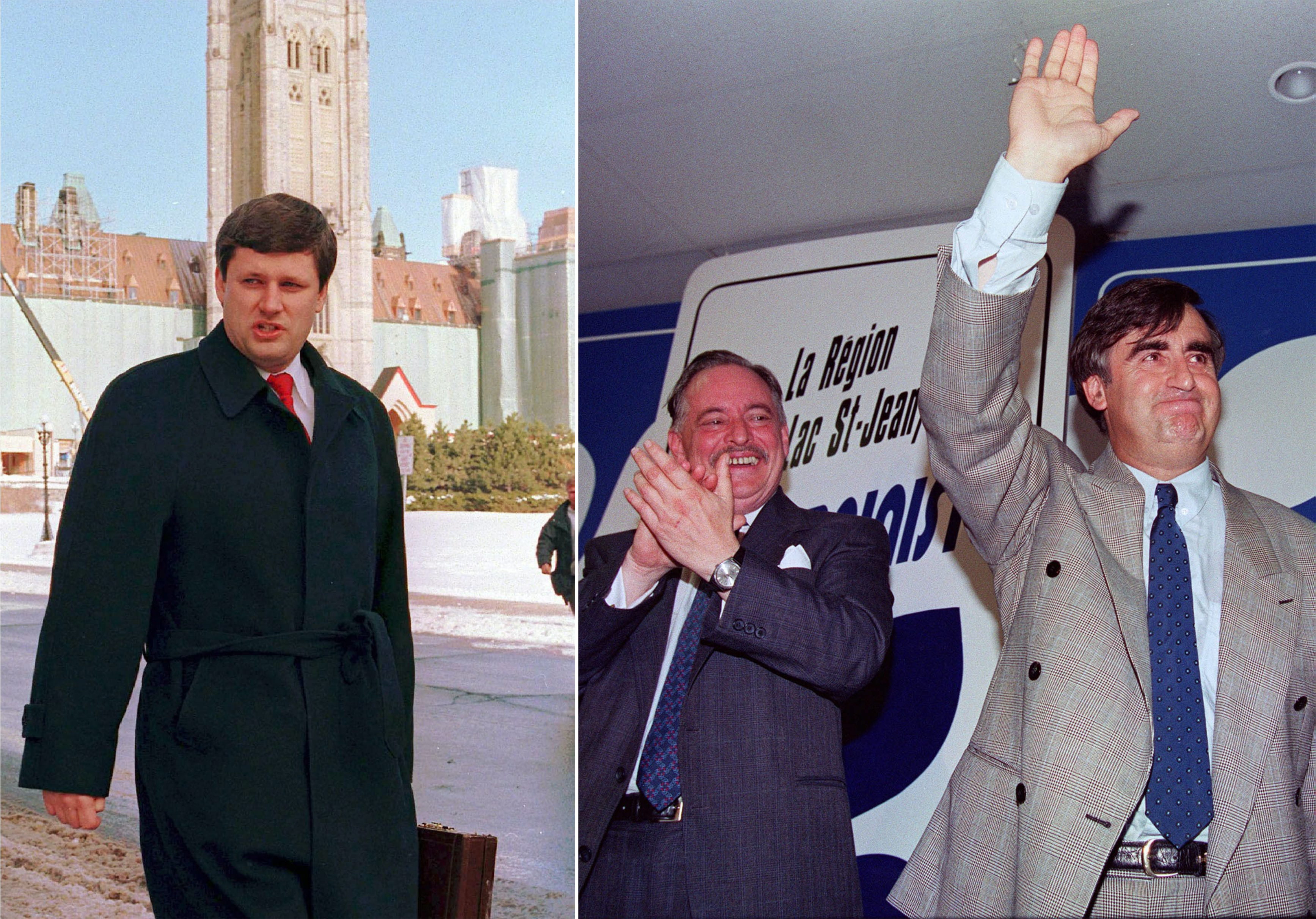
Tough love: Following the near-catastrophe of Quebec’s 1995 referendum, Reform Party MP and future Conservative Prime Minister Stephen Harper (left) tabled Bill C-341, the Quebec Contingency Act, which clarified that a future “Yes” vote would be a vote for complete secession and nothing else. The Bill was ignored by the Liberal government and the separatist movement continued to grow under Parizeau’s successor, Lucien Bouchard (right, at right).
xRuthless strategy: The 1995 Quebec referendum’s deliberately vague and convoluted question (top) was designed by the Parti Québécois (shown at bottom left, PQ leader Jacques Parizeau) to lure Quebeckers – and perhaps even “soft nationalists” or pseudo-federalists, such as former Liberal Premier Robert Bourassa (bottom right) – into voting “Yes”. If successful, it likely would have triggered a national crisis in which Quebec effectively dictated the terms of its own unilateral independence. (Sources of photos: (top) CP Photo/Ryan Remiorz; (bottom left) CP Photo/Clement Allard; (bottom right) CP Photo/Jacques Boissinot)

After news of that scenario spread, the Reform Party caucus and a few other clear-headed federalists grew determined to prevent that from occurring. Something needed to be done to turn the tables on Quebec’s uncompromising separatists in a future referendum. Quebec’s previous two referendums on independence relied on what Conrad Black in a recent column called “trick questions”, employing oxymoronic terms like “sovereignty-association”. The federalists needed measures that would prevent the province’s secession process from being rushed, based on frivolous motives, excuses or manipulation, or declared valid based on a bare majority in favour.

More broadly, the federalists wanted to prevent an open-ended series of referenda all using disingenuous or murkily worded questions designed to coax Quebeckers ever closer to voting “Yes”. It was even conceivable that such a referendum might be called by an insincerely “federalist” Liberal Premier such as Robert Bourassa. Quebec’s restrictive election laws assigned the “No” campaign to the province’s Official Opposition, meaning in turn that the case for remaining in Canada would be led by the hard-core separatist Parizeau.

Having played central if unacknowledged roles in exposing the absurdity and danger of the situation, Manning and Harper set about laying the foundation to rectify it. They developed a two-plan strategy. Plan A was a set of proposed federal reforms to offer Quebeckers a better deal within Canada. Plan B was ensuring that, if Quebec’s separatists said no to that, they’d be unable to steamroll over Canada in a future referendum and any subsequent negotiations.
The federal Clarity Act was passed by the Liberal government of Jean Chrétien in 2000 following a 1998 Supreme Court of Canada reference opinion on Quebec secession. It was designed not to provide a clear path to secession but to prevent Quebec from separating. By providing “clarity” to Quebeckers that voting “Yes” was a vote for complete independence and nothing else, the Act aimed to dampen support for the “Yes” side and to prevent the province from using a referendum to gain leverage for a “better deal”. Should Quebeckers still vote to separate, however, the Act’s provisions created a political and legal minefield blocking the path to independence, by giving almost all decision-making power to the federal government and making the process of negotiating separation nearly impossible.

Stephen Harper’s Tough-Love Law

On October 30, 1996 – one year after Quebec’s almost-successful vote to leave – Harper tabled a draft law in the House of Commons: Bill C-341, the Quebec Contingency Act (referendum question). In plain and uncompromising language, the brief bill declared that:

  • The Government of Canada would determine whether a referendum question on separation was “clear and unambiguous”;
  • If it wasn’t, on the same day as Quebec’s referendum the GoC would hold a parallel referendum using a clear question;
  • The parallel referendum would ask:
  • “(a) should Quebec separate from Canada and become an independent country with no special legal ties to Canada — YES or NO?
  •   (b) if Quebec separates from Canada, should my community separate from Quebec and remain a part of Canada — YES or NO?”
  • If Quebec’s preferred question was declared to be clear, the subsequent referendum would pass if a simple majority of the ballots cast were marked “Yes”;
  • Following a “Yes” vote to a clear question, “the Government [of Canada] is authorized to enter into discussions with the government of Quebec to conclude an agreement on the terms on which Quebec might separate from Canada”;
  • A separation agreement would be put to a national referendum;
  • The constitutional amendments required to effect separation would require the consent of every province; and
  • A unilateral declaration of independence was not only illegal, but the GoC would refuse to recognize any such declaration and continue to govern Quebec as before.

Bill C-341 was intended and worded to signal to Quebeckers that any future vote on separation would be truly a vote to leave Canada entirely – and nothing else. This message, even more than the wording of the bill itself, was its main intended point of “clarity”. Under Plan A, Quebec would already have been offered a better deal, and its government would have rejected it, or there would not now be another vote on separation. Meaning that Plan B was now in effect.

Critically, Harper’s bill clearly set forth what would constitute a clear majority to be recognized by Ottawa as reflecting the will of Quebeckers: a simple majority of the ballots cast. The bill did not demand the much higher threshold of a majority of eligible voters, let alone the entire population, nor specify separate geographically defined majorities, such as in the major cities as well as rural Quebec, nor a majority of aboriginal voters, nor some kind of super-majority, such as majorities in two-thirds of all of Quebec’s voting constituencies. The Reform Party’s bill had clarity written directly into it.

Ruthless strategy: The 1995 Quebec referendum’s deliberately vague and convoluted question (top) was designed by the Parti Québécois (shown at bottom left, PQ leader Jacques Parizeau) to lure Quebeckers – and perhaps even “soft nationalists” or pseudo-federalists, such as former Liberal Premier Robert Bourassa (bottom right) – into voting “Yes”. If successful, it likely would have triggered a national crisis in which Quebec effectively dictated the terms of its own Unilateral Declaration of Independence. Tough love: Following the near-catastrophe of Quebec’s 1995 referendum, Reform Party MP and future Conservative Prime Minister Stephen Harper (left) tabled Bill C-341, the Quebec Contingency Act, which clarified that a future “Yes” vote would be a vote for complete independence and nothing else. The Bill was ignored by the Liberal government and the separatist movement continued to grow under Parizeau’s successor, Lucien Bouchard (right, at right). (Sources of photos: (left) CP Photo/Fred Chartrand; (right) CP Photo/file)
Yet its underlying purpose was the opposite of what Harper and Manning’s many critics claimed – that Reform wanted to push Quebeckers out of Canada. Instead, by removing lingering ambiguity that such a vote might be merely about “sending a message to Ottawa,” “strengthening Quebec’s negotiating position,” “pushing for a better deal,” etc., the Reform measure was designed to reduce the size of a future “Yes” vote. By creating a stark and achievable pathway to independence, it aimed to reduce the likelihood of such a thing happening. This is a key point to keep in mind when considering the actual Clarity Act’s effects on Alberta today.

Though Harper’s bill was never formally debated, dying on the Order Paper, and like nearly all of Reform’s ideas triggering extended vitriol from the Liberals, Bloc Québécois, NDP and central Canadian media, its key ideas circulated and quietly took hold. That same year, Lucien Bouchard succeeded Parizeau as PQ leader and soon threatened yet another referendum. Pressure mounted on Chrétien’s government. But no clarity-related government bill was forthcoming.

The Supreme Court of Canada Reference Case on Quebec Secession

In 1996 Chrétien’s government submitted a “reference” request to the Supreme Court of Canada seeking judicial guidance regarding the constitutionality and legality of Quebec separating from Canada. It remains unclear whether this was done to overcome internal divisions in the Liberal caucus, to buy time and kick the can down the road, or to gain cover from the highest court to deflect the inevitable fury from Quebec’s nationalists at any “tough love” referendum law.

The reference asked the Supreme Court to answer three questions:

“1.       Under the Constitution of Canada, can the National Assembly, legislature or government of Quebec effect the secession of Quebec from Canada unilaterally?

   2.       Does international law give the National Assembly, legislature or government of Quebec the right to effect the secession of Quebec from Canada unilaterally? In this regard, is there a right to self‑determination under international law that would give the National Assembly, legislature or government of Quebec the right to effect the secession of Quebec from Canada unilaterally?

   3.       In the event of a conflict between domestic and international law on the right of the National Assembly, legislature or government of Quebec to effect the secession of Quebec from Canada unilaterally, which would take precedence in Canada?”

On August 20, 1998, the Supreme Court issued its decision, signed by all nine justices including Chief Justice Antonio Lamer. At its simplest, the Court answered “No”, “No” and “No conflict”, respectively. It was not deaf to political realities, however. Quebec’s independence movement was large, powerful and anything but transient. Its agenda couldn’t simply be ignored. Accordingly, the Court did not declare that no province could ever leave Canada under any circumstance.

Instead, it issued a number of findings whose stripped-down, paraphrased versions soon became famous. In paragraph 88, arguably the decision’s lynchpin, the Court stated:

“The federalism principle, in conjunction with the democratic principle, dictates that the clear repudiation of the existing constitutional order and the clear expression of the desire to pursue secession by the population of a province would give rise to a reciprocal obligation on all parties to Confederation to negotiate constitutional changes to respond to that desire.”

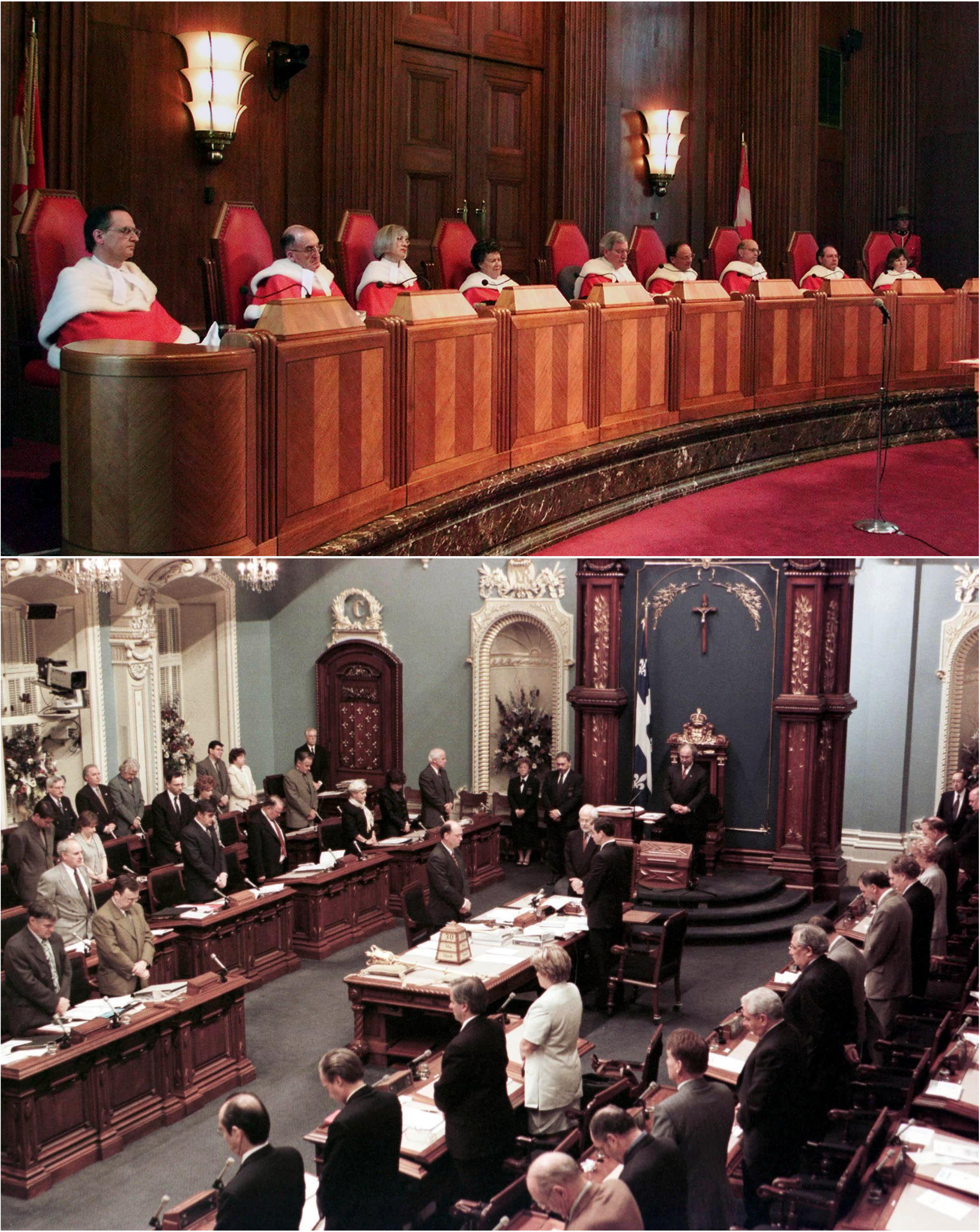
In its reference to the Supreme Court of Canada (top), the Chrétien government asked whether Quebec’s National Assembly (bottom) could unilaterally lead the province out of Canada. While answering a firm “No”, the Court affirmed that a “clear majority” vote for independence would impose a solemn duty upon Ottawa to negotiate the possibility of secession in good faith.
xIn its reference to the Supreme Court of Canada (top), the Chrétien government asked whether Quebec’s National Assembly (bottom) could unilaterally lead the province out of Canada. While answering a firm “No”, the Court affirmed that a “clear majority” vote for independence would impose a solemn duty upon Ottawa to negotiate the possibility of secession in good faith. (Sources of photos: (top) CP Photo/Fred Chartrand; (bottom) CP Photo/Clement Allard)

The court pointedly warned both sides, however, not to regard negotiations as leading to a guaranteed result. “No negotiations could be effective if their ultimate outcome, secession, is cast as an absolute legal entitlement based upon an obligation to give effect to that act of secession in the Constitution,” it stated in paragraph 91, before adding in the following paragraph that, “The rights of other provinces and the federal government cannot deny the right of the government of Quebec to pursue secession, should a clear majority of the people of Quebec choose that goal…” [Emphasis added] The Supreme Court’s introduction of the concept of “clear” majority was a significant departure from Harper’s bill that envisioned only a simple majority.

As for implementation, the Court left essentially everything up to the political process, and explicitly so. Any changes to the future structure and makeup of Canada, it held, must be fundamentally a matter not of litigation but of negotiation. This point being critical to Alberta’s present-day situation, it is worth quoting at length:
“The task of the Court has been to clarify the legal framework within which political decisions are to be taken ‘under the Constitution’ and not to usurp the prerogatives of the political forces that operate within that framework. The obligations identified by the Court are binding obligations under the Constitution. However, it will be for the political actors to determine what constitutes ‘a clear majority on a clear question’ in the circumstances under which a future referendum vote may be taken. Equally, in the event of demonstrated majority support for Quebec secession, the content and process of the negotiations will be for the political actors to settle. The reconciliation of the various legitimate constitutional interests is necessarily committed to the political rather than the judicial realm precisely because that reconciliation can only be achieved through the give and take of political negotiations. To the extent issues addressed in the course of negotiation are political, the courts, appreciating their proper role in the constitutional scheme, would have no supervisory role.” [Emphasis added]

In an age of ever-increasing judicial activism, the Supreme Court of Canada exercised decided restraint in recognizing that the future of a country and its constitution cannot be imposed by judges but must be debated, negotiated and passed into law by the people’s elected representatives and, potentially, ratified by the people themselves.

The federal Clarity Act of 2000 omits any criteria for what constitutes a “clear expression of a will by a clear majority” in a referendum on secession, other than noting that something so important requires a majority stronger than just 50-percent-plus-one-vote. The House of Commons is required to “take into account” factors like vote size and voter turnout as well as the views of all other provinces, territories and aboriginal groups, at minimum. This multi-layered ambiguity enables the federal government to declare virtually any “Yes” majority unclear, effectively forestalling any negotiations for independence. Even if that hurdle was overcome and negotiations began, other provisions in the Clarity Act further stack the deck in favour of Ottawa and against provincial independence.

The Clarity Act

The Supreme Court had delivered the outlines for the GoC to build a clear and tough but fair framework for a future secession referendum and negotiating process. Finally in December 1999 Stephane Dion, Chrétien’s Minister of Intergovernmental Affairs, introduced Bill C-20, An Act to give effect to the requirement for clarity as set out in the opinion of the Supreme Court of Canada in the Quebec Secession Reference, which became known as the Clarity Act. It was proclaimed on June 29, 2000.

The Act codified the Court’s answers to the three big questions, but in a way applying to all provinces. The Act purported to address four main points:

  • The referendum question, including the origin of any question that would be used to initiate the process towards independence;
  • The clarity of the referendum question, as to “whether the question would result in a clear expression of the will of the population of a province on whether the province should cease to be part of Canada and become an independent state,” and who would adjudicate that clarity;
  • The referendum results, including whether these represent “a clear expression of a will by a clear majority of the population of that province that the province cease to be part of Canada,” and who would adjudicate the result’s clarity; and
  • The referendum consequences, including the mechanism by which a province’s secession would be effected and the criteria that must be met for the mechanism to be engaged.

Very little in the Clarity Act proved clear, however. Though it demands that a referendum question be clear, it does not define “clarity” nor provide wording for a clear question, as Harper’s bill did. Another difference: the Clarity Act ditched his bill’s specification that a simple majority of ballots cast on a clear question be sufficient to trigger secession negotiations, instead demanding a “clear majority” that must be more than 50-percent-plus-one-vote but remains otherwise undefined. There is no provision for a parallel federal referendum in the secession-voting province, nor for a national referendum to ratify any secession deal.

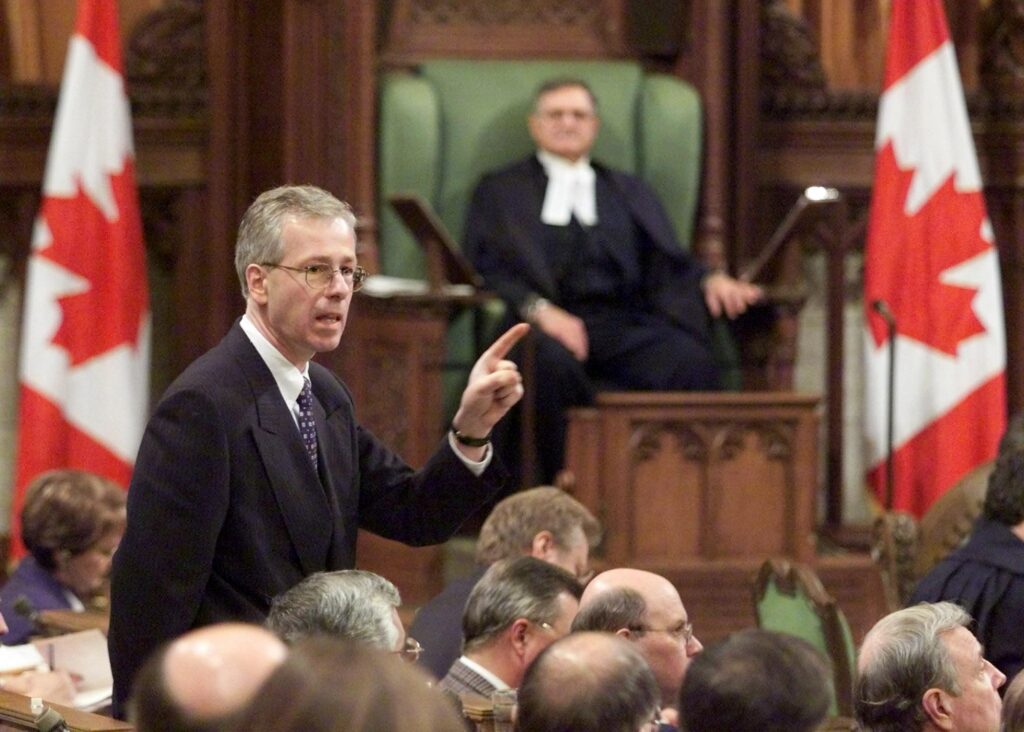
Out of sight, out of mind? Introduced by Intergovernmental Affairs Minister Stéphane Dion (shown, standing) in late 1999, the Clarity Act not only left key concepts undefined, placing future decision-making in Ottawa’s hands, but refused to spell out how secession negotiations could commence even after its conditions were met.Out of sight, out of mind? Introduced by Intergovernmental Affairs Minister Stéphane Dion (shown, standing) in late 1999, the Clarity Act not only left key concepts undefined, placing future decision-making in Ottawa’s hands, but refused to spell out how secession negotiations could commence even after its conditions were met. (Source of photo: CP Photo/Tom Hanson)
The Clarity Act also departs significantly from the Supreme Court opinion in its treatment of secession negotiations, essentially turning a key Supreme Court finding on its head. Where the reference opinion clearly states that secession negotiations must occur following a clear majority on a clear question, the Act recurringly states that the GoC “shall not enter into negotiations” unless such-and-such happens – but nowhere states that negotiations shall begin if the required conditions are fulfilled. The Supreme Court created an obligation to negotiate; the Clarity Act seems worded to slip out from under that.

The Liberals’ 2000 law instead places nearly all key decisions in the hands of the House of Commons, i.e., the Prime Minister’s Office, with the GoC given broad scope to seek input from other provinces, aboriginal groups and any other entities it considers relevant. And none of Ottawa’s decisions can be appealed by the province wishing to separate. Please see Part I for the full discussion of what is clear and unclear in the Clarity Act.

Still, the Clarity Act as well as the somewhat improved clarity of thinking in Ottawa had a salutary effect on Quebec’s relationship with Canada. “The notion that a province can set the question it wants, hold a referendum and then unilaterally set the terms for the negotiations leading to its departure on its own terms was out the window,” recalls Harper. The Supreme Court reference, the subsequent federal law and Quebec’s own fiscal problems and internal political turmoil all took the steam out of Quebec’s separatist movement, a happy result that essentially endured for 25 years.

A Present-day Referendum on Provincial Independence

The implications of the discussion above and in Part I for any provincial citizenry that may contemplate separating from Canada are significant, to put it at its mildest. A good-faith reading of the Clarity Act and Supreme Court reference, combined with the historical factors that led to the law taking its peculiar form, suggest the deck is stacked overwhelmingly against independence. And it can be expected that every entity across Canada opposed to a particular province’s independence will exploit these advantages to the fullest.

The referendum question – Except for drafting and announcing the referendum question itself, and picking the date for the vote, the province contemplating separation will not be in control of the process. Ottawa will. The first hurdle – a major one – is the GoC’s power to vet the proposed referendum question and seek the opinion of as many anti-independence entities as it desires.

Notwithstanding the Act’s 30-day deadline to rule on the question’s clarity, and the Supreme Court’s pointed statement that secession is a fundamentally political question, in today’s litigious and Charter-focused environment, any anti-independence entity whose views the Act says should be “taken into account” will consider itself free to go to court claiming it was insufficiently consulted, in order to derail the process. This has already happened in Alberta, though in this case, outside the Clarity Act’s framework.

Some are even claiming that the Clarity Act empowers Ottawa to vet any referendum question in detail, or even draft the question itself, before a vote and, if it doesn’t, then no question of any kind can even be posed. Alberta’s Treaty 8 First Nations chiefs have demanded just such intervention. Prime Minister Mark Carney, to his credit, seems to have put that controversy to rest by noting two weeks ago that Alberta’s current planned question – “Should Alberta remain a province of Canada or should the Government of Alberta commence the legal process required under the Canadian Constitution to hold a binding provincial referendum on whether or not Alberta should separate from Canada?” – won’t trigger the Clarity Act’s review process because it is not a binding vote on separation.

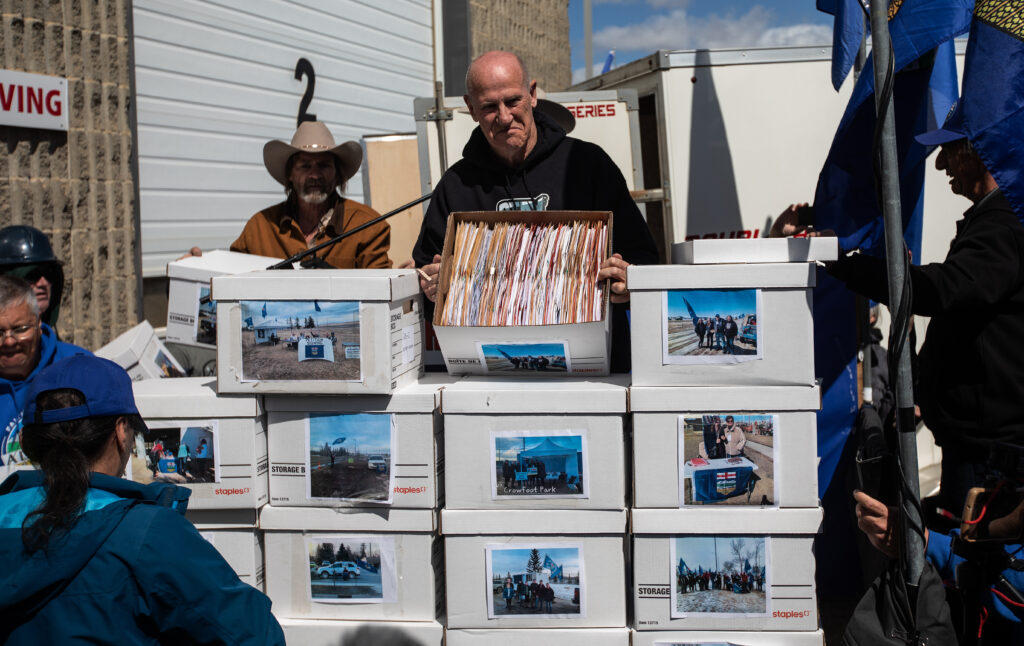
Negotiations delayed are negotiations denied: The Clarity Act requires that Ottawa consult with all other provinces and territories, aboriginal groups and any other entity it chooses, providing an opening to virtually any interested party to delay separation by demanding the right to be consulted. A similar scenario has already unfolded in Alberta, where a Court of King’s Bench ruling invalidated a citizen-led separatism petition over a failure to consult Indigenous groups. Shown, boxes containing the rejected signatures in Edmonton, May 2026. Negotiations delayed are negotiations denied: The Clarity Act requires that Ottawa consult with all other provinces and territories, aboriginal groups and any other entity it chooses, providing an opening to virtually any interested party to delay separation by demanding the right to be consulted. A similar scenario has already unfolded in Alberta, where a Court of King’s Bench ruling invalidated a citizen-led separatism petition over a failure to consult Indigenous groups. Shown, boxes containing the rejected signatures in Edmonton, May 2026. (Source of photo: The Canadian Press/Jason Franson)
A “Yes” vote – Following a majority “Yes” vote, Ottawa and its multiplicity of anti-independence allies will seek reasons to declare the majority “unclear”. These will range from at least superficially plausible mathematical or geographical concerns – too low a turnout, not enough support in major cities – to claims by woke groups that insufficient voters of various races, ethnicities, gender identifications, etc. had voted to separate. Though spurious, such claims will create an additional hurdle threatening to halt or seriously delay the process. Also two weeks ago, Carney reiterated that 50-percent-plus-one-vote will not be sufficient. But he ventured no opinion on what might.

Secession negotiations – Any negotiations regarding independence, if they take place at all, will not be contained or predictable, let alone linear or short. The Clarity Act’s vagueness, one-sidedness and refusal to specify when and how negotiations may begin, and what conditions would bring them to an end, mean these talks are guaranteed to be complex, bitter, unstable and extended.

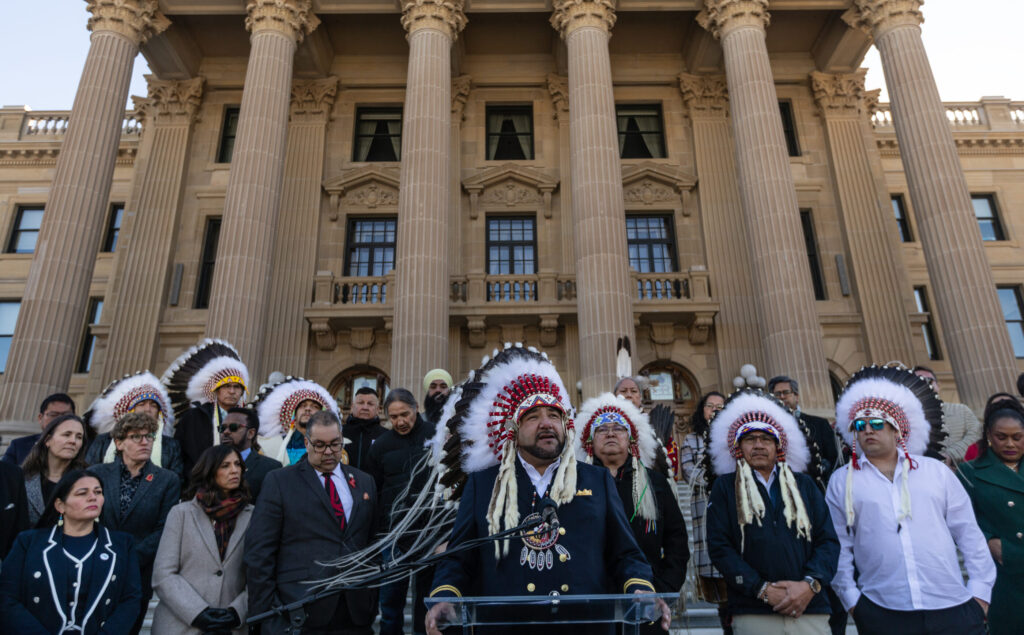
My way or nay: Treaty 8 First Nations chiefs, led by Grand Chief Trevor Mercredi (centre), recently called for Ottawa to vet any Alberta independence referendum question, even for a non-binding vote, and to retain the option of blocking it. Their presumptuous demand proved too much for Prime Minister Mark Carney.My way or nay: Treaty 8 First Nations chiefs, led by Grand Chief Trevor Mercredi (centre), recently called for Ottawa to vet any Alberta independence referendum question, even for a non-binding vote, and to retain the option of blocking it. Their presumptuous demand proved too much for Prime Minister Mark Carney. (Source of photo: The Canadian Press/Jason Franson)
The government of the province wishing to separate will be up against not only the GoC but every party in the House of Commons, the government of nearly every other province and territory, aboriginal groups, and a broad swath of interest groups that the federal government can call upon to strengthen its position and weaken the separating province. At each step, the GoC will have opportunities and incentives to bog down, sabotage, derail or otherwise prevent the negotiations from coming to fruition.

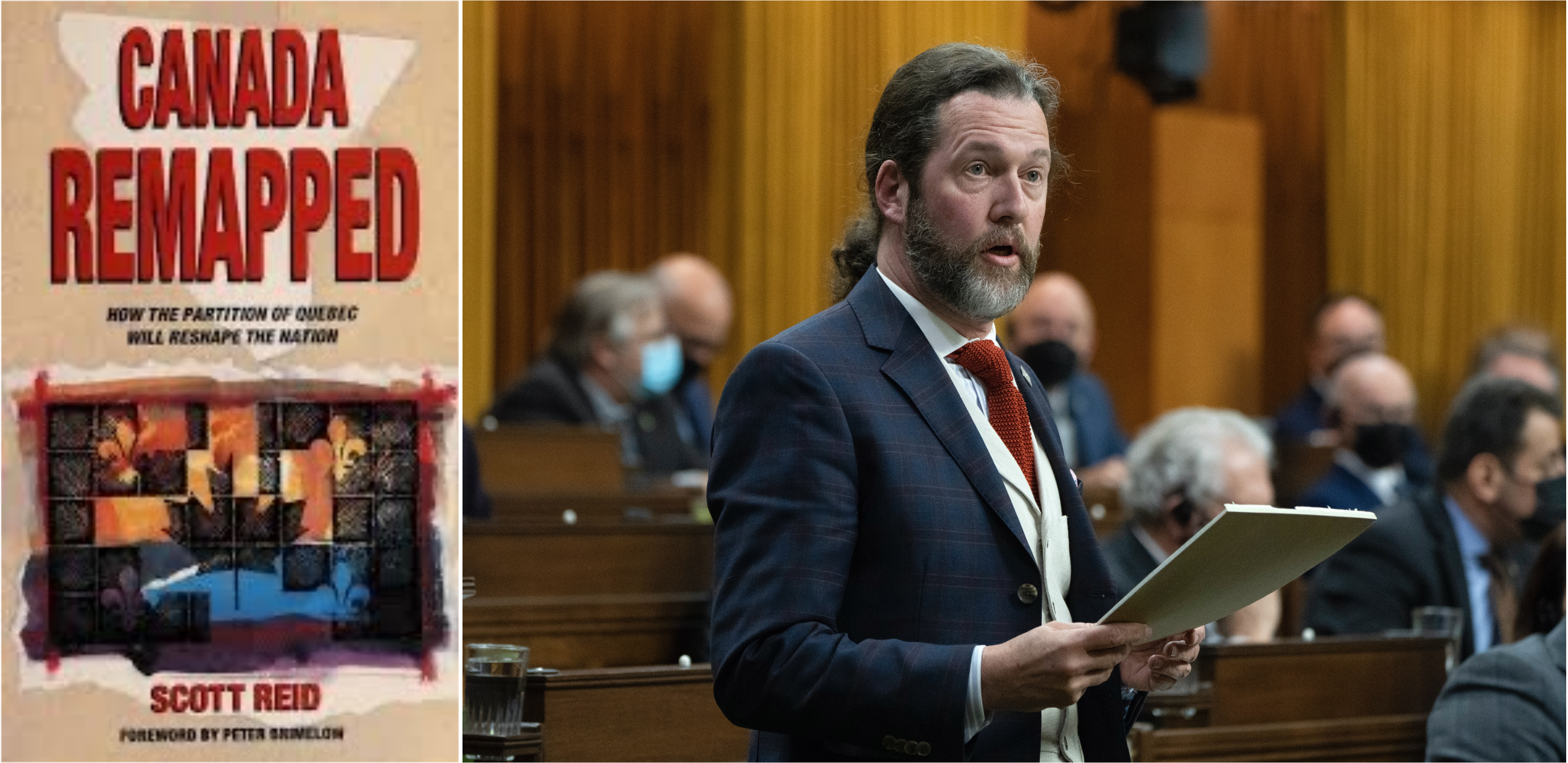
Sheer incompetence is also likely to enter the picture, complicate matters and increase friction and strife. “We are one of the most sclerotic, inefficient bureaucracies in the world,” notes Conservative MP Reid. “We can’t [properly] administer our prisons, right? We can’t administer ArriveCan. We can’t administer our ports correctly. We can’t administer airports. You know, how on earth are we going to administer this crisis?”

Provincial boundaries – An especially intense source of pressure and opportunity for federal mischief will be demands to alter the boundaries of the separating province in order to “rescue” or “safeguard the interests” of geographically concentrated federalist minorities as well as First Nations located in that province. This was prominently mooted during the bitter debates over Quebec’s future in the 1980s and 1990s, and was an explicit provision in the Reform Party’s private member’s bill. The Clarity Act lays another landmine by mentioning this possibility and then leaving it to future negotiations to sort out.

By making the constitutional path to provincial independence a mirage through its many obstacles that leave nearly all decision-making power in the federal government’s hands, the Clarity Act might inadvertently push a province whose population had voted a decisive “Yes” on secession toward a unilateral declaration of independence. This was what Quebec separatists were planning if they won that province’s referendum on October 30, 1995. The Clarity Act of 2000 was designed to prevent that from occurring. But the legislation’s maximalist approach – it stacks the deck entirely against accepting a “Yes” vote and then negotiating secession in good faith – risks inflaming separatist sentiment and demolishing the federalist cause. Although the Supreme Court of Canada has declared a unilateral declaration of independence unlawful, if Albertans conclude the process is a sham, their perceptions of bad faith could encourage a frustrated province to pursue extra-constitutional means.

Amending the Constitution – If by some combination of provincial willpower and sheer luck the negotiations end with Ottawa acquiescing to the province’s separation, independence can only come about by amending Canada’s Constitution. While some have advocated requiring provincial unanimity for such an amendment, the Clarity Act does not say so, suggesting the “standard” 7/50 process would apply. This process has been attempted with the 1987 Meech Lake Accord and the 1992 Charlottetown Accord, both of which failed ignominiously after extended negotiations and nationwide political strife. Interestingly, this process does have a time-limit under the Clarity Act: if even one required entity declines to pass the amendment in question within three years, the entire amendment effort lapses.

“We are one of the most sclerotic, inefficient bureaucracies”: While Ottawa would have every incentive to delay or derail secession negotiations following any Unilateral Declaration of Independence, Scott Reid, veteran Conservative MP and author of Canada Remapped, cautions that sheer bureaucratic incompetence could prove an equally formidable obstacle.“We are one of the most sclerotic, inefficient bureaucracies”: While Ottawa would have every incentive to delay or derail secession negotiations, Scott Reid, veteran Conservative MP and author of Canada Remapped, cautions that sheer bureaucratic incompetence could prove an equally formidable obstacle. (Source of photo: The Canadian Press/Adryan Wyld)
Ottawa’s unilateral power – The House of Commons (again, in effect, the Prime Minister’s Office) is designated as the sole decision-making authority on all key issues other than passing a constitutional amendment. The Clarity Act provides no avenue for a province to appeal and have the HoC revisit any decision.

The wider conversation – In addition to the legal and political obstacles, throughout this process the province wishing to separate will be under relentless pressure from a gamut of sources to simply give up. These will range from activist groups amplified by sympathetic media claiming that independence would be “racist”, to Toronto-based and international banks threatening to withhold financing from the provincial government or its major industries, to organizations cancelling events and conferences in Alberta, to companies moving their headquarters or other operations out of the province.

With former political heavyweights already coming out of the woodwork to denounce independence-minded Albertans as a “marginal fringe”, or to implore people to accept the province’s lot in Canada, while others warn ominously of “economic uncertainty” creating a poor “investment climate” – as if the Justin Trudeau era had somehow delivered stability and booming growth – this phase has already begun, five months before Albertans are even going to cast ballots on a question concerning a future independence referendum. It is the same set of pressure tactics used during the push to ratify the Meech Lake and Charlottetown accords – as well as by the “Remain” side in the UK’s Brexit referendum.

Litigation over the Clarity Act’s legality – While the Act seems worded to prevent secession negotiations from even commencing, the Supreme Court’s reference opinion held that good-faith negotiations must occur following a clear vote on a clear question. By stacking the deck in favour of Ottawa at every turn, the Clarity Act appears to violate the spirit and, in the case mentioned above, even the letter of that decision. This could set up its own round of litigation as to whether the Act itself is even constitutional.

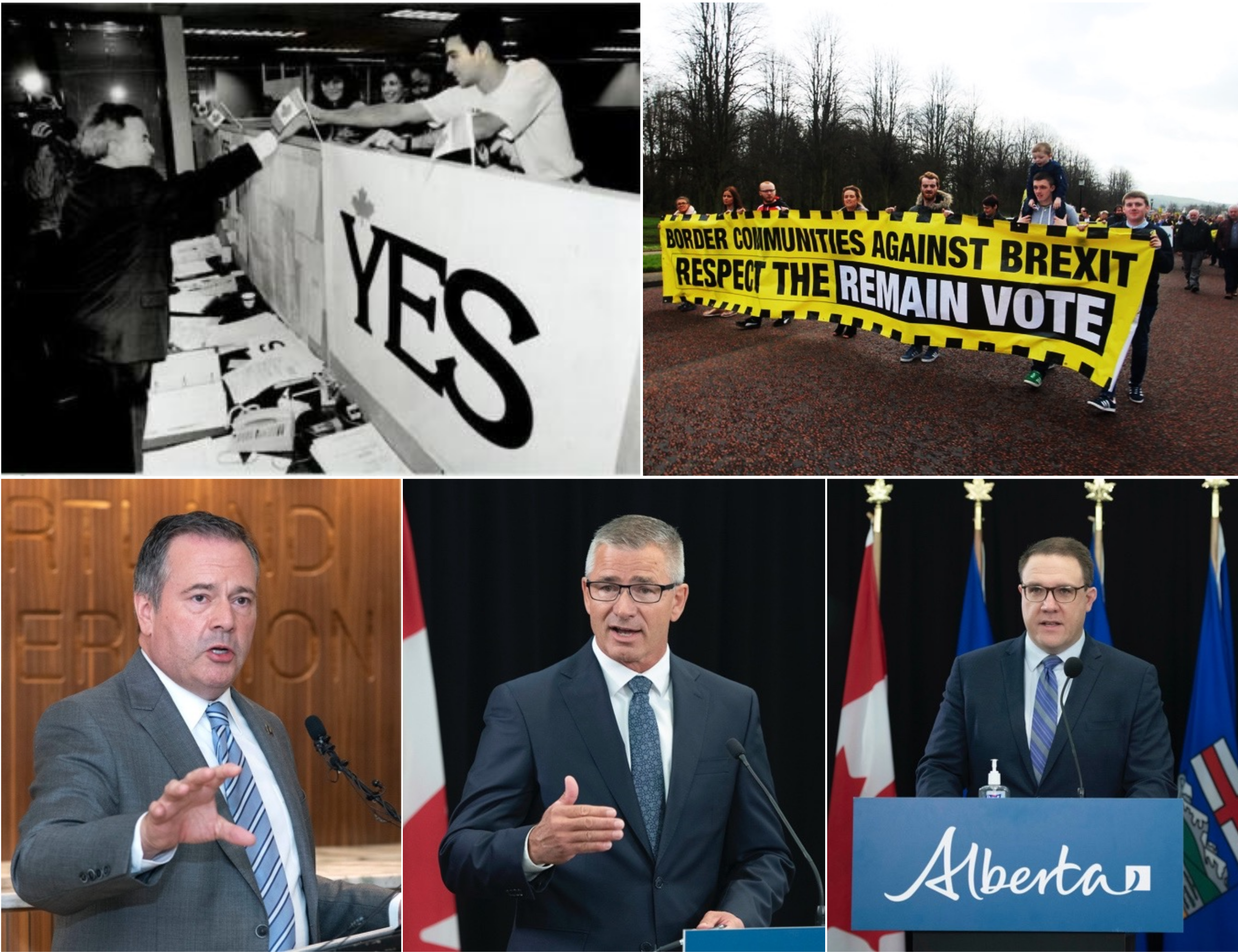
The pressure is on: Any serious quest for independence will face coordinated political and economic opposition, similar to the tactics that accompanied the Charlottetown Accord referendum in 1993 (top left) and Britain’s Brexit vote in 2016 (top right). It has already begun in Alberta as (bottom, left to right) former Premier Jason Kenney, former Finance Minister Travis Toews and current Finance Minister Jason Nixon warn of economic hardship should Alberta separate.The pressure is on: Any serious quest for independence will face coordinated political and economic opposition, similar to the tactics that accompanied the Charlottetown Accord referendum in 1993 (top left) and Britain’s Brexit vote in 2016 (top right). It has already begun in Alberta as (bottom, left to right) former Premier Jason Kenney, former Finance Minister Travis Toews and current Finance Minister Jason Nixon warn of economic hardship should Alberta separate. (Sources of photos: (top left) Toronto Star; (top right) Sinn Féin, licensed under CC BY 2.0; (bottom three) Alberta Newsroom, licensed under CC BY-NC-ND 2.0)


Status quo? Advantage Ottawa – Critical to remember is that failure of the Clarity Act process at any step along the way amounts to victory for Ottawa, the other provinces, anti-independence groups, voters across Canada and the “No” side in the voting province. If a question is deemed unclear, if a “Yes” majority is deemed too small, if negotiations reach stalemate, if the Constitution is not amended, the status quo remains. That’s what Ottawa wants – so Ottawa wins.

One might very well ask: Then what is the point? But therein might also lie the Clarity Act’s Achilles’ heel.

This concludes Part II. In Part III:

  • How the Clarity Act could backfire on Ottawa;
  • Where does this leave Alberta? And
  • Where do we go from here?

Jim Mason holds a BSc in engineering physics and a PhD in experimental nuclear physics; he lived and worked in Alberta for 17 years and is currently retired and living near Lakefield, Ontario.

George Koch is Editor-in-Chief of C2C Journal.

Source of main image: ChatGPT.

Love C2C Journal? Here's how you can help us grow.

More for you

The Day After: How Ottawa’s Clarity Act Could Destroy the Federation It Was Meant to Protect

With Alberta headed for a vote on having a vote on independence, many Canadians may think the threat of separation has evaporated. Or that it’s a long way off. Or that, in any case, Ottawa’s Clarity Act will shut it down and protect the federation. But in the concluding instalment of their series (read Part I here and Part II here), George Koch and Jim Mason explode that delusion. The Act is more likely to increase the “Yes” vote which, they predict, will trigger more political wrangling, more bad faith and bitterness, possible civil unrest and even the province’s annexation by the U.S. The consequences, in other words, are dire no matter which side you’re on.

Canada’s Other Productivity Crisis: The Daily Irritants That Slow Us Down and Sap Our Spirit

Multi-factor verification. Customer surveys. SMS alerts. Endless online check-ins. Technology was supposed to free up our time for better things. Instead, it has created endless obstacles to getting anything done. Plus there’s the constant impact of government regulations and questionable safety measures that further rob us of our valuable time. Peter Shawn Taylor looks at the absurd and annoying ways that 21st-century life ties us up and grinds us down. While some examples seem faintly comical, taken together they comprise what Taylor argues is a micro-productivity crisis of national proportions that is no laughing matter.

A Mess and Minefield: Ottawa’s Clarity Act on Provincial Separation is Anything but Clear

Proponents of independence for Alberta seem to believe the federal Clarity Act provides a sure pathway to secession should they win a referendum vote. But as Jim Mason and George Koch explain, the Act is less pathway than political minefield. It demands a clear question with a clear majority vote – but offers no criteria for either. It provides no instructions on how separation negotiations should proceed, but it does allow other provinces, Indigenous groups and others to intervene. And it assigns virtually all decision-making to Ottawa. It is, Mason and Koch find in the first of this two-part series, a formula not for resolution but deadlock, virtually certain to frustrate any constitutional effort to secede. Almost like it was designed that way.

More from this author

The Day After: How Ottawa’s Clarity Act Could Destroy the Federation It Was Meant to Protect

With Alberta headed for a vote on having a vote on independence, many Canadians may think the threat of separation has evaporated. Or that it’s a long way off. Or that, in any case, Ottawa’s Clarity Act will shut it down and protect the federation. But in the concluding instalment of their series (read Part I here and Part II here), George Koch and Jim Mason explode that delusion. The Act is more likely to increase the “Yes” vote which, they predict, will trigger more political wrangling, more bad faith and bitterness, possible civil unrest and even the province’s annexation by the U.S. The consequences, in other words, are dire no matter which side you’re on.