Climate Politics

A Practical Path to Lowering Canada’s Greenhouse Gas Emissions

Gwyn Morgan
July 21, 2021
The zeal with which many politicians push environmental policies seems in almost inverse proportion to their practicality. The more expensive, unrealistic, utopian and unachievable, the more it animates them. Justin Trudeau and his key ministers are the apotheosis of this tendency, appearing determined to wreck western Canada’s economy and ruin the prosperity of millions in an impossible quest to “save the planet.” The economic carnage and impoverishment they’ll wreak seems almost like a feature rather than a bug, worn like a national hairshirt or display of religious penance. Gwyn Morgan, however, believes it’s still possible to craft a Canadian emissions reduction strategy based on facts and economic opportunity rather than ideology and fantasy. Canada, he explains, “can do good by doing well” – reducing global emissions by exporting to eager markets around the world a Canadian natural resource that we have in practically unlimited supply.
Climate Politics

A Practical Path to Lowering Canada’s Greenhouse Gas Emissions

Gwyn Morgan
July 21, 2021
The zeal with which many politicians push environmental policies seems in almost inverse proportion to their practicality. The more expensive, unrealistic, utopian and unachievable, the more it animates them. Justin Trudeau and his key ministers are the apotheosis of this tendency, appearing determined to wreck western Canada’s economy and ruin the prosperity of millions in an impossible quest to “save the planet.” The economic carnage and impoverishment they’ll wreak seems almost like a feature rather than a bug, worn like a national hairshirt or display of religious penance. Gwyn Morgan, however, believes it’s still possible to craft a Canadian emissions reduction strategy based on facts and economic opportunity rather than ideology and fantasy. Canada, he explains, “can do good by doing well” – reducing global emissions by exporting to eager markets around the world a Canadian natural resource that we have in practically unlimited supply.
Share on Facebook
Share on Twitter

At last month’s G7 meeting, the leaders of seven of the world’s most advanced economies agreed to a greenhouse gas emissions target of  “net zero” by 2050. That would require largely phasing out the use of fossil fuels. But how? The common reply is “putting a price on carbon,” i.e., imposing carbon taxes everywhere. But unless there’s a viable and cost-effective alternative, taxing something people can’t do without only makes them poorer.

Policy makers seem to believe that “green power” – mainly meaning wind and solar – is the answer. But the World Energy Data website shows that, after several decades of hype and many hundreds of billions of dollars spent, wind and solar contribute only 3.3 percent of world energy supply. This may come as a surprise, since the richly subsidized wind and solar industries claim a much higher figure for their energy-generating “capacity.” This is defined as the electricity that would be generated if the system in question operated continuously at full-speed without any downtime. For solar and wind, this would mean the sun shining all the time and the wind blowing everywhere. In other words, it’s a purely theoretical claim, because it’s hard to imagine those conditions existing at any time, let alone during cold, calm and dark winter nights – when the power is most needed.

xTightening the screws: The G7 Leaders all agreed to aim for “net zero” greenhouse gas emissions by 2050, but at what cost? With no viable alternatives to current energy sources, a decline in the average citizen’s standard of living is inevitable. (Source: Leon Neal/Pool Photo via AP)

Ontario power consumers learned this first-hand after policies implemented under the previous Liberal government that subsidized the installation of thousands of costly windmills and solar panel arrays sent the province’s electricity price from one of the lowest in North America to one of the highest. In addition to imposing needless costs on millions of ratepayers, this approach drove many of the province’s manufacturers south to the welcoming arms of business-friendly, lower-tax U.S. states like Georgia and the Carolinas. Ontario’s then-Liberal government had no excuses, because a similar mix of policies had been tried in Spain and Germany and had failed just as spectacularly.

Given these realities, it’s incredible to think that G7 leaders would agree to base the energy security of their citizens on a plan that defies the irrefutable laws of physics.

What about other alternatives to replace the 84 percent of energy supplied by fossil fuels? World Energy Data lists the following: hydroelectricity contributes 6.4 percent to world energy supply, nuclear 4.3 percent, geothermal and biofuels 1.7 percent. Hydro is a zero-emissions energy source with a long track record, but dams have already been built on many of the world’s most suitable rivers and any new dam-building proposal generates massive opposition. (There’s even a campaign in the U.S. to remove existing dams – and several have already been torn down.) Nuclear is also a zero-emissions energy source, and it has huge growth potential, but new plants are very capital-intensive and often face strong public opposition. Lastly, geothermal and biofuels are marginal producers that would require years of exponential growth to become meaningful contributors. So it’s hard to see how any of those sources could have a material impact in the foreseeable future.

xHobbled by politics, economics or the plain laws of physics: Hydro, nuclear, geothermal and biofuels sources of electricity cannot grow to match the capacity of fossil fuels in world energy production.

Besides the laws of physics, G7 leaders face another stark reality. The U.S., UK and the 27 EU member countries combined produce just 27 percent of global emissions. Most of the other 73 percent comes from Asian countries. Emissions from China alone equal the G7’s 27 percent. And despite President Xi’s virtuous green rhetoric, his country built three times more emissions-intensive coal-fired electrical capacity in 2020 than the rest of the world combined. China’s energy consumption – and emissions – are going up, as are India’s and those of many other developing countries. Meanwhile, based on a green energy fantasy, Prime Minister Justin Trudeau and his G7 counterparts plan to further hobble their own economies, which are already uncompetitive with China.

xChasing rainbows: Even as China and India’s energy consumption sets new yearly records, G7 leaders are busy undermining their own economies in pursuit of global greenhouse gas reductions. (Source: 2020 Union of Concerned Scientists/ Earth Systems Science Data)

Should we give up hope of reducing greenhouse gas emissions? It’s clear that “net zero” is scientifically impossible for the world as a whole, and could only be achieved in selected countries at a staggering cost that would impoverish everyone except the wealthiest and most privileged elites. Still, a substantial reduction is achievable. And the biggest opportunity for cost-effective, practical emissions reduction lies in a fossil fuel in practically unlimited supply.

That fossil fuel is natural gas.

Burning coal to generate electricity currently causes 40 percent of global emissions from fossil fuel sources. Converting a coal-fired plant to natural gas reduces its emissions by almost 50 percent. Canada’s utilities have already shut down the large majority of their coal-fired units, and the remaining plants’ days are numbered. (Just on Monday, Transalta Corp. announced that it had completed the coal-to-gas conversion of the second of its three remaining coal-fired generating stations in Alberta.) But there is vast opportunity to do much more of this globally. We can, as the saying goes, “do good by doing well” by exporting our bountiful natural gas supplies in the form of liquefied natural gas (LNG) to replace coal.

LNG Canada, among other Canadian national resources, are they key to reducing global greenhouse gas emissions.
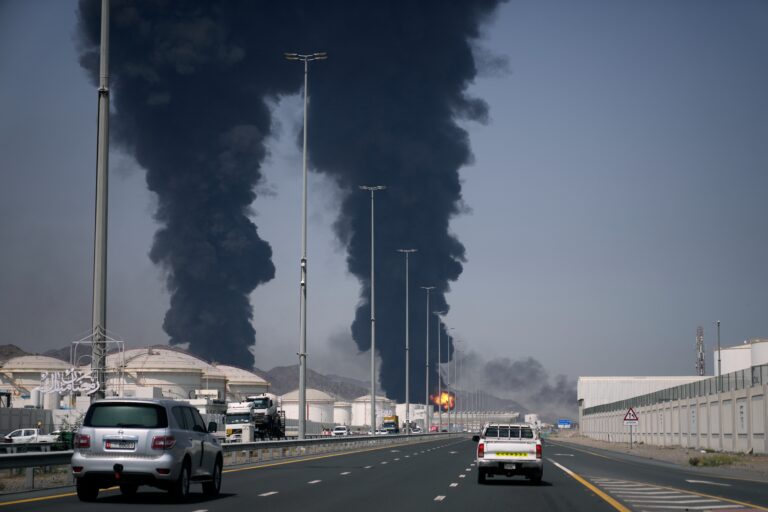
Switching vehicles and ships from crude-oil-based to cleaner-burning natural-gas based fuels is a practical way to achieve large reductions in greenhouse gas emissions, as in Iran (left image), Egypt (middle) and British Columbia, where BC Ferries has purchased several vessels that can run on liquefied natural gas as well as diesel, like (pictured on right) the Salish Raven. (Image sources: Shutterstock (left), Ahmed Gomaa/ Xinhua via ZUMA Press (middle), The Canadian Press/ Don Denton (right)) 

The $40 billion LNG Canada project now under construction in Kitimat, B.C. will reduce Chinese CO2emissions by 60-90 million tonnes per year, the equivalent of shutting down 20-40 coal-fuelled power plants. That’s also the equivalent of taking some 80 percent of the cars off Canadian roads. Canada has sufficient gas supplies for many more LNG projects. A decade ago, there were 20 projects proposed. But Canada’s Byzantine regulatory approval process, which has earned our country a “can’t get anything done” reputation, saw project sponsors giving up after spending billions in preparation and regulatory costs.

There’s also opportunity for natural gas to replace some use of crude oil. Oil used for ground transportation and shipping contributes approximately one-third of global emissions. Converting vehicles and ships to natural gas cuts greenhouse gas emissions by up to 25 percent. And that’s already happening. Worldwide there are more than 20 million natural gas-fuelled (NGV) passenger vehicles, heavy trucks and buses. Paradoxically, few of those are in the very G7 countries that vow to achieve “net zero.” Asia, led by China, India and Pakistan, accounts for the majority of NGVs, no doubt motivated mainly by reducing dangerous urban smog rather than concern about greenhouse gas emissions. Iran has the world’s second-largest NGV fleet, which seems surprising until one considers that switching vehicles to less expensive natural gas allows Iran to export more highly profitable crude oil.
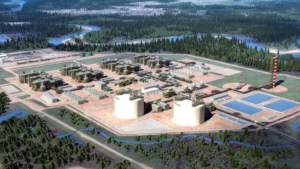
xEnergy – and emissions reductions – in abundance, if only the politicians would listen: Artist’s rendering of LNG Canada project at Kitimat, B.C., so far the only major Canadian LNG export project to reach the construction stage.

The marine shipping industry is well advanced in replacing high-polluting bunker fuel with LNG. Here in Canada, BC Ferries has taken delivery of several new LNG-powered vessels and has also converted older vessels to natural gas. There is broad scope to do much more.

Rather than ravaging the living standards of Canadians with carbon taxes and wasting public funds subsidizing green power, here are two things Canada can and should do to reduce both national and global emissions.

First, commission an LNG export task force made up of government, industry and directly affected populations (including First Nations) to streamline the LNG export project approval process. This will make investment in LNG more attractive and help lure back international energy companies and investors. Second, ditch Trudeau’s scheme to require all vehicles sold in Canada to be electric by 2035 and instead support the immediate creation of a nationwide NGV filling station network, setting NGV fuel taxes at zero. This will enable the use of NGVs to flourish in Canada.

It’s time for a Canadian emissions reduction strategy based on facts and economic opportunity rather than ideology and fantasy.

Gwyn Morgan is the retired founding CEO of EnCana Corp., formerly Canada’s largest producer of natural gas.

Love C2C Journal? Here's how you can help us grow.

More for you

One Free Miracle: Towards a Theory of Everything

A new year has dawned and, as the light strengthens across the Northern Hemisphere, David Solway reminds us that how we choose to experience our world is at least as important as understanding how it came to be. In the first instalment of this two-part series, the writer illuminated the irreducible paradox at the heart of all theories concerning the universe’s creation, then scrutinized the seemingly unbridgeable gap between quantum physics and the physical world we live in. In Part II he considers an even tougher and, so far, unsolved scientific challenge: gravity. Some of the finest minds in science think it actually is insoluble without some kind of creative intelligence to oversee it. In other words, a miracle. To Solway, the true miracle is the fact of a marvellous world and our freedom to experience and wonder at it.

The Impossible Equation: Seeking a Unified Theory for a Miraculous Universe

We’ve long been told that science and religion occupy two incompatible poles – one of reason and fact, the other of faith, superstition and even irrationality. But what if it isn’t so? In this two-part series, David Solway proposes a new Grand Unified Theory of cosmology aimed at bringing science and religion back together. In the opening instalment, Solway illuminates the irreducible paradoxes at the heart of all theories concerning the universe’s creation, then scrutinizes the seemingly unbridgeable gap between quantum physics and the physical world we live in – a gap that nevertheless is bridged into an integrated and orderly reality. What, then, might this say about the apparently irreconcilable differences between 21st century science and theology? Perhaps, Solway ventures, they’re more like two peas in a pod – and should consider forging a new entente to support humanity’s eternal search for Truth.

Triangulation of Hate: Why Canada Is Choosing to Let Antisemitism Grow

Canada has seen a troubling rise in anti-Semitism in the last two years. Hatred of Jews is now expressed openly, shamelessly, without restraint – and without consequence for those engaged in it. In part one of a two-part series, Lynne Cohen explains why Canada’s political and civic leaders seem unwilling to call out anti-Semitism or take any meaningful action to stop it. Whether driven by bias, cowardice or cold political calculation, the country’s political class is not just failing Canada’s Jewish population. It is choosing to do so. If the brutal massacre of innocent Jews by Muslim terrorists at Bondi Beach in Australia teaches anything, it’s that allowing anti-Semitism to spread has murderous consequences. Canada should take heed.

More from this author

Socialist Shakedown: It’s Finally Time to End Supply Management in Agriculture

U.S. President Donald Trump’s trade policy may be chaotic and punitive, but he’s right about one thing: Canada’s agricultural supply management system has to go. Not because it’s unfair to America, though it is, but because it punishes Canadians. The price-fixing scheme limits consumer choice, requires a huge bureaucracy and prevents farmers from producing more in the face of shortages, forcing them instead to dump excess production. Worst of all, writes Gwyn Morgan, it drives up prices for milk, cheese, chicken, eggs and other essential foods — all for the benefit of a few thousand farmers, largely in Quebec. For Canada’s trade negotiators, argues Morgan, ending this mad racket should be job one.

Climate Climbdown: Sacrificing the Canadian Economy for Net Zero Goals Others Are Abandoning

Climate-obsessed politicians – Justin Trudeau in the vanguard – nearly destroyed the Canadian economy chasing emissions targets that are both unrealistic and pointless. Ottawa and the four biggest provinces have squandered $158 billion to create just 68,000 “clean” jobs. Meanwhile, fossil fuels are supplying a bigger share of Canada’s energy needs than ever. And now, leading U.S. officials and even eco-zealots like Bill Gates are re-evaluating their net-zero ideology. But that hasn’t gotten through to Prime Minister Mark Carney who, warns Gwyn Morgan, intends to inflict further punishment on an ailing country in pursuit of a delusional cause.

What if October 7 Had Happened Not in Israel but in Canada?

It is probably beyond the imagination of most Canadians that they would ever face the kind of evil atrocity Israelis suffered on October 7, 2023. Or that we would find ourselves living next door to savage terrorists bent on our annihilation. But as Gwyn Morgan points out, it is critical to understand that reality as Israel’s struggle for existence carries on. The history of Israel is nothing short of miraculous. As Morgan personally observed on a tour of the world’s only Jewish state, Israelis have with determination and heart built a free, tolerant, prosperous and technologically-advanced democracy while surrounded by enemies. In the face of ruthless attacks by Hamas and the craven behaviour of supposed friends and allies who now lean in favour of the terrorists, Israel has reminded the rest of the world what real courage is.