Conservative leader Erin O’Toole’s keynote speech at the Conservative Party of Canada’s recent convention was a golden opportunity to begin attracting Canadians wanting change from our incompetent and corrupt Liberal government. Unfortunately, as the National Post’s John Ivison reported in his March 24 column, six in ten Canadian voters remain politically homeless after O’Toole’s speech. The leader’s approach, in other words, appears to have fallen flat.
Here is my own, alternative version of the keynote address, one that I believe would have resonated with many of those politically homeless Canadian voters:
“My fellow Canadians, as I contemplate a new future for our country, I’m reminded of a quote by the great British Prime Minister Margaret Thatcher, delivered as she took over from a corrupt, deeply socialist party that had transformed the once strong and proud United Kingdom into an impotent, failing nation. The leader whom the whole world would soon know as the Iron Lady declared: ‘We will stand on principle or we will not stand at all.’

No leader can ever promise perfect government, but I can promise you principled government.
Although our party normally advocates limited government spending, as the pandemic took hold last year Conservatives advanced the principle of helping individuals who are in duress through no fault of their own, by supporting extraordinary public expenditures to help Canadians weather the crisis. The Trudeau government’s dysfunctional and politicized implementation of the special pandemic measures, however, quickly subverted that worthy objective and transformed it into another government-created fiasco.

Canada’s $686 billion in Covid-19 response spending has, as a percentage of GDP, been more than twice the level of all but two other G20 countries. Sadly, much of that enormous expenditure was wasted due to a flawed structure and inept administration. For example, billions of dollars went to people who didn’t even need the money. Recent data shows that a substantial portion of Canadians are wealthier than before the pandemic!
The CERB benefit was a needed temporary measure, but the way it was structured created a disincentive for people to take the jobs that were available. In a deep recession – arguably a depression – with a massive spike in unemployment, the Liberals managed the almost magical feat of creating a worker shortage. And almost none of those billions went to support businesses that had been forced by government to shut down. The latest data shows that more than 200,000 Canadian small businesses will never reopen, destroying the years of hard work, personal sacrifice and capital investment it took to build them.
Now, as vaccines begin to defeat the coronavirus, the Liberal plan for economic recovery is to add another $100 billion to the vast sums already spent, taking our national debt to a staggering $1.2 trillion. To put those almost incomprehensible figures into perspective, when Trudeau inherited a balanced budget from Stephen Harper, his plan for $10 billion in deficit spending was considered a major step.
The resignation last August of Finance Minister Bill Morneau over the WE Charity scandal, a debacle perpetrated largely by the Prime Minister himself, left the Trudeau Cabinet woefully bereft of financially literate ministers. Now, the most precarious financial situation in our country’s history is in the hands of a former drama teacher and a former journalist (who is also Deputy Prime Minister, which would be a formidable load for even the most competent and experienced politician).
Even more terrifying, both Trudeau and Chrystia Freeland have deluded themselves into believing in a fantasy world where global financial markets allow gargantuan deficits to be funded at near-zero interest rates. I’m reminded of the lyrics from the old Stevie Wonder hit: ‘When you believe in things, That you don’t understand, Then you suffer Superstition’.
In reality, interest rates are closely tied to inflation and inflation is tied to the cost of consumer goods. And, despite the near-silence among our politicians, mainstream media and banking establishment, inflation has become a looming threat. Even now as that unnecessary $100 billion is being spent, the cost of groceries, appliances and construction materials is rising rapidly. Inflationary periods in the past drove the annual interest rate on our national debt as high as 16 percent. A mere 2 percent uptick on a $1.2 trillion national debt would increase the annual debt-servicing costs by $24 billion per year. And, make no mistake, the threat of inflation is being quietly talked about in the genuinely informed circles of international finance and investing.

Another Liberal superstition is that ongoing economic growth will offset any additional debt-related costs (higher GDP translating to greater government tax revenue). But in reality, the main thing that kept our economy going even before the pandemic was unsustainable government spending. Canada has become a low-growth country. The only hope for a national economic resurgence now is vigorous private-sector investment. But since the Liberals took power in 2015, investor confidence has plummeted, both at home and internationally. In the past five years, investment by Canadian companies made outside our country has exceeded foreign investment into Canada by $150 billion.
Fixed-capital formation – which, with apologies to professional economists, refers roughly to a country’s overall addition of productive assets through capital investment – is another key measure of investor confidence. Canada’s rate of fixed-capital formation has plummeted to third-worst in the 37-country OECD, ahead only of Brazil and Mexico. Adding to those self-inflicted wounds is the Trudeau government’s ideological hostility to the oil and natural gas industry, the country’s largest source of tax and export revenue.
But there is an alternative to this sorry record of incompetence, ideological blindness, corruption and delusion: The policies of the Conservative Party of Canada. Once elected, our new government would unleash the huge potential of our private sector to rebuild our beloved nation’s battered economy.
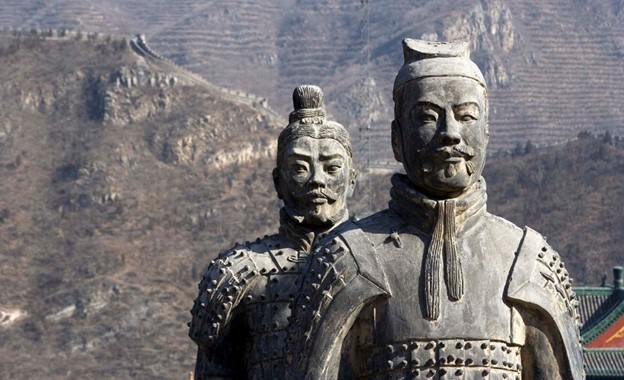
Achieving that would also require dealing with job-killing Chinese imports and the Trudeau carbon taxes. I know this will come as a surprise, but those two issues are intrinsically linked. How? The answer lies in the ancient art of piàn jú, a Chinese term for swindle, scam or racket. In his famous treatise The Art of War, 6th century BC Chinese General Sun Tzu described the use of strategic deception to “subdue the enemy without battle….to contest for world supremacy.”
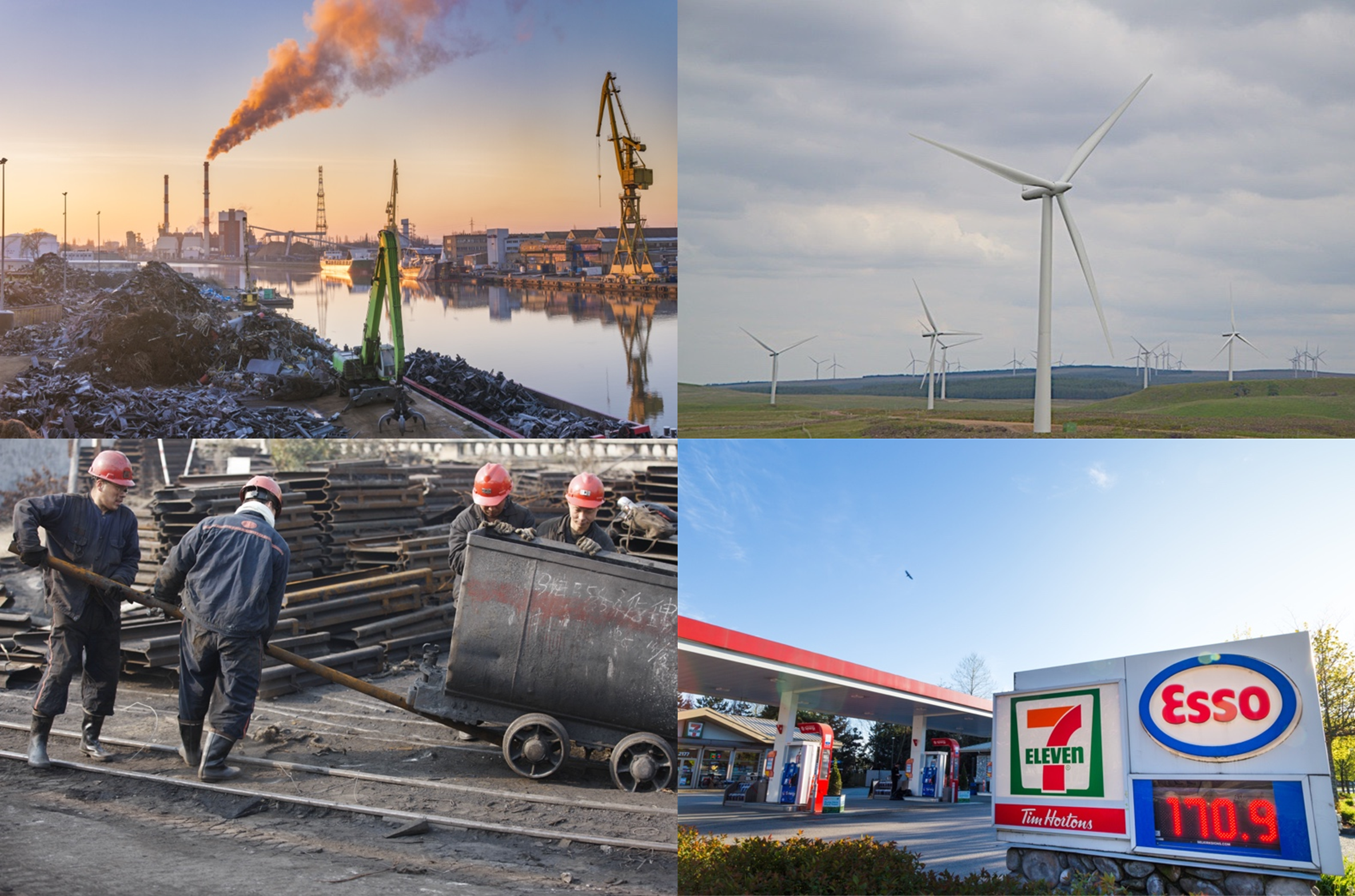
Today, coal-burning electric generating plants make China the world’s largest emitter of greenhouse gases. China has pledged to turn itself into a green energy champion by replacing those coal-fired plants with wind and solar power. But a recent joint report by the U.S.-based Global Energy Monitor and the Helsinki-based Centre for Research on Energy and Clean Air found that China last year added three times more coal-fired electrical capacity than the rest of the world combined. Many more plants are still under construction, and those new plants alone will soon be producing more than Canada’s national total of greenhouse gas emissions. Canada’s manufacturers have a much lower carbon footprint than China, partly because we have converted nearly all our coal-burning plants to much lower-emitting natural gas.
In modern-day China, the Communist regime is exercising a classic example of Sun Tzu’s ancient art of strategic deception. What better way to ‘subdue the enemy without battle’ than to trick Canada into implementing carbon taxes on Canadian-made goods, all while further driving up electricity costs by building more of the wind and solar facilities that have already hollowed-out Ontario’s industrial heartland.
Those new alternative energy facilities in Canada will largely be equipped with panels and components made at a handsome profit in China – whose manufacturers benefit from the low energy costs of largely coal-fired electricity. Meanwhile, as we continue to kill our manufacturers with carbon taxes, all those higher-carbon-footprint goods we import from China drive up global emissions.

President Xi knows we in Canada are addicted to China’s cheap manufactured goods, and he must be overjoyed to see our government’s carbon taxes and costly green power plans further tighten the financial noose on our hard-pressed manufacturers. He has us exactly where he wants us, and no amount of indignation over hostage diplomacy, Uyghur forced-labour camps or his other outrageous behaviour will change that.
Addiction to Chinese goods represents the most existential threat to the West since the Cold War with the Soviet Bloc. But while the Soviet threat included mutual nuclear destruction, Chinese President XI has adopted Sun Tzu’s strategy ‘to contest for world supremacy’. Xi’s words, ‘the East is rising – the West is declining’ couldn’t be clearer. Yet the Trudeau government continues to accept his green assurances.
So what would a new Conservative government do? We will encourage manufacturing of our own goods by eliminating carbon taxes and we’ll transfer those carbon taxes to those high-emission Chinese imports. And we’ll work with the provinces to streamline regulations and remove internal trade barriers upon manufacturers. We’ll build jobs not in China – but here at home!
It’s time for a Prime Minister who refuses to be a pawn in Xi’s grasping hand.
Thank you all very much. And God Bless the great country of Canada and all its people.”
Gwyn Morgan is the retired founding CEO of EnCana Corp., formerly Canada’s largest producer of natural gas.