Energy and Climate Politics

Net Zero: The Dictator’s Dream Come True

Gwyn Morgan
October 11, 2022
Who would have imagined that Western countries’ increasingly fanatical efforts to phase out fossil fuels would leave two dictators essentially in control of both global energy security and the supply of manufactured goods? As Gwyn Morgan sees it, Western elites’ unreflective zeal is steering us not towards utopia but instead on a descent into a kind of New World Disorder. Not everyone, however, is suffering nor displeased at the worsening global chaos. In the dark halls and tortured minds of the world’s biggest dictators, Morgan shows, the West’s fantasy of “net zero” is something akin to “net awesome.”
Energy and Climate Politics

Net Zero: The Dictator’s Dream Come True

Gwyn Morgan
October 11, 2022
Who would have imagined that Western countries’ increasingly fanatical efforts to phase out fossil fuels would leave two dictators essentially in control of both global energy security and the supply of manufactured goods? As Gwyn Morgan sees it, Western elites’ unreflective zeal is steering us not towards utopia but instead on a descent into a kind of New World Disorder. Not everyone, however, is suffering nor displeased at the worsening global chaos. In the dark halls and tortured minds of the world’s biggest dictators, Morgan shows, the West’s fantasy of “net zero” is something akin to “net awesome.”
Share on Facebook
Share on Twitter

Late 19th century novelist and humorist Mark Twain famously said that, “Truth is stranger than fiction.” Seldom have those words been more clearly illustrated than in the campaign by Western countries – Liberal-run Canada playing a starring rhetorical role – to rid the world of fossil fuels.

In supreme irony, the first gathering aimed at that virtually unattainable objective took place in the country now suffering the worst consequences of pursuing it. On March 1, 1995, the first United Nations Framework Convention on Climate Change Conference of the Parties (COP 1) began in Berlin. Thus also began Germany’s regrettable journey toward trying to become “carbon-free.”

xGermany’s purported “Wende” (pivot) to non-emitting solar and wind energy not only degraded the country’s historical architecture and picturesque landscape, it proved incredibly costly as well as useless during the country’s many dark winter days. (Source of photos: Shutterstock)

Over the past decade, Germany has been shuttering not just many of its high-emitting coal-fired power plants but also its zero-emission nuclear power plants. That unfathomable decision was based on a plan to replace them with electricity from windmills plastered all over the picturesque German countryside and solar panels bolted to centuries-old rooftops. Germany being often cloudy and frequently calm, however, this predictably proved both prohibitively expensive and completely unreliable. On some of Germany’s coldest, darkest winter days, this enormous and complex infrastructure has produced no power at all. A genuine “net zero.”

These innate and insurmountable physical limitations forced Germany to build a vast array of “backup” gas-fired power plants and to become ever-more dependent on Russian natural gas, mainly via the gigantic Nordstream-1 pipeline that was to be matched by a second line. Then came Russian dictator Vladimir Putin’s invasion of Ukraine. Germany’s dependency left it no alternative than to continue importing Russian natural gas at reduced volumes but much higher prices, thus simultaneously doing grave damage to Germany’s economy and providing the funds Putin needs to continue his murderous war on innocent Ukrainians.

The overall global oil supply situation is also a huge boon for Russia. Since COP 1, total crude oil demand has increased from 64 million to 100 million barrels per day. And despite all the “net zero” rhetoric, the International Energy Agency forecasts that demand will keep on growing for at least several decades more.

Even as oil demand increased, the environmental, social and governance (ESG) movement pressured investors to unload their oil industry holdings. Faced with depressed share valuations reflecting their perceived status as a “sunset industry,” plus the increasing reluctance of banks to underwrite new energy projects, the rational course for oil and natural gas producing companies was to pay out large dividends to shareholders generated by the cash flow from existing production rather than reinvest in production growth. Thus, demand grew while supply stagnated. The Ukraine crisis revealed just how narrow the world’s supply margin has become. Regrettably, most of that margin is in Putin’s hands.

xWhile Western countries increasingly shunned oil and natural gas investment, global fossil fuel consumption didn’t stop growing. This was a boon to countries that continued to produce all they could, like Putin’s Russia, and are now extorting inflated prices from dependent countries – like “clean and green” Germany.

And now, amidst the wanton attempt to destroy a civilized democracy and a global oil and natural gas shortage, what does our country, which possesses one of the planet’s largest endowments of oil and natural gas, do to help? Basically nothing – because our fanatically anti-fossil fuel government has stymied the construction of both export pipelines and liquefied natural gas (LNG) export facilities.

The importance of unleashing Canada’s vast oil and gas resources has never been clearer, except to Prime Minister Justin Trudeau. During his trip to Latvia in March, a reporter asked whether Canada could help replace Russian oil. Trudeau’s answer illustrated the fanatical depth of his worship at the net-zero altar: “We will be there to support, as the world moves beyond Russian oil and indeed, beyond fossil fuels, to have more renewables in our mix.”

And in late August, when Germany’s left-wing Chancellor, Olaf Scholz, virtually begged Canada to increase its natural gas exports as soon as possible by building LNG plants on our east coast, Trudeau’s reply was even more unhinged: he said there was no “business case” for LNG, and that Canada should instead invest in a facility to produce hydrogen in Newfoundland. This is a completely unproven technology with enormous technical, logistical and business risks and a time-frame of at least a decade. In other words, Germany will be getting help from Liberal-run Canada approximately never.

x“No business case”? In response to German Chancellor Olaf Scholz’s (right) desperate plea that Canada increase its natural gas shipments to Germany, Canadian Prime Minister Justin Trudeau (centre) offered something even less than hot air: a future hydrogen facility in Newfoundland. (Source of photo: The Canadian Press/Adrian Wyld)

These incredible answers came as Ukrainians and their beautiful country were being ravaged by a megalomaniac who threatens civilization with nuclear Armageddon. No doubt Putin is grateful to Trudeau for helping him control international oil markets by having hamstrung Canada’s supply potential. It was Vladimir Lenin, Russia’s first Communist dictator and murderer of Russia’s last Czar, who is widely credited with coining the phrase “useful idiots.”

There’s a second country that’s a big winner from the West’s fixation on net-zero. That country is run by another despotic dictator, this one named Xi Jinping. The Chinese president has promised to reduce carbon emissions, but this is utterly insincere. Among the counter-evidence: China already has nearly 1.1 million megawatts of coal-fired generating capacity – well over 200 times Canada’s total. And while Canada’s capacity is declining towards zero, the Global Coal Plant Tracker shows that China has nearly 200 additional units under construction, with hundreds more planned.

xEmpty promises: China continues to brazenly increase its cheap coal-fired energy generation, using it to manufacture competitively-priced solar panels and wind turbine parts for export into the western market – which are used to generate overpriced, unreliable power. (Sources: (graph) Hannah Ritchie and Max Roser/OurWorldInData.org, licensed under CC BY-SA 4.0; (photo) Shutterstock)

The reality is that China pretends to reduce emissions while increasing cheap coal-fired power generation. North American and European politicians worshipping at the net-zero altar meanwhile implement policies mandating costly and unreliable wind and solar power generation, combined with continually rising carbon taxes. As a result, our manufacturers simply cannot compete, leaving us no other choice than to import Chinese-made goods, which helps the Chinese government further strengthen its global political and military standing. As I’ve mentioned before, among those Chinese manufactured goods are the solar panels and wind turbine components that countries like Canada import and install to produce over-priced, intermittent power, even as the Trudeau government prevents us from using the resources we already have in the ground to produce abundant, reliable and inexpensive power.

Who could ever have imagined that the West’s attempts to phase out fossil fuels, which supply 84 per cent of global energy, would leave two dictators in control of both global energy security and the supply of manufactured goods? The truth is indeed sometimes stranger than fiction. Here it’s worth recalling the rest of Twain’s famous line: “But it is because Fiction is obliged to stick to possibilities; Truth isn’t.”

Gwyn Morgan is a retired business leader who has been a director of five global corporations.

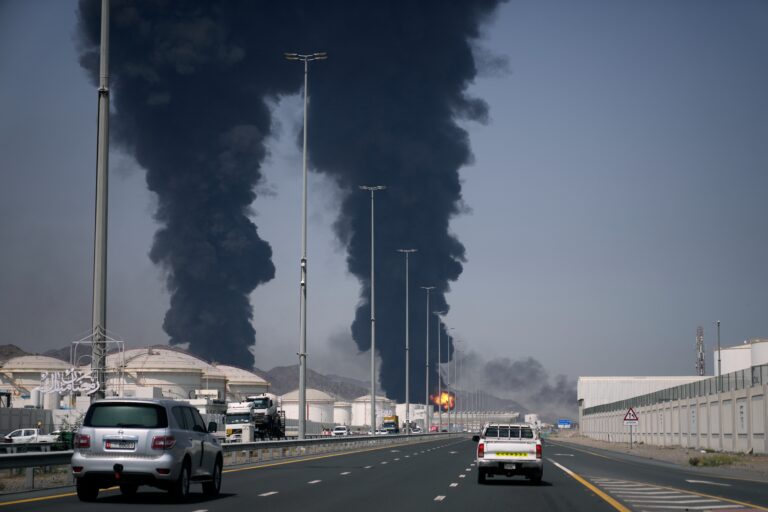
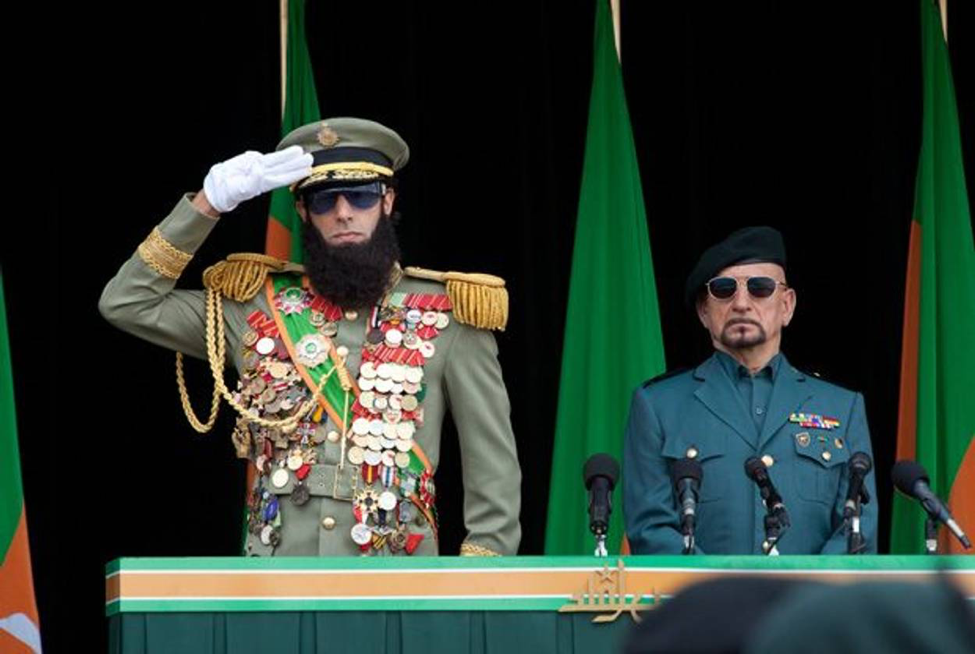
Source of main image: Paramount Pictures.

Love C2C Journal? Here's how you can help us grow.

More for you

Culture Beyond Politics and State Control: The Life of the Apolitical Man

You may not be much interested in politics, but politics – to borrow from the famous dictum on war by Leon Trotsky – is most definitely interested in you. With land acknowledgements to stand up for, rainbow-coloured sidewalks to stride over, garbage to sort and slogans like “Elbows up!” to recite, politics in today’s world is virtually inescapable. But is there any point in even trying? David Solway argues that the answer is an emphatic “Yes”. In a transcendent essay that ranges from idyllic Aegean islands to crumbling 19th-century communes, Solway paints a vivid portrait of the nature and meaning of apolitical life in its full sense, charting its evolution and blind alleys in literature, art and real-world attempts – and issuing a rallying cry for its centrality in building and, he still hopes, saving the greatest civilization the world has ever known.

Sign on the Dotted Line: How B.C.’s Latest Indigenous Outrage Threatens Freedom of Contract Across Canada

As if the mayhem created by the 2025 Cowichan decision regarding property rights wasn’t enough, the B.C. court system has now declared its readiness to undermine legal contracts as well. As Peter Best reveals, a January 2026 decision to allow a contentious Indigenous lawsuit to proceed threatens to upend centuries of contract law. At issue is a small B.C. First Nation’s claim it has an aboriginal title right to export propane on an industrial scale, one that should overrule a signed, legal contract between the port of Prince Rupert and a billion-dollar energy project that itself is providing major aboriginal benefits. Acceding to such an outrageous demand, Best warns, will plunge relations between natives and the rest of Canada further into chaos and mistrust.

The Other Right to Choose: Reversing the Trudeau Immigration Fiasco

Canada’s immigration system was once the envy of the world. Based on the notion that those who get into the country are those who determine its future, the system chose people best able to contribute. Then the Trudeau Liberals blew it up, opening the gates to just about anyone – including literal terrorists – wreaking economic havoc and breaking Canadians’ faith in the value of citizenship. John Weissenberger, who served as chief of staff to the federal immigration minister in Stephen Harper’s Conservative government, has watched it happen with growing dismay, and argues for a return to sanity – centred on the sensible “points” system that served Canada so well for decades.

More from this author

From the Strait of Hormuz to Cuba, Net Zero is Dying – Mark Carney Needs to Let Go

After decades spent pursuing net-zero dreams at great cost to their economies and social fabric, most of the world’s industrialized nations are waking back up. War with Iran and the threat of tanker blockades have everyone worried about oil and natural gas supplies and clamouring for energy security. Or nearly everyone. Not Mark Carney, though. Canada’s prime minister keeps pushing industrial carbon taxes higher and insists on wasting taxpayers’ money on windmills that make no difference. Gwyn Morgan recalls his own observation of the global warming movement’s original rise, its morphing into the radical “net zero” cult – and its spectacular global disintegration. It is high time, Morgan writes, that Canadians demand Carney also drop his delusions.

Future Tense: Why Gen Z is Right to Feel Betrayed

Older generations often roll their eyes when young people seek to blame them for their woes. But if Canada’s Gen Zers feel betrayed by the Boomers, they are right to do so, argues Gwyn Morgan. Years of irresponsible fiscal and regulatory policies have hamstrung the Canadian economy and left younger generations facing a bleak future of stagnant wages, rising taxes and shrinking opportunities. A former business leader who created more than his share of jobs and prosperity during his long corporate career, Morgan casts a worried eye over the next generation – and offers sympathy for the situation they’re inheriting.

The Price of Foolish Pride: What Germany’s Social and Economic Decline Can Teach Canada

Germany was postwar Europe’s most successful nation – until it was seized by an arrogant leftist ideology that led it down a ruinous path. Its government abandoned safe, zero-emission nuclear power for inefficient wind and solar plus natural gas from Vladmir Putin. It threw open its borders to millions of asylum-seekers with barely a thought to the enormous costs or the difficulties of social integration. Today, at the 11th hour, Germany is at last struggling to turn around its decade of economic decline and social disintegration. In this cautionary tale, Gwyn Morgan sees a profound warning for Canada.