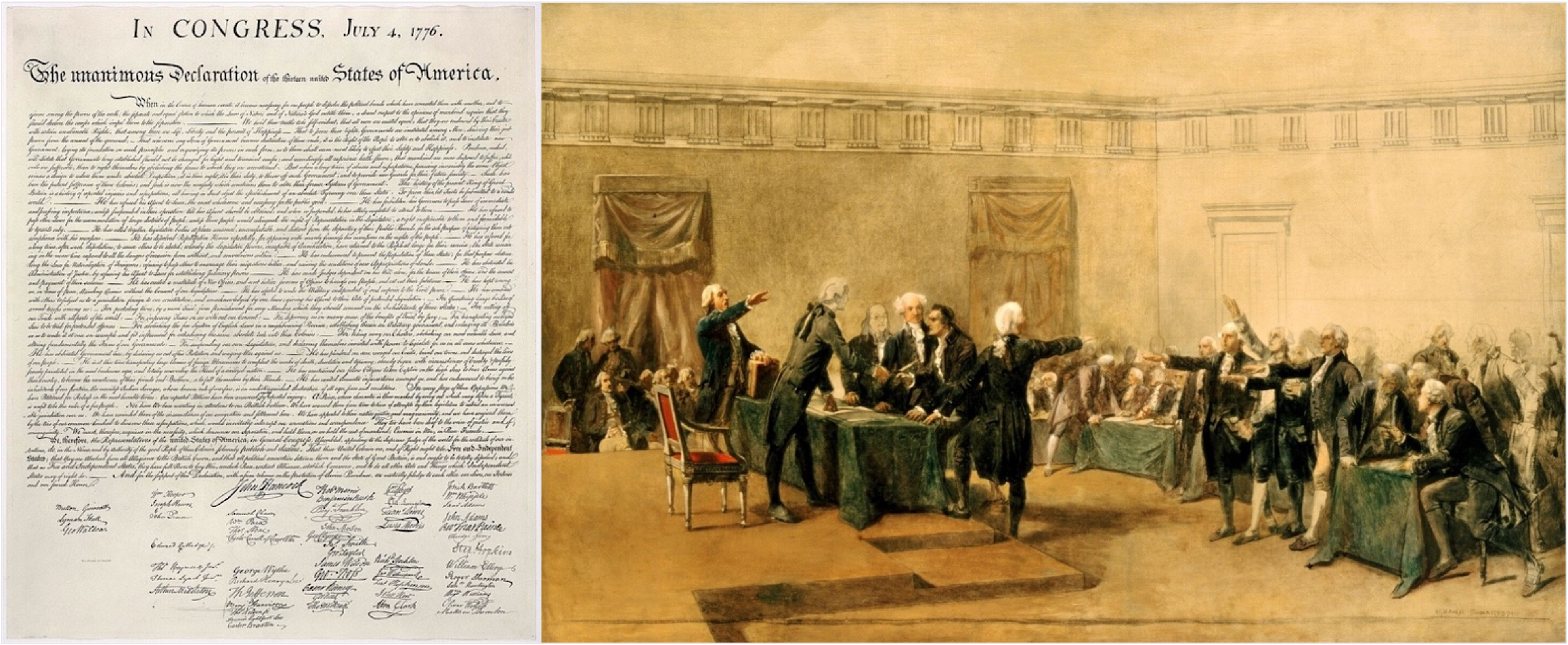
 The Founding of the United States through its defining document, the Declaration of Independence (left), was unprecedented in world history, drawing extensively on Enlightenment as well as earlier philosophical traditions, making it as consequential 250 years later as the day it was adopted on July 4, 1776. Depicted at right, Signing of the Declaration of Independence, by Charles Édouard Armand-Dumaresq, 1873.
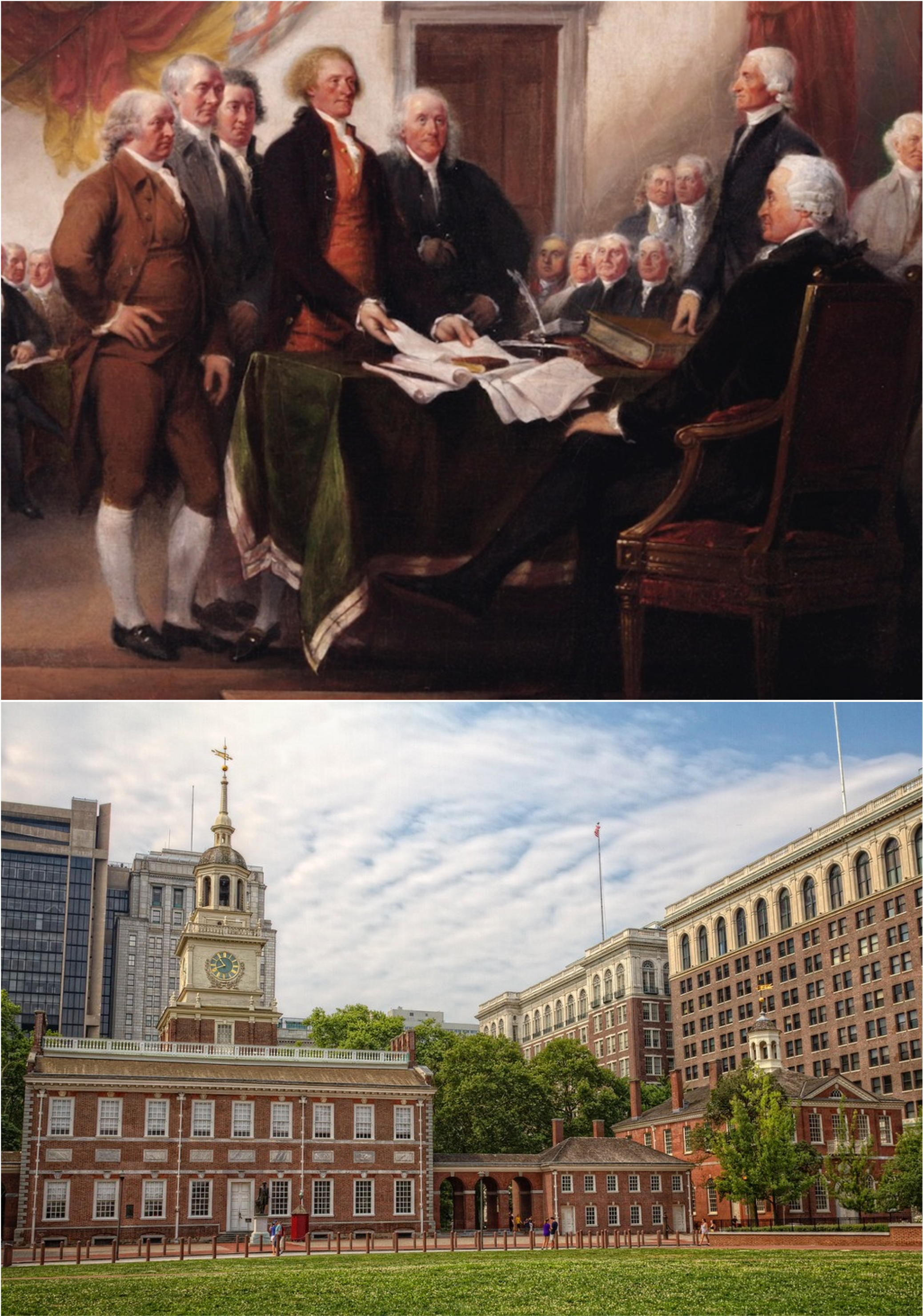 A revolution in ideas: Gathering in Philadelphia, delegates from Great Britain’s 13 American colonies founded a new nation on the revolutionary propositions that all humans are created equal by “Nature’s God” and governments exist to secure people’s natural and unalienable rights. At top, the Committee of Five: (left to right) John Adams of Massachusetts, Roger Sherman of Connecticut, Robert R. Livingston of New York, Thomas Jefferson of Virginia and Benjamin Franklin of Pennsylvania, detail from The Declaration of Independence, July 4, 1776, by John Trumbull, 1818. At bottom, Independence Hall, Philadelphia. (Source of bottom photo: IceNineJon, licensed under CC BY-NC-ND 2.0)
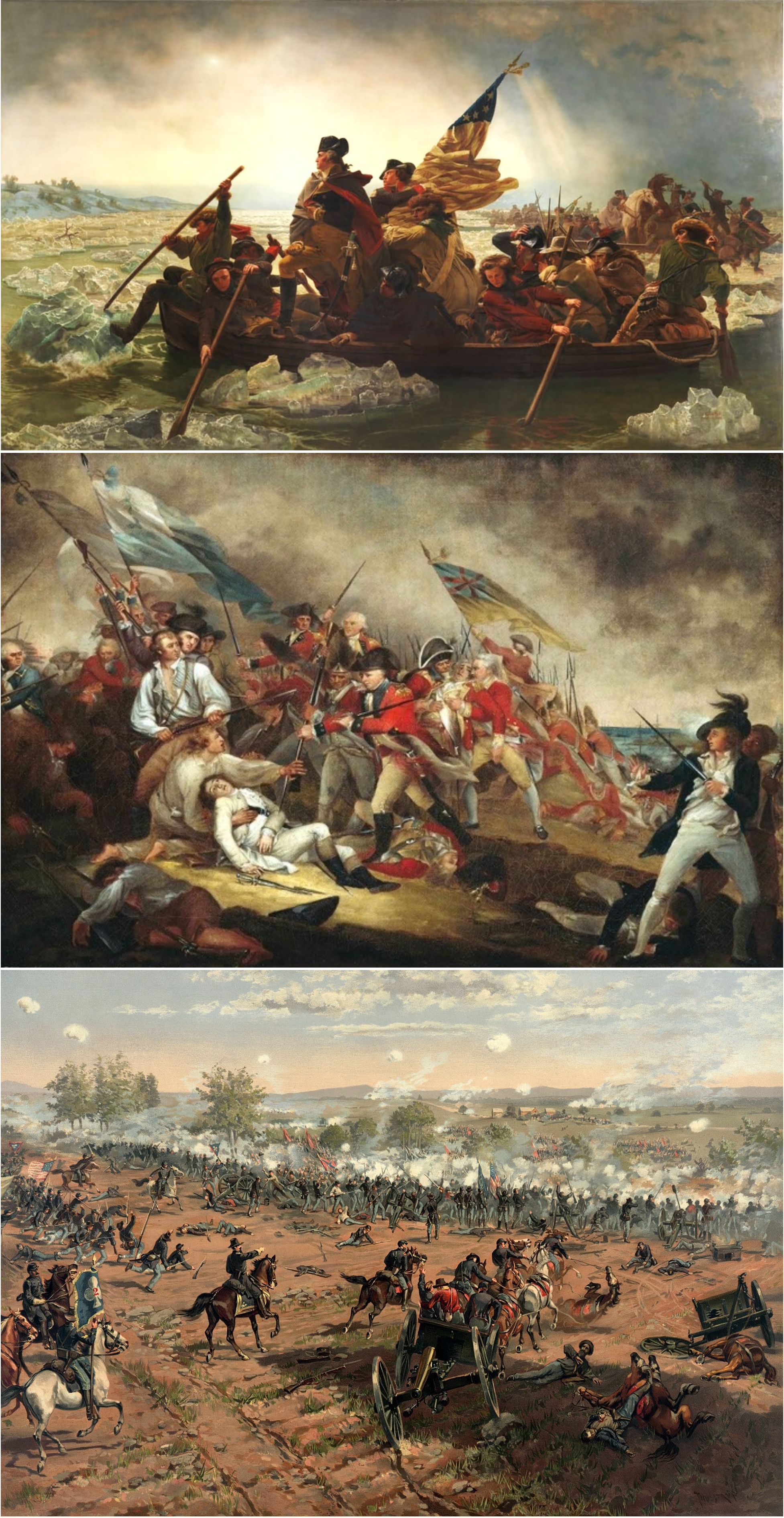 Contrary to critics’ claims, the Declaration’s “self-evident” “truths” were far more than a “list of grievances”; they articulated a vision of just government grounded in natural rights – principles the American colonists deemed worthy of defending at great cost during the Revolutionary War (1775-1783) and Civil War (1861-1865). Depicted: (top) Washington Crossing the Delaware, with the Continental Army on the night of December 25-26, 1776, by Emanuel Leutze; (middle) The Death of General Warren at the Battle of Bunker’s Hill, June 17, 1775, by John Trumbull; (bottom) Battle at Gettysburg, July 1863, by Thure de Thulstrup.
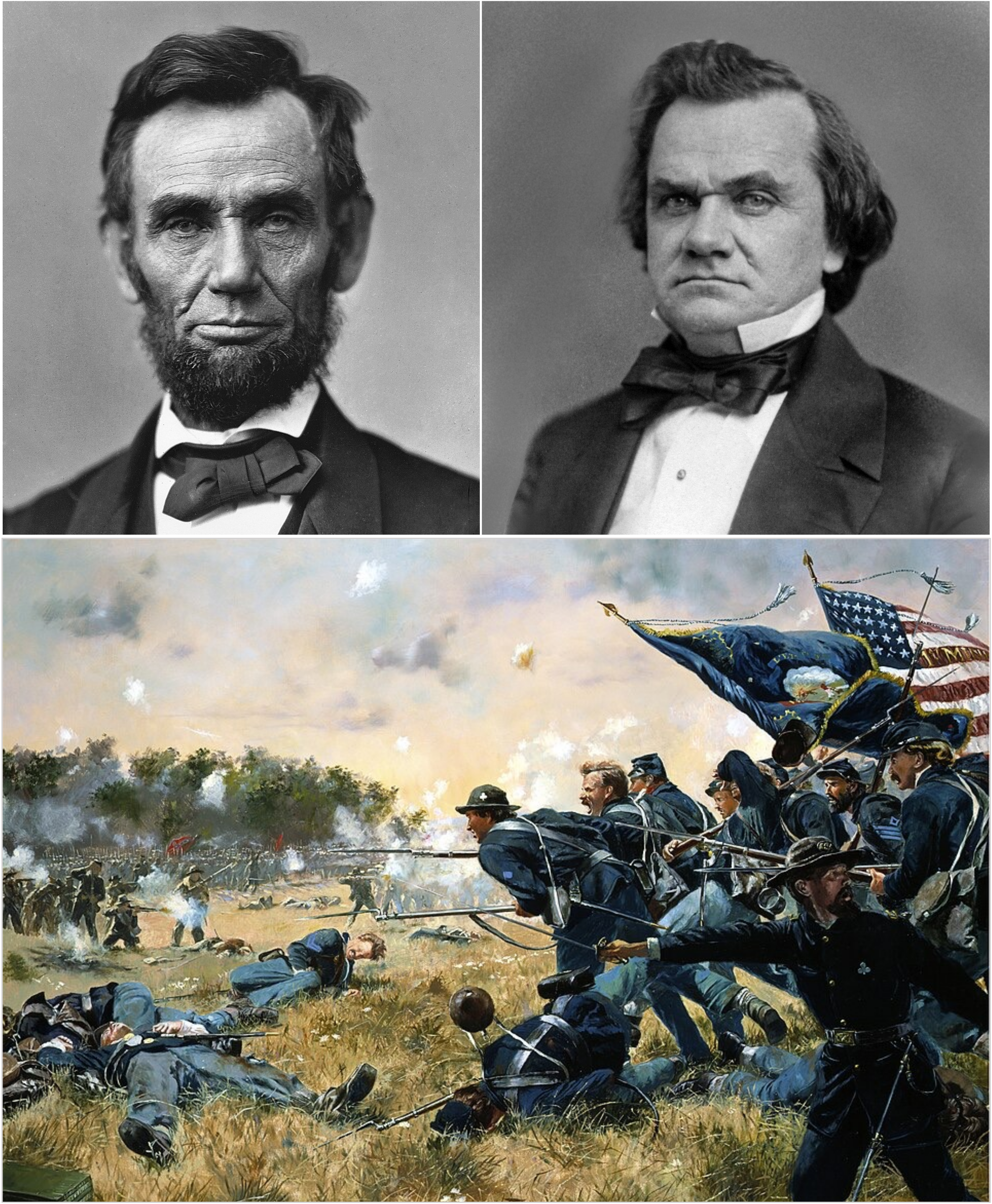 In the increasingly contentious years preceding the Civil War, country lawyer Abraham Lincoln (top left) opposed prominent Senator Stephen Douglas’ (top right) doctrine of popular sovereignty. The future President, later proclaimed the Great Emancipator, argued that even if a majority consented to “the monstrous injustice of slavery,” such a government would remain illegitimate because it violated the Declaration’s core principle. Hundreds of thousands of Americans would soon heed Lincoln’s call and give their lives so that the Declaration’s ideas were not extinguished. Depicted at bottom, The First Minnesota, by Don Troiani. (Source of top right photo: Julian Vannerson, licensed under CC BY-SA 4.0)
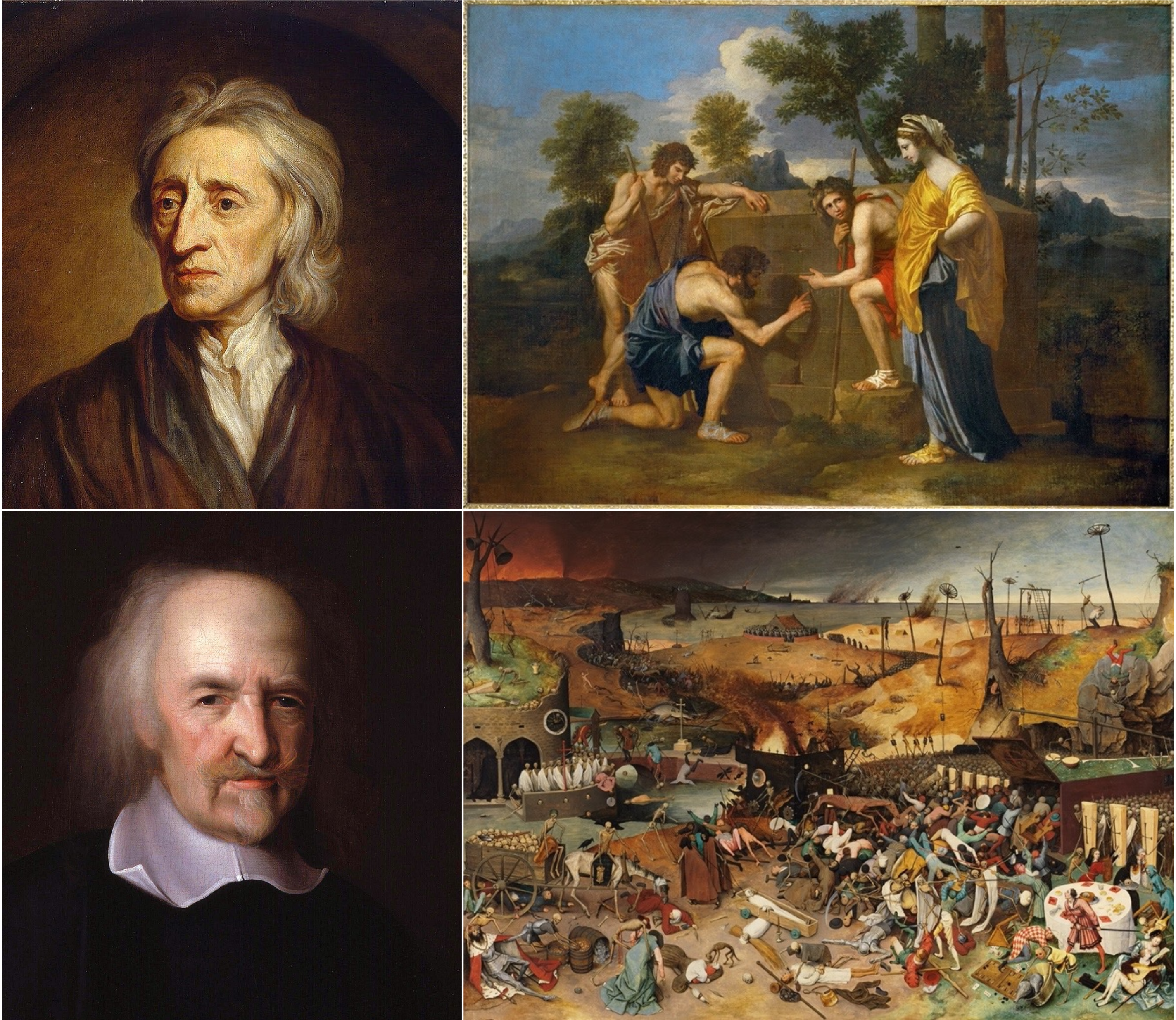 The roots of freedom or of totalitarianism? John Locke’s (top left) political philosophy, which helped inspire both England’s 1689 Bill of Rights and the U.S. Declaration of Independence, held that men are “by nature, all free, equal, and independent,” while his predecessor, Thomas Hobbes (bottom left), contended that nature is a state of pure savagery and that justice and rights stem not from any pre-existing natural laws but entirely from the sovereign’s limitless authority. Depicted: (top right) Et in Arcadia Ego (Even in Arcadia, There Am I), by Nicolas Poussin, 1638; (bottom right) The Triumph of Death, by Pieter Bruegel the Elder, 1562.
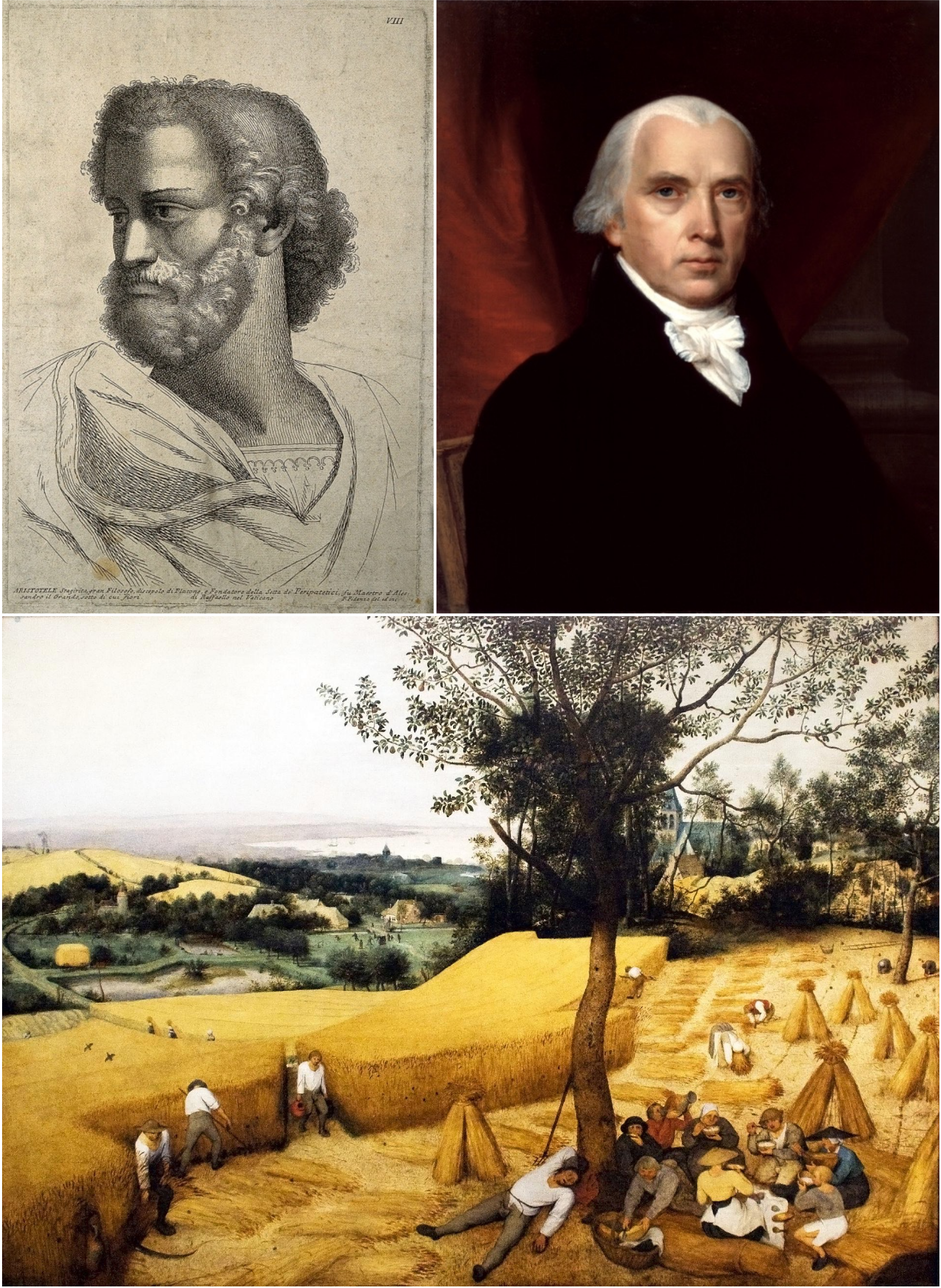 Building on Aristotle’s (top left) concept of eudaimonia – human flourishing made possible by the free exercise of one’s faculties, such as talents and hopes – U.S. Founder James Madison (top right) argued that because property originates from those very faculties, and is critical to the exercise of human freedom, it must be considered of supreme value and vigilantly protected by government. Depicted at bottom, The Harvesters, by Pieter Bruegel the Elder, 1565. (Source of top left image: Welcome Collection, licensed under CC BY 4.0)
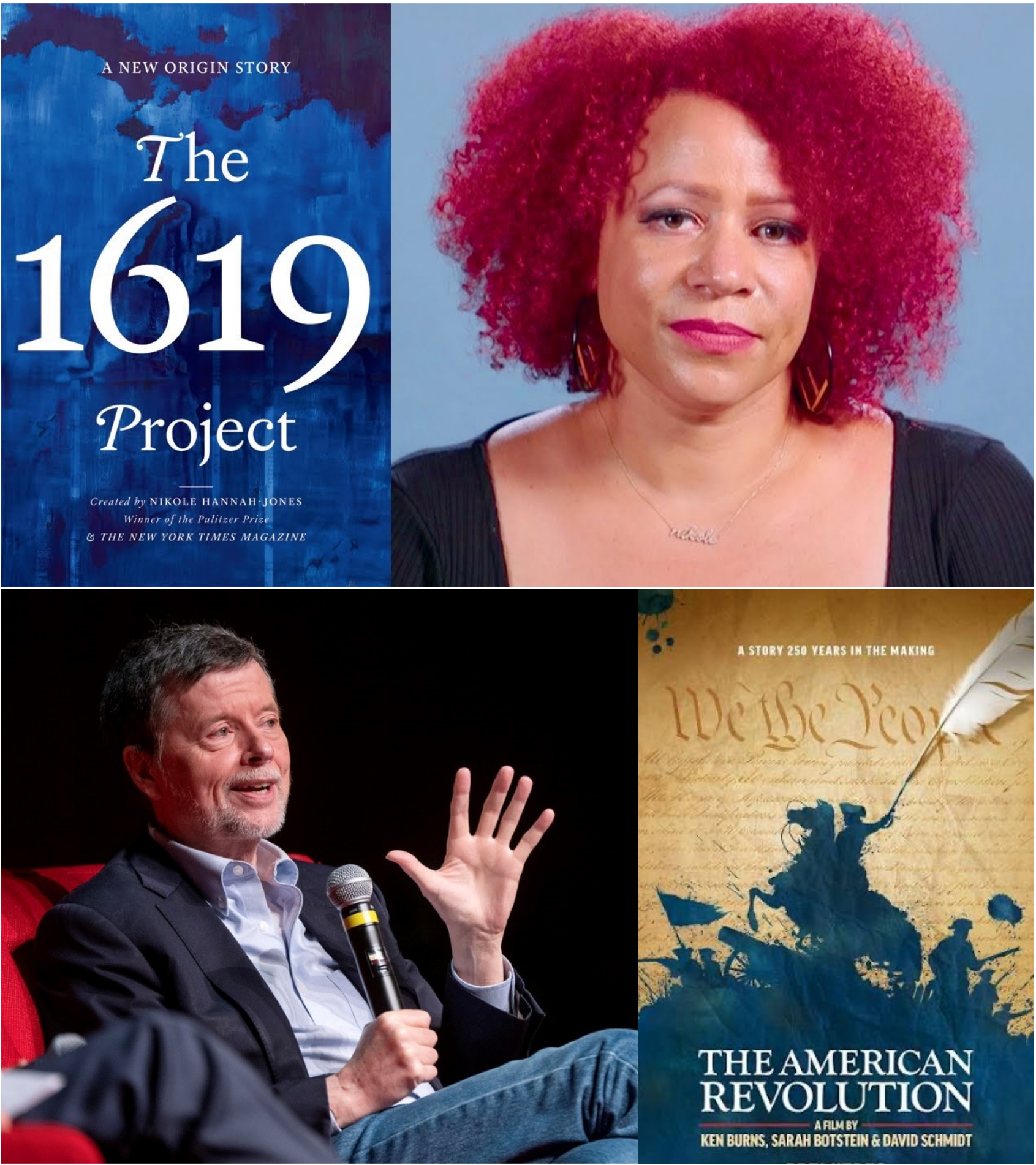 The left’s great smear campaign: Works such as The 1619 Project by Nikole Hannah-Jones (top right) and the recent documentary The American Revolution by Ken Burns (bottom left) seek to invalidate the Declaration’s validity and the Founders’ authority by claiming that the U.S. was founded upon and for the purpose of slavery and that the claim that “all men are created equal” was intended to apply only to “white men of property.”
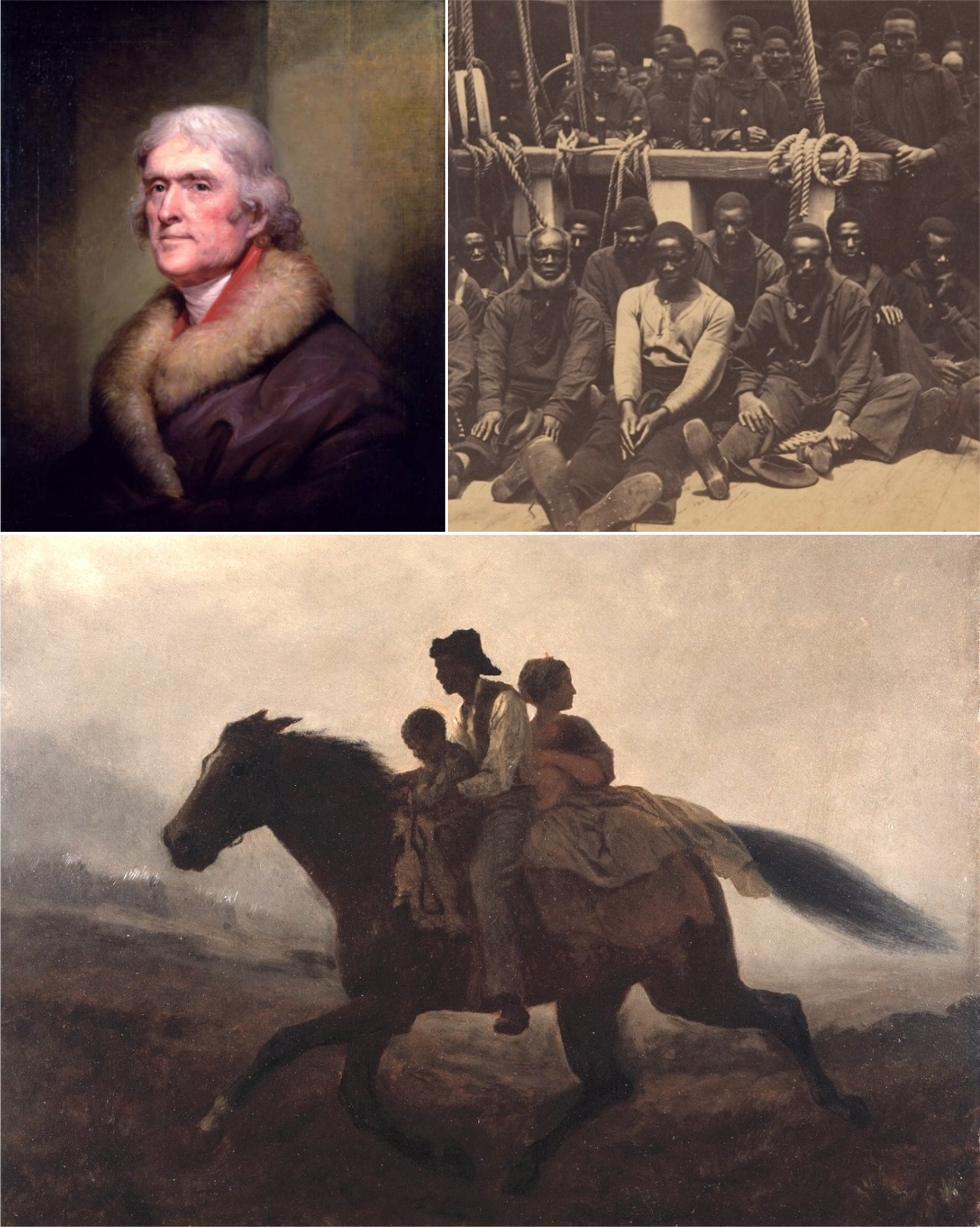 All means all: Principal Declaration author and future President Thomas Jefferson (top left) condemned slavery as a “cruel war against human nature itself” and fundamentally incompatible with the natural and sacred equality of all people. At top right, freedmen leaving South Carolina on the USS Vermont, 1862. At bottom, A Ride for Liberty – The Fugitive Slaves, by Eastman Johnson, 1862.
The Founders most often spoke about equality in more fundamental moral and political terms. To them, equality primarily meant that no individual can claim to be so superior to another that they can legitimately rule them without their consent. As Jefferson expressed the thought in a letter just 10 days before his death on July 4, 1826, the Declaration’s 50th anniversary: “The mass of mankind has not been born with saddles on their backs, nor a favored few booted and spurred, ready to ride them legitimately, by the grace of god.” Equality as rightly understood creates an environment in which everyone’s rights are protected, leaving them free to deploy their talents in different ways and with different degrees of effort and diligence, with inevitably unequal results. Some will earn and/or accumulate more than others, and some will draw honours that others don’t.
What the Declaration strove to do – for the first time in humanity’s journey – was to establish a political regime rid of conventional inequalities – illegitimate inequalities between individuals created by law or custom. In European feudal society as in an Asian caste system, there is almost no hope of social mobility. Political and economic inequalities are baked in that do not track with natural talent. And seemingly indestructible Medieval laws kept the artificial inequalities of feudalism intact for centuries. It is why the Americans explicitly rejected such laws in crafting their national Constitution.
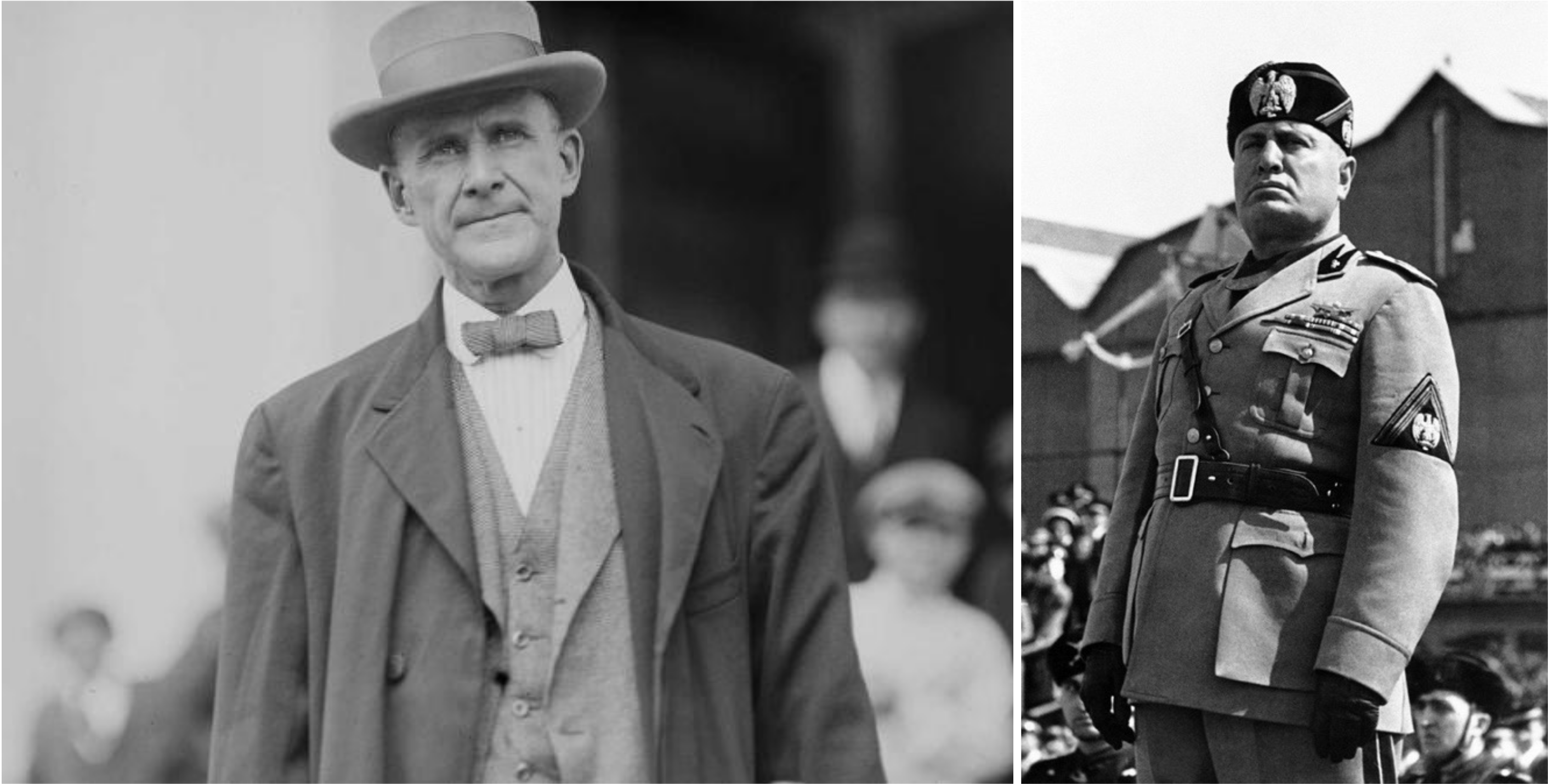
The Declaration entered history as a revolutionary solution to an old set of problems – but based on a mix of brand-new, established and ancient ideas. More than a century later, leading American “progressives” like John Dewey and Richard Rorty argued there was no natural basis for our rights at all. They accused the Founders of being unhistoric (a mortal insult coming from progressives, who regard history as something like a living force that “progresses” in the direction they want). Instead, the Founders foolishly believed that truth does not change over time. As Dewey accusingly wrote: “Natural rights and natural liberties exist only in the kingdom of mythological social zoology.”
In the progressive mind, freedom is not our natural endowment; it is a gift of the state. Rejecting the truth of the Declaration enables expanding not only the status but the role of the state. Liberated from the Founders’ misconceptions, we can now look to the state to manage the inequalities that arise in the course of human affairs. If one person lacks talent, the state must lift them up. If another is too talented, the state must place a thumb on the scales and hold them back because they were born with “privilege.” But believing that society or government should swoop in every time someone is “frustrated” or wants to satisfy “new desires,” as Dewey also wrote, is to expand the scope of government infinitely. For, as Aristotle pointed out, human desires are limitless.
According to the Declaration, remember, the state exists to secure the rights of individuals, who have meaning and spiritual value prior to and independent of the state. For progressives like Dewey (as well for fascists, but that too is another essay), the individual is a product of the state and owes what dignity they have to the state. The natural limits to the state’s “legitimate” powers insisted upon by Locke in the Second Treatise, echoed in the Declaration and written into the U.S. Constitution are erased and the state becomes “totalitarian”, at least in principle and, increasingly, in action and effect.
Paradoxically – and disturbingly – post-liberal conservatives sometimes collapse the Enlightenment thinking of the Declaration into the progressive view of Dewey’s liberalism that arises in the 19th century. Or they suggest the Declaration’s classical liberal principles actually gave birth to the progressive view of the state. I worry that such an approach neglects to consider the extent to which progressives like Dewey explicitly rejected the natural rights teaching of the Declaration by denying that anything can be transhistorical and eternally true. The post-liberal conservatives risk encouraging us to take our eye off the true culprit not only in the main intellectual challenge to the Declaration and its principles, but to the entire West’s overall decline: historicism (that “arc of history”). And historicism, warned the great political scientist Leo Strauss in his 1953 Natural Right and History, “culminated in nihilism.”
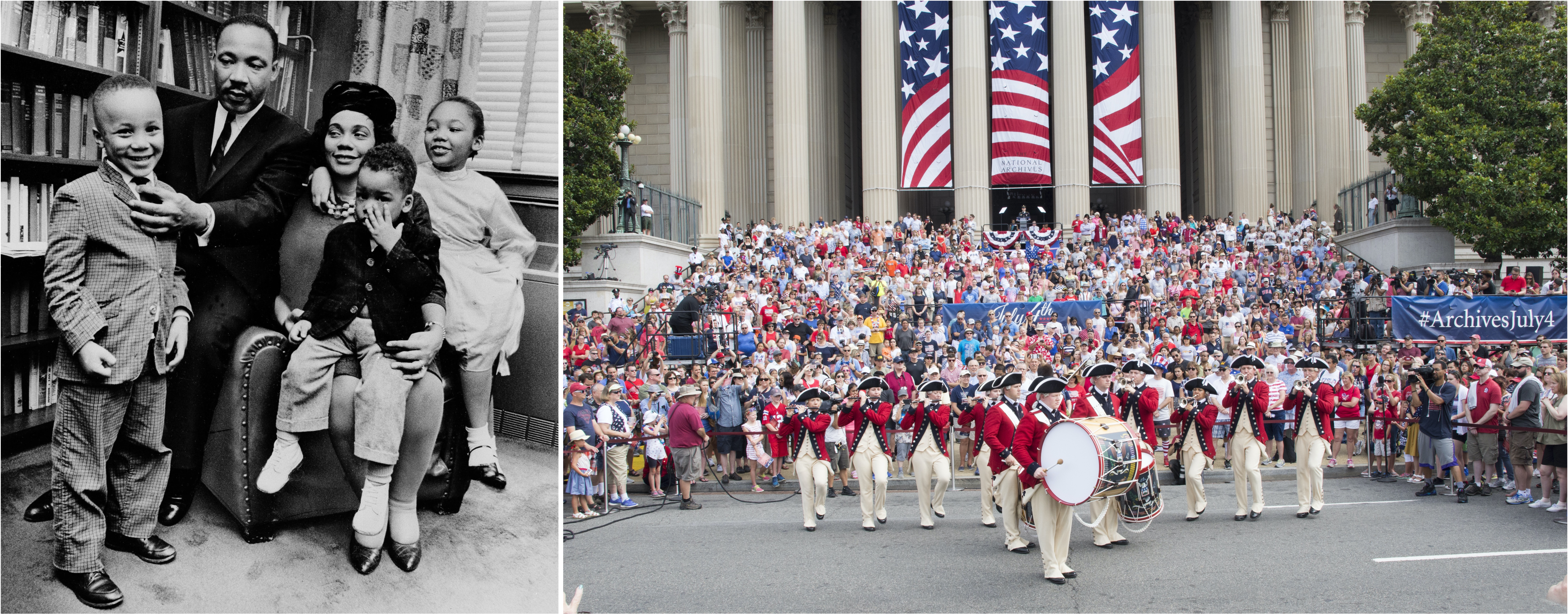
And here we return to the Declaration’s contemporary – timeless – relevance. The great American civil rights campaigner Rev. Martin Luther King, Jr. reminded us, as Lincoln had before him, that the rights perceived and announced by the Founding in 1776 are as true now as they were then – because they are always true. Like Lincoln, King entreated America to live up to the truth contained in the Declaration. Unlike smug progressives or their 21st-century radical-left heirs, King did not argue that the Founding’s principles were flawed.
Quite the opposite. In his eternal “I Have a Dream” speech, King unapologetically referred to “the magnificent words of the Constitution and the Declaration of Independence…to which every American was to fall heir. This note was a promise that all men – yes, Black men as well as white men – would be guaranteed the unalienable rights of life, liberty and the pursuit of happiness.” Those unalienable rights were as valid in 1776 as they were in 1963 and as they are today.
In my estimation, that is the great legacy of the Declaration that deserves to be celebrated in this year and in every year hereafter.
David Livingstone, PhD, is Honorary Research Associate in Vancouver Island University’s Political Studies Department and Senior Fellow with the Aristotle Foundation for Public Policy.
Source of main image: AP Photo/John McDonnell.