“I have a dream that my four little children will one day live in a nation where they will not be judged by the color of their skin but by the content of their character.” (Martin Luther King, Jr.)
That white, female teachers make up the bulk of the K-12 teaching force in Canada, including some 80 percent in the Province of Manitoba, should not surprise anyone. For a variety of well-known reasons, women have long been attracted to teaching. Less well recognized is that in recent decades the profession has been significantly enriched by becoming more diverse in class background, ethnicity, visible minority status, and sexual orientation. What is even less appreciated is that the proportion of men entering the profession, especially at the elementary level (K-6), has declined over the past 60 years.
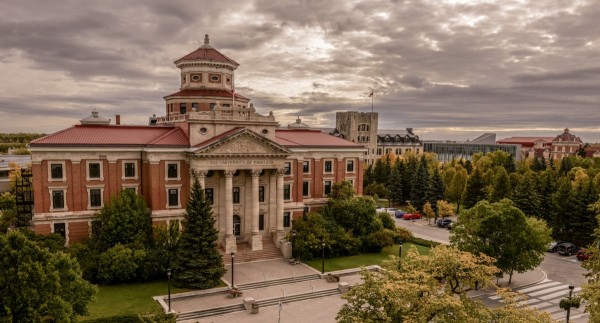
But these natural evolutionary changes weren’t enough to satisfy the diversity demands of two members of the faculty of education at Winnipeg’s University of Manitoba (U of M). Academics-cum-administrators Melanie Janzen and Jerome Cranston spent four long years developing a new entry-student admission policy designed to “ameliorate the socio-historical disadvantages of certain groups.” The university Senate approved the transformation last January, but not without controversy. So in the June 27, 2016 issue of University Affairs, Janzen and Cranston laid out their arguments for reducing the perceived dominance of privileged white women in the province’s teaching profession. In our view, those arguments are full of logical contradictions and empirical errors.
The new policy reserves 45 percent of spaces in the Bachelor of Education program for students who belong to the following categories: “Indigenous, Métis or Inuit (15 percent); having a [physical, mental, psychological, sensory or diagnosed learning] disability (7.5 percent); LGBTTQ [lesbian, gay, bisexual, transgender/transsexual, two spirit, or queer] (7.5 percent); being a racialized minority (7.5 percent); or being socially disadvantaged [homelessness, low levels of education, chronic low income, chronic unemployment] (7.5 percent).”
Janzen and Cranston helpfully explained in their magazine article that candidates “may identify with as many categories as are applicable to them” but they don’t have to prove they belong to any of them because “Requiring documentation to ‘prove’ one’s identity only reinforces the hegemonic power of the university and its officials to adjudicate identity claims.”
In other words, no evidence is required to prove that applicants are legitimate members of these “traditionally disadvantaged groups.” Nor is there any rationale for an ad libitum categorization which simplistically and arbitrarily solidifies fluid identities: sexual orientation, disability, racialization (imposed ethnic identity), and social disadvantage are all intertwined, malleable, and disbursed along a convoluted continuum.
Nor is any notice paid to other possibly stigmatized categories, including what is arguably the most overlooked but most common form of discrimination in Western society – “lookism” – being too short, too fat, or too ugly, as judged by superficial societal ideals.
In their research that led to the new policy, Janzen and Cranston made no effort to determine the actual diversity – including intellectual diversity – that already exists among current education students and active Manitoban teachers. If they had done some homework, they would have found that a growing proportion of aboriginal students have been enrolling in the faculty for years in the absence of any patronizing policies. If they really wanted teachers to reflect the incidence of disability, they would have set the quota much higher: by some estimates, 20-25 percent of Canadian university students suffer from some sort of mental disorder.
Ah, but they’re not called quotas. “The percentage allocated to each category is an enrolment target and not a quota”, Janzen and Cranston wrote in University Affairs, because “quotas are often filled regardless of qualifications.” This is semantic sleight of hand. If it sounds like a quota and acts like a quota, it is a quota, even if the targeted applicants have to meet the faculty’s “minimum admissions standards.”
As in other faculties or schools of education, these standards are already rock bottom: U of M B Ed applicants are accepted with grades as low as a “C” in courses they wish to teach together with a meagre Grade Point Average of only 2.5, which is the lowest admission standard of any U of M post-baccalaureate degree programme. This means students with GPAs of 2.5 could be selected over those with GPAs of 4.5 if they belong to one or more of the designated categories.
This argument is admittedly a bit of a red herring because the faculty has been accepting lots of students with low GPAs for years. Moreover, it does not require applicants to take independently certified entrance tests (as is done in other jurisdictions), or even to submit to comprehensive panel-based interviews, as required by many other professional programmes. Presumably that would be another abuse of the university’s “hegemonic power.”
Low entrance requirements are exacerbated by the absence of external accreditation or uniform certification of graduating teachers, as in many other professions, including medicine, law, and dentistry. This means that if education students simply complete the required coursework, they are granted certification by the Province of Manitoba.
By comparison, at the U of M Faculty of Medicine, only 13 percent of eligible candidates – those with a cumulative GPA of 4.1 who also scored high in their demanding interviews and the accredited Medical School Admission Test – were enrolled in the programme for the class of 2016.
Given how poorly the faculty of education selects and trains its apprentice teachers, it should not be surprising that Manitoba K-12 students score at the lowest level in Canada-wide standardized tests.
Janzen and Cranston are impervious to such arguments. In fact, writing in defence of their new entrance formula, they dismissed the criticism that it “disadvantages the so-called ‘best and brightest’ from being admitted to the Bachelor of Education program” by asserting that “… this argument places an unwarranted confidence in grade point averages as reflections of ‘brightness.’ There is no evidence to suggest that students with the highest grade point averages make the most effective teachers.”
Assuming for a moment that this is actually true, then what makes the “most effective teachers”? Janzen and Cranston claim it is those who are most comfortable and secure in their self identity. So by discriminating in favour of applicants on the basis of identity, their entrance formula should produce the best teachers. Time will tell if that kind of creative logic produces the predicted result, but in the meantime most scholarly literature insists that the most important factor affecting student learning is … surprise, surprise … the quality of teaching.
More particularly, we have long known the characteristics of the top teachers: they are “active warm-demanders,” meaning they enthusiastically engage their students in their learning and teach them directly in an empathetic fashion. If training teachers to become excellent educators is the fundamental goal of an education programme, this means ensuring that all student-teachers are engaging, articulate, highly literate and numerate, compassionate, and have an excellent understanding and love of the subjects they will teach.
Conversely, belonging to any given allegedly marginalized minority is no guarantee of classroom sympathy with the issues faced by that minority or any other. On the contrary, as this summer’s brouhaha between Pride Toronto and Black Lives Matters teaches us, aggrandizing identity politics – in the classroom or anywhere else – is a recipe for social conflict between competing minorities. There is scarcely any anecdotal evidence, let alone empirical proof, that the social or physical identity of a teacher has any positive effect on the learning outcomes or social esteem of students who share that identity. Conversely, what can be seen on a daily basis by observing children from countless backgrounds fostering genuine inclusion by playing together in Winnipeg’s schoolyards is that they are well ahead of ivory tower academics like Janzen and Cranston when it comes to real-life equity issues.

Over the last 100 years, faculties of education have invented and promoted an almost endless list of false or unscientific school reforms (new math, discovery learning, social promotion, mainstreaming, open-area classrooms, multiple intelligence, etc.). This latest fad – which has nothing to do with teaching or learning – shifts attention to a ghettoizing preoccupation with teacher-focused identity politics. Like so many other modern innovations, this one is bound to fail. Until then it will certainly bring us no closer to realizing Martin Luther King Jr.’s inclusive dream.